The scorecard
6.4/10 · Mixed
- Writing25%
- 6.5
- Production25%
- 6.5
- Delivery15%
- 7.5
- Cohesion15%
- 5.5
- Originality10%
- 5.5
- Replay value10%
- 6.0
The deadpan punchlines on I.B.S. and Girls, Cash, Cars land, but the repeated Jay-Z jabs and crew-holdover verses are stale.
The Alchemist's Wet Wipes and the Rick Wakeman flip on Girls, Cash, Cars stand out, though the many different producers leave the sound patchy and low on energy.
His flat, funny delivery is still the genre's most distinctive voice, with only crew guests like Hell Rell and 40 Cal. thinning the effect.
A solid early run and bursts like the Alchemist beat and the Max B closer roughly offset a baggy twenty-track sequence with an overlong intro, two voicemail skits and two remixes.
It extends the Purple Haze formula with less invention, and the crew-driven sound reads as a retreat from the previous record.
A handful of tracks hold up, but the middle stretch, the remixes and the diss material are easy to skip on repeat.
Cam'ron Killa Season: A Movement Defends Its Territory
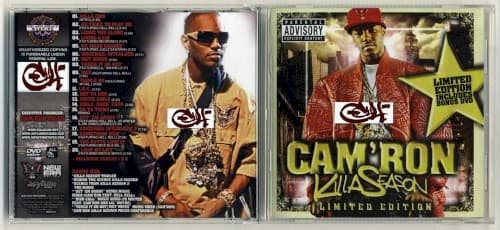
Killa Season is the sound of a movement defending its own territory. Cam'ron arrives in 2006 as the leader of the Diplomats, fresh from the strangest and best record of his career, and instead of pushing further out he turns around and builds a clubhouse. The result is an album that lives up to the crew's loyalty and fails the standard he set himself two years earlier. My position runs against the soft consensus that treats it as a pleasant continuation: this is a retreat, enjoyable in pieces, and the clearest evidence in his catalog that the Purple Haze formula depended on more than his voice.
What the record answers is the question of what happens after the peak. Purple Haze had the benefit of a shared sound among a handful of high-end producers who treated Cam'ron's deadpan like a gift. Killa Season trades that for a long list of mostly lesser-known beatmakers and a heavy rotation of crew guests, with Hell Rell, Juelz Santana, 40 Cal. and Jim Jones carrying large portions of the running time. The lineage is audible, the Diplomats shorthand of soul loops and gang-chorus hooks, but the original Roc-A-Fella polish is gone and nothing quite replaces it.
The stakes were commercial and reputational. It debuted at number two on the Billboard 200 and moved 114,000 copies in the first week, which is respectable, but the critical conversation was less kind. Several writers called it a step down from Purple Haze, and the feud with Jay-Z that colors a few songs struck some as stale. Cam'ron was also the executive producer, which gives the record's loose structure an authorship it might not otherwise deserve.
So the argument is this: Killa Season is a loyal, funny, overlong sequel that proves the Diplomats movement could keep an audience while failing to prove it could keep an edge. It has real moments, and the fan service is genuine, but it is the album that makes the case for why his previous record was a peak.
Patchwork Beats, Crew Cameos and Stale Jay-Z Jabs
The production is the album's central problem and also its quiet strength. Almost every track has a different producer, including The Alchemist, The Heatmakerz, Ty Fyffe, Pro-V and Jonathan Dugger, and the result is a mixtape-like patchwork instead of a unified sound. The soul-sample loops remain, and several are inventive, but the drums lack the weight of the previous record, and the overall energy is lower. Rolling Stone and Pitchfork both complained about it, and the complaint is fair: when the beat sounds routine, the entire song sounds routine.
Cam'ron remains an excellent rapper in the narrow sense. His deadpan delivery is still the most distinctive instrument in the genre, and the punchlines still land when they are good. The record has a loose, joking tone that suits him, and a few cuts show him at his funniest, with absurd images and offhand cruelty delivered in a flat voice. Some critics noted a vulnerable side as well, a moment of reflection that sits oddly with the swagger around it.
The writing is more uneven. The Jay-Z jabs, which the album returns to on several tracks, are the weakest material, repetitive and dated, and a DVD included with the limited edition reportedly framed the feud as publicity, which only makes the songs feel more manufactured. The diss tracks are long on attitude and short on invention, and they leave the album with less of the surreal comedy that defined the last one. Whole songs feel like Dipset holdovers, with verses that could have been recorded for any crew release.
Guests are the second structural issue. Hell Rell and 40 Cal. appear repeatedly, and while they fit the crew sound, they do not match the guest list of the previous album. A Lil Wayne feature offers a change of pace, and Max B stretches a closer well past six minutes, but too often the guests dilute Cam'ron's own presence on a record that bears his name and his executive-producer credit.
What the album does well is hooks. Several songs have choruses that stick, and the skits, which were praised by one critic, retain a sense of humor. The album also has a genuine looseness that makes it easy to play in the background. The problem is that looseness is the wrong goal for a record that follows one of the decade's best, and the album sounds like an artist enjoying himself among friends rather than one trying to top his last record.
Twenty Tracks Where a Tight Twelve Would Do
The sequence is the clearest evidence that this record was assembled rather than planned. It opens with a five-minute intro, which is a long time to ask a listener to wait for the rapping to start, and then follows with a run of crew-heavy songs that establish the mood without pushing it. The early pacing is fine, with a good balance of boasts, hooks and gang vocals, and a reasonable sense of momentum through the first handful of tracks.
The middle is where the album stops moving. The two voicemail interludes, a long run of mid-tempo crew cuts and a few repetitive diss songs slow the record down for nearly a third of its running time. The contrast that makes a long album bearable, hard songs against funny ones, slow ones against fast, mostly disappears, and the songs begin to blend. By the late stretch, the album has run out of new ideas and begins to repeat itself.
The best of it appears in scattered bursts. The Alchemist beat early in the second quarter is a welcome shift in texture, and the late-album track with Max B is an unusual, stretched-out piece that gives the end of the record some shape. Those moments prove that the album had better material available, which makes the filler harder to forgive.
The length is not earned. Twenty tracks and over seventy minutes is far too much for a record whose strongest material would fit on a tight twelve-song album. Two remixes sit near the end and feel like leftovers, and the interludes add little. Several critics said as much, and the AllMusic review's line about trimming and planning being rare in this camp sums up the problem neatly. As a sequence, it works better as a playlist than an album, and the right approach is to build a shorter version from the highlights and ignore the rest.
A Fun Sequel That Proves Why Purple Haze Was the Peak
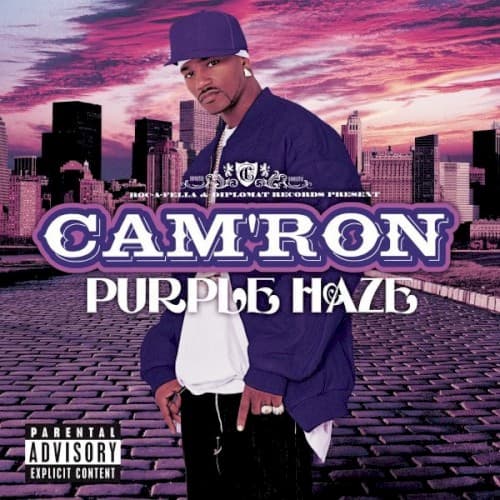
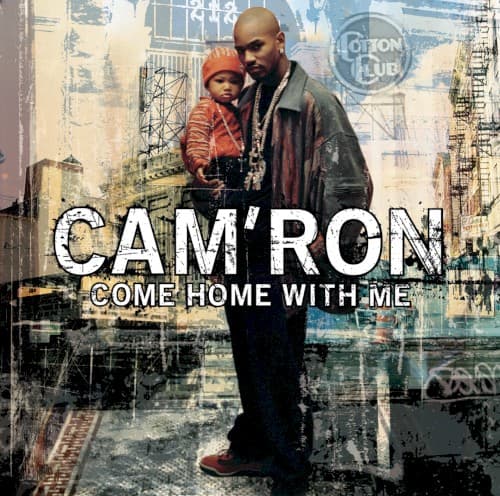
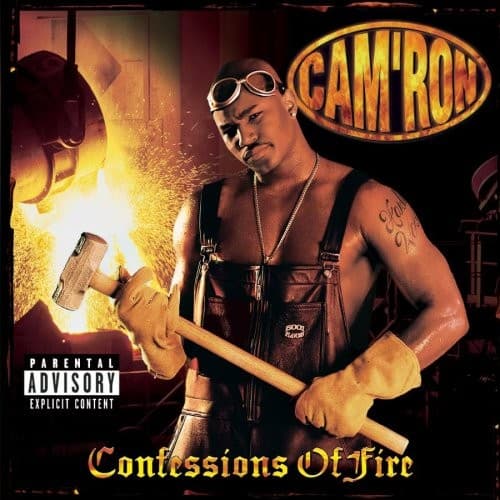
No other Cam'ron albums are rated on the site yet, so the ranking rests on his own track record. Killa Season sits below Purple Haze and, in my view, below Come Home With Me, though it is more fun than Confessions of Fire. It is the loosest and least ambitious of his major-label records, and the fact that it still debuted at number two says more about the Diplomats' audience than about the album. The scores reflect that: the delivery is still strong, the hooks are real, and the writing is intermittently excellent, but the cohesion and production fall well below the previous record.
The reception supports that reading. Reviews were positive overall but nearly every one compared it unfavorably with Purple Haze, and the more critical ones called it a retreat that would satisfy the converted and little else. That is accurate. It is a record for people who already like the crew, and it asks them to enjoy familiar pleasures rather than offering new ones.
Who should start here? Fans of the Diplomats sound who want more of it, and anyone who enjoys Cam'ron's voice enough to forgive uneven material. Who should skip it? Listeners new to him, who should begin with Purple Haze, and anyone who prefers tight, planned albums. It has aged modestly: the jokes still work, the feud material has dated badly, and the production sounds more routine now than it did then.
Three tracks make the case. Start with Wet Wipes for the Alchemist beat and the album's cleanest rapping, then I.B.S. for the funnier side, and Girls, Cash, Cars for a sharp, compact example of the sound. For what to hear next, Purple Haze is the obvious answer, because it shows what this album is trying to be and fails to become, and Come Home With Me is the better entry into his Roc-A-Fella era.
Killa Season is the sound of a rapper who had already made his best record and chose to spend the next one among friends, and the friends are the best and worst thing about it.
Track by track
Track Listing
Killa (intro)
WeakA five-minute opener with 40 Cal. that is far too long for an intro. It sets the crew mood but delays the album, and it is mostly atmosphere.
He Tried to Play Me
SolidA crew-style opener with Hell Rell, built on a smooth, soulful beat. It is confident and loose but does little to distinguish itself from a dozen similar Dipset songs.
Leave You Alone
StandoutA Blackout Movement production built on an Etta James sample, giving it a soulful, wounded mood. It is one of the more melodic and personal cuts on the record, and the sample choice is good. It is brief and fairly slight.
Living a Lie
SolidA Ty Fyffe production with Mo Money that leans into reflection. Cam'ron sounds more vulnerable here, and the song is a welcome change of tone even if the writing stays plain.
We Make Change
SolidA short Juelz Santana duet on a smooth Ronnie Dyson sample. The pair have easy chemistry and the hook is catchy, though the song is a lightweight crew cut.
Voicemail (interlude)
WeakA skit built from a phone message. It is mildly funny and mostly filler.
Wet Wipes
StandoutThe Alchemist production here is the best beat on the record, with a dusty, understated loop that suits Cam'ron's flat delivery. He sounds relaxed and sharp, delivering punchlines in a dry voice without the crew crowding the track. The song has a distinct texture that most of the record lacks, and it shows what the album could have been with more care in the beat selection. It is short, focused and funny, and it is among the cleanest rapping Cam'ron does on the album. The writing is playful without being sloppy, and the beat gives the verses room. A highlight and the best argument for the record's place in his catalog.
Touch It or Not
SolidA Headbangaz Entertainment beat with Lil Wayne, and the album's most obvious attempt at a crossover moment. The guest adds a different cadence and a burst of energy, and the pairing is interesting because the two voices could hardly be more different. The beat is bouncy and the hook is simple, but the verses do not rise to the occasion, and the song is more curious than memorable. It is a decent mid-album lift that proves the album could use more guests from outside the crew.
War
SolidA Hell Rell collaboration on a NOVA beat, built around a tough, martial mood. The song is competent and aggressive, but it is exactly the type of generic crew track that makes the middle of the album blur together.
Triple Up
StandoutA Headbangaz production with 40 Cal., built on an O'Jays sample that gives the track a soulful, wounded loop. The beat is the star, and the verses are solid but unsurprising. A good example of the sound the album favors.
I.B.S.
StandoutThe funniest song on the record, a Heatmakerz production that plays its absurd subject straight and gives Cam'ron room to do what he does best. Pitchfork singled it out as the kind of humorous song the album needed more of, and that reading is correct. The beat is bouncy, the hook is silly and the delivery is deadpan in the way that made him distinctive. It is short and sharp, and it is a reminder of the surreal comedy that defined the previous album. The track is also a clear example of how much better he sounds when he stops fighting and starts joking. A highlight.
Get Ya Gun
SolidA Big Tyme production that is aggressive and short, and there is little to distinguish it from other street tracks in the middle of the record.
White Girls
SolidA Beat Firm production on a mid-tempo, melodic loop. The subject is familiar and the execution is fine, but it adds little to the album's argument.
Girls, Cash, Cars
StandoutA compact Stay Gettin' Productions beat built on a Rick Wakeman sample that gives it an unexpectedly grand, theatrical feel. The song is short, bouncy and funny, with a hook that sticks and verses that stay on the right side of absurd. It is a clear example of how the album works best when it keeps things tight and lets the beat do some of the work. The sample choice echoes the odd, maximal instincts of the previous record, and Cam'ron's delivery is relaxed and playful. A strong, efficient cut that is easy to return to and a good entry point for the album.
Do Ya Thing (remix)
SolidA short remix built on an Earth, Wind & Fire sample, giving it a warm, familiar texture. It is a pleasant bounce, but as a remix it feels like a leftover.
Get ’em Daddy (remix)
SolidA crew remix with Hell Rell, J.R. Writer and Jim Jones, stretching past four minutes. The posse energy is fun but the song feels like a bonus track, and it adds to the album's length without adding much.
Voicemail (interlude 2)
WeakA second voicemail skit that repeats the first one's joke. Filler.
Something New
SolidA Boola production with Hell Rell, built on a soulful James & Bobby Purify sample. The loop is appealing and the song has a nice bounce, though the guest verse and hook are routine.
You Gotta Love It
SolidA six-minute Max B collaboration built on an interpolation of a film score, and the album's most ambitious track. It is also its most diss-heavy, which drew criticism from Pitchfork, and the length stretches the material past what it can support. The mood is tense and theatrical, and the unusual beat gives it a distinct identity, but the Jay-Z material feels like a retread and the verses do not justify the running time. It is interesting more than successful, and it shows exactly the album's strengths and weaknesses in one place: a good idea, a strange beat and not enough editing.
Love My Life
SolidA closing track with Nicole Wray, built by Jonathan Dugger on a smooth, reflective beat. The tone is warm and appreciative, and it leaves the album on a gentler note than the diss tracks before it. A pleasant, slight finish.
Frequently Asked Questions
Is Cam'ron's Killa Season a good album?
How did Killa Season perform on the charts?
What are the best songs on Killa Season?
Styles