The scorecard
7.3/10 · Good
- Writing25%
- 7.0
- Production25%
- 8.0
- Delivery15%
- 7.5
- Cohesion15%
- 6.5
- Originality10%
- 7.0
- Replay value10%
- 7.5
Cam'ron's asides are funnier and sharper than on his debut, but the street and romance stories stay surface-level, as Rolling Stone noted.
Just Blaze's soul loops on Oh Boy, Welcome To New York City and The Roc (Just Fire) are huge and give the voice a worthy frame, with a Kanye West beat adding texture.
His loose, deadpan cadence is at its best on Oh Boy and Hey Ma, and Juelz Santana's energy complements it.
A strong first third gives way to a run of long, similar mid-tempo songs, and several tracks at five to six minutes make fifteen songs feel bloated.
It applies the Roc-A-Fella soul-sample template skillfully rather than inventing a sound, though Cam'ron's voice keeps it distinctive.
The singles and the Just Blaze cuts hold up well, while the title track, Live My Life (Leave Me Alone) and the long mid-album songs are easy to skip.
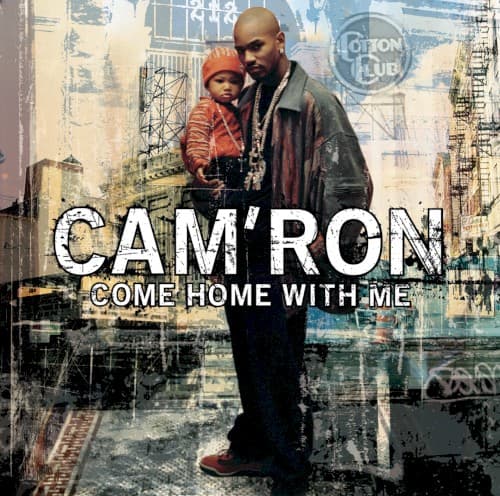
Cam'ron Come Home With Me: Harlem's Voice Finds Its Roc-A-Fella Beat
Come Home With Me is the album where Cam'ron stopped auditioning for other people's formulas and borrowed a better one: the Roc-A-Fella sound of the early 2000s, with its chopped soul loops, thick drums and a boardroom's worth of guests. The consensus treats it as a commercial peak that happens to be a decent album. I would push that further. It is the record that turned a talented but uneven Harlem rapper into a star, and it did so by matching his sleepy, funny voice to beats that finally had enough personality to answer it.
The history matters here. By 2002, soul-sample production had become the dominant New York idiom, and Just Blaze was its most reliable architect. Cam'ron, coming off two albums on Epic that never settled on a sound, arrived at a label that could supply that architecture and a cosign from Jay-Z, and the pairing worked immediately. The album peaked at number two on the Billboard 200 and went platinum, and the two singles, Oh Boy and Hey Ma, climbed into the top five of the Hot 100, which made it his biggest moment by a wide margin.
It also sits at a lineage junction. Juelz Santana, Jimmy Jones and Freekey Zekey appear throughout, giving the record the feel of a crew album in all but name, and you can hear the Diplomats identity forming around Cam'ron's bored, unbothered center. That makes the album a hinge between the major-label chase of his first years and the more self-contained, eccentric records that followed.
The weakness of the record is that the best of it lives in its first half and its singles. When the beats stop being excellent, the writing does not rescue them, and the album drifts into long, repetitive songs that remind you how much of the success was the production. That is the argument in short: Come Home With Me is a very good commercial album built on three or four great records and a lot of competent filler, and it is the point at which a distinctive voice found its best setting.
Just Blaze Loops, a Bored Voice and Songs That Run Long
The production is the album's engine, and Just Blaze is its most valuable player. His three beats here, the long opening song with Juelz, the Jay-Z posse cut and the closing-stretch banger with Memphis Bleek and Beanie Sigel, share a big, orchestral soul sound with drums that hit hard enough to make a bored voice sound dangerous. Ty Fyffe handles a large share of the remaining tracks and tends toward a smoother, more melodic palette, while a Kanye West beat and a few others supply variety. The result is more consistent than his previous albums and has real range, from the shiny radio singles to the colder street cuts.
The sampling is conspicuous and well chosen. The record borrows from 1970s soul, early R&B and even a famous Tupac track, and it interpolates familiar melodies to create hooks that are immediately recognizable. That makes the best songs feel inevitable, as if the loop had always been waiting for a rapper, and it also makes the weaker ones feel like karaoke when the interpolated hook outshines the verse.
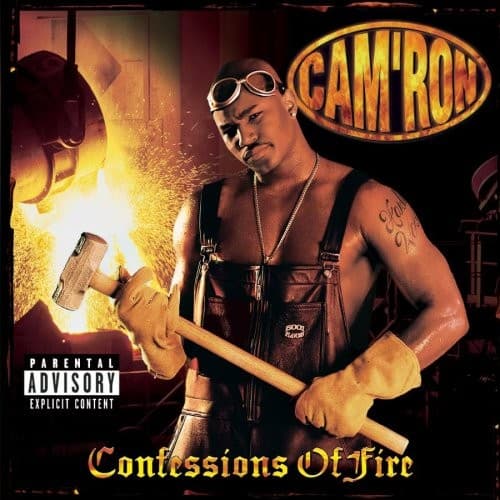
Cam'ron himself is the second asset. His delivery is the best on the record: a loose, conversational cadence with a habit of tossing punchlines mid-sentence, as though he did not care whether you noticed. It is a style that rewards attention and that rarely strains, and it fits the album's mood of casual dominance. His writing is better on this record than on Confessions of Fire, with funnier asides and sharper detail, even if the subjects remain the familiar ones: money, women, street credibility. Critics at the time admired the voice and doubted the stories, and that split is still accurate. He is a brilliant stylist who does not always have much to say.
The weaknesses are plain. Several songs run too long, with six-minute running times that dilute the best ideas, and a number of cuts rely on a hook to carry what the verses cannot. The R&B-leaning tracks, including those with a female vocalist, are pleasant but generic, and at least a couple of songs are outright duds. Reviewers singled out the title track and Live My Life, and both give the album an easy place to lose its momentum.
Guests are used well and sometimes too much. Juelz Santana in particular gives the album a youthful energy that makes the mid-tempo songs more fun, but he turns up so often that the record starts to feel like a display for the crew instead of for its title artist. That tension is a feature of the album, and the reason it sounds like a team, but it makes Cam'ron a slightly less commanding presence than the best albums in this style demand.
A Big Front End and a Middle That Tests Patience
The album opens with a statement, and the first third is the strongest run of the record. The short introduction sets up a long opener with Juelz that stretches past six minutes and uses that length to establish both the sound and the personality. The pacing there is deliberate, and it announces that this will be a confident, unhurried album rather than a collection of singles. Then the first hit arrives and the energy lifts: the album knows where to place its biggest songs and uses them to pull the listener forward.
The middle is where it begins to wobble. After the early highlights, the album fills out with a mid-tempo run, including a long R&B duet and a stretch of songs that share the same pace and mood. They are listenable and individually fine, but the sequence loses its contrast, and the album's runtime starts to feel heavy. Several songs between four and six minutes in a row make the run of tracks feel longer than the clock says, and the standout moments become less frequent.
The recovery comes in the second half, when the Jay-Z posse cut and the later Just Blaze beat restore the sense of stakes. The album also ends in a more modest register than it started, with a reflective closing stretch that fades out instead of building to a statement. That is a reasonable choice but not an exciting one, and the final songs are less memorable than the album's early momentum would suggest.
Is the length earned? Not entirely. Fifteen songs averaging nearly five minutes is a lot for an album built on a limited range of moods, and a tighter eleven- or twelve-track version would have hit harder. The sequencing is smart about where it places its peaks, which is why the album feels more like a record than a playlist, but the trim would have improved the pacing considerably. As it stands, it is an album with an excellent front end, a competent back end and a middle that tests patience.
The Commercial Peak, Not Quite the Best Record
No other Cam'ron albums are rated on the site yet, so the ranking rests on what this record does against his own history. Within that history, Come Home With Me is the commercial peak and a clear improvement on the debut: the production is stronger, the persona is clearer and the singles are better. It is probably not his best album, since the looser, stranger records that followed let his personality run further, but it is the one that proves he could succeed at the highest level without losing his voice. That makes it the best entry point for casual listeners and a necessary stop for anyone tracing the road to the Diplomats era.
The scores reflect that position. The production is excellent, the delivery is among his best, and the album is a legitimate pillar of early-2000s New York rap. The writing is competent and funny but rarely deep, the sequencing is too long, and the filler is real. The result is a Good-to-Great record, strong enough to own, uneven enough to trim.
Who should start here? Anyone who likes soul-sample production, anyone curious about the Roc-A-Fella era and its extended family, and anyone who wants the hits. Who should skip it? Listeners who prefer dense lyricism or tightly edited albums, and anyone put off by the era's tendency toward bloated tracklists. It has aged well: the beats still sound huge, the singles hold up, and the weaker songs are easier to skip in the streaming age.
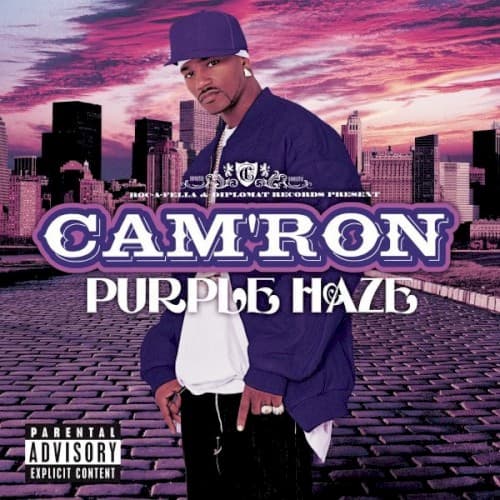
Three tracks make the case. Start with Oh Boy, the single that defined the moment, then The Roc (Just Fire) for Just Blaze at full power with two label peers, and Hey Ma for the biggest hit and the crew chemistry. For what to hear next, Purple Haze shows where the voice went when it was free to be stranger, and Confessions of Fire is the useful contrast for hearing how much a change in production did.
Come Home With Me is the sound of a talented rapper meeting the right beats at the right moment, and the best songs on it are still the standard for what a Harlem rapper could do with a Just Blaze loop.
Track by track
Track Listing
Intro (Cam'ron/Come Home With Me)
SolidA short scene-setter with DJ Kay Slay that borrows a soul sample and establishes the swagger. It is mostly atmosphere, effective as an opener, and not something you return to.
Losing Weight Part 2
StandoutA six-minute Just Blaze production with Juelz Santana that sets the template for the album: a big soul loop, heavy drums and two rappers trading casual boasts. The length lets Cam'ron stretch out, and his deadpan delivery gives the verses a loose, funny feel. Juelz adds a youthful contrast, and the chemistry between them hints at the Diplomats sound to come. It runs a little long and the hook is functional, but as an album opener it makes the case for the Roc-A-Fella beat style. It is one of the stronger cuts on the record and a reminder of how much better he sounds on a fully realized beat.
Oh Boy
StandoutThe biggest single, built on a Just Blaze beat that flips a soul sample into a bouncing, instantly recognizable loop. It was a number one hit on the R&B/hip-hop chart for five weeks and peaked at number four on the Hot 100. Cam'ron's verses are relaxed and quotable, and Juelz Santana's hook gives the song its youthful bounce. The writing is simple but sharp, with punchlines that land because of the delivery rather than the density. It is the album's best argument and the song that made the pairing of Harlem voice and Roc-A-Fella production sound inevitable. Great pop-rap that never feels like a concession.
Live My Life (Leave Me Alone)
WeakA Daz Dillinger collaboration built on a Tupac-linked sample, and one of the cuts critics singled out as a dud. The beat is flat, the hook is thin and the song never finds a reason to exist.
Daydreaming
SolidA Tiffany duet that interpolates a famous Aretha Franklin melody, running over six minutes. The vocal is pretty and the beat is smooth, but the track is long for how little it develops, and the rap verses feel like an interruption of an R&B song. The 2003 single did not match the first two hits.
Come Home With Me
WeakThe title track, with Juelz Santana and Jimmy Jones, built on a funk-flavored sample. Critics named it among the album's weaker songs, and the hook is repetitive and the beat less distinctive than the rest. It is not a disaster but it is the kind of track that tests the sequence.
Welcome To New York City
StandoutA Just Blaze posse cut with Jay-Z and Juelz Santana that sounds like a Roc-A-Fella celebration. The beat is big and celebratory, but the chief draw is the guest verse, which raises the stakes for everyone around it. Cam'ron holds his own with a typically relaxed performance. It is a strong mid-album lift and the album's clearest sign of its new alliance.
Hey Ma
StandoutThe second hit, with Juelz, Freekey Zekey and Toya, built on a smooth Commodores sample. It peaked at number three on the Hot 100 and is his biggest chart success. The song is a love-and-lust pitch delivered with the group's usual breezy charm, and the hook, with Toya on board, is irresistible. It is smoother and more radio-friendly than Oh Boy, and it shows the crew's chemistry at its best. The writing is light and the structure is simple, but the combination of beat, hook and voices makes it durable. A genuine crossover record that still sounds like Harlem rather than pop.
On Fire Tonight
SolidA Ty Fyffe production with Freekey Zekey that stretches past five minutes on an interpolated soul hook. It is smooth and pleasant, and it is also the start of a run of long mid-tempo tracks that blur together.
Stop Calling
WeakA six-minute track with McGruff and Freekey Zekey that is too long for its material. The beat is competent and the rapping is relaxed, but nothing here earns the running time. Skippable.
I Just Wanna
SolidA smooth, D'Angelo-sampling cut with Juelz Santana that offers a lighter groove. It is easygoing and well produced, with a laid-back charm that makes it a pleasant mid-album breather even if it does not leave a mark.
Dead Or Alive
StandoutA Kanye West production with Jimmy Jones, built on a folk-leaning sample that gives the album an unexpected texture. The beat is moody and unusual for the record, and Cam'ron's delivery shifts to a more serious register. It is a welcome change of pace and one of the more interesting songs on the second half, though the verses are not as sharp as the production.
The Roc (Just Fire)
StandoutA heavy Just Blaze beat with Memphis Bleek and Beanie Sigel, praised by critics for pairing Cam'ron with a hard-hitting loop. The orchestral sample gives it a menacing gravity, and the three rappers rise to the occasion. This is the album's hardest song and the most direct link to the Roc-A-Fella side of the deal. The verses are confident, the hook is short and effective, and the beat does what all the best beats on the album do: make the voice sound bigger. A standout that restores the energy after the mid-album lull.
Boy Boy
SolidA Ty Fyffe and Heat Makers production that runs nearly five minutes without a guest. It is a solid, mid-tempo cut that lets Cam'ron carry a song alone, though it lacks the standout hook or beat to stick.
Tomorrow
SolidA BPM production built on an interpolated El DeBarge melody, closing the album on a reflective, smoother note. It is a modest end rather than a statement, pleasant and a little anticlimactic.
Frequently Asked Questions
Is Cam'ron's Come Home With Me a good album?
How successful was Come Home With Me?
Who produced Come Home With Me?
Styles