The scorecard
6.8/10 · Good
- Writing25%
- 6.5
- Production25%
- 7.0
- Delivery15%
- 7.0
- Cohesion15%
- 6.5
- Originality10%
- 6.5
- Replay value10%
- 7.0
Cee is a sharp, economical hook writer with a gift for the casual aside, but across fourteen tracks the subject matter rarely leaves money, women and proving doubters wrong.
The beats keep drill's low end but leave room for melody, and the mix keeps the voice forward, though few tracks are built around a distinctive sonic idea.
His relaxed, conversational cadence and hook craft are the main reasons the tape travels, though the performance leans on one narrow vocal range and never gets a guest verse to push him into another gear.
The brisk runtime keeps the tape easy to finish, but the middle stretch blurs into one long plateau where tracks feel interchangeable, so it plays more like a run of good singles than a built sequence.
Blending melodic hooks with drill drums was not new in London, but Cee made it sound more like pop than anyone around him, and Wild West is the cleanest early version of that move.
As a recent-era tape built on hooks it should keep getting replays, though the thin range of subjects suggests the deeper cuts will not reveal much more with time.
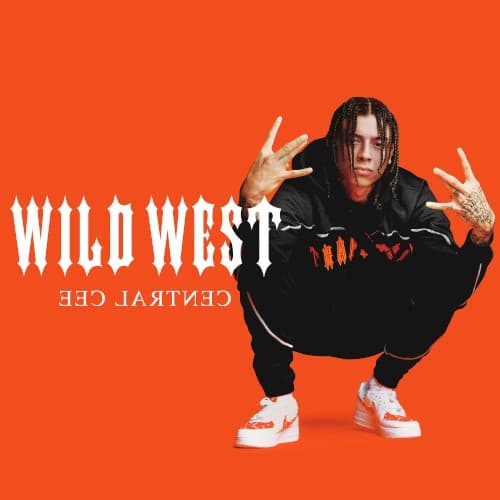
Central Cee Wild West: The Hook Writer Hiding in a Drill Rapper
Wild West is built on one unusual idea: Central Cee raps like a pop writer who happens to be working over drill drums. The voice stays light and conversational on top of low-end that would normally ask for menace, and the friction between the two is where this mixtape finds its identity. He does not shout over the beat and he does not bury himself in it. He sits slightly behind the pocket, drops an offhand line, and lets the hook do the heavy lifting.
The claim worth making about the tape is a narrow one. Wild West is a very good calling card and a merely decent album. It proves, more convincingly than most of its British contemporaries managed, that drill could be hummed in a kitchen, and it does so with a restraint that makes the fourteen songs easy to play back to back. What it does not do is widen its view. The writing circles the same few preoccupations, so the record works better as a collection of smart singles than as a statement about anything.
The stakes were practical as much as artistic. This was an independent release with no label behind it, and it debuted at number two on the UK Albums Chart and was the most streamed album of its week. That turns the tape into a data point about where British rap audiences were heading: toward tight songs, melodic phrasing and a front-man who sounds friendly rather than forbidding. Listeners coming from the harder end of Headie One or the weightier storytelling of Dave will hear a different set of priorities here, hooks first and scene-setting second.
Seen from outside the UK, the appeal is easy to explain. The accent is distinctly London, but the rhythm of the delivery, the melodic habits and the short runtimes are the kind of things that cross borders without translation. The same record also explains the tape's ceiling. A style this smooth has to keep finding new angles or it turns into wallpaper, and Wild West only partly manages that. It is a confident first statement from Central Cee that leaves the bigger questions for later.
Smooth Voice, Sharp Edges: How Cee Bends Drill Toward Pop
The first thing that stands out is how little Cee tries to prove with volume. His voice stays in a narrow, conversational range, and he gets variety from rhythm instead: lines that stutter, stretch and then snap back onto the beat. On a record this short that matters. When every song runs between roughly two and a half and three and a half minutes, a rapper who relies on shouting would tire the listener by track six. Cee never does, and that discipline is the most underrated thing about the tape.
The writing is built around punchlines and attitude more than narrative. He is good at the quick put-down, at the line that sounds like a throwaway and lands twice on second listen, and at sketching a mood in a few words. Hooks are his real craft. Songs like Pinging (6 Figures) and Loading are built so that the chorus feels inevitable, with a melodic shape that stays in the head after the verse has faded. That is a pop skill rather than a drill skill, and it is why the tape reached listeners who do not follow the scene closely.
The production keeps drill's sliding bass and skittering percussion but softens everything around them. Melodic loops, airy textures and a clean, forward vocal mix give the songs a sheen that is closer to a streaming playlist than to a mixtape from a basement. There is a trade-off. Because the beats rarely have a strong personality of their own, the record leans heavily on Cee's voice to carry each track. When the voice is on, the arrangement feels streamlined. When he is on autopilot, there is little underneath to catch the ear.
That leads to the main weakness, and it is a real one. The subject matter is narrow. Money, status, women and the pleasure of being right about himself make up most of the tape, and the perspective barely shifts from song to song. A few tracks hint at more reflective territory, but they stay surface-level, and the vulnerability is brief and self-protective. Compared with peers from other scenes who use a debut to map a whole neighborhood or a whole inner life, this one draws a flattering portrait of one persona and stops there.
The lack of guest verses is another sign of how self-contained the project is. There is nobody to push him into a different gear, and nobody to contrast with his cool tone. That makes the listening experience coherent, but it also removes the surprises that a well-chosen feature usually provides. The tape is more consistent than daring.
Fourteen Songs, Thirty-Seven Minutes of the Same Good Mood
As a sequence, Wild West is quick and easy to finish. Nothing overstays its welcome, and the fourteen tracks pass in a little over thirty-five minutes, which suits the material. The opening run is the strongest stretch: the first handful of songs establish the sound, the voice and the swagger in fast succession, and each one adds something small, a new hook shape, a slightly different bounce, a new angle on the same attitude.
The middle of the record is where it begins to blur. Several songs share a tempo, a vocal tone and a similar emotional temperature, and without a clear change of pace the order feels interchangeable. Swap two or three tracks and few listeners would notice. The sequencing is not broken, but it does not build either. There is no obvious peak followed by a valley, only a long plateau of competent, pleasant songs.
The late stretch recovers some energy, partly because the tape finally shifts its mood and partly because the ear has had a rest. Tension is one of the better examples of how a small change in tone can reset a record. The closing stretch ends with a plain, direct song rather than a grand finale, and that fits the tape's personality. There is no pretense of a story arc, so there is no disappointment when one does not arrive.
Is the length earned? Mostly. A longer tape would expose how little the material changes, and a shorter one would lose a handful of good singles. The runtime is about right for what this is. The pacing problem is not duration but variety, and that is a lesson the artist would need to learn before attempting a full-length studio album with real range.
A Strong First Draft of a Pop-Rap Star
Because no other Central Cee albums are rated on the site yet, there is no catalog order to defend. On its own terms, Wild West belongs in the good-to-very-good band: the delivery and the hooks are excellent, the production is polished but safe, and the writing is the thing holding it back from anything higher. It is the kind of debut that makes a stronger claim about the artist's potential than about the record itself.
It is for listeners who like melodic rap built around short songs, and for anyone curious about how British drill became mainstream pop-adjacent music. It is also a useful entry point for people who find harder drill exhausting, since the temperature stays warm throughout. Fans of narrative depth, dense lyricism or heavy atmosphere should probably skip it, because the tape rarely offers any of the three.
The tape should age reasonably well. Its best songs are built on hooks and rhythm, which tend to outlast topical references, but the narrow range of themes means that repeat listens reveal fewer new details than a denser record would. It reads now as a clear snapshot of a moment: a rapper who has found his voice and not yet found much to say with it.
If you only have time for a few songs, start with Pinging (6 Figures), Day in the Life and Loading. Together they show the range of what he does well: the hook, the narrative sketch and the bounce. For what to hear next, try Dave for a heavier, more writerly take on British rap, or Headie One for a harder-edged version of the same drill sound. Wild West ends up being the album you reach for when you want fourteen confident songs and not a single sentence you will have to think hard about.
Track by track
Track Listing
6 For 6
StandoutA compact opener that sets the tone fast: easy cadence, confident posture, nothing wasted. It works as a statement of intent more than a song with a story, and at under two and a half minutes it respects the listener's time.
Fraud
SolidA brisk follow-up that keeps the mood and the tempo, with Cee swaggering through a tight verse and a chorus built for repetition. It is solid without being memorable, mainly useful for showing how comfortable he sounds at this speed.
Pinging (6 Figures)
StandoutOne of the tape's clearest demonstrations of why the pop instinct matters. The hook is simple and sticky, the verses stay out of its way, and the beat leaves exactly enough room for his voice to ride on top. The writing is not deep, but it is efficient, and the track captures the cool, understated bravado that defines the record. It also shows his habit of sliding between half-sung and half-rapped phrasing, which gives a drill beat a lighter surface than the genre usually allows. Compared with the tape's more repetitive moments, this one feels engineered with care, and it stands as one of the most replayable songs here.
The Bag
SolidA serviceable mid-tape song about money and attitude, handled with the same smooth tone as everything around it. The hook does its job, but the verses trade on familiar ideas and the track does not add much to the pattern already set.
Day in the Life
StandoutOne of the more ambitious songs on the tape and one of the few that tries to map a stretch of time, not just a mood. Running a little over three minutes, it gives Cee room to sketch routine and context, and the extra length lets the beat breathe. This is where the writing comes closest to storytelling, and it is more engaging for it. The details are still light and the perspective stays flattering, so it is no confessional, but the change of structure is welcome. It is a good example of what the tape could do if more of it moved beyond pure attitude, and a strong candidate for a first listen.
Dun Deal
SolidA confident, straightforward drill track with a clipped delivery and a chorus that lands cleanly. It is energetic and well made, though it sits in the same lane as its neighbors, so it reads as a pleasant addition more than a standout.
Commitment Issues
StandoutThe tape's most direct attempt at relationship territory, and a good example of where the writing is at its most relatable. Cee turns a familiar complaint into something that sounds casual and self-aware, and the melody keeps the song moving even when the lines are simple. The delivery is warmer here than on the braggadocio tracks, which gives the record a needed change of temperature. It stops short of real vulnerability and the emotional range is narrow, but the hook is one of the catchiest on the tape. As a piece of pop-rap songwriting it works, and as a break from the money talk it is welcome.
Sex Money Drugs
SolidThe title is a summary of the tape's three main preoccupations, and the song treats them with the same breezy confidence as everything else. It is catchy and competent, but also the clearest example of the narrow subject range: the ideas are familiar and the execution is professional rather than inventive.
Ruby
SolidThe longest song on the tape, and it uses the room to slow things down slightly and let the melody carry more of the weight. It is a decent change of pace, even if it does not fully justify the extra minutes, and it benefits from the contrast with the faster tracks around it.
Hate It Or Luv It
SolidA cheeky, hook-forward track that plays up the self-assured persona the whole project is built on. It is short, lively and easy to enjoy, though it leans on attitude more than ideas, and the verses are more functional than sharp.
Xmas Eve
SolidA short, light interlude-style song that adds a bit of seasonal color and a slightly different tone. It is pleasant filler rather than a highlight, and it is mostly there to vary the pace.
Loading
StandoutOne of the most infectious songs here and the best case for the pop reading of the tape. The hook is built so tightly that it feels like it has been in your head for years after a single play, and the verses keep the energy up without competing with it. His delivery is relaxed but rhythmically precise, finding small catches in the pocket that keep a simple idea interesting. The production gives him a clean, bouncy bed and nothing fights for attention. It is not lyrically dense, but it does not need to be, and it shows exactly what Cee does better than almost any of his peers: make a repeatable, friendly piece of music out of a style that is usually hostile.
Tension
StandoutA change of mood that arrives at the right time, with a slightly more serious tone and a beat that leans darker than most of the tape. It is one of the better late-record tracks and offers a hint of what a wider emotional palette might sound like.
Gangbiz
SolidA direct, no-frills closer that returns to the drill roots of the sound. It ends the tape without ceremony, which suits the project's personality, though it is not one of its most memorable songs.
Frequently Asked Questions
Is Central Cee's Wild West good?
What are the best songs on Wild West?
How did Wild West perform commercially?
Styles