The scorecard
7.1/10 · Good
- Writing25%
- 6.5
- Production25%
- 8.0
- Delivery15%
- 6.5
- Cohesion15%
- 7.0
- Originality10%
- 7.5
- Replay value10%
- 7.0
The rhymes came largely from Ren, Cube and The D.O.C., and they deliver sharp comic characterization and street reportage, but the album's ideas are narrow and its sexual bravado wears thin.
Dr. Dre and DJ Yella layer funk samples, electro leftovers and heavy bass into a dense sound that was far ahead of most 1988 rap on the West Coast.
Eazy's nasal, mischievous voice is limited technically but is one of the most recognizable in rap, and he sells every punchline with total conviction.
Twelve tracks with skit-like interludes and a recycled remix make a quick, focused listen, though the middle repeats the same boast.
It built a template for West Coast gangsta rap by pairing a funk-heavy production style with a gleefully villainous persona.
The best songs hold up for their sound and character, but the sexual humor and thin lyricism date it faster than its production does.
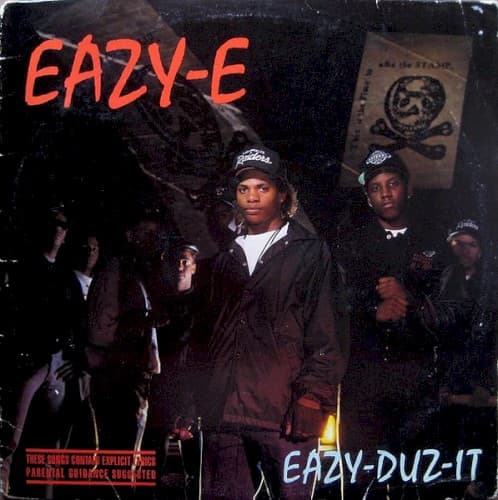
Eazy-E Eazy-Duz-It: A Star Built by Other People's Pens
Eazy-Duz-It is the rare debut that works better as a piece of production and casting than as a statement by the person on the cover. Eazy-E is the face, the voice and the gleeful villain, but the rhymes came largely from MC Ren, Ice Cube and The D.O.C., and the beats came almost entirely from Dr. Dre and DJ Yella. That division of labor is the key to the record. It is a comic, funk-drenched cartoon of gangsta rap, and its real achievement is how convincingly it makes one man's persona out of a team's work.
The consensus treats it as Straight Outta Compton's lesser companion, and that framing is mostly fair. It is less angry, less political and less formally sharp than the group record that followed it. But the common dismissal of it as a mere sidebar misses what it does better than that album: it is funnier, looser and more openly theatrical, and it lets Eazy's character carry a whole record rather than a few verses. If you want to understand how a funk-based West Coast sound and a villain persona became a business, this is the cleaner example.
The lineage matters more than the lyrics. The record answers the East Coast's turn toward dense sample collage by building something heavier and more bass-driven, and it points toward the G-funk years that Dr. Dre would define a few years later. It also gives Ice Cube a place to practice the first-person character writing that made his own solo work so sharp. The album got little radio or television support at the time, yet it sold well enough to earn a double platinum certification.
My argument is that Eazy-Duz-It is more important than it is great, and that this is a useful thing to say out loud. It is a lively, often funny and sometimes crude record with a few excellent songs and a lot of repetition. The people who made it were better at building a character than at giving him much to say, and the album shows both strengths clearly. For anyone tracing Eazy-E and the rise of gangsta rap, it is essential context and an enjoyable listen in short doses.
Funk, Electro Scraps and a Voice Everyone Else Wrote For
The production is what holds the album up. Dre and Yella build a sound from funk samples, heavy bass lines and the leftover electro textures of mid-1980s Los Angeles, with drums that hit harder than most rap records from the same year. AllMusic called the result dense, funky and unique, and that description is accurate: several of the busiest songs stack so many samples and sounds that they compete with the rapper for attention. That density is a strength when the beat is confident, and a problem when Eazy's voice is the thing being drowned.
The writing is a more complicated case. Ren's elaborate storytelling and The D.O.C.'s punchy boasts supply many of the lines, and Cube's character writing gives the best songs a sense of scene. The writers understand that the right way to use Eazy is as a comic figure, an outsize and slightly absurd gangster whose confidence is part of the joke. That approach produces some of the album's funniest moments, and it also explains why the record sounds so different from the grim realism that its genre later claimed for itself. It is closer to a party record with violent imagery than to a document of street life.
Eazy himself is a limited rapper by technical standards. His voice is high, nasal and slightly off the beat in a way that feels deliberate, and his flow is simple. But the voice has character, and it is the glue that makes a project written by committee feel like one person's album. A better technician would have made a less distinctive record, and the casting here is part of why the album works at all.
The weaknesses are real and worth naming. The lyrical range is narrow, with a heavy reliance on sexual boasts and crude humor that quickly repeats itself and has not aged well. Robert Christgau gave the album a C+ and complained about thin beats, a charge that sounds wrong about the production but right about the writing, which lacks the weight of the group record. The rapping rarely escapes the persona, so a listener hoping for emotional or political depth will find little of it. There is also an issue of redundancy, since several songs use the same structure of a boast followed by a joke followed by another boast.
The result is a record whose best qualities are texture and attitude rather than ideas. That is a legitimate way to make a rap album, and it was an important one at the time. But it also puts a ceiling on the score, because the record is easier to admire for its sound and its influence than to love for its words.
Twelve Tracks, Two Skits' Worth of Filler and a Back Half That Recycles
As a sequence, the album is short, loud and mostly well judged. Twelve tracks, with a few interludes among them, keep the pacing brisk, and the opening stretch moves quickly from a spoken introduction into the hard material. The record knows it does not have enough ideas for an hour, and it respects that limit, which is a point in its favor in an era when albums often padded their length.
The early songs are the strongest part of the sequence. They establish the sound, the persona and the humor in quick succession, and the pacing alternates between party songs and more menacing ones without wasting time. The dialogue and mock interview bits are an unusual choice for the genre at the time, and they give the record a sketch-comedy feel that sets it apart from its peers.
The middle is where the structure begins to repeat. Several songs follow the same template of a heavy beat, a boast and a punchline, and the effect is of one idea stretched across multiple tracks. Nothing is bad, but the energy flattens, and the best material is clustered in other parts of the running order. A tighter edit would have lost one or two of these songs and made the whole thing leaner.
The remix of a track that predates the album is a smart bridge between the earlier work and the new record, but it also reminds the listener that part of the project is recycled. The closing songs recover some of the early energy and end the album on a lively, slightly absurd note rather than a solemn one, which fits the character. The final impression is of a record that knows its strengths.
The length is earned, but only just. At around forty minutes it asks little of the listener, and the best songs justify the time. It is the kind of album that plays better as a set of highlights than as a front-to-back listen, but it never overstays long enough to become a chore.
Essential Context, Uneven Pleasure
Eazy-Duz-It is a good album and an important one, and in this catalog it stands as the central document of Eazy-E's solo career. It is less sharp than Straight Outta Compton, which has more urgency and better writing, but it is funnier, more theatrical and more fully built around its star. If you want to hear the cartoon version of gangsta rap that a lot of the genre's later pop success depended on, this is the clearest example.
Who is it for? Anyone interested in West Coast rap history, in Dr. Dre's early production and in how the N.W.A circle built its public image. It is also a good fit for listeners who enjoy a loose, humorous and somewhat crude party record, and who can accept its dated gender politics as part of the period. Skip it if you want lyrical depth, emotional range or consistent technical skill from the main rapper. It is not that kind of album, and it does not pretend to be.
It has aged unevenly. The production holds up better than anything else about it, and the best beats still sound heavy and strange in a way that most 1988 records do not. The lyrical content, especially the sexual humor, has dated badly and sounds more like a relic than a provocation. The album's influence, on the other hand, has only grown, because it showed how a persona could carry a project and how a team of writers could build a star.
Start with the title track for the full cartoon, We Want Eazy for the production at its busiest and No More ?'s for the closest thing to a story on the record. Those three songs give a fuller sense of what the album does than any single track, and they are enough to decide whether the rest is for you.
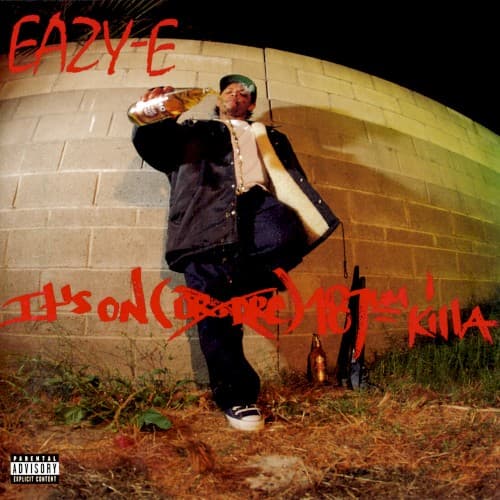
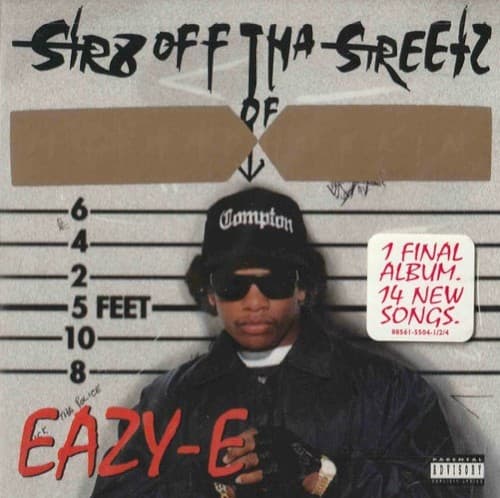
For what to hear next, move to the later solo work such as Str8 Off Tha Streetz of Muthaphukkin Compton to see where the persona went, or to It's On (Dr. Dre) 187um Killa for a more bitter, more focused take on the same character. The most accurate thing to say about this album is that Eazy-E sounds bigger on it than the words he was given.
Track by track
Track Listing
(Prelude)
SolidA spoken introduction that sets the comic, theatrical tone. It is brief and functional, and it works more as a sketch than as a song.
Still Talkin’
StandoutA solid early track that establishes Eazy's persona and the heavy Dre and Yella sound. It is confident and brisk, though the writing leans on boasts more than on ideas, and a later 12-inch remix extends its life.
Nobody Move
SolidA hard, menacing track that leans on the album's more aggressive side. The beat has weight, but the writing is more about attitude than detail, and the song does not stand out among the album's other tough-guy cuts.
2 Hard Mutha’s
SolidA short, abrasive track that keeps the energy up in the first half. It is serviceable and loud, but it adds little to the persona the record has already established, and it sits among the more forgettable songs.
Boyz‐N‐The Hood (remix)
StandoutA key track and the clearest link to the group's earlier work. Written by Ice Cube with some contribution from Eazy, it describes growing up in Compton with a mix of humor and menace. The remix gives it a bigger, fuller sound than the original, and Eazy's high, nasal voice sells the narrative with a swagger that is hard to imitate. It is one of the few songs on the record that has genuine scene-setting, and it is the reason the album matters as a document of the genre's early shape.
Eazy‐Duz‐It
StandoutThe title track and lead single, written by MC Ren. It opens with a girl singing a changed version of a children's TV theme before Eazy interrupts, which sets the comic tone in seconds, and Dr. Dre's bass line then drives the song. Eazy presents himself as a gleeful villain, and the chorus makes the comedy explicit. It is full of the sound effects of the genre, including gunshots, and it is the best single-song summary of the album's persona and its limits.
We Want Eazy
StandoutA key track and the album's busiest production, with layered samples that AllMusic noted compete with the rapping for attention. It charted on both the R&B and rap charts and has the energy of a crowd chant, which suits the star-building purpose of the album. The density is both its strength and its flaw, since Eazy's voice sometimes gets lost in the mix. It is still one of the most fun songs on the record and a clear example of the Dre and Yella style at full volume.
Eazy‐er Said Than Dunn
StandoutThe third single, built on another heavy stack of samples and beats. The production is the main attraction, and Eazy's rhymes work as a vehicle for the groove. It is a solid track and a good example of the album's party side, though it does not add much to what the title track and the previous single already established.
Radio
StandoutA key track with another dense, layered production. It is one of the songs that early reviewers pointed to as building the street buzz around the group, and it has a looser, funnier feel than the harder material. Eazy's voice is at its most playful, and the beat gives him room to be absurd. It is not a deep song, but it captures the spirit of the album more directly than most.
No More ?’s
StandoutA key track that frames Eazy's backstory as a mock interview with a female journalist, who asks about his childhood and his crimes. He answers in verse, describing himself as a thief and a gang member with no respect for rules. The format is the closest thing to a story on the album, and it adds a theatrical touch that makes the persona more vivid. It is similar in theme to the remixed Compton song, but more comic in tone.
I’mma Break It Down
SolidA mid-album cut that continues the boasting and street talk. It is competent, with a heavy beat and a confident performance, but it lacks the detail of the stronger songs and feels like filler within a short album.
Eazy, Chapter 8, Verse 10
SolidA closing track that ends the record on a loose, slightly absurd note. It is functional rather than memorable, but it fits the album's theatrical spirit and gives the project a suitably cartoonish finish.
Frequently Asked Questions
Is Eazy-Duz-It a good album?
Who wrote and produced Eazy-Duz-It?
How well did Eazy-Duz-It sell?
Is Eazy-Duz-It better than Straight Outta Compton?
Styles