Scorecard: 7.0/10 · Good
How we score- Writing(25%)
- 6.5
The lyrics lean on mood and atmosphere over concrete imagery, with most tracks sketching emotion in broad strokes rather than detail; 'Redbone' and 'Baby Boy' show the strongest ideas.
- Production(25%)
- 8.5
Göransson and Glover craft meticulous P-Funk homage with live-band warmth, layered synths and grooves that commit fully to the '70s reference without sounding cheap or digitized.
- Delivery(15%)
- 6.0
Glover sings in a high falsetto that strains on the album's most ambitious vocal lines; he sells the hooks but lacks the range to nail every melodic reach.
- Cohesion(15%)
- 7.5
The sequencing moves from aggressive opener to slow burn without much filler, though the back half sags under the weight of six-minute ballads that repeat similar ideas.
- Originality(10%)
- 5.5
The album abandons Glover's prior rap style completely but mines Funkadelic and Parliament so directly that it reads more as skilled tribute than new ground.
- Replay value(10%)
- 7.0
The production and hooks hold up, especially on 'Me and Your Mama' and 'Redbone,' but the overmanneredness of the period cosplay wears thin after the novelty fades.
Childish Gambino Awaken, My Love! — The Costume That Fits Too Well
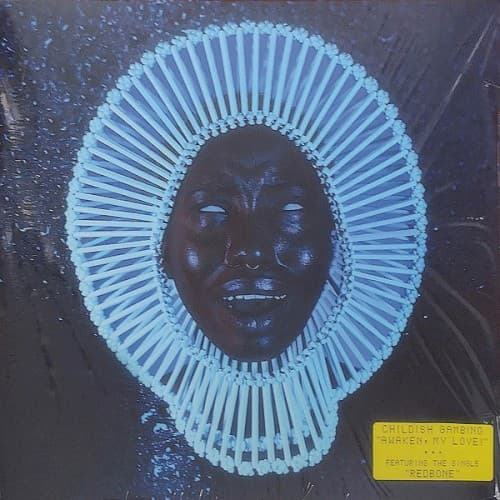
Donald Glover walked away from rapping at the exact moment he had earned the right to coast. His first two albums as Childish Gambino were uneven but showed a writer learning to thread punchlines with introspection, and by 2016 he had Atlanta on the air and enough industry credibility to do anything. He chose to make a P-Funk album with no raps, a bold pivot similar to Kanye West's 808s & Heartbreak abandoning rap for AutoTuned melody. Awaken, My Love! is psychedelic soul built from Funkadelic and Parliament samples and reference points, produced with Göransson in a style so committed to the '70s that it sounds like a period piece.
The thesis is right there in the first two songs: open with six minutes of guitar squall and screaming falsetto, then pull back to the groove, and you have declared that this is not a rap album and will not apologize. The gamble paid off commercially—the album went platinum, and Glover got Grammy nominations in major categories. The question is whether the album is more than a well-executed costume.
The answer depends on what you want from a departure. If the goal is to prove Glover can sing and arrange a live band through a specific sound, Awaken, My Love! succeeds without qualification. The production is meticulous, the grooves are thick, and the sequencing holds together from the aggression of the opening to the slow-burn finale.
But if the goal is to show what Glover has to say when he stops rapping and starts singing, the album is thinner than it should be. The lyrics sketch emotion in broad strokes—love, fear, protection, paranoia—without the specificity that made his rap writing interesting. The reference points are so direct that whole stretches feel like tribute rather than transformation. It is the most complete album Glover has made under this name, and also the one where his voice is least present.
The Sound of a Man Who Did His Homework
The production is the album's clearest success. Göransson and Glover built every track with live instrumentation—guitars, bass, drums, keyboards—and mixed them to sound like they were recorded on tape in 1974, with the same organic warmth that defines OutKast's Stankonia. The warmth is genuine, the grooves are patient, and the arrangement choices show a deep knowledge of the source material.
The opening track borrows the structure of a Funkadelic epic: nearly two minutes of quiet build, then an explosion into distorted guitar and Glover's falsetto scream, sustaining the intensity for four more minutes without a traditional verse or hook. The mix is deliberate and controlled; nothing feels hurried or digital.
The problem is that the sound is so faithful to its references that it rarely surprises. The two-minute runtime and raw scream aesthetic of one track could be a Maggot Brain deep cut. Short interludes sketch moods without developing them. These are not bad tracks, but they are filler in service of the album's aesthetic commitment.
The writing is where the imitation shows most clearly. Glover's lyrics lean on atmosphere and repetition rather than detail. Most verses describe feelings without specifying them. Tracks talk about fear and survival in general terms, or repeat the same sentiment in slightly different phrasing for most of their runtime.
The moments where Glover tries to match the melodic ambition of his influences expose the limitations of his voice. He does not have the range to nail every reach, and the strain is audible.
The album's one clear weakness is its length. At 49 minutes across eleven tracks, it is not bloated, but the back half lingers on slow tempos and long outros that could have been trimmed. Multiple ballads are all over four minutes, and all repeat similar ideas about love and protection. By the time the closer arrives with six minutes of gospel-inflected reassurance, the pace has ground to a crawl. The sequencing is strong through the first half, but the second half needed at least one uptempo track to break the mood.
When the Album Runs Out of Gas
The sequencing front-loads the album's energy. The opening is the most aggressive track Glover has ever released, and it sets up an expectation of confrontation that the rest of the album does not meet. The first stretch maintains momentum with grooves that move, and the early peak is the track where everything clicks into something that justifies the album's existence.
After that peak, the album slows down and does not recover. The middle section offers a pleasant interlude, but the following ballads blur together. An instrumental comedown arrives, and the closer aims for uplift but mostly extends the same chord progression without building to a real climax.
The pacing issue is not fatal, but it makes the album feel longer than it is. The first six tracks earn their place; the last five could have been edited to three. The back half is where the album's commitment to mood over structure becomes a liability. Glover is trying to create an immersive experience, but immersion requires variation, and the second half offers too little of it. The album works best when it is assertive and sags when it tries to sustain tenderness for too long.
A Successful Experiment That Never Quite Becomes His Own
Awaken, My Love! is the most technically accomplished album Glover has made as Childish Gambino, and it is also the one where his personality is most hidden. The production is excellent, the grooves are real, and the decision to abandon rapping entirely was bold and mostly successful. But the album is so committed to its '70s reference points that it never escapes their shadow.
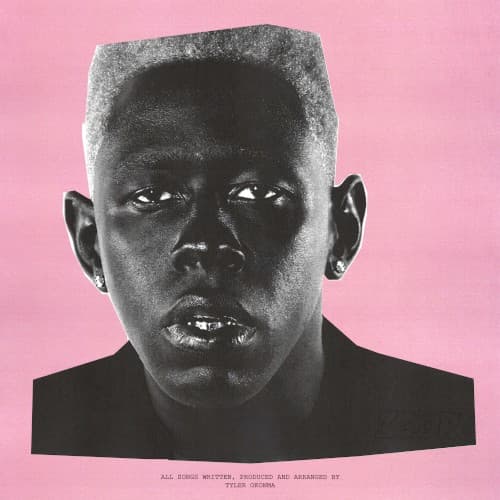
It is a tribute album disguised as a reinvention, and while the tribute is done with skill and obvious love, it is still a tribute—unlike genre pivots like Tyler, The Creator's IGOR which transformed influences into something genuinely new. The moments where Glover's voice—literal and figurative—breaks through are the ones that stick: the scream on the opener, the paranoia of the hit, the vulnerability of the late ballad when it is not repeating itself. The rest is well-made pastiche.
This is the album for listeners who want to hear Glover sing and who are willing to meet him in the middle of a Funkadelic homage. If you are looking for the writer who made Because the Internet or the actor who made Atlanta, you will find only traces of him here. The album has aged well in the sense that one track is now canonical and the production still sounds warm and intentional, but it has not grown beyond its initial impact.
Start with the opener for the aggression, Redbone for the hit, and the creeping groove track for atmosphere. If those three tracks work for you, the rest of the album will land; if they feel like cosplay, the back half will not change your mind. For next steps, try D'Angelo Voodoo for a similar fusion of '70s soul and modern production that goes deeper, or Funkadelic Maggot Brain to hear the source material that Glover is working from. Awaken, My Love! is a successful experiment, but it is not the album where Glover figured out what Childish Gambino sounds like when it is fully his own.
Track Listing
Me and Your Mama
▲The album's most aggressive moment and its best opener. Glover and Göransson build two minutes of quiet tension with layered guitars and muted vocals before the track explodes into distorted guitar squall and falsetto screaming. The structure borrows directly from Funkadelic epics like Maggot Brain, but the intensity is genuine. Glover's voice strains at the top of the scream, and the strain sells the desperation. The track sustains its volume for four more minutes without a traditional verse or hook, just repeated melodic phrases and guitar noise. It is the one moment on the album where the tribute sounds like transformation rather than imitation, because the aggression is specific to Glover's voice and the mix is thick enough to hold the chaos together. The transition to Have Some Love is the album's best sequencing choice.
Have Some Love
●A groovy cooldown after the opener's intensity. The production is built on a steady bassline and light synth stabs, with Glover's falsetto floating in the pocket rather than pushing against it. The melody is simple and repetitive, and the lyrics sketch a plea for connection without much detail. It works as a palate cleanser and as proof that Glover can sing in a lower register when he is not reaching for the high notes, but it does not develop beyond its initial idea. The track is short enough that the repetition does not wear, and the groove is warm enough to justify its place in the sequence.
Boogieman
▲The creepiest track on the album, built on a slippery bassline and droning synths that never resolve. Glover's vocal melody is sing-song and unsettling, and the lyrics describe paranoia and fear in general terms without specifying the threat. The production does the work here: the mix is murky, the drums are sparse, and the whole track feels like it is crawling forward rather than walking. The hook repeats the same phrase until it becomes hypnotic, and the track ends without release. It is one of the few moments where the album's commitment to mood creates something that feels genuinely strange rather than reverent.
Zombies
●A mid-tempo groove that talks about survival and fear without much specificity. The production is solid—clean guitar, steady drums, warm bass—but the song does not build or shift. Glover's melody is pleasant, and the falsetto is more controlled here than on the album's high-reaching moments, but the lyrics repeat the same idea about walking through danger without developing it. The track is fine as a mood piece, but it is the first sign that the album is going to prioritize atmosphere over structure. It does not overstay its welcome, but it does not earn repeated listens either.
Riot
●A two-minute burst of raw funk that samples Funkadelic's Good to Your Earhole directly. Glover screams over distorted guitar and pounding drums, and the whole track is designed to sound like it was recorded in one take in 1971. It works as an energy spike, but it is pure homage with no transformation. The brevity keeps it from becoming a problem, and the sequencing—placing it right before Redbone—sets up the album's peak by clearing the air with noise.
Redbone
▲The album's obvious peak and its only true hit. The production is built on a creeping guitar lick and a drum pattern that locks into a hypnotic loop, with just enough space for Glover's falsetto to float above it. The melody is patient and the hook—stay woke, they be creepin'—is direct and paranoid in a way that most of the album's lyrics are not. The track works because it is specific: the creeping groove matches the lyric about paranoia and vigilance, and the vocal performance is controlled enough to sell the mood without straining. The outro extends the groove for nearly two minutes, and the repetition earns itself. This is the track where the album's aesthetic commitment and Glover's voice as a writer align, and it is the one song that justifies the entire project.
California
●A two-minute interlude that sketches a laid-back West Coast vibe without developing it. The production is warm and the melody is pleasant, but the track is pure mood with no structure. It works as a transition between Redbone and Terrified, but it is filler in service of the album's sequencing rather than a song that stands on its own.
Terrified
●A mid-tempo ballad about fear and vulnerability that repeats similar ideas to Zombies without adding much. The production is clean and the vocal melody is pretty, but the song does not build or shift. Glover's falsetto is more controlled here than on the album's high-reaching moments, but the lyrics are vague and the hook does not land as hard as it should. The track is pleasant but forgettable, and it is the first sign that the back half is going to struggle with pacing.
Baby Boy
●A six-minute ballad addressed to a child, built on gentle guitar and warm keys. The production is lovely, and the sentiment—protection, reassurance, unconditional love—is clear. The problem is that the song repeats the same idea in slightly different phrasing for most of its runtime, and the six-minute length is not earned. Glover's vocal is tender and the melody is pretty, but the track does not develop beyond its first verse. It is the album's clearest example of mood prioritized over structure, and while the emotion is genuine, the execution is padded. A three-minute version would have been stronger.
The Night Me and Your Mama Met
▼An instrumental that extends the mood of Baby Boy without adding a new idea. The production is built on layered synths and a slow drum pattern, and the track drifts for three and a half minutes without a hook or a climax. It works as a comedown, but it is the second piece of filler in a row, and the sequencing suffers for it.
Stand Tall
●A six-minute closer that aims for gospel-inflected uplift but mostly repeats the same chord progression without building to a real climax. The production is warm, and the vocal melody is patient, but the song does not develop. Glover's falsetto is strained on the high notes, and the lyrics sketch reassurance without specificity. The track works as an ending in the sense that it is quiet and reflective, but it does not justify its length. The album needed a sharper conclusion.