Scorecard: 7.6/10 · Great
How we score- Writing(25%)
- 7.0
The introspection is genuine but often trades specificity for abstraction, repeating the same emotional territory without the vivid imagery that would make each track distinct
- Production(25%)
- 8.5
Brion and the roster of collaborators build a cohesive sound world that merges neo-soul warmth with subtle hip-hop textures, serving the mood without overwhelming the delivery
- Delivery(15%)
- 7.5
The singing and half-rapped melodies suit the material better than strict bars would, though the narrow emotional range limits how much the performance can do across thirteen tracks
- Cohesion(15%)
- 8.0
The pacing is deliberate and the sound is unified, but at fifty-eight minutes the album lingers too long in the same headspace without enough dynamic shift to justify the runtime
- Originality(10%)
- 7.0
The L.A. alternative soul aesthetic was already sketched on The Divine Feminine; Swimming deepens it but does not reinvent it
- Replay value(10%)
- 7.0
The production holds up and individual tracks reward repeat listens, but the sameness of tone across the full album makes it harder to return to as a complete statement
Mac Miller Swimming — When Self-Care Means Treading Water
Swimming argues that healing is not a narrative arc but a holding pattern. The thesis is in the title and in the way the album circles the same idea for fifty-eight minutes: staying afloat is enough, even when you are not moving forward. Mac Miller sings and raps through breakup aftermath and the work of self-maintenance, returning again and again to the same mood, the same tempo, the same patient admission that he is trying. The question is whether the album earns that repetition or mistakes stasis for depth.
The stakes are real. By 2018 Miller had spent a decade in public, and Swimming arrives in the middle of a tabloid breakup and the kind of scrutiny that turns private pain into content. The album refuses that pressure. It does not explain itself and it does not perform recovery as triumph.
Instead it presents thirteen tracks that sound like a man talking himself into tomorrow, one slow loop at a time. The production, led by Jon Brion with contributions from J. Cole, Dev Hynes, Flying Lotus, DJ Dahi and others, builds a world of muted guitars, spacey synths and neo-soul warmth that never rushes and never quite resolves. The writing is less successful. Miller commits fully to the emotional register but rarely gives the listener a specific image or turn of phrase to hold onto, and by the back half the album starts to feel like it is running in place.
The Sound of Trying Not to Sink
The production on Swimming is the album's clearest achievement. Brion appears on seven tracks and his influence is audible throughout: the arrangements are patient, the textures are warm without being soft, and the instrumentation leaves space for Miller's voice to float rather than fight for attention. The album draws from the same L.A. alternative soul palette that shaped The Divine Feminine, but where that record leaned on live instrumentation and romance, Swimming uses the same tools to map interior weather.
The guitars are muted and distant, the synth drone underneath them almost subsonic. Sparse neo-soul piano and occasional violin sighs never intrude. Brass lines and earworm riffs push toward something closer to a radio single without abandoning the album's overall mood. The sequencing keeps the energy low and the tempos steady, which serves the concept but also means the album has little dynamic range.
Miller produced several tracks himself and the roster of collaborators is deep: J. Cole and Dev Hynes, Pomo and Dâm-Funk, DJ Dahi, Flying Lotus, Tae Beast. The credits list reads like a vision board for tasteful 2018 rap-adjacent production, and the results justify it. The synth-funk actually moves, with Thundercat, Syd, Dâm-Funk and Snoop Dogg contributing uncredited vocals that thicken the groove.
Sluggish dancehall-inflected trip hop built on a Cutty Ranks sample works because the beat is strange enough to hold attention. The mix is clean and the production never overplays its hand, which is a strength until it becomes a limitation. By the time the album nears its end, the careful restraint starts to feel like a refusal to commit to an idea strong enough to break the trance.
The writing is where Swimming falters. Miller is fully present and the emotional honesty is not in question, but the lyrics lean on abstractions and vague declarations of struggle without the specific details that would make the songs feel distinct from one another. He addresses his temper, the pitfalls of fame, the breakup, the work of self-acceptance, but he does so in broad strokes that repeat across tracks without building or complicating the thesis. The verses function more as rhythmic delivery than as storytelling or wordplay, and while that choice suits the hazy production, it also means the album offers little for the listener to return to once the mood is established. The result is an album that communicates a feeling effectively but struggles to say anything new about it after the first twenty minutes.
A Patient Record That Stays Too Long
Swimming is front-loaded by design. The opening stretch establishes the sound and the stakes, and the album never really leaves that zone. The first track sets the tone with Brion's production and Miller's sung-rap admission that he is lost but still here. The closest thing to a gear shift arrives early, with funk grooves and a brighter palette that offers relief without breaking the album's spell.
After that peak the album sags. The middle section is competent but does not add much. The back half tries to close with weight: one track is texturally interesting, another is reflective in a way that mirrors the opener, and the closer ends the album on the same patient, unresolved note it began with. The sequencing is deliberate and the pacing is consistent, but consistency is not the same as necessity. At thirteen tracks and fifty-eight minutes, Swimming stays in the room longer than it needs to. The album would be stronger at forty-five minutes, and the lack of dynamic peaks or troughs makes it hard to argue that the length is earned.
Where It Lands and Who It's For
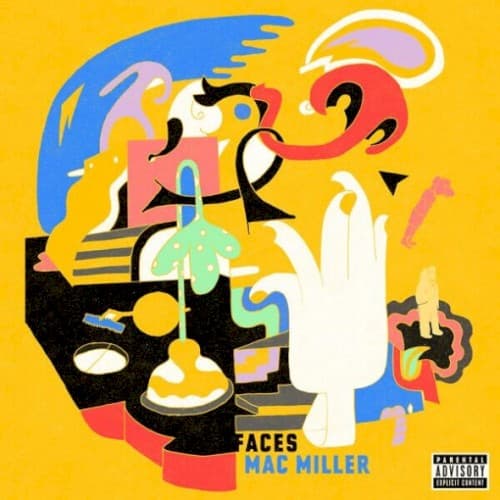
Swimming ranks below Faces in Mac Miller's catalog because it trades that mixtape's risk and range for a single sustained mood that it does not quite have the writing to justify across an hour. Faces was messy and long but it earned the chaos; Swimming is controlled and intentional but it mistakes patience for depth. The production is excellent and the emotional commitment is real, but the album does not build or resolve in a way that makes the full runtime necessary. It is Miller's most polished album and his most obviously Grammy-friendly, which is both a strength and a sign of what is missing.
This album is for listeners who value mood and texture over lyrical specificity, and for anyone interested in where Miller was headed as he moved further from rap and deeper into sung introspective hip-hop. It is not the place to start if you want to hear his writing at its sharpest or his ideas at their most ambitious. Skip it if you need an album to do more than circle the same feeling for an hour. The album has aged as a document of a moment and a headspace, and the fact that it was the last released in Miller's lifetime gives it a weight that the music itself does not entirely carry.
Start with Self Care, What's the Use? and Come Back to Earth to understand what the album does well. If those tracks connect, the full album will reward the time even if it does not justify all of it. If you want to hear Miller take bigger swings with the same introspective impulse, go back to Faces. If you want to hear the L.A. soul production approach in a tighter package, try The Divine Feminine. Swimming is a good album that never becomes a great one, and the reason is simple: it knows exactly what it wants to say but it does not find enough ways to say it.
Track Listing
Come Back to Earth
▲The opener sets the album's tone with Brion's spacious production and Miller's sung admission of dislocation. The guitars are clean, the synths are subdued, and the vocal melody carries the weight without pushing too hard. It establishes the emotional register and the sonic palette, and it does both efficiently. The writing is abstract but the delivery sells it, and the track works as a thesis statement even if it does not offer much to unpack on repeat listens.
Hurt Feelings
▲J. Cole and Dev Hynes build a track around an O'Donel Levy sample and a We've Only Just Begun interpolation that frames the breakup aftermath without naming names. The production is lush and the mood is melancholy but not defeated. Miller's writing here is more specific than elsewhere on the album, addressing the gap between how he feels and how he is perceived. The track earns its four minutes and serves as one of the album's stronger lyrical moments.
What’s the Use?
▲Pomo and Dâm-Funk deliver the album's most kinetic production, with synth-funk grooves and uncredited vocals from Thundercat, Syd, Dâm-Funk and Snoop Dogg that give the track a communal warmth. Miller's flow is lighter here, less weighed down by introspection, and the result is the album's most immediately enjoyable song. It provides necessary dynamic relief without abandoning the overall sound, and it holds up as well as anything on the album.
Perfecto
●Tee-WaTT and Brion keep the tempo low and the arrangement minimal. Miller sings more than raps, and the track functions as a mood piece rather than a statement. It is pleasant and unobtrusive, and it does not add much to the album's argument. Solid filler that fits the sequencing but would not be missed if it were cut.
Self Care
▲The album's emotional and sonic centerpiece, built around an Erykah Badu sample and co-produced by DJ Dahi, ID Labs, Nostxlgic and Nice Rec. The production is the richest on the album, with layers of texture that support Miller's most committed vocal performance. The writing is still more about mood than specificity, but the track earns its five minutes and forty-five seconds because the production and delivery are strong enough to carry it. Dev Hynes and JID contribute uncredited vocals that deepen the atmosphere. This is the track that justifies the album's approach, and it is the one that works best as a standalone piece.
Wings
●Alexander Spit's production is spacious and neo-soul inflected, with piano and occasional violin that punctuate without overwhelming. Miller addresses his temper and his tendencies toward self-sabotage, and the writing is more direct than on some of the surrounding tracks. The mood is patient and the performance is restrained, which suits the material. It is a solid album track that does its job without making a strong case for repeat listens outside the full album context.
Ladders
●Pomo, Brion and Nice Rec build the album's most obvious single, with brass lines and earworm riffs that push toward radio without fully committing to it. The production is bright and the energy is higher than most of the album, but the writing is thin and the track feels like it was built to service playlists rather than the album's thesis. It is competent and pleasant, and it is also the kind of track that exposes the limitations of the album's approach when applied to a more conventional structure.
Small Worlds
●Tae Beast and Lang deliver understated production that fits the album's sound but does not add much character. Miller's performance is fine and the mood is consistent with the rest of the record, but the track does not offer a hook or a lyrical moment that justifies its place in the sequencing. It is the kind of song that disappears on repeat listens, pleasant enough in the moment but not necessary.
Conversation, Pt. 1
▲Cardo, Yung Exclusive and Flying Lotus collaborate on a track that has more texture than most of the album's middle section, with a beat that moves in unexpected ways. Miller's delivery is more animated here, and the production provides some of the strangeness that the album otherwise avoids. It is a brief highlight that suggests a more adventurous version of the album that could have been.
Dunno
●Parson Brown, Mac Miller and Brion keep the energy low and the mood introspective. The track blends into the album's overall sound without offering much that is distinct, and the writing is vague even by Swimming's standards. It is not bad, but it is not necessary, and it contributes to the sense that the back half of the album is running in place.
Jet Fuel
▲DJ Dahi, Lacy and Mac Miller build sluggish dancehall-inflected trip hop around a Cutty Ranks sample, and the result is one of the album's stranger and more interesting tracks. The beat is off-kilter enough to hold attention, and Miller's performance adapts to the rhythm in a way that shows his versatility. The track is almost six minutes long and it earns most of that runtime, though it could have been tightened. A late-album highlight that breaks the album's trance without abandoning its mood.
2009
▲Eric G's production is built around a Chanté Moore sample, and the track is designed as a reflective closer that mirrors the album's opening. Miller looks back at the last decade and tries to take stock, and the writing is more specific here than on much of the album. The mood is patient and the performance is committed, and the track works as an emotional endpoint even if it does not resolve anything. It is one of the album's stronger moments, though at nearly six minutes it indulges the same tendency toward overlong runtime that weakens the album as a whole.
So It Goes
●Mac Miller and Brion close the album with muted guitars and a spacey synth drone that never resolves. The track is atmospheric and patient, and it ends the album on the same unresolved note it began with, which is thematically consistent but not particularly satisfying. The production is fine and the mood is established, but the track does not add much that the album has not already said. It functions as a coda that lingers too long.