
From Comedy Writer to Genre-Defying Force: The Childish Gambino Journey
When Donald Glover adopted the Childish Gambino moniker in the late 2000s, few predicted the trajectory that would follow. A writer for NBC's "30 Rock" and cast member on "Community," Glover faced immediate skepticism—the internet dismissed him as another celebrity dabbling in rap. His early mixtapes revealed someone wrestling with that perception, delivering technically proficient bars loaded with self-awareness and cultural references that signaled deeper ambitions than novelty tracks.
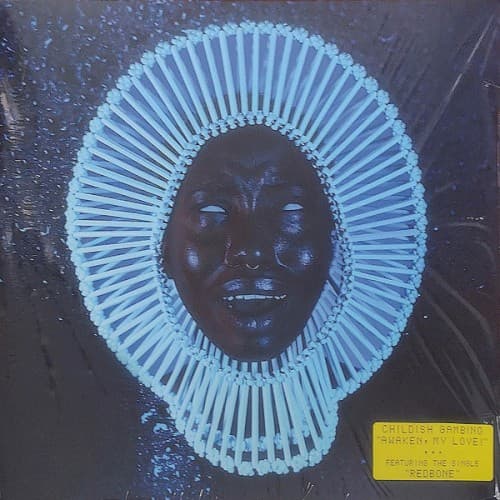
What distinguishes Gambino's career is the refusal to remain static. Beginning with straightforward rap releases heavily influenced by Kanye West's maximalist production and introspective lyricism, Glover systematically dismantled expectations with each subsequent project. By 2013's "Because the Internet," he'd constructed a conceptual narrative universe. By 2016's "Awaken, My Love!," he'd abandoned rap entirely for psychedelic funk. This restlessness—viewed by some as artistic ADHD, by others as fearless experimentation—defines his contribution to contemporary music.
Glover's significance extends beyond albums. "This Is America," his 2018 single and accompanying video, became a cultural flashpoint, dissecting gun violence and racial politics with unsettling imagery that dominated conversation for months. Whether rapping, singing, acting, or directing, Glover operates as a multimedia artist who uses the Childish Gambino identity to interrogate Black identity, internet culture, and American contradiction.
Sonic Restlessness: Childish Gambino's Ever-Shifting Musical Identity
Pinning down a signature Childish Gambino sound proves impossible by design. Early projects like "Culdesac" and "Camp" showcased nimble wordplay over polished hip-hop production—punch-in flows, pop culture references stacked like Jenga towers, and emotional vulnerability wrapped in punchlines. Critics heard echoes of Drake's confessional style and Lil Wayne's technical dexterity, filtered through the lens of someone equally fluent in "Community" episode arcs and Def Jam catalog deep cuts.
The Ludwig Göransson partnership fundamentally altered Gambino's sonic palette. Their collaboration birthed "Because the Internet," where glitchy electronics and atmospheric production created space for more fragmented, stream-of-consciousness delivery. Göransson's orchestral sensibilities added cinematic weight, transforming songs into soundscapes where Gambino's voice became another textural element rather than the sole focal point.
"Awaken, My Love!" represented Gambino's most radical departure—a full embrace of Parliament-Funkadelic-inspired psychedelic soul with minimal rapping. Glover's falsetto, previously a novelty, became the primary instrument across tracks drenched in analog warmth. The album confused hip-hop purists while earning R&B accolades, including Grammy nominations that acknowledged the artistic risk. Later work continued this unpredictability, incorporating funk grooves, Afrobeat rhythms, and experimental song structures that resist easy categorization.
The Evolution of Donald Glover's Alter Ego: Childish Gambino's Career Arc
Glover's rap career began as internet culture—self-released mixtapes like "Sick Boi" and "Poindexter" in 2008 established the name but not the credibility. "I Am Just a Rapper" and "I Am Just a Rapper 2" showcased improving technical skill, yet the comedian-turned-rapper label stuck like gum on a shoe. The breakthrough arrived with 2010's "Culdesac," a free release that demonstrated legitimate artistic vision. Songs like "Got This Money" revealed someone grappling with identity, success, and the dissonance of being too Black for white audiences, too suburban for hip-hop gatekeepers.
"Camp," his 2011 major label debut on Glassnote, crystallized this tension. The album divided critics—some heard overwrought angst and corny punchlines, others recognized raw honesty about not fitting prescribed boxes. Commercial success came regardless, debuting in the Billboard Top 15 and establishing a fanbase willing to follow wherever Gambino led. "Royalty," a 2012 mixtape featuring guest verses from Ghostface Killah, Schoolboy Q, and others, proved he could hold his own beside established names.
"Because the Internet" marked full creative control. Released in 2013 with an accompanying screenplay and a custom-built internet experience, the album examined digital-age disconnection and identity fragmentation. Production became more adventurous, Glover's delivery more conversational, the narratives more abstract. "3005" became an unlikely hit—a melancholic love song that crossed over without compromising the album's conceptual ambitions. The project announced Gambino as someone interested in albums as complete artistic statements, not just rap collections.
The three-year gap before "Awaken, My Love!" felt seismic when the album arrived in December 2016. No rapping. No punchlines. Just Glover channeling Bootsy Collins and Sly Stone through a modern lens, with Göransson's production providing period-appropriate analog textures. "Redbone" became a sleeper hit, its falsetto plea and funk bassline earning triple platinum certification and a Grammy for Best Traditional R&B Performance. The album's reception split along predictable lines—R&B publications praised the artistic evolution, hip-hop heads lamented the genre abandonment.
Glover's subsequent output became increasingly sparse and strategic. "This Is America" arrived in May 2018 as both song and cultural event, its video racking up 100 million YouTube views within a week. The track's trap production clashing with gospel vocals and African rhythms, combined with choreographed chaos depicting American violence, made it impossible to ignore. Four Grammys followed, including Record and Song of the Year—validation for Glover's multimedia approach.
The final Childish Gambino album, "3.15.20," emerged in March 2020 during pandemic lockdown, initially streaming with numbered tracks before receiving a proper release. The project leaned further into experimental territory—songs bleeding into each other, genre shifts mid-track, guest vocals from Ariana Grande and 21 Savage integrated into soundscapes rather than traditional features. Reception remained mixed, yet the album completed Gambino's arc from punchline rapper to genuine iconoclast willing to alienate audiences in pursuit of artistic vision.
Childish Gambino's Lasting Impact: Multiplatform Artistry and Hip-Hop's Expanding Boundaries
Glover's influence manifests less in direct stylistic descendants and more in the permission structure he created. By succeeding across music, television, film, and stand-up, he demolished the compartmentalization that traditionally confined Black entertainers. When Tyler, the Creator pivoted toward crooning on "Igor," or when Kid Cudi explored alternative rock textures, they walked paths Gambino helped legitimize—the idea that hip-hop artists need not remain bounded by genre or medium.
The Childish Gambino catalog demonstrates how internet-era artists can build careers outside traditional industry gatekeepers. His early mixtapes found audiences through blogs and message boards before labels offered contracts. "Because the Internet" integrated social media and web experiences into the album's narrative fabric, presaging how artists like Kanye West and Travis Scott would use digital platforms as extensions of their creative worlds. This multimedia approach—treating music releases as components of larger artistic statements—now feels standard rather than experimental.
"This Is America" represents his most significant cultural contribution beyond music. The track forced conversations about complicity, distraction, and violence that extended far beyond hip-hop discourse. Its success proved that confrontational political art could achieve mainstream penetration without dilution, influencing how artists like Kendrick Lamar and J. Cole approached their own social commentary. Gambino's willingness to abandon the project entirely at his commercial peak—announcing retirement while still culturally relevant—challenges the more-is-more mentality dominating streaming-era release strategies. The legacy remains unfinished precisely because Glover refuses to let it calcify into something predictable.