The scorecard
6.6/10 · Good
- Writing25%
- 5.5
- Production25%
- 7.5
- Delivery15%
- 7.0
- Cohesion15%
- 6.5
- Originality10%
- 6.5
- Replay value10%
- 6.5
The subject is trust and betrayal, but verses stay with broad statements and repeated hook phrases, as on Time Heals All and Bus Stop.
Kaytranada on Honeymoon and the Boi-1da and S.O.S. Band interpolation on Do It Right show real taste, and the mix stays soft and consistent across many producers.
Toliver's elastic voice moves between croon and rap pocket convincingly, and guests such as Lil Durk and GloRilla on Leave The Club change the energy.
Fifty-three minutes of mid-tempo R&B blur together between the fifth and eleventh tracks, and a deluxe edition arriving days later shows the playlist-first design.
The move toward soul and slow-jam R&B is a clear step from his earlier trap-leaning work, but it is a smooth refinement of an existing crossover blend.
Do It Right, Honeymoon and Leave The Club should hold up, while the middle of the tracklist is likely to be skipped on repeat; this is a projection for a recent release.
Don Toliver Love Sick: A Smooth Playlist in Search of an Album
Love Sick has a guest list that reads like a festival lineup and a lead artist who sometimes sounds like one more name on it. James Blake, Lil Durk, GloRilla, Kali Uchis, Justin Bieber, Future, Wizkid, Charlie Wilson, Brent Faiyaz and Toro y Moi all appear across sixteen songs, and the production sheet is just as crowded. That is the central problem and the central interest of this record: Don Toliver set out to make what he called futuristic R&B and soul, and in doing so he handed so much of the steering wheel to collaborators that his own identity gets blurry. The thesis here is that Love Sick is a stylish playlist with a few excellent songs and no governing idea, and that its real achievement is proving how adaptable his voice is rather than how much he has to say.
The case for the album is easy to make. He is a naturally melodic singer who can bend a phrase into rap rhythm without sounding stiff, and the fact sheet quotes Clash praising how his flows blur the lines between rap and R&B. When the beat is built around a clear groove, or when a guest forces a change of pace, he sounds loose and warm. The sampled and interpolated material also gives the project a through-line of old-school soul and early-2000s R&B, which is a smart way to anchor a record about romance.
The case against is just as concrete. Rolling Stone described the album as superficial, and while that critic framed it as a feature, I think it is a limit: a record that promises to dig into trust, betrayal and letting go needs songs that actually do the digging. Too many tracks stay at the level of attractive mood. The streaming-era logic is visible in the structure, with five singles, collaborations designed for different audiences and a deluxe edition arriving days later. It is a well-engineered product that rarely feels like a single statement. That makes it pleasant, replayable and forgettable in equal measure, and the rest of this review explains where it works and where it does not.
Soft Pianos, Borrowed Melodies and Verses Without Detail
The album is carried by its arrangements and the consistency of its mix. Production comes from an unusually wide group, including James Blake, Cardo, Wheezy, Hit-Boy, Kaytranada, Boi-1da, DJ Dahi and Ronny J, along with TisaKorean on his own feature. The surprising thing is how well Derek Anderson and Jaycen Joshua keep the sound together. Pianos are hushed, bass is soft rather than punishing, and the vocal treatments keep Toliver in the same silky register from the first song to the last. That polish is both a strength and a weakness: nothing sounds wrong, and little sounds risky.
The sample and interpolation choices are the most interesting decisions on the record. Beenie Man, Lisa Stansfield, the S.O.S. Band, Jai Paul and Blackstreet are all referenced, so the album keeps tipping its hat to dancehall, pop, funk and slow-jam R&B in a way that suggests a record collector more than a trap regular. Used well, as on Do It Right, a borrowed melody gives Toliver something to lean on and lifts a song above generic mood. Used less well, the reference feels like a shortcut to emotion that the verses never earn.
Delivery is the album's most consistent asset. Toliver has an elastic voice that stretches from a high, almost falsetto croon to a flat conversational rap, and he understands how to place a hook so that it lingers. The guests are handled with intelligence: Lil Durk and GloRilla bring a harder edge to a song that would otherwise coast, and Kali Uchis, Wizkid and Charlie Wilson each pull the sound toward a different corner of R&B and Afrobeats. Bieber and Future sit on the pop-and-trap end of the spectrum, which makes their placement feel designed for radio. The casting is more thoughtful than the writing around it.
The writing is where the album is thin. The subject is love, but the material rarely moves beyond familiar poses: devotion, jealousy, regret, and the occasional flex. Detail is scarce, and when a verse tries for vulnerability it often settles for a general statement rather than a particular image. Wordplay is minimal, and several hooks rely on repeating a simple phrase until it becomes a texture. That is a legitimate pop technique, but it caps how much a listener can take from the project beyond the sound.
Originality is moderate. Against his own earlier work, the shift toward soul and slow-jam R&B is a clear evolution. Against contemporaries who already blend rapping and singing, it is a smooth refinement rather than a breakthrough. The record succeeds as an exercise in taste and fails to become an argument.
A Strong Front Half and a Middle That Melts Away
As a sequence, Love Sick works best in its first third and its closing run, and drifts in the middle. The opening is brisk, with a short intro piece followed by a collaboration that sets the romantic tone, and the singles are spread across the front half in a way that suits a playlist-first strategy. The pacing there is smart: tempos change, guest voices arrive every song or two, and nothing wears out its welcome.
The middle is the sag. Between the fifth and eleventh songs the album settles into a long run of mid-tempo, softly lit R&B where the beats, the vocal tone and the subject matter all converge. Individual tracks are not bad, but they are hard to tell apart, and a listener moving through the project in order can lose track of where they are. The pacing problem is compounded by length. At roughly fifty-three minutes, the record has the runtime of a classic album but the variety of an EP, and at least three songs could be cut without damaging the narrative, because there is not much of a narrative to damage.
The closing stretch recovers some ground. The final run brings in Brent Faiyaz, Toro y Moi and a last solo song, which restores variety and gives the end a more reflective mood. It does not quite land as a finale, since the album never built a clear arc to resolve, but it is a graceful way to leave. Cinderella stands out as the closing section's most interesting piece of sound design, while Honeymoon is the clearest moment where a producer shakes the album out of its comfort zone.
The deluxe edition adds more guests and extra songs a few days later, which tells you how the project was planned: as a living playlist that can keep growing instead of a fixed document. That strategy suits how people consume music now, but it works against the idea of Love Sick as a finished body of work. Listen to it in chunks, front to back at most once, and treat the middle as optional.
Fluent in R&B, Still Waiting on the Words
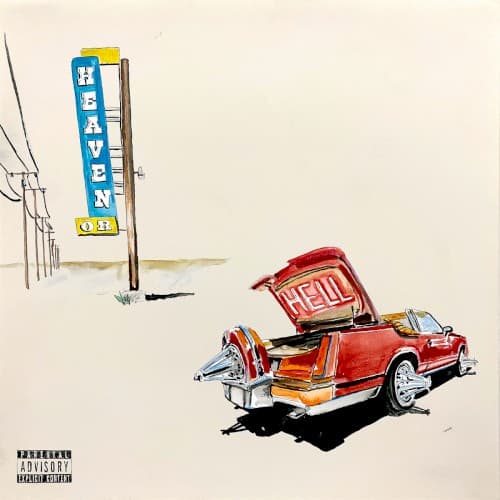
Love Sick sits below Heaven or Hell, the 7.2 that currently anchors Don Toliver's page on this site. The earlier record had a harder sense of identity and hooks that felt more like his own. This one is smoother, more polished and more varied in its guests, but it is also less distinctive, and the stronger R&B ambitions are not supported by writing that goes deeper than the surface. Critics reflected that split: Metacritic shows generally favorable reviews at 68 out of 100 from five scores, and the Rolling Stone and HipHopDX takes both note the lack of standout songs relative to peers.
It is for listeners who want a late-night R&B-rap blend with a lot of well-chosen voices and who care more about vibe than lyrical detail. If you like the sound of Kali Uchis, Brent Faiyaz or Charlie Wilson placed beside trap-adjacent drums, Love Sick is a reasonably coherent way to hear that crossover. People who want sharp writing, a clear album arc or a stronger sense of Toliver as a personality should skip it or sample a handful of songs instead of committing to the full runtime.
The album has aged reasonably well because its sound is soft and rooted in older styles, which tends to travel better than trend-heavy production. Its weaker half, though, is likely to keep fading as the singles continue to stand in for the whole project. This is a record that gets remembered through a few tracks and not as a unit.
Start with Do It Right, the single that best balances an old-school interpolation with a modern pocket, then Honeymoon for the most distinct production on the album, and Leave The Club for the strongest guest chemistry. For a next step, try Heaven or Hell if you want the more focused, hookier version of his formula, or Hardstone Psycho if you want him over a rougher, more guitar-leaning set of beats. Love Sick is best understood as the record where his voice became fully fluent in R&B before his writing caught up.
Track by track
Track Listing
LoveSickness
SolidA short opening piece that sets the soft, romantic palette and little else. It is credited to four producers, which is a lot for under two minutes, and it works as atmosphere rather than a song. Nice, but it is mostly a doorway into what follows.
Let Her Go
StandoutJames Blake co-produces and sings, and his presence pulls the track toward a quieter, more spacious sound than most of the album. Toliver adapts well, keeping his delivery restrained, and the result is one of the more emotionally credible moments. The writing is general, but the arrangement carries the mood convincingly.
Leave The Club
StandoutLil Durk and GloRilla join for the album's most outwardly commercial collaboration, and the casting works because both bring a harder energy than Toliver's. The hook is easy, the beat is bouncy, and the contrast between voices keeps the song moving. It reads as a single, but a good one, and the chemistry among the three is better than the lyrics. A clear early highlight.
4 Me
StandoutKali Uchis duets over a track built on a Beenie Man sample, and the pairing is warm and unforced. The melody is light, the production leaves room for both voices, and the song is short enough that it never overstays. The romance is generic, but the groove and the vocal blend make it easy to like.
Go Down
SolidTisaKorean features and also produces, and the song borrows from his own track Backseat. The result is a looser, more playful cut with a slightly rougher texture than its neighbors. It is fine, though the sample reference matters more than the song itself.
Time Heals All
SolidA slower, more reflective piece, and one of the album's attempts to move past flirtation into hurt. The production is soft and layered, and Toliver sings with some genuine ache, but the lyrics remain broad, so the song feels more like a mood than an idea. Pleasant, a little long, and it begins the middle stretch's sameness.
Leather Coat
SolidBuilt around an interpolation of the Lisa Stansfield song All Around the World, this is a four-minute slow burner with a pop-soul feel. The melody is attractive, but the song idles in one place and does not develop. A track that is easier to admire than to replay.
Honeymoon
StandoutKaytranada's production gives this the most distinctive rhythm on the record, with a springy, danceable pocket that stands apart from the surrounding ballads. Toliver responds by sounding lighter and more playful, which is a welcome change. It is short, focused and one of the best examples of what the album could be with a clearer sonic risk. A highlight.
Private Landing
SolidJustin Bieber and Future join for a radio-oriented single that was clearly designed to reach beyond the core audience. The three voices fit smoothly, and the hook is catchy, but the track is more polished than personal. It is effective pop-rap, and it is also one of the clearest signs of how corporate the album's casting can feel.
Slow Motion
SolidWizkid adds an Afrobeats lilt to a track co-produced by James Blake and Sevn Thomas. The rhythm is gentle and the blend of voices is attractive, but the song is slight. It offers a change of pace without a distinct hook, so it works better as a transition than a destination.
Do It Right
StandoutThe lead single interpolates the S.O.S. Band song Take Your Time (Do It Right), and the choice pays off: the old melody gives Toliver a ready-made emotional hook that he sings with obvious comfort. Boi-1da and Sweet keep the production clean and unhurried, and the song is concise. It is the album's best argument for its R&B ambitions, and the one most likely to last.
If I Had
SolidCharlie Wilson adds veteran soul to a song built on a Jai Paul sample, and DJ Dahi's production leaves a lot of air around the voices. The mood is tender and the performance is good, but the song does not build toward anything. Attractive, and a bit sleepy.
Company Pt. 3
SolidA mid-tempo cut with a slick, unobtrusive beat. The beat is slick and Toliver is comfortable, but the song offers few new ideas. Solid filler that does not hurt or help the sequence much.
Bus Stop
SolidBrent Faiyaz joins for a track that samples Blackstreet, and the two singers share a smooth, melancholy tone. The vocal interplay is a strength, since both men favor the same slightly wounded phrasing, but the track again lingers close to four minutes without a real turn. A good guest feature on a song that could be shorter.
Cinderella
StandoutToro y Moi appears on a Ronny J production that has a hazier, more psychedelic color than the rest of the album. It is one of the few tracks that sounds like it came from a slightly different world, and it benefits from that. The melody is dreamy and the arrangement is the most adventurous late in the sequence. A strong late addition.
Encouragement
SolidThe closer is a short, subdued solo song produced by DJ Dahi, and it ends the album on a reflective note rather than a big one. The sentiment is sincere but general, and the production is gentle. A graceful exit, even if it does not resolve anything.
Frequently Asked Questions
Is Don Toliver's Love Sick good?
What are the best songs on Love Sick?
Who is featured on Love Sick?
Styles