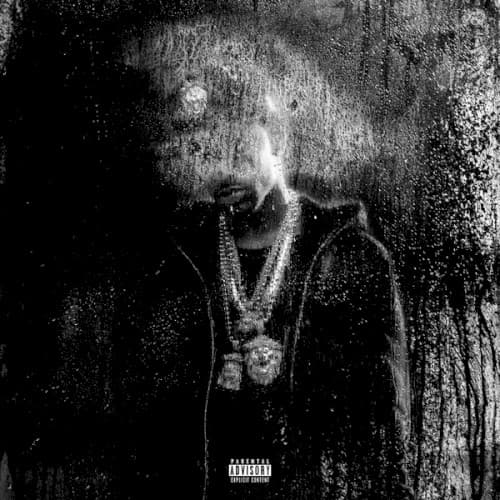
The scorecard
6.7/10 · Good
- Writing25%
- 6.5
- Production25%
- 7.5
- Delivery15%
- 6.5
- Cohesion15%
- 6.5
- Originality10%
- 5.5
- Replay value10%
- 6.5
The grief writing on the grandmother tribute is the first plainspoken, unforced material of his career, but the punchline-and-brag verses elsewhere stay clumsy and interchangeable.
Mustard and Key Wane's sparse bounce, the dark Mike Will Made It beat and the T-Minus and Boi-1da cut leave real space around the voice, though the credit list of a dozen hands shows in the seams.
Sean's quick, nasal flow rides the E-40 single and the Jhene Aiko duet with confidence, but he is overshadowed by guests on the heavier songs and rarely changes gears.
The moody first half and the reflective closing stretch cohere, but the radio-minded middle (Chris Brown and Ty Dolla Sign, Lil Wayne) deflates the momentum.
It is a clear step beyond his own earlier pun-heavy records, yet the mood-over-punchline template is borrowed from his GOOD Music and Drake peers.
A handful of singles and the closing stretch hold up well and the lead single's long chart afterlife suggests staying power, but roughly a third of the tracklist is skippable.
Big Sean Dark Sky Paradise: The Album Where Mood Finally Beat the Punchline
Dark Sky Paradise is the record where Big Sean stopped trying to win every bar and started sounding like a person with something at stake. That trade is the whole case for the album, and it is also the limit of it. The best material here puts mood first and punchline second, and the record works exactly as far as that bargain holds. When it slips, Sean falls back on the pun-and-brag routine that made his earlier work easy to like and hard to remember.
The context that matters is lineage. Sean came up inside the GOOD Music orbit of Kanye West, and this third album is the first one where he sounds as if he has absorbed what that orbit was supposed to teach: a rap record can be a mood board of private doubt arranged around a handful of hits. West's fingerprints are literal, with a guest spot, a producer credit on the biggest single and a share of the album's darker instincts. The shadow of Drake, who turns up on one of the singles, hangs over much of the running time too, since his melancholy-with-swagger template is the sound half of this album is chasing. Sean is a Detroit rapper working in a sound codified elsewhere, and the useful question is whether he adds anything of his own.
He does, modestly. His voice, quick and nasal and slightly too eager, suits the confessional passages better than his earlier albums suggested it would, and the tribute to his grandmother near the end is the first moment in his catalog where the writing stops performing. Yet the record asks for more patience than its length justifies, and the machinery around it, five singles and a rotating cast of famous guests, keeps dragging it back toward radio. This is a good album that wants to be a great one, and the gap between those two states is where it lives.
Sparse Beats, Heavy Mood, and Punchlines on a Short Leash
The production is the album's strongest argument, and it is also why the record never settles into a single identity. The credits read like a festival lineup: RobGotBeats on the opener, Mike Will Made It on Paradise, T-Minus with Boi-1da on Win Some, Lose Some, and DJ Mustard and Key Wane sharing a run of tracks near the end. The lead single stacks Mustard, West, DJ Dahi, Mike Free and Key Wane on a flip of a D. J. Rogers soul record, and the result is startlingly bare: a handful of drum hits, a thin loop and a lot of air. That preference for space is the real change from Sean's earlier pop-rap polish, and critics at the time heard the shift toward stormier, moodier sounds immediately.
The space works because it flatters his voice. Sean is not a rapper who sustains an argument across sixteen bars; he is a rhythm player, who clips syllables, stacks short rhymes and lets the pocket do the work. Over sparse drums that approach sounds like swagger. Over a crowded arrangement it sounds like noise. His best performances here are the ones where the beat leaves him room to breathe and the hook does the heavy lifting, which is why the Jhene Aiko duet and the Drake collaboration land harder than the songs that ask him to carry the weight alone.
As a writer he is better than the first two albums, and still not very good. The confessional songs are plainspoken and moving precisely because they stop reaching for a punchline, and a few of the single-line wordplay moments are genuinely sharp. But the pop-culture puns and brand-name brags that fill the rest of the tracklist are interchangeable. One verse can be swapped for another without anyone noticing, which is the opposite of what a distinctive voice should do. Complex called him occasionally clumsy, and the kindest reading is that the clumsiness is the price of the honesty.
The concrete weakness is the guest list. Lil Wayne and Chris Brown add name recognition without adding anything the song needed, and on those cuts Sean sounds like a host at his own party rather than the author of his own record. A tighter album would have cut two of those features and let the personal material set the tone. As it stands, the sound is consistent enough to be recognizable but too eclectic to be a signature, and the dozen-plus producer credits explain why the record reads as a strong compilation of moods more than a single point of view.
A Dark Opening, a Soft Middle, and a Closing Stretch That Earns It
The sequencing is the most revealing thing about the album, because it shows exactly where Sean's ambition and the label's priorities pull in different directions. The first third is the strongest stretch: it opens with a brooding, atmospheric statement of purpose, then moves through a run of collaborations that are well matched to the voice and the beats. The pacing is confident, the tempos vary without jarring, and the mood rises and falls in a way that feels planned rather than shuffled.
The middle is where it sags. A cluster of radio-aimed collaborations arrives one after another, each with a famous guest and a hook built for playlists, and the momentum that the opening built is spent on songs that could appear on any major-label rap album of the year. None of them is bad exactly, but they blur together, and that makes the sag feel longer than it is. At 12 standard tracks and around 50 minutes of music, the album is lean on paper, yet the middle makes it feel like an hour.
Then the sequence recovers. The closing stretch is the reason to sit through the middle: a personal song about loss, dignified by restraint, followed by an outro that quotes hip-hop's past without pandering to it. The album ends on its strongest idea, which is that grief and ambition can sit in the same room. A tighter middle would have turned this from a good album with a great ending into a good album with a great arc. The deluxe edition adds three more tracks that mostly extend the same ideas, and the standard edition is the better listen because it ends where the story ends.
The length is almost earned. Cut the weakest two or three songs and the running order becomes a model of how a major-label rap album can be both a hit machine and a personal record. Left as it is, the album proves the point and then undercuts it.
Big Sean's Best Album, and a Door Left Open
On this site it is the first Big Sean record to be rated, so the ranking is a matter of reading rather than a chart. The fact sheet shows critics at the time, from the New York Times to Rolling Stone, calling it his third and best, and that is also the right call here: it is more focused, more human and better built than the two albums before it. It still sits in the middle of the genre rather than near the top, and the scores reflect that. The writing is a clear step up from his punchline-heavy early work, the production is the strongest part of the package, and the cohesion holds only as far as the guest list lets it.
It is for listeners who like melodic, mood-driven rap with radio-sized hooks and who want to hear how the GOOD Music generation absorbed the lessons of Kanye West and Drake. It is also for anyone who thought Sean was only a punchline rapper and wants evidence otherwise. Skip it if you want dense lyricism, intricate storytelling or an album where every verse justifies its place; the writing never gets there. The tracks to start with are Blessings, I Know and One Man Can Change the World, in that order, because together they cover the album's hit side, its melodic side and its emotional core.
It has aged reasonably well. The lead single has since been certified diamond, and the album itself was certified double platinum in 2020, which suggests the singles outlasted their moment. The deep cuts have not aged as well, and the album's reputation rests on a smaller share of its tracklist than the tracklist's length implies.
For the next step, hear Hall of Fame to measure how far Sean moved between albums, and then go back to the source: Kanye West's My Beautiful Dark Twisted Fantasy is the record that taught this whole school how to make doubt sound expensive. Sean's version is smaller and softer, and for one closing song about his grandmother it is enough.
Track by track
Track Listing
Dark Sky (Skyscrapers)
StandoutA short, atmospheric opener from RobGotBeats that sets the brooding tone before the guests arrive. It is a statement of intent rather than a song, and at under three minutes it never overstays.
Blessings
StandoutThe third single, with Drake, and the album's clearest example of mood-first rap with a pop hook. Vinylz and Ritter build a spacious, gospel-tinged bed that leaves room for Sean's thankful, slightly anxious verses, and Drake slots in as the smoother counterweight. It peaked at number 28 on the Hot 100, the second-highest of the singles, and it is the song that best explains why the album works. The only complaint is that the hook is so polished it nearly smooths away the tension the verses were building.
All Your Fault
SolidKanye West guests over a sample of an Ambrosia soft-rock record, and the mix of smooth keys and a restrained verse gives it a pleasant glow. Sean's performance is serviceable rather than special, and the song feels like a bridge between the moody opening and the singles.
I Don’t Fuck With You
StandoutThe lead single and the one that put the album on the radio, reaching number 11 on the Hot 100 and later earning a diamond certification. A stack of producers led by DJ Mustard builds a stripped-down loop from a D. J. Rogers soul record, and E-40 contributes a veteran Bay Area verse that gives the song its regional spine. Sean's flow is a perfect fit for the sparse drums: clipped, conversational and dismissive in tone. It is catchy in a way that shows how little a great single needs, and it remains the best argument that Sean could ride a minimalist beat better than most of his peers. The lyrics are repetitive, and that repetition is the point.
Play No Games
SolidA radio-friendly collaboration with Chris Brown and Ty Dolla Sign built on a sample of an old Guy record. The hook is smooth, the groove is easy and the singles run gave it a number 84 chart peak. It is competent, forgettable and the clearest sign of where the album's middle starts to sag.
Paradise
StandoutA dark, ominous Mike Will Made It beat gives Sean a heavier canvas than most of the album, and he responds by tightening his flow and leaning into a more anxious tone. It was the second single but only reached number 99, and it deserved better: the track captures the moody center of the album more fully than the louder hits. The hook is understated, and the beat's low-end pressure does the work that a bigger chorus would normally do. It is shorter than it feels, which is a compliment.
Win Some, Lose Some
StandoutT-Minus and Boi-1da supply a patient, sombre bed for the album's most reflective rap song, and at five minutes it is also one of the longest. Sean uses the space to weigh success against what it costs, and the verses are more specific and less performative than his usual material. It is the song that best proves he can hold a theme across a full track. A tighter second verse would have made it one of the best cuts, but even with a little slack it is a high point.
Stay Down
WeakA mid-tempo track from Da Internz and L&F that never builds enough to justify its length. It sits in the middle of the album doing nothing wrong and nothing memorable, which is the textbook definition of filler.
I Know
StandoutJhene Aiko's airy hook on a Mustard and Key Wane production gives Sean a romantic, late-night pocket that suits his rhythm-first style. At more than five minutes it is the album's longest song, and the extended length lets the groove settle rather than rush. The verses are sweeter and more vulnerable than the usual brag material, and Aiko's contribution is the type of guest performance that actually changes a song. It is the best of the album's love-and-regret songs, and the blueprint for what a Sean ballad could be.
Deep
WeakLil Wayne guests on a Mustard and Key Wane beat, and the combination should work better than it does. Wayne's verse is loose and casual, Sean's is competent, and the song never finds a reason to exist beyond the pairing. It is the weakest of the collaborations and a clear candidate for the cut.
One Man Can Change the World
StandoutThe emotional center of the album and the fourth single, with Kanye West and John Legend. It deals with the loss of Sean's grandmother and his acceptance of her death, a point XXL singled out as the key to understanding the whole record. The production is built around an interpolation of an earlier Kanye and Rick Ross song, though it plays nothing like it: the beat is stately and restrained, and Legend's chorus gives the song a hymn-like quality. Sean's verses are plainspoken and unforced, and he is at his most convincing when he stops trying to be clever. It peaked at number 82 on the Hot 100, which says more about the radio than about the song.
Outro
StandoutDJ Dahi builds a closing piece from a Darondo soul sample and an interpolation of a Tribe Called Quest record, tipping a hat to hip-hop's past without leaning on nostalgia. It is a graceful sign-off that sends the album out on a reflective note rather than another hit.
Frequently Asked Questions
Is Dark Sky Paradise Big Sean's best album?
What are the best songs on Dark Sky Paradise?
How well did Dark Sky Paradise sell?
Styles