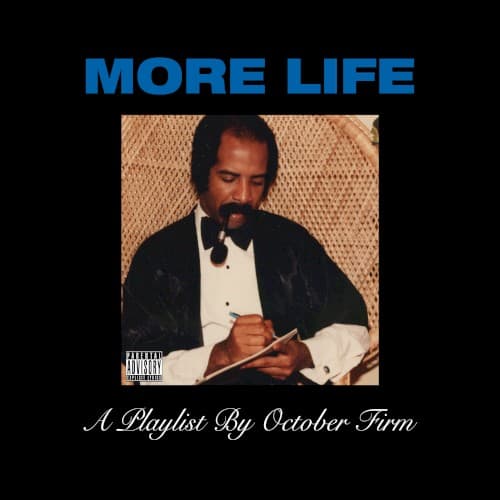
Drake More Life — When Toronto Went Global and Got Lost
You cannot understand this project without standing in the middle of the airport anxiety Drake lived in during 2016 and early 2017. The label wanted an album, the fans wanted vindication after the Meek Mill beef, and the culture wanted him to respond to the new wave drowning radio. Instead he dropped a playlist — not an album, a playlist — and filled it with sounds from London, Lagos, the Caribbean, Toronto basement parties, and the same introspective headspace that had made him the biggest rapper alive.
More Life arrived as Drake's attempt to curate the global sound he had been absorbing through OVO Sound Radio sessions and late-night studio experiments with producers who were not from his usual circle. The project featured twenty-two tracks, no clear narrative arc, and collaborations that felt more like cultural passport stamps than organic creative partnerships. Some of it worked brilliantly. Some of it felt like a billionaire trying on accents.
Was this the sound of an artist expanding his palette or a streaming-era strategy to flood playlists and chase engagement metrics?
More Life raised that question and never bothered to answer it. The word "playlist" was doing heavy lifting here — it gave Drake permission to skip the album structure entirely and just vibe for seventy-five minutes. No concept, no through-line, just moods, features, and global influences stitched together by the thinnest curatorial thread.
It was the sound of someone who had won so completely that he could afford to experiment without consequences. The risk was that some of these experiments might reveal how far he had drifted from the hunger that built his empire.
The Globe-Trotting Sound That Never Finds Home
More Life pulled from Afrobeats, UK funky, dancehall, grime, and the atmospheric Toronto sound Drake had helped define, but it rarely committed fully to any of them. The production roster read like an international summit: 40 and Boi-1da anchored the familiar Drake textures, but Nineteen85, Frank Dukes, Murda Beatz, and a small army of UK and Caribbean producers brought new rhythms into the mix. The result was a project that felt geographically restless, moving from the moody synth-pop of Passionfruit to the grime-adjacent energy of Skepta Interlude to the island bounce of Madiba Riddim without ever settling into a coherent sonic identity.
The production was polished to a fault. Every track sounded expensive, every mix pristine, but the sheen sometimes flattened the rough edges that made the original sounds exciting. When Drake sampled UK funky or Afrobeats, he sanitized them for the OVO aesthetic, turning street energy into penthouse ambiance.
Lyrically, Drake toggled between victory-lap flexing and the same relationship paranoia that had fueled his best work, but the emotional stakes felt lower here. He was rapping about success fatigue, trust issues, and romantic disappointment from a position so elevated that the complaints started sounding like luxury problems. The bars were technically sharp — Drake's flow remained effortless, his ear for melody unshaken — but the hunger was gone. He sounded like someone managing an empire rather than fighting to build one.
The guest features highlighted the curatorial ambition but also exposed the project's lack of focus. Young Thug, PARTYNEXTDOOR, Skepta, Giggs, Jorja Smith, and Sampha all appeared, some for full verses, others for interludes or hooks, and the inconsistency in their integration revealed how loosely the project was constructed. When the features worked, they elevated Drake's sound. When they didn't, they felt like name-drops on a mood board.
The vocal delivery ranged from the effortless singing on Passionfruit to the staccato aggression on Gyalchester, but even the toughest moments lacked the edge that made If You're Reading This dangerous.
This was Drake at his most comfortable, and comfort is the enemy of great rap albums.
The flaw was overreach disguised as curation — too many ideas, not enough editorial discipline. Could a project this geographically ambitious ever achieve sonic coherence, or was fragmentation always the point?
The Seventy-Five Minute Journey That Needed an Editor
More Life moved like a DJ set with no clear peak, opening with the moody threat of Free Smoke and coasting through tonal shifts without building momentum. The first stretch floated on melody and international influence, establishing the playlist's curatorial vibe but rarely delivering knockout moments. The middle section tried to balance introspection with bravado, but the sequencing felt arbitrary — hard rap cuts butted against atmospheric interludes with no connective tissue. By the time the back half arrived, the project had already exhausted its novelty, leaving the closing tracks to either redeem the runtime or confirm that this was an album that needed trimming.
The pacing sagged under its own length. Seventy-five minutes is a marathon, and More Life did not earn that duration. Too many tracks felt like sketches or streaming bait rather than fully realized songs. The interludes broke up the flow without adding meaning, and the sequencing made no argument for why these twenty-two songs needed to appear in this order.
The project would have been stronger at fifteen tracks, cutting the filler and tightening the thematic focus. Instead it sprawled, prioritizing quantity over impact.
The emotional arc was nonexistent. Drake moved from confidence to vulnerability to aggression without progression, cycling through moods like someone scrolling a playlist rather than building toward a statement. The lack of structure made the project feel disposable despite the high production value. Nothing about the sequencing suggested this was meant to be heard front-to-back, and that undercut the few moments that deserved sustained attention.
The Playlist That Proved Drake Could Do Anything Except Edit Himself
More Life sits in the middle of Drake's discography — not as essential as Take Care or Nothing Was the Same, not as focused as If You're Reading This, but more ambitious than Views even if the execution was messier. It is the sound of an artist at the peak of his commercial dominance using that power to experiment without consequence. The global influences were genuine, the production was expensive, and the curation was intentional, but the lack of editing and emotional stakes kept it from being more than a solid playlist with standout moments.
The album has aged as a document of Drake's 2017 omnipresence rather than a cohesive artistic statement. Passionfruit became a pop crossover hit, Fake Love dominated radio, and tracks like Portland and Gyalchester reminded fans that Drake could still rap when he wanted to. But the deep cuts faded quickly, and the runtime ensured that most listeners cherry-picked rather than replayed the full project. It is a good album that could have been great if Drake had been willing to kill half his darlings.
Fans of Drake's melodic side and his international collaborations will find plenty to enjoy here. Listeners who prefer the focused aggression of his earlier work or the narrative cohesion of his best albums will find More Life frustrating — it is all vibes, no vision. New listeners should start with Passionfruit, Free Smoke, and Do Not Disturb before deciding if the full seventy-five minutes is worth the investment.
Fans of The Weeknd's Starboy-era pop-R&B crossover, PARTYNEXTDOOR's moody production, and the UK rap wave that included Skepta and Giggs will recognize the sonic DNA here. More Life is not the album that defined 2017, but it is the one that showed how completely Drake had absorbed the sounds moving through global rap. The question it never answered was whether absorption alone counts as artistry or just expensive tourism.
Track Listing
Free Smoke
▲The opening shot sets the tone: moody, menacing, and unbothered. Boi-1da and Frank Dukes craft a skeletal beat built around ominous keys and a bassline that creeps rather than knocks, giving Drake space to deliver a seven-minute flex that doubles as a mission statement. He raps about loyalty tests, industry politics, and the exhaustion of staying on top, his flow switching between conversational ease and clipped aggression. The production never rushes, letting the threat simmer rather than explode. It is one of the project's best pure rap performances, but the runtime drags — four minutes would have hit harder than seven. The hook is minimal, almost an afterthought, which works for the song's brooding energy but makes it less memorable than it should be. This is Drake reminding everyone he can still rap when the situation calls for it, even if the situation no longer feels urgent.
No Long Talk
●Giggs arrives with his South London drawl intact, but the collaboration feels more like a cosign than a true creative partnership. The production is spare and grime-adjacent, all low-end rumble and sharp hi-hats, but it never commits fully to the UK sound. Drake matches Giggs' energy without losing his own voice, which is impressive, but the track feels like a détente rather than a meeting of styles. The bars are solid, the chemistry is there, but nothing about this song demands replay. It works as a playlist transition, not as a standout moment.
Passionfruit
▲This is the sound of Drake discovering he could make pop music without sacrificing his core identity. Nana Rogues flips a sample into a sun-drenched, Afrobeats-inflected groove that sounds like summer in the islands, and Drake sings over it with the kind of effortless melody that made him a crossover star. The lyrics are pure relationship paranoia — distance, miscommunication, suspicion — but the production is so buoyant that the pain feels weightless. The hook is instant, the verses are minimal, and the whole thing clocks in under five minutes, which makes it one of the tightest songs on the project. It became a radio smash for a reason: it is Drake at his most accessible, blending global sounds with pop structure without feeling calculated. The only weakness is that it set a standard the rest of More Life rarely matched.
Jorja Interlude
●Jorja Smith's voice floats over a minimal guitar loop, delivering a short meditation on trust and distance. It is beautiful, understated, and completely disposable as an interlude. This should have been a full song or cut entirely — thirty seconds of atmosphere does not justify its own track.
Get It Together
▲Jorja Smith returns for a full feature, and suddenly the interlude makes sense as a teaser. The production is lush and soulful, with live instrumentation giving the track warmth that much of More Life lacks. Drake and Smith trade verses about fractured relationships, their voices blending smoothly over the groove. The song has replay value that most of the playlist does not, and Smith's presence elevates Drake's performance. This is one of the few moments where a guest feature feels essential rather than decorative. The only flaw is that it arrives too early in the tracklist, peaking before the project has built enough momentum to earn it.
Madiba Riddim
●The beat is pure island bounce — bright synths, bouncing bass, Caribbean rhythm — but Drake's performance feels like a tourist rapping over a vacation playlist. He delivers a solid verse, but nothing about his flow or cadence suggests he has lived in this sound. It works as a vibe, fails as a statement. The track is fun in the moment and forgettable five minutes later.
Blem
▲This is Drake doing what he does best: turning minimal production and a repetitive hook into a hypnotic, replayable track. The beat is skeletal, just bass and snap drums, and Drake sings more than raps, letting the melody carry the song. The bars are about success, excess, and the hangovers that come with both, delivered with the kind of casual confidence that made him a superstar. It is not deep, not ambitious, just effective. The hook lodges in your brain and refuses to leave. This is playlist filler done right — it does not try to be more than it is, and that honesty makes it work.
4422
▲Sampha's voice is the centerpiece here, mournful and fragile over a piano-driven beat that feels like late-night regret. Drake sings backup, adding texture but never dominating the track, which is a rare moment of restraint. The production is gorgeous, all space and reverb, and Sampha's songwriting is strong enough to carry the weight. This is one of the few tracks on More Life that feels fully realized, with a clear emotional core and production that serves the song rather than overwhelming it. The only complaint is that it is too short — this could have been expanded into something even more powerful.
Gyalchester
▲The beat hits like a warning shot — hard drums, eerie synths, and a bassline that sounds like it is circling prey. Drake raps with the aggression of someone who still has something to prove, delivering bars about loyalty, competition, and the cost of staying on top. The flow is precise, the energy is high, and the production is menacing enough to match the lyrics. This is the closest More Life gets to the raw hunger of If You're Reading This, and it is one of the project's best pure rap moments. The only issue is that it arrives in the middle of the tracklist, surrounded by softer songs that undercut its impact. This should have been a statement, not a playlist entry.
Skepta Interlude
●Skepta delivers a minute of pure grime energy, and then it is over. Like most of the interludes on More Life, this feels like a missed opportunity — it should have been expanded into a full collaboration or cut. As it stands, it is a tease that goes nowhere.
Portland
●Quavo and Travis Scott join Drake for a hyperactive Atlanta trap cut that sounds like a radio bid disguised as experimentation. The production is busy, the hook is repetitive, and the verses are solid but not memorable. This is the kind of track that dominates summer playlists and disappears by fall. It works as a moment, not as a song. The feature verses are fine, but nothing about this collaboration feels essential. It is three stars doing what they do competently, which makes it decent and forgettable in equal measure.
Sacrifices
●2 Chainz and Young Thug show up, and suddenly the energy shifts. The production is bouncy and melodic, and all three rappers deliver strong performances, but the track never coheres into something greater than its parts. Thug's verse is the highlight, his voice bending around the beat in ways that feel alien and perfect. Drake holds his own, but this is Thug's song. The issue is that the beat is too polite for the performances it is hosting — this needed rougher edges.
Nothings Into Somethings
▲Drake returns to the introspective mode that built his career, delivering a seven-minute meditation on success, loss, and the people who doubted him. The production is minimal, just a piano loop and soft drums, giving Drake space to rap without distraction. The bars are sharp, the flow is effortless, and the emotional core is genuine. This is Drake at his most vulnerable, reflecting on how far he has come and what he has sacrificed to get here. The runtime is justified — this is a full thought, not a sketch. It is one of the best tracks on More Life, proof that Drake still had the ability to deliver meaningful work when he slowed down and focused.
Teenage Fever
●Jennifer Lopez gets a writing credit for the sample that anchors this track, a dreamy interpolation of her 2002 hit that Drake sings over with nostalgic longing. The production is hazy and romantic, and Drake's vocals are smooth enough to carry the vibe. The lyrics are about revisiting old feelings and wondering what could have been, delivered with the kind of wistful distance that makes the song feel like a memory. It is pretty, melodic, and lightweight — one of the tracks that benefits from the playlist format because it does not have to carry much weight. It works in the moment and fades quickly.
KMT
▲Giggs returns, and this time the collaboration hits harder. The production is dark and aggressive, all rumbling bass and sharp percussion, and both rappers deliver verses that feel genuinely menacing. Drake matches Giggs' intensity without mimicking his style, and the chemistry is stronger here than on No Long Talk. The hook is simple but effective, and the track has enough edge to stand out in the middle of a project that often feels too polished. This is what a true Drake-Giggs collaboration should sound like — two rappers meeting on common ground rather than one deferring to the other. The only issue is that it arrives too late in the tracklist to shift the project's momentum.
Lose You
●The production is soft and melancholic, built around a gentle guitar loop and muted drums. Drake sings about the fear of losing someone he cares about, his voice low and vulnerable. The song is pretty but insubstantial, the kind of track that works as background music but never demands attention. It is competent, forgettable, and proof that More Life needed an editor willing to cut decent songs in service of a stronger whole.
Can't Have Everything
▲Drake raps over a beat that samples his own mother's voicemail, turning personal frustration into a six-minute thesis on loyalty, success, and the enemies who tried to stop him. The production is spare, giving Drake's voice room to dominate, and the bars are some of the sharpest on the project. He name-checks rivals, reflects on career decisions, and delivers the kind of introspective flexing that made Take Care essential. The hook is minimal, almost nonexistent, but the verses are strong enough to carry the track. This is Drake at his most reflective and most combative, and it works because the emotional stakes feel real. It is one of the few moments on More Life where the runtime feels earned rather than indulgent.
Glow
●Kanye West produces and features, and the result is one of the most polarizing tracks on More Life. The beat is abrasive and chaotic, with distorted vocals and aggressive drums that sound nothing like the OVO aesthetic. Kanye's verse is manic and unhinged, and Drake's performance feels like he is trying to match that energy without fully committing. The track is interesting as an experiment but exhausting as a listening experience. It is the kind of collaboration that works better in theory than in practice. Fans of Kanye's Yeezus-era chaos will appreciate the risk. Everyone else will skip it.
Since Way Back
▲PARTYNEXTDOOR co-writes and co-produces, and the result is a smooth, melodic track that sounds like a late-night conversation between two friends. The production is lush and atmospheric, and both artists sing more than rap, trading verses about relationships and regrets. The chemistry is natural, the vibe is relaxed, and the song feels like a genuine collaboration rather than a feature for feature's sake. It is one of the warmest moments on More Life, proof that Drake's best work often comes when he is working with his closest collaborators. The only weakness is that it blends into the tracklist rather than standing out — it is good, not great.
Fake Love
▲This was the single that dropped months before More Life arrived, and it still sounds like the blueprint for everything the project was trying to be. The production is minimal and hypnotic, just bass and snap drums, and Drake delivers one of his most memorable hooks in years. The lyrics are simple — people change, relationships fade, loyalty is rare — but the delivery makes them feel universal. The song became a global hit because it distilled Drake's sound into three and a half minutes of pure repetition and melody. It is not deep, not ambitious, just perfectly executed. The only issue is that it feels like it belongs on a different project, one with tighter focus and stronger sequencing. On More Life, it is an oasis in the middle of a sprawl.
Ice Melts
▲Young Thug returns for the album's strangest and most captivating collaboration. The production is ethereal and minimalist, giving both rappers space to experiment with melody and cadence. Thug's voice bends and warps in ways that should not work but do, and Drake matches his energy without losing his own identity. The track is hypnotic, weird, and replayable in a way that most of More Life is not. It is the kind of risk that justifies the playlist format — a song that would feel out of place on a traditional album but thrives in a looser context. This is one of the few moments where Drake's curatorial instincts pay off completely.
Do Not Disturb
▲The closing track is the moment More Life finally delivers on its promise. The production is somber and reflective, built around a mournful sample and minimal drums, and Drake spends nearly six minutes dissecting his career, his relationships, and the loneliness that comes with success. The bars are sharp, the flow is effortless, and the emotional core is genuine. He reflects on missed opportunities, lost friendships, and the cost of staying on top, delivering one of his most honest performances in years. The song ends with a spoken-word outro that feels like a thesis statement for the entire project: Drake has won, but victory feels emptier than he expected. This is the song that should have set the tone for More Life rather than closing it. If the entire project had matched this level of focus and vulnerability, it would have been a classic. Instead, it is the one moment where everything clicks, proving that the talent was always there — Drake just needed to stop curating and start creating.