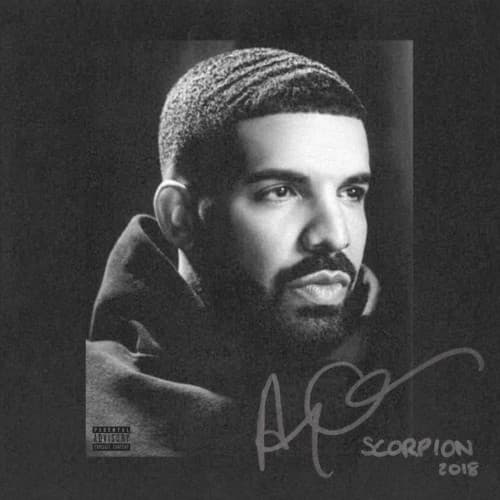
Drake Scorpion — The Year He Tried to Be Everything to Everyone
You know the album is desperate when it opens with someone telling you they're a survivor. Drake built a decade-long career on never having to prove anything to anyone, floating above the fray with passive-aggressive subliminals and champagne toasts. Then Pusha-T mentioned his son on a diss track and suddenly here comes twenty-five songs spanning two discs, each one a different version of damage control dressed up as victory laps.
Scorpion arrived at the exact moment Drake needed to remind the world he was still commercially untouchable. The Pusha beef had exposed vulnerabilities — the hidden child, the ghostwriting allegations resurfacing, the sense that maybe the throne was not as secure as it looked. His response was to flood the zone. If one Drake could not silence the critics, maybe five different Drakes could?
The double album format promises ambition. What it delivers here is hedging. Side A leans rap. Side B tilts R&B.
The structure suggests artistic range but functions more like market research — which Drake will people actually want? The one spitting over Tay Keith drums or the one crooning over 40 production? Rather than commit to a vision, Scorpion tries to be both, stretches itself across ninety minutes, and ends up feeling like a playlist instead of a statement.
The commercial strategy worked. The album debuted with seven songs in the Billboard Hot 100 top ten simultaneously. But winning the streaming game and making a cohesive album are not the same achievement.
When the Formula Starts Showing Its Seams
The production carries Scorpion further than the writing deserves. 40 remains the album's anchor, layering melancholy synth beds and submerged piano loops that give even the filler tracks a sense of expensive sorrow. Boi-1da and Tay Keith handle the rap side, delivering the hard drums Drake needs to remind people he can still operate in that lane. The sonic palette stays polished, expensive, and familiar — exactly what you expect from a Drake album at this budget level.
But familiarity becomes the problem. By 2018 the formula had calcified. Moody intro, quotable flexes, songs about women who did him wrong, songs about fame isolating him, one or two bangers to keep the clubs happy, then back to feelings.
Scorpion does not break the template. It executes it twice.
Lyrically the album swings between defensive posturing and emotional oversharing without finding much middle ground. The Pusha response tracks feel obligatory rather than furious. The confessional moments about fatherhood land with more weight but arrive too late in the tracklist to reshape the album's center of gravity. Drake sounds more tired than inspired, running through moves that worked on previous records without the energy that made them feel vital the first time.
Vocally he coasts. The singing lacks the ache that made Nothing Was the Same feel vulnerable. The rapping lacks the hunger that powered If You're Reading This.
He floats through verses, hits the expected cadences, switches flows when the song structure demands it, but rarely sounds like he wants to be there. It is competent. It is professional. It is not compelling. Is any of this enough to justify ninety minutes of your time?
The feature list stays small by design, but the choices feel safe. Jay-Z phones in a decent verse without elevating the song beyond album track status. Michael Jackson's posthumous appearance generates headlines but adds little beyond nostalgia bait.
Static Major's vocals provide the album's most interesting sonic texture, but the song itself never builds on that foundation. Drake remains the center of every track, which means when his energy dips, the whole album sags with it.
Ninety Minutes of Momentum That Never Quite Gathers
The sequencing reveals the album's core issue within the first thirty minutes. The opening stretch establishes a harder edge, then immediately softens. The momentum never sustains. Every time the album builds energy it pivots to something slower, safer, more introspective.
The impulse to balance moods kills the possibility of any single mood taking over. Major singles were already massive before the album dropped, which means their placement feels less like sequencing decisions and more like Spotify slot-filling. They work as individual songs but do nothing to strengthen the album's arc. They exist as commercial peaks that the surrounding material cannot match.
The second half tries to position itself as the emotional counterweight but plays more like an extended comedown. The middle section moves at the same drowsy tempo, each song bleeding into the next without distinction. Brief production shifts arrive but never shake the album out of its stupor.
By the time the closing stretch arrives — where Drake finally addresses his son directly — it should feel cathartic. Instead it feels like the album finally ran out of ways to avoid the subject.
The back half drags because nothing demands your attention. No track feels essential. No sequence of three or four songs creates a run you want to replay. Scorpion operates on the assumption that more is more, that quantity can substitute for curation.
The Album That Confirmed the Ceiling
Scorpion sits in the lower half of Drake's discography, above Thank Me Later and Certified Lover Boy but nowhere near the peak. It is the album where the machinery became visible, where you could see the rollout strategy, the streaming optimization, the attempt to be everything to everyone all at once. The artistry took a back seat to the market dominance.
Who should listen: Drake completists, fans who prefer his R&B mode over his rap mode, anyone studying how streaming-era artists approach album construction as playlist logic. Who might skip it: listeners who want cohesion over quantity, people exhausted by ninety-minute albums, anyone hoping for the creative risks that defined his earlier work.
The album aged poorly not because the production sounds dated but because it represents the moment Drake stopped chasing greatness and started protecting market share. Nothing here sounds embarrassing in 2025. It just sounds unnecessary. You can hear the hits without sitting through the full double album experience, and the album knows it.
If you want the best of Scorpion, run a handful of key tracks. That is a strong EP buried inside a bloated album. For similar Drake but better, revisit Take Care or Nothing Was the Same.
For artists who execute the moody-rap-meets-R&B blend with more focus, check out PARTYNEXTDOOR's PARTYMOBILE or The Weeknd's After Hours. Scorpion's influence shows up in how every major artist now drops bloated streaming-optimized albums, which is not exactly a legacy to celebrate.
This is the album where Drake proved he could win without really trying. That might be the saddest flex of all.
Track Listing
Survival
▲The album opener sets the defensive tone immediately, Drake responding to the Pusha-T situation without mentioning him by name. The production from 40, Boi-1da, and Jahaan Sweet rides a stuttering piano loop and minimal drums that let Drake's voice sit front and center. He raps with urgency here, more focused than he sounds for most of the album, but the content stays surface-level — vague threats, assertions of dominance, reminders that he is still on top. The hook works because it is simple and Drake sells the repetition with enough conviction to make it stick. As an opening statement it does the job, even if the substance does not match the intensity. You can hear him trying to sound unbothered while clearly being very bothered.
Nonstop
▲Tay Keith's menacing piano stabs and hard-hitting drums give Drake one of the album's few genuine bangers. He rides the pocket with a sing-song flow that burrows into your head and refuses to leave, the kind of cadence that makes the song feel bigger than it is. Lyrically it is pure flex — money, success, relentless work ethic — delivered with enough charisma to overcome the lack of depth. The "nonstop" refrain drills itself into your brain within thirty seconds. This is Drake operating in pure hit-making mode, no pretense of depth, just vibes and quotable lines designed for Instagram captions. It works because he commits fully to being that guy for three minutes without second-guessing himself. The song proved its durability by staying in rotation long after the album cycle ended.
Elevate
●The energy dips immediately as Drake shifts into motivational-speech mode over a contemplative 40 and Boi-1da beat. The production glides on muted synths and a shuffling rhythm that never quite locks into a groove. Drake sounds like he is reading affirmations from a vision board — lines about staying focused, cutting off fake friends, keeping your circle tight. It is the kind of track that sounds good in theory, the type of song you tell yourself you should like because the message is positive, but it never generates any real momentum. The hook meanders. The verses feel like filler. You forget it is playing halfway through and do not realize it ended until the next track starts.
Emotionless
▲Mariah Carey's "Emotions" sample flips into something wistful and distant, giving Drake space to reflect on fame's hollowness and the cost of celebrity. The production from No I.D. and 40 creates a bed of melancholy that suits the subject matter, even if Drake's observations about Instagram culture and superficial relationships feel obvious. The second verse hints at the Pusha situation again, Drake addressing the child revelation indirectly, sounding more resigned than angry. It is one of the album's better moments because the mood matches the content and Drake sounds genuinely reflective rather than performatively introspective. The song does not overstay its welcome. It says what it needs to say and exits before it becomes tedious. A highlight on an album that needed more of this focus.
God's Plan
▲The Cardo and Yung Exclusive production became unavoidable in early 2018, the piano melody and booming bass forming the backdrop for Drake's biggest single in years. The song works because it balances flex with humility, Drake acknowledging his success while framing it as divine favor rather than personal superiority. The verses are quotable without being clever, the hook is simple enough that everyone from kids to grandparents could sing along, and the video of Drake giving away a million dollars cemented the song's feel-good narrative. It is an efficient, bulletproof pop-rap construction that does exactly what it set out to do. Criticizing it for lacking depth misses the point — this is Drake operating as a cultural force, not an album artist. The song's ubiquity wore it out for some listeners, but its craftsmanship remains undeniable.
I'm Upset
▼This feels like a leftover from a rejected Take Care session, Drake running through grievances over a Oogie Mane beat that loops the same piano figure for three minutes without variation. The complaints are generic — people wanting his time, fake friends, women with ulterior motives — delivered without any sharpness or wit. The hook repeats "I'm upset" like that alone constitutes commentary. It does not. The track exists because Drake needed something for the tracklist, not because he had something to say. Even the cadences sound recycled. Skip it without guilt.
8 Out of 10
▼Produced by 40, Boi-1da, and Paul Jefferies, this track tries to recapture the minimalist menace of If You're Reading This but ends up sounding like a rough draft. Drake addresses the Pusha beef more directly here, referencing the diss track and his hidden son with lines that feel defensive rather than defiant. The beat is sparse to the point of emptiness, just bass and hi-hats with occasional synth stabs that do not add up to a compelling groove. Drake's flow meanders, never locking into a pocket, and the hook — where he rates himself eight out of ten — lands with a thud. The self-awareness does not make the song more interesting. It just makes you wonder why he included it.
Mob Ties
●Boi-1da and Tay Keith deliver another hard-edged beat, this one built on ominous keys and rattling hi-hats that give Drake room to sound tougher than he actually is. He leans into street talk, name-dropping mob associations and threatening anyone who crosses him, but the posturing feels unconvincing coming from someone whose biggest confrontation that year was a rap beef he lost. The song works as background music, something to play in the car with the bass up, but it does not hold up under scrutiny. Drake sounds like he is performing hardness rather than embodying it, and the gap between the image and the reality becomes impossible to ignore. Solid production wasted on empty flexing.
Can't Take a Joke
▼Nineteen Eighty-Four and BlaqNmilD craft a minimalist beat with barely-there drums and a distant synth line that feels more like ambient sound than a proper instrumental. Drake floats through the verses without saying much, delivering generic observations about people who do not understand him and women who want his attention. The hook repeats the title as if repetition alone makes a statement. It does not. The song occupies space on the tracklist without justifying its existence, the kind of mid-album filler that disappears from memory the moment it ends. Even Drake completists struggle to defend this one.
Sandra's Rose
▲A nod to his mother over production from Noel Cadastre that samples Rosie Gaines, this track finds Drake in reflective mode, tracing his rise and acknowledging the people who doubted him along the way. The beat carries a mournful weight, strings and keys blending into something that sounds expensive and sad in equal measure. Drake raps with more focus here, the verses containing actual narrative detail instead of vague flexing. The second half brings in a beat switch that shifts the mood without disrupting the song's flow, a rare moment of dynamic sequencing on an album that mostly coasts on one idea per track. Not a standout but a reminder that Drake can still craft album cuts with purpose when he tries.
Talk Up
●Jay-Z shows up for a verse that feels obligatory rather than inspired, trading bars with Drake over a Boi-1da beat that never finds its footing. The production jumps between tempos and moods, trying to create energy through chaos instead of groove. Drake's verses are fine but forgettable, his flow hitting familiar pockets without pushing into new territory. Jay sounds like he recorded his verse in one take and moved on, delivering competent bars that do not elevate the song beyond filler status. The track exists so Drake can say he got Jay-Z on the album, but neither artist sounds particularly interested in being there. Even the title promises more bite than the song delivers.
Is There More
●Nineteen Eighty-Four and Noel Cadastre provide a beat that floats on melancholy keys and trap drums, giving Drake space to question whether his success actually brings fulfillment. The content could have been compelling — introspection about fame's emptiness, the sense that no amount of accomplishment fills the void — but Drake delivers it with the energy of someone half-asleep. The hook meanders. The verses blend together. By the time the song ends you realize you retained nothing. It is the sound of an artist going through the motions, hitting the expected themes without investing any genuine emotion. Side A ends not with a statement but with a shrug.
Peak
●Side B opens with 40 and Nineteen Eighty-Four crafting a hazy, downtempo groove that signals the shift from rap to R&B mode. Drake sings about reaching his peak and wondering what comes next, the lyrics touching on existential questions that the drowsy delivery never fully commits to. The production is gorgeous — layered synths, subtle bass, the kind of expensive-sounding arrangement that makes mediocre songs sound better than they are. But the melody does not stick. The hook does not land. It sets a mood without building a song, the kind of track that works as background music during a late-night drive but fails to justify focused listening. Pretty but inessential.
Summer Games
●No I.D. samples Leon Thomas III's voice to create a bed of chopped vocals and minimal drums, Drake singing about a summer fling that ended badly. The production carries the track, the sample work creating a nostalgic ache that Drake's lyrics do not quite match. He runs through familiar complaints — she wanted more than he could give, the timing was wrong, now she is with someone else — delivered without the specificity that would make the story feel real. The song drifts by pleasantly enough, the kind of mood piece that works in the context of a playlist but does not demand repeat listens. Solid production carrying average songwriting, a pattern that defines much of Side B.
Jaded
▼Ty Dolla Sign adds background vocals to a DJ Paul and 40 production that loops a melancholy synth line over crisp drums. Drake sings about a woman who grew jaded from past relationships, his empathy undermined by the vague lyrics and sleepy delivery. The song never builds momentum. The hook repeats the title without adding context or emotional depth. It exists in the same tonal space as the previous two tracks, blurring together into an extended stretch of mid-tempo R&B that never differentiates itself. By this point in the album the sameness becomes exhausting. You want something — anything — to break the pattern, but Drake stays locked in cruise control.
Nice for What
▲Murda Beatz and BlaqNmilD flip a Lauryn Hill sample and Big Freedia bounce into one of the year's most infectious singles. The production is a masterclass in making something feel both nostalgic and current, the Lauryn vocal chops creating warmth while the bounce beat keeps the energy high. Drake switches his flow to match the rhythm, delivering verses that celebrate women living their best lives without needing male validation. It is Drake at his most joyful, embracing New Orleans bounce with enough reverence to avoid appropriation while still making it feel like his own. The song radiates good vibes without sacrificing musicality, a rare Drake track where the positive message and the execution align perfectly. Still sounds great seven years later.
Finesse
▼A very short interlude with 40 at the boards, Drake singing a brief melody about a woman trying to finesse him. It lasts just over a minute, barely qualifying as a track, functioning more as a transition than a song. The production is lush but the fragment feels incomplete, like the first verse of something that never got finished. Including it as a separate track instead of folding it into another song feels like a cynical streaming play, padding the tracklist with something that does not stand on its own. Forgettable even while it is playing.
Ratchet Happy Birthday
●DJ Paul, BlaqNmilD, and Murda Beatz create a bouncing, celebratory beat that sounds like a New Orleans second line mixed with trap drums. Drake sings a hook wishing a woman happy birthday while acknowledging her wild side, the song walking the line between playful and condescending. The production works harder than the concept, creating a party atmosphere that Drake's half-hearted crooning does not quite match. It feels like an idea that needed more development or should have been left as a loosie. The beat deserves better writing. The writing deserves a better commitment to the bit. Instead it ends up as a novelty track that might get played at birthday parties but serves no real purpose on the album.
That's How You Feel
▲Noel Cadastre and Forty produce a gorgeous bed of glowing synths and restrained drums, giving Drake and Nicki Minaj space for a duet about relationship miscommunication. Nicki delivers one of the album's best features, her verse bringing personality and specificity that most of Scorpion lacks. She sounds engaged, her flow sharp, her presence elevating the song beyond Drake's pleasant but vague verses. The production shimmers, the kind of expensive-sounding arrangement that justifies the runtime even when the lyrics do not. This needed to be a full Nicki and Drake collab EP, not a three-minute moment buried on a bloated album. The song works because someone finally showed up with energy.
Blue Tint
●40 and Bink! craft a minimalist beat with airy synths and muted drums, Drake singing in a higher register than usual about a woman from his past. The melody floats without ever resolving into something catchy, the song drifting in and out of focus without building tension or release. The lyrics are vague, the usual Drake relationship observations delivered without specificity or emotional stakes. It is pleasant background music, the kind of track that does not offend but also does not demand attention. Another example of Side B's core problem — competent execution of ideas that were not compelling to begin with.
In My Feelings
▲BlaqNmilD and Murda Beatz deliver another New Orleans bounce-influenced production, this time paired with a Drake hook that became a viral dance challenge and one of 2018's biggest songs. The "Keke, do you love me" refrain is absurdly catchy, the kind of hook that lodges in your brain and refuses to leave. The verses are fine but the song lives and dies on the chorus, which Drake delivers with just enough playfulness to make it feel fun rather than corny. The bounce rhythm gives the song a physicality that most of Scorpion lacks, making it one of the few tracks that demands movement. The viral success was not an accident — this is pure pop songcraft disguised as a rap track, engineered for maximum reach and minimum resistance.
Don't Matter to Me
●A posthumous Michael Jackson feature stitched together from demo vocals, produced by 40 and Nineteen Eighty-Four into a smooth R&B groove. The Michael vocals are haunting but feel exploitative, another artist's unfinished work repurposed for someone else's album without clear context or purpose. Drake's verses are adequate but adding yourself to a Michael Jackson song is a no-win situation — you either disappear next to the legend or you overstay your welcome trying to match his presence. The production is tasteful, at least, avoiding the urge to overload the track with unnecessary flourishes. But the whole thing feels like a marketing decision rather than an artistic one, a headline-grabbing feature that adds nothing meaningful to either artist's legacy.
After Dark
●Ty Dolla Sign and Static Major's vocals blend with Drake's over a DJ Paul and Noel Cadastre production that builds on eerie keys and trap drums. Static's presence adds texture and melancholy, his voice carrying a weight that makes you wish he had lived to finish more music. Drake sings about late-night paranoia and trust issues, the lyrics touching on themes that could have been compelling if delivered with more conviction. The song builds atmosphere but never quite becomes a complete idea, hovering in a liminal space between mood piece and proper track. It works better than most of Side B because the production and features give it dimension Drake's vocals alone cannot provide.
Final Fantasy
●40 and Boi-1da produce a lush, dreamy backdrop for Drake to sing about a woman who might be too good to be true. The title references the video game series, Drake comparing an idealized relationship to a fantasy world that does not exist in reality. The metaphor is obvious but the execution is fine, the production doing most of the heavy lifting while Drake floats through verses that say very little. The song does not outstay its welcome but also does not leave an impression, another well-produced but underwritten moment on an album full of them. You could remove it from the tracklist and nothing would change.
March 14
▲The album closer addresses Drake's son Adonis directly, produced by 40, Nineteen Eighty-Four, and Noel Cadastre into a sparse, piano-led arrangement that strips away the polish and leaves Drake's voice exposed. This is the most vulnerable he sounds on the entire album, admitting his fears about fatherhood, acknowledging he did not plan for this, confessing he is still figuring it out. The honesty cuts through the posturing that defines most of Scorpion, revealing someone actually grappling with consequences rather than flexing past them. The song should have been the emotional center of the album but it arrives too late, buried at the end of Side B after ninety minutes of filler. If Scorpion had been built around this vulnerability instead of treating it as a final-act confession, it could have been a completely different album. Instead this is an island of genuine feeling surrounded by an ocean of content.