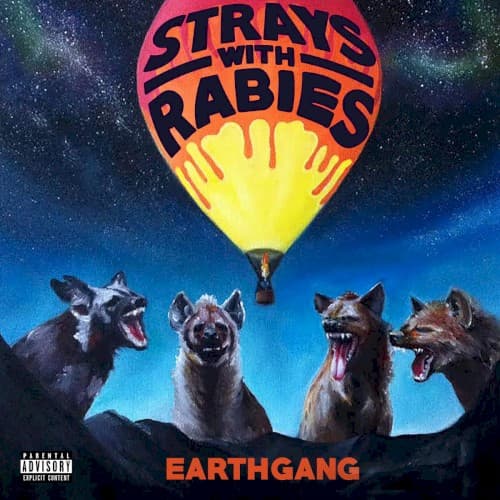
The scorecard
6.6/10 · Good
- Writing25%
- 6.5
- Production25%
- 6.5
- Delivery15%
- 7.0
- Cohesion15%
- 6.5
- Originality10%
- 7.0
- Replay value10%
- 6.5
Olu and WowGr8 write with real specificity, mixing a spiritual vocabulary, odd imagery and social commentary, but at their weakest they pile images up until the point disappears.
The funk, soul and psychedelic textures give the record a distinct identity, but the sound is uneven across the fourteen tracks and some beats feel like sketches.
The two voices contrast well, one raspy and urgent and the other quicker and more melodic, and both move easily between rapping and singing, though the performances are more consistent than they are remarkable.
A strong opening and a deliberate closing stretch give the record real shape, but tonal swerves, a blurred middle and uneven track quality mean it plays like a gifted mixtape rather than a finished album.
In 2015 almost nobody else was blending Southern funk, gospel and hardcore rapping with this much looseness.
The strongest songs reward repeat plays, while the rougher cuts show their seams quickly.
EarthGang Strays With Rabies — Atlanta Weirdness With the Funk Still Barking
Strays With Rabies is the sound of two Atlanta rappers deciding that being strange is a strategy rather than a handicap. The record is loose, restless and often thrilling, and it is also unfinished in ways that only become obvious on a second pass. Olu and WowGr8 rap like men who have been told their whole careers that their approach is too eccentric for radio, and who respond by getting more eccentric. The thesis here is that this is the record where EarthGang's identity is already complete but their discipline is not: the voices, the spiritual preoccupations and the funk-soaked taste are all in place, and the editing, sequencing and beat selection are still catching up.
The West Coast is a useful yardstick, because it is the region most associated with funk as a foundation. G-funk took the elastic bass and synth lines of Parliament and Zapp and turned them into a mood of smooth, menacing leisure, and the Bay Area spent decades pushing the same palette into stranger, more independent places. EarthGang draw on the same funk lineage, but they route it through Atlanta, through gospel and Southern soul, and through the looser, more theatrical tradition of the city's left-of-center rap. The result sounds less like a lowrider cruise and more like a church service held in a basement club. That difference is earned rather than borrowed, and it is the reason the record is worth hearing.
What the record borrows, honestly, is the idea of the mixtape as a place to throw ideas at the wall. Fourteen tracks move between hard rapping, sung hooks, spoken-word interludes and rough, atmospheric cuts, and the quality varies along with the mood. The best songs have a clear focus and a hook that sticks. The weaker ones read as experiments that were left in the final cut because they were interesting rather than because they worked.
That honesty is both the charm and the limit. This is not the polished major-label work the duo would later make, and it does not try to be. It is a raw, vivid portrait of two rappers with a very specific worldview and the talent to back it up, and its flaws are the flaws of ambition, not of timidity.
Two Voices, One Congregation, Uneven Seams
The writing is the first thing to notice, because it is the element that most clearly separates EarthGang from their peers. Both rappers work from a spiritual vocabulary, mixing religious imagery with street-level observation and a good deal of self-mythology. They like extended metaphors, odd tension of the sacred and the profane, and moments where a verse turns abruptly from a joke to a confession. At their best they write with real specificity, and a line that starts as a boast can end as a small piece of social commentary. At their weakest they pile images on top of each other until the point disappears, and a few verses sound written for the sound of the words rather than their meaning.
The delivery is more consistent. The two voices are different enough to keep the record from becoming monotonous: one is raspy, urgent and more physical, the other quicker, higher and more melodic. Both are comfortable singing as well as rapping, and the hooks often blur the line between a chorus and a chant. That flexibility is a clear strength, and it separates them from the more rigid, bar-for-bar approach of many of their contemporaries. It also gives the album a theatrical feel, as if the songs were scenes in a play and the two rappers were switching roles.
The production is rich in texture and inconsistent in quality. The palette is built on live-sounding funk, gospel keys, hazy guitar and thick, rolling bass, and it gives the record its identity from the first minute. In comparison with West Coast funk, the sound is looser and dirtier: where G-funk polished its grooves into a gleaming surface, this record leaves the edges visible. That choice is part of the appeal, and it also exposes the weaker beats, several of which sound more like drafts than finished tracks. Some songs are carried by a single strong idea and not much else.
The main weakness is the tonal whiplash. The album moves from hard, aggressive rapping to soft, sung material and back again with little warning, and the shifts are sometimes more distracting than exciting. A song that builds a strong mood can be followed by something that breaks it, and the cumulative effect is of a record that cannot decide what it wants to be. A few of the more experimental pieces also run on longer than their ideas justify.
Still, the ambition is hard to dismiss. A mixtape that tries this much and misses on some of it is more interesting than a clean, safe record that tries nothing. The best moments here show a duo that was already ahead of the curve in 2015, and the flaws are the kind that a better editor and a bigger budget would fix. As a document of where the group stood before its major-label years, the record is a vivid one.
A Mixtape Flow That Swerves More Than It Builds
As a sequence, Strays With Rabies behaves like a mixtape. It opens with a loose, scene-setting track and then moves through a series of moods without an obvious through-line. The opening stretch is the strongest part of the record: the songs establish the funk and gospel palette, the two voices introduce themselves clearly, and the pacing gives each idea room to land. It is an effective way to start and it earns attention quickly.
The middle of the record is where the sequencing loses its grip. Several songs of similar tempo and mood run in a row, and the differences between them are subtle enough that the stretch blurs together. A few tracks are strong in isolation but suffer from their position, and the gaps between ideas are filled with transitions that do not always work. The album needs a stronger sense of build, and instead it relies on variety, which is not the same thing. The effect is of a record that has many good moments and no clear shape.
The closing stretch is better organized. The final songs pull the tone toward something more reflective and more unified, and the last track ends the record on a note that feels deliberate. After the uneven middle, the finish gives the listener a sense of arrival, even if it does not retroactively fix what came before.
The length is slightly more than the material can bear. Fourteen tracks is not excessive in the abstract, but the quality drops enough in the middle that cutting three or four of the weakest would improve the whole. The peaks are high enough to justify most of the runtime, and the best way to hear it is to treat it as a collection of strong songs rather than a continuous work. Played in order, the album rewards patience; played selectively, it rewards curiosity more cleanly, and the first half is where most listeners should begin.
A Rough Draft of a Distinct Voice
There is no other EarthGang record rated on this site yet, so the placement is a matter of context. Strays With Rabies sits early in their story, and its value is as the clearest early statement of what the duo wanted to be. It is not their most polished work and it does not try to be. It is the record where the voice, the worldview and the funk-gospel palette are all present, and where the main missing ingredient is discipline. Compared with the West Coast tradition it draws from at a distance, it is more eccentric, less glossy, and more spiritual, and those differences are the source of its character.
It is for listeners who like their rap strange, soulful and a little unruly, and for anyone interested in the lineage of Atlanta's left-of-center acts. It is also a useful document for fans of the group's later, more polished work who want to hear the raw version of the same ideas. It is not for listeners who want a tightly sequenced, consistently excellent record, and it is not the place to begin if you prefer clean, radio-ready production.
It has aged reasonably well. The best songs still sound distinctive, and the eclectic approach that once seemed risky now reads as ahead of its time. The weaker tracks have dated more, mostly because they were built from sketches rather than finished ideas. The gap between the strongest and weakest material is the main reason the record feels like a promise rather than a statement.
Start with the sharp, politically aware track near the middle, the spiritual cut with the strongest hook, and the closing song. Those three show the range of the duo at its best. After that, move to their later major-label work, which keeps the same worldview and adds the polish and sequencing this record lacks.
The record is best understood as a very good rough draft: the voices are finished, the taste is finished, and the editing is still waiting.
Track by track
Track Listing
... And on the 8th Day
StandoutA loose, atmospheric opener that sets the record's tone with spiritual imagery and a hazy, funk-leaning feel. It works as an invitation more than a song, and the production is more mood than structure. A good entry into the world of the album.
Momma Told Me
StandoutA more grounded track that leans on family and upbringing as a way into the group's worldview. The writing is warmer and more direct than on the surrounding songs, and the delivery is easy and conversational. It is one of the clearest windows into where the two rappers come from, even if the beat is more functional than memorable.
Ain't No Take-Backs
StandoutA confident, forward-moving cut that gives both rappers room to trade lines. The energy is high and the hook is simple enough to stick. It is a solid, uncomplicated song that holds the early momentum in place.
Missed Calls
SolidA relationship-focused track with a smoother, more melodic feel. The sung passages work well and the mood is convincing, but the writing falls back on familiar ideas and the song adds little new to the record.
Diamonds
StandoutA track about value, status and what is worth carrying, delivered with a hazy, hypnotic groove. The writing balances boast and reflection, and the production gives the voices room to breathe. It is a quietly effective song that grows on repeat listens.
Liquor Sto'
SolidA street-level portrait with a looser, more conversational delivery. The scene-setting is vivid and the humor is dry, though the track stays close to a familiar template and does not develop its idea far.
Masturpeace
SolidA playful, sensual track that leans on wordplay and a woozy, slow-burning groove. The tone is more interested in mood than in storytelling, and the verses have a pleasantly strange sense of humor. Fun, if slight.
New Negro Spiritual
StandoutOne of the record's most ambitious songs, pulling gospel feeling and political awareness into a single slow-building track. The title announces a lineage, and the performance mostly earns it with a serious tone and a hook that feels like a congregation. The writing is the most focused on the album, and the production gives it a sense of occasion. This is the clearest argument for what makes the group different from its Southern peers, and the track that best justifies the spiritual framing of the whole project.
Lady Nectarine
SolidA sweeter, more melodic song built around a character sketch. The beat is warm and the singing is easy on the ear, but the writing is lighter than the material around it, and the track plays more as a palate cleanser than a destination.
Nigga Wake Up
StandoutA pointed, socially conscious track that turns the album's playfulness into something harder and more urgent. The delivery is more direct than elsewhere and the writing speaks to community and responsibility without resorting to lecture. It is among the most serious pieces on the record, and its bluntness gives the middle section a needed jolt. The production is stripped back enough that the message stays in front.
A.W.O.L.
StandoutA restless, high-energy cut that lets both rappers push their delivery harder. The beat is rougher and the verses are faster, and the track has the feel of a freestyle that was kept because it worked. It is a short burst of aggression that helps break up the record's softer stretches.
Solar Lilly
SolidA hazy, melodic piece that leans toward psychedelic soul. The mood is pleasant and the hook is gentle, but it is more atmosphere than song, and it blends into the stretch around it.
Punchanella
SolidA playful, bouncing track that leans into the duo's more eccentric side, with quick-fire delivery and cartoonish imagery. It is entertaining but slight, and it shows the record's tendency to prefer personality over structure.
Simba
StandoutThe closer is reflective and a little triumphant, bringing the record's spiritual themes back into focus. The delivery is more measured than on most tracks and the mood feels earned after the album's swerves. It is a satisfying ending that suggests where the group was headed.