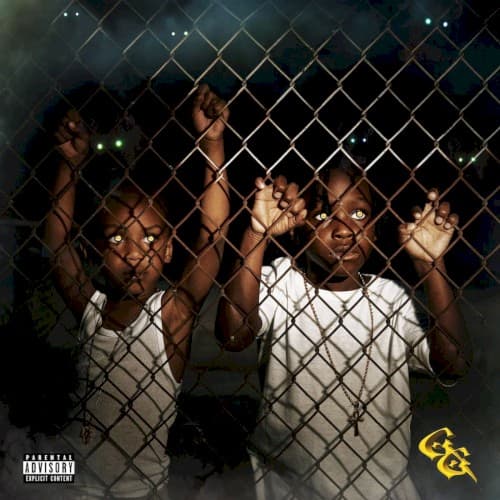
The scorecard
6.8/10 · Good
- Writing25%
- 7.0
- Production25%
- 7.0
- Delivery15%
- 7.0
- Cohesion15%
- 6.5
- Originality10%
- 6.5
- Replay value10%
- 6.5
The songs about protest, therapy and self-belief are direct and sincere, though a few verses settle for affirmation where the earlier records offered stranger, more specific imagery.
Reggae, gospel, funk and R&B colors sit comfortably next to modern trap drums, and the long closing songs are built with real patience.
Olu and WowGr8 move between rapping and singing without strain, and the guest verses from JID and J. Cole on the long group song raise the intensity.
Seventeen entries including three skits and two sub-minute fragments make a front half that stutters before the album settles into its long second act.
The duo still sounds like itself in a streaming market that rewards sameness, though the framework is a refinement of Mirrorland more than a new idea.
The singles and the closing run repeat well, while the skits and fragments are the first things a returning listener skips.
EarthGang Ghetto Gods — An Album That Refuses to Be a Playlist
Ghetto Gods is an album built for a listening culture that barely exists anymore. It has an intro fragment under a minute long, three skits, a tiny interlude, and a final stretch of long, patient songs that ask the listener to sit still for five minutes at a time. In the streaming economy, where the first thirty seconds decide whether a track survives and playlists reward uniformity, that is close to an act of defiance. The thesis of this review is that the defiance is partly earned and partly self-indulgent: EarthGang have made a record that sounds like itself and resists the shape of the market, but they have also left some of the market's lessons on the table, and the first half pays for it.
The rollout is part of the story. The release was delayed by four weeks, and in the meantime the duo let fans hear the record at free live shows instead of feeding the algorithm with teasers. The singles came out ahead of the album in the usual way, but the earlier release strategy leaned on tribute freestyles to figures the duo admired, which fits the record's theme of transformation and gives the project a sense of occasion that most streaming-era albums lack. It is a rare case of a rollout that supports the music instead of replacing it.
The music itself is a confident step from the group's major-label debut. Critics noted the mix of reggae, gospel, funk, R&B and rap, and the album's reflective turn after a period of pandemic isolation and political upheaval. That mood gives the record a more serious tone than its predecessor, and the writing is more direct about mental health, community and self-belief. The result is an album that is easier to respect than to love on first listen, and that improves as the sequence moves toward its long, unhurried second half.
Whether that is a virtue depends on how you listen. If you consume albums as a stream of singles, the first half will feel padded. If you listen in order, the record builds a mood that a playlist cannot reproduce, and the payoff is real.
A Stuttering Start and a Long, Patient Second Act
As a sequence, Ghetto Gods is front-loaded with friction. The opening fragment under a minute long clears the throat, and the first few real songs are tightly built, but the arrival of a skit and a tiny interlude within the first half interrupts the momentum before it has time to settle. In a world of playlists, these breaks are an invitation to skip, and the album does not do enough to justify them. The first half is where the record is most likely to lose a casual listener.
The pacing improves in the middle. The singles are placed where they can anchor the mood, and the transitions between them are smoother than in the opening stretch. The run feels closer to an album than a collection of songs, and the group's habit of moving between rapping and singing gives the sequence a natural flow. The tempo is varied, the guests arrive at sensible points, and the record begins to build the reflective mood that defines it.
The back third is the album's best argument. The songs get longer, the beats get more spacious, and the writing finds a steadier register. The closing songs run past five minutes each, which in streaming terms is a luxury, and they use that time well: the mood deepens instead of repeating. The ending feels earned in a way that few modern rap albums manage, mostly because the record has taken the time to build toward it.
Is the length earned? At around fifty minutes, the running time is not the problem. The problem is the allocation: roughly five of the seventeen entries are skits or fragments, and trimming them would sharpen the first half without costing the record anything essential. As it stands, the album is a good listen from front to back and a less effective one in shuffle, and that trade-off is the clearest sign of how the record was built. It was made for people who press play and stay.
Defiance That Pays Off Late
There is no other EarthGang album rated on this site yet, so the placement is a matter of context. Ghetto Gods is the second studio album, and it reads as a deliberate reflection after the more exuberant major-label debut: calmer, more direct and less interested in spectacle. Critics were generally positive, with a Metacritic average of 76, and the praise tends to focus on the way the record keeps its Atlanta roots while sounding like nobody else. That is the right emphasis. Compared with the debut, it gains in sincerity and loses a little in strangeness, and the net result is a record that is close in quality but different in temperament.
It is for listeners who play albums in order and are willing to let a record build a mood, and for anyone who wants a streaming-era rap project that does not sound like the algorithm. It is also a good fit for fans of Dreamville and the broader Atlanta tradition. It is not for listeners who want a tight, single-heavy collection or who skip skits on principle, and it is not the place to start if you want the group at its most playful.
The album should age better than most of its peers. The production is not tied to a trend, the writing is direct enough to remain relevant, and the longer songs will reward repeat listens. The skits are the part most likely to date poorly, because they are built around the energy of a specific moment.
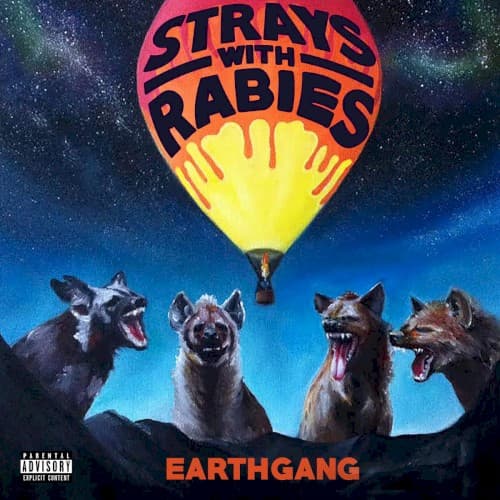
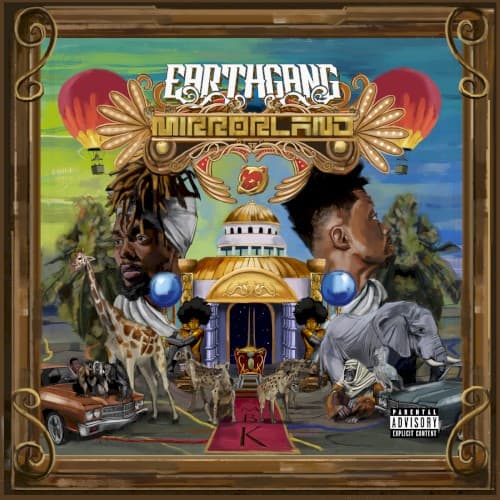
Start with the long group song with JID and J. Cole, the single built around a Musiq Soulchild sample, and the closing track with Ari Lennox. Together they cover the album's range of energy, sentiment and patience. After that, move to Mirrorland, the major-label debut that makes the case for the same worldview with more color and more hooks, or back to the rawer Strays With Rabies for the group's earliest and loosest statement.
Ghetto Gods is a record that asks for time and mostly repays it, and its best proof is that the closing run is longer than anything the playlist era would normally permit.
Track by track
Track Listing
THE GLOW
SolidA brief opening fragment with vocals from 2 Chainz. It sets the tone and moves on, and at under a minute it works as an introduction rather than a song.
GHETTO GODS
StandoutThe title track is a short, confident statement of the album's theme of transformation. The production is punchy and the delivery is assured, and the song makes its point efficiently. It is a clear mission statement and one of the more direct tracks on the record, though it is over before it can build much.
BILLI
StandoutA hard, compact track with Future, built around a heavy beat and a tight, rhythmic delivery. It is the most straightforward trap-leaning song on the record, and the guest fits naturally. Efficient and effective, if more conventional than most of the album.
WATERBOYZ
StandoutThe first long song, with JID and J. Cole, runs just over five minutes and gives the record its first real peak. The beat is spacious and the verses trade with a competitive edge that lifts the energy, and the extended length lets each voice develop an idea. It is the clearest example of the group's strengths in a collaborative setting, and it shows how the album uses time. A highlight of the first half.
HEY BOO (Skit)
WeakA short skit that adds flavor and little else. It is a character moment that interrupts momentum and is not worth repeating.
AMEN
StandoutA warm, melodic single built on a Musiq Soulchild sample, with the singer on the hook. The mood is soulful and sincere, and the production gives the record its most radio-friendly moment. The writing is gentle and affectionate, though the track stays close to a familiar R&B template.
ALL EYES ON ME
StandoutA confident single about honesty and celebration, with a hook designed for a toast. The production is bright and the delivery is relaxed, and the song gives the album a sense of release after the opening run. It is a feel-good track with a clear purpose, and it works because it does not overreach.
LIE TO ME
SolidA moody, melodic song about trust, with a smooth beat and a restrained delivery. The writing is more interested in atmosphere than detail, and the track blends into its neighbors. Pleasant, but not distinctive.
JEANS INTERLUDE (Skit)
WeakA brief interlude that offers a pause and a bit of character. It is filler and does not add much to the sequence.
BLACK PEARLS
StandoutA bright, confident track with Baby Tate that celebrates self-worth over a bouncy beat. The guest adds energy and the hook is easy to remember. It is lighter than the songs around it, which makes it a welcome change of pace, though its ideas are simple.
NEEZY'S WALK
SolidA very short fragment with a guest voice that functions as a transition. It is too brief to judge and not essential.
AMERICAN HORROR STORY
StandoutThe first single, running just over five minutes, and one of the clearest statements of the album's more serious mood. The production is dark and slow-burning, and the writing deals with fear, pressure and the sense of living inside a bad story. The delivery is controlled and the beat leaves room for the words, which gives the song real weight. It is a strong example of how the album uses length to build tension, and it marks the point where the record finds its depth.
POWER
SolidA big, soulful track with CeeLo Green and Nick Cannon, built around a theme of strength and authority. The guests add a theatrical touch and the production is rich, but the song's message is more broadly stated than precisely argued. It is entertaining and well made, if a little general.
ZAZA (Skit)
WeakA short skit that adds humor and nothing else. It repeats the pattern of the earlier interludes and is easy to skip.
SMOKE SUM
StandoutA serious, reflective track recorded during a period of protests, and it carries that context in its tone. The beat is spacious and the delivery is grave, and the writing deals with grief and frustration without rushing to resolve them. It is one of the strongest songs on the album and the clearest case for its patient approach. The length feels earned, and the song lingers in a way that few modern rap tracks do.
STRONG FRIENDS
StandoutA vulnerable, open track about being honest regardless of how others respond. The production is soft and melodic, and the delivery is sincere, which gives the song a quiet power. It is one of the most personal moments on the record, and it adds emotional depth to the closing stretch.
RUN TOO
StandoutA long, emotional closer with Ari Lennox that brings the record's themes of struggle and perseverance to a warm conclusion. The guest vocal blends well with the duo's delivery, and the production builds patiently toward a satisfying release. At over five minutes it gives the album a proper ending, and it is a fitting final statement for a record about taking the time to arrive.