The scorecard
6.3/10 · Mixed
- Writing25%
- 6.0
- Production25%
- 7.5
- Delivery15%
- 5.5
- Cohesion15%
- 6.5
- Originality10%
- 6.0
- Replay value10%
- 5.0
Ghost's vivid specificity translates awkwardly to romance: lines about guest houses and phone calls lack the detail that made his crime narratives sharp
Soul samples from Sean C & LV and others create warm beds for singing, though the gloss sometimes smothers Ghost's natural grit
Rapping over R&B requires different cadence than boom-bap and Ghost often sounds like he is reading verses written for different beats
Fourteen tracks of one idea gets repetitive by track nine, though removing skits and interludes means less dead weight than most rap-R&B crossovers
Ghostface attempting a full R&B album was new in 2009 but the execution follows the Ne-Yo blueprint without adding much Wu-Tang strangeness
The novelty of Ghost as love man wears thin faster than his crime stories; most tracks work once but few demand return
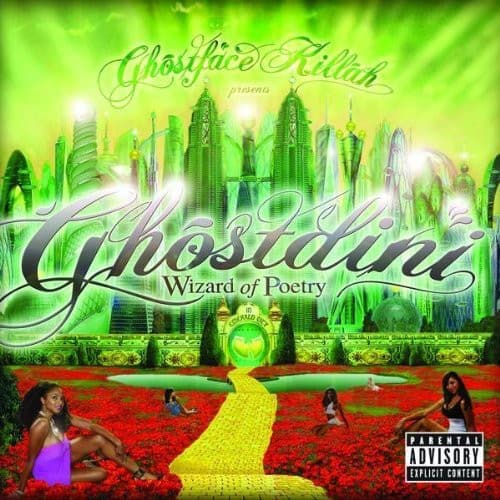
Ghostface Killah Ghostdini — The Wu-Tang Mafioso as Quiet Storm DJ
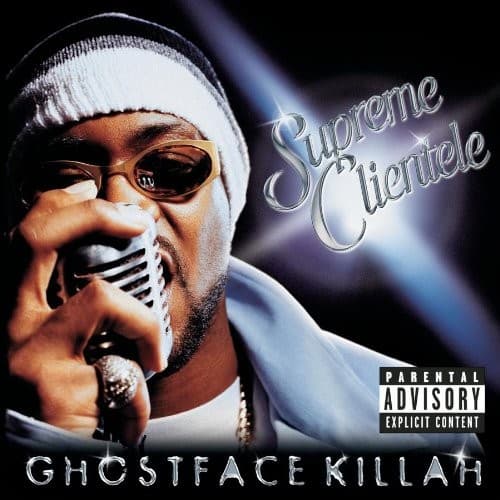
The question Ghostdini asks is whether Ghostface Killah's gift for detail survives a full album of slow jams, and the answer lands somewhere between yes and not quite. On Supreme Clientele he could make a shootout feel like you were counting spent shells on the pavement; here he tries the same trick with phone calls and arguments and bedroom talk, and the machinery that made his crime narratives work does not quite transfer. The thesis of this album is that Ghost's storytelling voice, the one that turned cocaine deals into vivid novellas, could do the same for relationships if he just swapped guns for guest houses and bricks for baby talk. It is a gamble that pays off in moments and drags in stretches, because writing about love at this level of specificity requires a different kind of honesty than writing about violence, and Ghost does not always find it.
This is his eighth solo album and his first attempt at a full R&B concept, built on the Ne-Yo collaborations from earlier records but committed to the bit for fourteen tracks. The production leans on soul samples and live instrumentation, the hooks come from singers like Raheem DeVaughn and John Legend, and Ghostface raps about dates and phone calls and making up after fights. It works when his eye for the wrong detail cuts through the smoothness, when a line about Stapleton or a specific complaint makes the song feel lived-in instead of theoretical. It sags when he reaches for general declarations of devotion or tries to stretch a thin idea across four minutes. The album succeeds as proof that Ghostface could make this pivot without embarrassing himself, but it does not make the case that he should have.
Soul Samples and the Mismatch Between Grit and Gloss
The production on Ghostdini does its job too well, which becomes the problem. Sean C and LV handle four tracks and set the template: warm soul loops, live bass, enough space for a singer to carry the hook and for Ghost to weave around the melody. The sample flips create gentle pockets, Marvin Gaye references stay balanced, and grooves arrive with no wasted motion. The J.U.S.T.I.C.E. League bring orchestral strings, Mahogany builds around silky loops, and the whole album sounds expensive in a way that smooths out the edges Ghostface usually works with. It is well-crafted R&B production, which means it does not need a rapper at all.
Ghostface's writing here is his writing from Supreme Clientele and Fishscale pointed at a different subject, and the fit is uneven. He is still specific, still piling up details, still moving through a verse like he is describing a scene he watched happen. He sets up scenarios about side apartments, writes letters, apologizes for arguments. The impulse is right: make the relationship stuff as concrete as the drug stuff.
But love songs require vulnerability that crime songs do not, and Ghost defaults to scenarios instead of feelings, blocking out scenes without letting you inside them. When he tries for raw emotion he reaches for cliches about forever and being there, and the vivid storyteller who made you see the Wallabee Clarks turns into just another rapper promising devotion. The exceptions are the moments where he complains or catalogs specifics: the argument details, the possessiveness, the bluntness about sex. Those feel like Ghostface. The rest feels like homework.
The guest singers do most of the heavy lifting. Raheem DeVaughn anchors two tracks with Auto-Tuned hooks that were already dated in 2009, but his voice is strong enough to make them work as R&B songs even when Ghost's verses sit awkwardly on top. John Legend and Estelle bring professionalism, Lloyd and Adrienne Bailon fill their roles, and Shareefa appears twice without leaving much mark. Fabolous raps a decent guest verse that reminds you what the album is missing: another MC to create tension or contrast. The whole album is Ghostface rapping alone over singer-driven tracks, and by the back half the format has worn through. The remix adds Kanye and Ne-Yo and feels like a glimpse of what a more balanced version of this concept could have been, but it arrives too late and it is a remix of an older song, not new material.
Fourteen Tracks of One Idea and Nowhere to Hide
The problem with Ghostdini as an album is that it is the same song fourteen times with different singers, and no amount of solid production hides that by the second half. The opening stretch states the premise and moves through multiple tracks without much variation in tempo or mood, and by the fifth song the sameness has set in. There are no skits or interludes to break it up, no posse cuts, no beat switches, no detours into different emotional territory. Just Ghostface rapping about relationships over soul-sample R&B for fifty-three minutes.
The sequencing does not help. One brief jolt of rawness arrives in the middle of the first half, then the album slides back into the same mid-tempo zone and stays there. The middle section blurs together, each track well-executed in isolation but interchangeable in the context of the full album. One Auto-Tune excess was widely panned and it does stand out as the album's worst moment, an attempt at a club record that sounds like it wandered in from a different, worse project. The album does not build to anything or move through stages of a story; it just presents variations on a theme until it stops. Starting in the middle gives you the idea without the slog, and if you want the full experience you will know by the first stretch whether the back half is worth your time.
A Detour That Proves the Point and Then Outstays It
Ghostdini ranks near the bottom of Ghostface's solo catalog, well below Supreme Clientele and the run of albums that made his reputation. It is not a failure in the sense of being incompetent or embarrassing; the production is polished, Ghost's rapping is technically sound, and a few tracks work as R&B-rap hybrids that justify the experiment. But it is a failed experiment in the sense that it does not make a case for itself as an album. The idea that Ghostface could apply his storytelling to love songs is interesting for two or three tracks, then it becomes a limitation. Rap-R&B crossovers usually fail because the rapper does not commit or the production is cheap; Ghostdini fails because it commits completely to a concept that is not deep enough to support an album.
This is for Ghostface completists and for listeners curious about what Wu-Tang's best storyteller sounds like when he tries to go quiet storm. It is not for anyone who wants to hear Ghost at his best, because even when this works it is him operating in someone else's mode. Skip it if you want prime Ghostface; the vividness and danger that made Supreme Clientele essential are mostly absent here, replaced by competent R&B that any capable singer-rapper could have made. The album has aged poorly in the sense that the Auto-Tune and the smooth production that sounded contemporary in 2009 now sound like period pieces, and the songs do not have enough underneath the production to survive the shift.
Start with "Guest House" for the best full realization of the concept, "Stapleton Sex" for the most Ghostface-sounding track, and "Let's Stop Playin'" for the Marvin Gaye flip. If those three do not convince you, the rest will not either. For more Ghostface worth your time go back to Supreme Clientele or forward to Twelve Reasons to Die, where he found better uses for his strengths. Ghostdini is the album that proved Ghostface could make an R&B record, but not the album that proved he should have.
Track by track
Track Listing
Not Your Average Girl
SolidThe album opens with its thesis: Ghostface as romantic lead, rapping over Scram Jones soul-chop with Shareefa singing the hook. Ghost tries to catalog what makes this woman different and lands on generic praise instead of the sharp details that usually make his writing work. The production is warm and the structure is solid, but the song announces the album's central problem early: when Ghost reaches for sweeping statements about love he loses the specificity that makes him Ghostface.
Do Over
SolidRaheem DeVaughn's Auto-Tuned hook is the most 2009 thing on the album, and Mahogany's production leans into the smoothness with a silky sample flip. Ghost raps an apology for an unspecified argument, trying to rebuild trust, and the details are too vague to land. He is better at describing the mechanics of making up than the feelings underneath it, and the song works as background R&B but not as a Ghostface showcase.
Baby
SolidThe best of the Raheem DeVaughn collaborations, built on a Ryuichi Sakamoto sample that gives the track a floating, delicate feel. Ghost's verses are still too general, promising devotion and compliments without the wrong detail that would make it specific to him, but the production and DeVaughn's vocal create enough mood to carry it. This was released as a single and it is easy to hear why: it is the most radio-ready song here, which is not a compliment in the context of a Ghostface album.
Lonely
SolidSean C and LV flip a soul sample into a mid-tempo groove and Jack Knight handles the sung hook. Ghost raps about missing someone while he is on the road, and the writing is serviceable but not memorable. The track does not drag but it does not stick, either. It is a competent R&B-rap song that could have appeared on a dozen other albums in 2009 and disappeared just as easily.
Stapleton Sex
StandoutTwo and a half minutes of rawness that the rest of the album needed more of. Ghost raps explicitly about sex with the bluntness and specificity that made his crime narratives work, and Sean C and LV's production stays minimal and grimy instead of polished. This was excluded from the clean version for obvious reasons, and it stands out on the album as the track where Ghost sounds most like himself: detailed, confident and uninterested in smoothing out the edges. It is too short and it is surrounded by songs that want to sand down what this one foregrounds, but it works.
Stay
SolidA short track built on an Yvonne Fair sample, with Ghost pleading for a woman to stay a little longer. The possessiveness in the writing is more interesting than the devotion on the surrounding tracks, and the production from Skymark is clean without being overproduced. At under three minutes it does not overstay the idea, but it also does not develop it into anything more than a sketch.
Paragraphs of Love
SolidBei Maejor and Tim Bosky produce a track that tries for lushness and lands on clutter, with Vaughn Anthony and Estelle both singing hooks that compete for space. Ghost raps about writing love letters and the concept has potential, but he describes the act of writing without sharing what the letters say, and the song feels like a missed opportunity. Estelle's presence does not add much, and the track is overlong at nearly four minutes of the same idea circling itself.
Guest House
StandoutThe best full realization of the album's concept: Ghost sets up a detailed scenario about maintaining a side apartment for a woman, Fabolous drops a solid guest verse that plays off the premise, and Shareefa sings a hook that fits the track's cinematic feel. The J.U.S.T.I.C.E. League bring orchestral strings and a dramatic build, and the whole thing works as a story-driven R&B-rap hybrid. Ghost's writing here is specific enough to feel lived-in, the scenario is vivid enough to carry the length, and the track justifies the experiment even if most of the album does not. This is what Ghostdini could have been with better editing and more varied concepts.
Let’s Stop Playin’
SolidJohn Legend sings a hook built on a Marvin Gaye sample and Ghost raps about the push and pull of a complicated relationship, trying to cut through the games and get to honesty. Sean C and LV's production is tasteful, Legend's vocal is strong, and Ghost's verses have enough specific complaints to feel real. The problem is that by track nine the format is exhausted, and even a well-executed version of it feels like more of the same. This would have worked better earlier in the sequence or as a standalone single.
Forever
WeakProduced by Clyde & Harry, flipping a Whatnauts sample into a warm soul backdrop for Ghost to rap promises of permanence. The writing is the most generic on the album, full of vows and declarations that any rapper could have written, and Ghost's delivery sounds like he is going through motions. The production is solid but the song is filler, the kind of track that exists to pad an album to an even number.
I’ll Be That
SolidL.T. Moe produces a mid-tempo track and Adrienne Bailon sings the hook. Ghost raps about being the man a woman needs, and the writing is predictable from the first bar. Nothing here is offensively bad but nothing is memorable either. It is professional R&B that does not need Ghostface on it and does not benefit from his presence.
Goner
SolidSean C and LV produce another soul-sample track, Lloyd sings a hook about a woman leaving, and Ghost raps verses that try for regret but land on summary. The song is nearly five minutes long and it does not have five minutes of ideas. The production is competent, Lloyd's vocal is fine, and the whole thing evaporates as soon as it ends. By this point in the album the fatigue is undeniable: this is the fourth Sean C and LV track and it sounds like the others, and no amount of polish hides that the concept has been exhausted since track seven.
She’s a Killah
WeakThe album's worst moment by a significant margin. Ron Browz brings the Auto-Tune excess that made T-Pain unbearable to critics in 2009, the hook is grating, and Ghost's verses sound phoned in. Pitchfork singled this out for a scathing review and they were right: it is a wince-inducing attempt at a club record that belongs on a different, worse album. Anthony Caputo's production is generic and the whole track feels like a label decision rather than an artistic choice. Skip it.
Back Like That (remix)
StandoutA remix of a Supreme Clientele leftover, with Kanye West and Ne-Yo added to the mix. Xtreme's production flips a Willie Hutch sample and the song works as a reminder of what Ghost sounds like when he has other rappers to play off and when the concept is not stretched to fourteen tracks. Kanye's verse is solid, Ne-Yo's hook is professional, and the whole thing feels like it wandered in from a better version of this album. It is a bonus track and it is stronger than half the album proper, which tells you something about how the sequencing and concept failed.