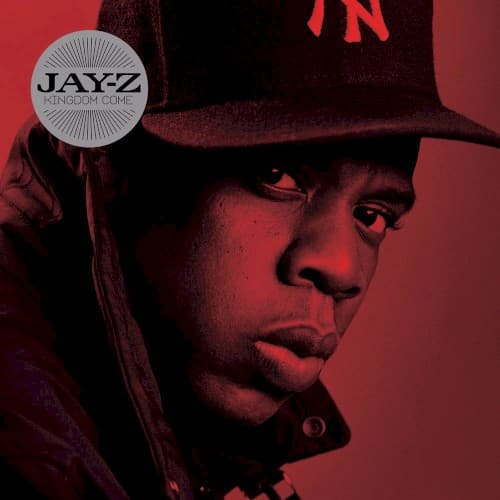
The scorecard
6.1/10 · Mixed
- Writing25%
- 6.0
- Production25%
- 7.5
- Delivery15%
- 6.5
- Cohesion15%
- 5.5
- Originality10%
- 4.5
- Replay value10%
- 5.0
The verses on 'Minority Report' and 'Lost One' show real writing, but most of the album coasts on assertions of success without the imagery or wordplay that built his reputation.
Dr. Dre's mixing and Just Blaze's three beats ('Oh My God,' 'Kingdom Come,' 'Show Me What You Got') sound expensive and polished, though the Neptunes track and 'Beach Chair' misfire badly.
The flow is competent and controlled throughout, but the hunger that made his earlier records urgent is gone—he sounds like he's executing a job, not fighting for position.
The album lurches between Just Blaze's brash comeback anthems, Dr. Dre's somber reflections, and radio plays for Beyoncé and Usher with no clear argument holding them together.
The album offers no new ideas: the Just Blaze beats recreate the Blueprint sound three years later, and the subject matter—wealth, women, past beefs—retreads ground he covered better elsewhere.
'Minority Report' and 'Lost One' hold up as serious attempts, but the rest wears thin after a few listens—there are no lines or moments worth returning to.
JAY-Z Kingdom Come — The Retirement That Lasted Three Years
The problem with Kingdom Come is not that it exists. Jay-Z had retired on The Black Album in 2003 with a hail of gunfire and a promise that Shawn Carter would replace the persona, then returned three years later under the same name because the mystique was worth more than the experiment. The problem is that the album never decides what the comeback is for. If the point was to reclaim the throne from the younger names who had filled the space, the record needed the writing and sequencing that made The Blueprint an argument you could not ignore.
If the point was to show a grown man rapping about grown concerns, it needed the focus and restraint to make that listenable for an hour. Kingdom Come does neither. It is an expensive, well-produced collection of songs that sound like a victory lap for a race that has not been run yet, built on the assumption that the name alone is enough.
The album sold 680,000 copies in its first week and debuted at number one, tying Jay-Z with the Rolling Stones for the third most number-one albums in the United States. Critics called it lukewarm. Jay-Z later called it his worst. The consensus was correct.
The album has two tracks that work as serious writing, both produced by Dr. Dre, and a handful of Just Blaze beats that sound like the Blueprint era without the verses to match them. The rest is filler: radio songs for guests who outshine the host, complacent bars about wealth and maturity, and one genuinely embarrassing closer. The production budget was high, the talent assembled was elite, and the effort to compensate for three years of rust is audible on every track. What is missing is a reason to care.
A Roster of Producers Trying to Build a Throne Out of Air
The production on Kingdom Come is the work of expensive names doing expensive work: Just Blaze on three of the first four tracks, Dr. Dre on four beats and mixing every song, Kanye West on one, The Neptunes on one, Chris Martin from Coldplay closing it out. The credits read like a comeback budget, and the sound is polished in a way that announces the money behind it. Just Blaze delivers the album's best moments with 'Oh My God,' 'Kingdom Come,' and 'Show Me What You Got,' all built on the chipmunk soul and orchestral stabs that defined The Blueprint. The beats are brash and triumphant, engineered to sound like a return to form. They do their job. The problem is that the verses on top of them do not.
Dr. Dre's four tracks—'Lost One,' '30 Something,' 'Trouble,' and 'Minority Report'—sound like a different album, somber and slower, with live instruments and space for reflection. 'Lost One' is built around minor-key piano and addresses the split with Damon Dash, the death of Jay-Z's nephew, and the end of a relationship in verses that show real thought. 'Minority Report' samples Pavarotti and gives Jay-Z room to write about Hurricane Katrina with specificity and anger, opening with the line that people were poor before the hurricane came and building from there. The production is stately and sad, and Ne-Yo's hook closes the song with weight. These are the two tracks on the album where the writing earns the sound.
The rest of the production is uneven in a way that suggests the album was assembled rather than conceived. Kanye West's 'Do U Wanna Ride' is a letter to an incarcerated friend that works in parts but drags past five minutes. The Neptunes' 'Anything' is a radio play with Usher and Pharrell that sounds like a bid for crossover airplay and nothing more. 'Beach Chair,' produced by Chris Martin, is a slow, maudlin closer with piano and strings that wants to sound reflective and instead sounds overwrought. The sequencing offers no logic: the Just Blaze anthems open the album with one tone, the Dr. Dre tracks offer another, and the Neptunes and Chris Martin tracks undercut both.
The writing across the album is the weakest part. On the Just Blaze beats, Jay-Z raps about being back and being rich with none of the wordplay or narrative detail that made those subjects compelling on earlier records. 'Kingdom Come' and 'Show Me What You Got' are competent performances with no memorable lines. '30 Something' is a song about being an adult in hip-hop that lists signifiers of maturity—luxury cars, expensive tastes, age-appropriate behavior—without building an idea. The delivery is controlled and professional throughout, but it is the sound of someone executing a task rather than making a case. The hunger that drove Reasonable Doubt and The Blueprint is gone, and nothing has replaced it.
An Album That Peaks in the Middle and Sags on Both Ends
The opening stretch announces the comeback with fanfare and momentum, led by Just Blaze production that sounds like it has something to prove. The sequencing here works. Then the album slows down for reflective tracks and never recovers the energy. The best writing arrives in somber, deliberate form that kills the pacing, and the album becomes a series of one-off songs rather than a sustained argument.
The middle of the tracklist is where the filler arrives. Guest features dominate multiple tracks where collaborators do more with their time than Jay-Z does with his. The sequencing offers no shape: the album does not build to a climax, and it does not earn its length. At fourteen tracks and over an hour, Kingdom Come includes at least three songs that serve no purpose other than to fill space.
The final stretch is uneven in a way that undercuts the close. The album's peak arrives with a song that has a subject and a perspective that matters. What immediately follows sounds like a parody of introspection, slow and ponderous and vague. The album does not end so much as it stops, with no final statement and no argument that the fourteen tracks have been building toward.
A Comeback That Proved the Retirement Should Have Lasted Longer
Kingdom Come ranks near the bottom of Jay-Z's catalog because it is an album built on the assumption that showing up is enough. The production is polished and the guest list is elite, but the writing is the weakest of his career to that point, and the sequencing offers no reason to sit through the whole hour. It is the sound of a man coasting on reputation, assembling a comeback from expensive parts rather than fighting for a position he had lost. Jay-Z later called it his worst album, and the judgment holds.
The album is for completists only, and even they can skip most of it. 'Minority Report' is essential Jay-Z, one of the best examples of his social commentary and a song that deserves to be heard outside the context of this record. 'Lost One' is the other track worth keeping, a somber, well-written reflection on loss and broken relationships. The Just Blaze tracks—'Oh My God,' 'Kingdom Come,' 'Show Me What You Got'—are competent but redundant for anyone who owns The Blueprint. The rest is filler or worse.
For listeners new to Jay-Z, start with Reasonable Doubt or The Blueprint and work forward from there. Kingdom Come is the sound of an artist who had said what he needed to say and came back anyway, and it shows. The album has aged poorly not because the sound is dated but because the writing was never there to begin with. If you are curious, play 'Minority Report' and 'Lost One' and move on. For what to hear next, American Gangster from 2007 corrects most of what Kingdom Come gets wrong: tighter sequencing, sharper writing, a clear concept. That is the comeback album this should have been.
Track by track
Track Listing
The Prelude
SolidAn intro with Pain in da Ass doing his usual impersonations over a Mel & Tim sample, setting the stage for a return that the album never quite delivers. It works as throat-clearing.
Oh My God
SolidJust Blaze flips a Genya Ravan sample into a brash, orchestral stomp that sounds like prime Blueprint-era production. The beat deserves better verses: Jay-Z raps about being back and being successful with competence but no quotables, coasting on the energy of the production rather than matching it. The song works as a comeback announcement in sound only.
Kingdom Come
SolidThe title track is another Just Blaze banger, sampling Rick James and Boogie Down Productions into a triumphant, horn-heavy beat. The writing is the problem: Jay-Z spends the verses asserting his return and his status without the wordplay or narrative detail that made those claims compelling on earlier records. It is the sound of an expensive coronation with no kingdom to claim.
Show Me What You Got
SolidThe third Just Blaze track in a row, built on samples from Johnny Pate, Public Enemy, Lafayette Afro Rock Band, and Wreckx-n-Effect. The production is layered and punchy, the kind of beat that sounds like it cost money. The verses are serviceable but forgettable, full of boasts about cars and success that do not land with any force. The song was released as the lead single and it shows: it is engineered for radio play and nothing more.
Lost One
StandoutThe first Dr. Dre track and the first song on the album where the writing matters. The production is built around minor-key piano and mournful strings, somber and spacious. Jay-Z addresses the split with Damon Dash, the death of his nephew, and the end of a romantic relationship in verses that show real thought and emotional weight. Chrisette Michele's hook anchors the song without overpowering it. This is the kind of writing the rest of the album needed: specific, vulnerable, and honest. It is one of two tracks on Kingdom Come that earns its place.
Do U Wanna Ride
SolidKanye West produces a track addressed to Jay-Z's incarcerated friend Emory Jones, built on soulful loops and live drums. The song has moments of real writing—Jay-Z reflects on loyalty, the costs of the streets, and the distance between their lives now—but it drags past five minutes without enough material to justify the length. John Legend's hook is fine but underused. The song works in concept but not in execution.
30 Something
SolidDr. Dre produces a mid-tempo track about being an adult in hip-hop, and the song lists signifiers of maturity—luxury cars, expensive watches, age-appropriate behavior—without building an idea or a narrative. The production is clean and polished, but the writing is complacent, full of assertions about class and taste that sound like a press release rather than a verse. It is the sound of someone telling you he has grown up rather than showing it.
I Made It
StandoutDJ Khalil produces a short track dedicated to Jay-Z's mother, and it works as a moment of sincerity in the middle of an album that mostly coasts. The verses are brief and heartfelt, and the song does not overstay its welcome. It is a solid interlude.
Anything
WeakThe Neptunes produce a radio play with Usher and Pharrell that sounds like a bid for crossover airplay and nothing more. The beat is sleek and minimal, and Usher's hook does most of the work. Jay-Z's verses are perfunctory, full of generic lines about attraction and success. The song is filler.
Hollywood
WeakA duet with Beyoncé produced by Syience and Ne-Yo, and it is another radio play where the guest outshines the host. Beyoncé's hook is the song's best moment, and Jay-Z's verses are competent but add nothing. The production is polished and anonymous. The song exists to fill space on the tracklist and nothing more.
Trouble
SolidDr. Dre produces a mid-tempo track about women and relationships, and the song is fine but redundant. The production is solid, with layered drums and a minor-key melody, but the writing covers ground Jay-Z has covered better on earlier records. The verses are competent but not memorable. It is the sound of a professional doing a job.
Dig a Hole
WeakSwizz Beatz produces a track with Sterling Simms on the hook, and it is one of the album's weakest moments. The beat is generic, and the writing is thin. The song adds nothing and should have been cut.
Minority Report
StandoutThe album's best track, produced by Dr. Dre and featuring Ne-Yo on the hook. The production is built around a Pavarotti sample and stately piano, somber and elegant. Jay-Z writes about Hurricane Katrina with specificity and anger, opening with the line that people were poor before the hurricane came and building a verse that confronts government neglect and systemic failure. The writing is among the best of his career: imagistic, political, and personal without being sentimental. Ne-Yo's refrain—'seems like we don't even care'—closes the song with weight. This is the kind of song that justifies the rest of the album's existence, and it is the one track from Kingdom Come that belongs in the catalog of essential Jay-Z.
Beach Chair
WeakChris Martin from Coldplay produces and sings the hook on a slow, maudlin closer that wants to sound reflective and instead sounds overwrought. The production is built on piano and strings, and the song drags for over five minutes without a clear idea. Jay-Z reflects on his past, present, and future in vague terms that add up to nothing. It is an embarrassing way to close the album, and it undercuts the strength of 'Minority Report' immediately before it.