Scorecard: 8.2/10 · Great
How we score- Writing(25%)
- 8.5
Boldy narrates the drug trade with forensic precision—every verse is an inventory of weight, risk, and price, delivered without metaphor or bravado.
- Production(25%)
- 9.0
Alchemist builds subdued soundscapes from soul samples and understated drums that never rush Boldy's measured delivery, peaking on the eerie textures of Photographic Memories.
- Delivery(15%)
- 7.5
Boldy's monotone flows land like depositions—clinical and unhurried—but the lack of dynamic range keeps peaks like Diamond Dallas from hitting harder.
- Cohesion(15%)
- 7.5
The album maintains a disciplined 41-minute runtime and mostly avoids filler, but the back-to-back two-minute cuts feel like unfinished ideas and the back half introduces moments that try to deliver singles rather than sustain the established mood.
- Originality(10%)
- 7.5
The third James-Alchemist collaboration in two years refines their formula without expanding it—Boldy's specificity remains uncommon, but the approach is now familiar.
- Replay value(10%)
- 8.0
The detailed crime narratives reward close listens as new details emerge, though the uniform tone means certain tracks blur together on casual spins.
Boldy James Bo Jackson — When the Accountant Runs the Trap
The argument for Boldy James has always been specificity. Where most street rap deals in archetypes and Instagram flexes, he catalogs the drug trade like an auditor filing expense reports: the weight moved, the routes taken, the prices paid in money and years. Bo Jackson, his third album with the Alchemist in under two years, asks whether that method can carry an entire project without dilution or self-parody. The answer is yes, but barely—this is 41 minutes of such sustained focus that it borders on monotone, a feature and a flaw.
The Alchemist's production does most of the work to prevent sameness. Where their 2020 collaboration The Price of Tea in China leaned heavily on one flavor of dusty soul, Bo Jackson finds him pulling from a wider sonic palette: the horror-movie chimes on Double Hockey Sticks, the drowsy jazz loop on Turpentine, the skeletal minimalism of Steel Wool. What stays constant is the refusal to impose urgency. These beats don't build to drops or demand head nods; they settle into mid-tempo grooves that let Boldy's voice function as another texture rather than the focal point. The result is an album that plays like a long tracking shot through the same neighborhood at different hours, the scenery shifting slightly while the mood holds.
The risk is that mood becomes atmosphere becomes background music. Boldy's greatest strength—his ability to make moving work sound like just that, work—also means he rarely shifts gears. When every verse is delivered in the same measured cadence, describing the same transactions with the same absence of emotion, the peaks flatten. The guests don't solve this problem; they intensify it by matching his energy rather than contrasting it.
The Ledger and the Loop
Boldy writes like someone who has read too many police reports and decided to preempt them. His verses are itemized lists: brands of cars, quantities of product, street names, prices. On E.P.M.D he runs through a week's worth of transactions without a single line of reflection or a moment of doubt. On Illegal Search & Seizure he narrates a traffic stop with the detachment of someone filling out an incident form after the fact. The writing is disciplined to the point of being inhuman—there are no wasted words, no boasts that aren't also inventory, no threats that aren't also documentation. What it lacks is variation. By the time the tracklist reaches its late stretch, the Detroit geography and the trap mechanics start to feel like a loop, the same story told with different nouns.
The Alchemist compensates by building beats that never repeat themselves. The opener arrives with tolling bells and a sinister piano line that sounds like it was sampled from a silent film score. Another early cut floats on a murky jazz loop that never resolves. The album's centerpiece pairs Earl Sweatshirt and Roc Marciano over a beat so sparse it's almost a drone—just a few chords and some cymbal shimmer, leaving all three rappers exposed. The production never rushes; even when drums enter, they land behind the beat, dragging the tempo just enough to make everything feel submerged. This is boom-bap slowed to a crawl, and it works because Boldy doesn't need propulsion. He needs space.
The guests mostly defer. Benny the Butcher delivers a solid verse in his usual brash style, but it feels imported from a different album—his energy is higher, his voice more animated, and the contrast makes Boldy's approach look even more muted by comparison. Freddie Gibbs and Currensy slide into the beat without friction, but neither brings much beyond competent execution. The only guest who matches the album's frequency is Earl Sweatshirt, whose deliberately fractured flow mirrors Boldy's own fragmentation. Roc Marciano, on the same track, raps in the same near-whisper he's used for a decade, which means the song has no dynamic range at all—it's three monotones stacked on top of each other, impressive as a technical exercise but exhausting as entertainment.
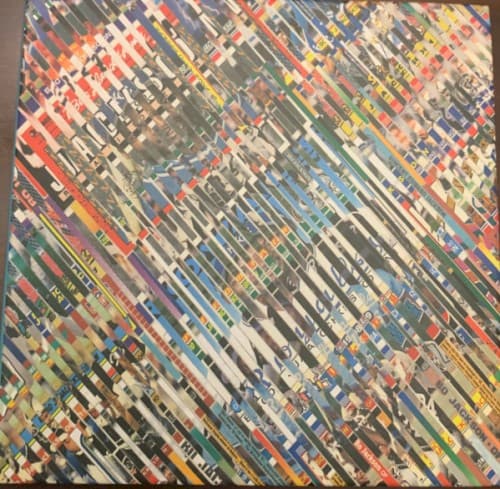
The writing has real weaknesses, mostly in what it refuses to do. Boldy never zooms out, never reflects on the work he's describing, never asks whether it was worth it or what it cost beyond the ledger. The paranoia that critics have called atmospheric is really just repetition: every other verse mentions looking over his shoulder, checking mirrors, expecting raids. By the tenth mention it stops sounding tense and starts sounding like a tic. The album's title and cover reference Bo Jackson, but the metaphor is never developed—there's no exploration of dual careers or crossover talent, just the name as branding. Two back-to-back two-minute cuts in the back half feel like unfinished ideas, verses that didn't expand into full songs. They don't ruin the flow, but they don't justify their existence either.
The Rhythm of Routine
The sequencing is the album's most underrated strength. Bo Jackson moves like someone driving the same route every day—minor variations, no surprises, the comfort of routine. The first three tracks establish the template: mid-tempo beats, meticulous verses, no hooks to speak of. The next stretch deepens the mood without shifting it. The halfway point arrives as the album's only real event, a posse cut that earns its length by letting three distinct voices occupy the same sonic space without competing. Then the album exhales: two brief cuts feel like interludes, palate cleansers before the final stretch.
The back half sags slightly. The next section brings more guests and slightly more propulsive beats, but they also introduce the only moments where the album feels like it's trying to deliver singles rather than sustain a mood. The closing run returns to the same energy the album opened with, which is both a victory and a missed opportunity—there's no arc, no revelation, no sense that the 41 minutes added up to anything beyond their runtime. The pacing is so even that peaks and valleys barely exist. The album never drags because nothing ever lasts long enough to overstay, but it also never builds because it refuses to climax.
What holds it together is consistency of tone. Every track sounds like it belongs, and the Alchemist's refusal to repeat himself sonically means the ear stays engaged even when Boldy's content circles the same drain. The length is the album's smartest decision—at 41 minutes, it ends before the method exhausts itself. Another ten minutes and the sameness would become a problem the production couldn't solve.
Who This Album Is For and Where It Ranks
Bo Jackson is the best version of what Boldy James does, which means it's also a test of whether you want to hear him do it for 41 minutes. If you value writing that treats the drug trade as labor rather than legend, this is essential. If you need dynamic range or emotional variation or any sense that the narrator has feelings about his subject, this will feel like homework. Among the Boldy-Alchemist collaborations, it's a refinement rather than a breakthrough—sharper and more sonically adventurous than The Price of Tea in China, but not different in kind.
This is an album for fans of Roc Marciano, Mach-Hommy, and the current wave of New York street rap that values monotone precision over personality. It's for listeners who want beats that reward headphone listens and verses dense enough to require transcription. It is not for anyone looking for hooks, anthems, or moments they'll remember outside the context of a full album listen. Start with Photographic Memories for the album's clearest statement of purpose, then Double Hockey Sticks and Turpentine for the Alchemist at his most inventive. If those three tracks work, the rest will land. If they feel like watching paint dry, skip the album entirely.
The aging will depend on whether the current street-rap aesthetic holds. Right now, in 2021, Boldy's approach feels like a correction to the excess and melodrama that dominated the 2010s. In five years it might sound visionary or it might sound like a dead end, a style so committed to one mode that it couldn't evolve. What won't change is the craftsmanship—the writing is too detailed and the production too considered to become irrelevant. For listeners who came up on Griselda and want something even more austere, this is the next step. For everyone else, it's a well-executed exercise in diminishing returns.
Track Listing
Double Hockey Sticks
▲The album opens with horror-movie bells and a menacing piano loop, Alchemist setting a tone that's more cinematic than the rapping will allow. Boldy enters with his usual inventory—weight, routes, prices—but the beat's gothic atmosphere makes the mundane details feel ominous. The refusal to build to a hook or climax establishes the album's method: sustained mood over event. It works as an introduction because it promises something the album doesn't quite deliver, a sense of danger that the monotone vocals rarely convey.
Turpentine
●A murky jazz loop that never resolves, drums that land lazily behind the beat, and Boldy cataloging his work with the enthusiasm of someone filing taxes. The production is excellent—blurred and aquatic, like the sample is playing underwater—but the verse is pure repetition, the same observations about paranoia and product that will appear on half the other tracks. The lack of a hook or bridge makes it feel like one long verse, which is the point, but also the limitation.
Brickmile to Montana
●Benny the Butcher's verse is the album's most animated moment, his voice louder and more aggressive than anything Boldy offers. The contrast is instructive: Benny treats the beat like something to conquer, while Boldy treats it like something to inhabit. The problem is that Benny's approach makes Boldy sound even more muted than usual, and the track ends up feeling like a guest verse that outshines the host. The beat, with its slow-motion soul loop, deserved a longer runtime.
E.P.M.D.
●Boldy runs through a week's worth of transactions without stopping for air: cars, corners, quantities, paranoia. It's impressive as a technical exercise in packing detail into sixteen bars, but the absence of any reflection or emotional color makes it feel like listening to someone read aloud from a ledger. The beat is skeletal, just a few minor-key chords and a rim shot, which gives Boldy nowhere to hide. The writing is sharp, but the monotony is the point, and that won't work for everyone.
Steel Wool
●The minimalism reaches its peak here: the beat is barely there, just a stuttering loop and some faint percussion, and Boldy's voice is the only thing carrying the track forward. The writing is as specific as ever—street names, product types, prices—but the lack of sonic variation means the verse blurs into the ones before and after it. It's a strong individual performance that doesn't stand out in the album's context, which is both the album's greatest strength and its central problem.
Photographic Memories
●The album's centerpiece and its most deliberate risk. Alchemist strips the beat down to almost nothing—a few sustained chords, some cymbal shimmer, silence in the gaps—and lets three monotone rappers occupy the same space. Boldy opens with another inventory, Earl Sweatshirt follows with his usual fractured syntax and half-mumbled asides, and Roc Marciano closes with the same near-whisper he's used for a decade. The result is a track with no dynamic range at all, three voices that sound like they're all rapping underwater. It's mesmerizing for about two minutes, then exhausting. The gamble is that sustained dread can replace momentum, and it almost works—the beat is eerie enough to hold attention even when the verses don't contrast. But by the end, the lack of variation becomes oppressive. This is the song that will define how listeners feel about the album: either it's the thesis statement or it's proof the method has limits.
Speed Trap
●A two-minute sketch that feels like an unfinished idea. The beat is solid—ominous keys, a shuffling drum pattern—but the verse ends just as it's getting started, and there's no hook or bridge to fill the space. It works as a palate cleanser between longer tracks, but it doesn't justify its existence as a standalone cut.
Diamond Dallas
●Stove God Cooks matches Boldy's energy and subject matter so closely that his guest verse feels redundant rather than complementary. The beat has more knockto it than most of the album, with a chopped soul sample that actually swings, but neither rapper takes advantage of the propulsion. The result is the album's closest attempt at a single, undermined by two verses that sound like they were written from the same template. Competent but forgettable.
Flight Risk
●Another two-minute cut that feels like a verse in search of a full song. Boldy runs through the usual topics—surveillance, product, paranoia—over a minimal beat that doesn't develop. It's not bad, but it's not necessary either, and the back-to-back short tracks make the album's second half feel less committed than the first.
Illegal Search & Seizure
●Boldy narrates a traffic stop with the detachment of someone filling out a police report after the fact: what the officer said, where the product was hidden, how the situation resolved. The writing is precise and the beat is appropriately tense, with a looped string sample that sounds like it's about to snap. But the lack of emotional response—no fear, no anger, just documentation—makes it feel like a reenactment rather than a story. Strong craft, missing the human element.
Fake Flowers
●Freddie Gibbs and Currensy deliver competent verses over a beat that has more melody than most of the album, but neither guest brings much beyond execution. Gibbs, usually the most charismatic voice in any room, dials his energy down to match Boldy's, which makes the track feel like a missed opportunity for contrast. Currensy floats through his verse with his usual laconic cool, which fits the vibe but doesn't add anything the album needed. The beat, with its woozy piano loop, is strong enough to carry the weight, but the track ends up feeling like a posse cut that forgot to bring the posse energy.
3rd Person
●Late-album Boldy doing exactly what he's done for the previous 35 minutes: itemizing the work, checking mirrors, moving weight. The beat is drowsy and textured, with a sample that sounds like it's being played on a warped tape, and the verse is as detailed as anything on the album. But by this point the method has exhausted its novelty, and the track feels like confirmation rather than development. Solid, but the album would not meaningfully change if it were cut.
First 48 Freestyle
●The album closes with Boldy freestyling over a minimal loop, no hook, no guests, just three minutes of the same meticulous drug-trade narration that opened the album. It's a deliberate choice to end where it began, refusing any sense of progression or resolution. The beat is sparse enough that the voice is the only focal point, and Boldy delivers with the same measured cadence he's used throughout. As a closing statement it's consistent with the album's refusal to climax, but it also means the album ends not with a bang or a whisper, but with a shrug. Competent, committed, and proof that the method works best in smaller doses.