The scorecard
5.0/10 · Weak
- Writing25%
- 5.5
- Production25%
- 5.0
- Delivery15%
- 6.0
- Cohesion15%
- 4.5
- Originality10%
- 3.5
- Replay value10%
- 4.5
The group aims for motivational uplift and social commentary but falls into platitudes; only a few verses carry the specificity and edge that made them essential
The soul-sample approach is warm but lacks tension; aside from Adrian Younge's work on Crushed Egos and one 4th Disciple track, the beats are either too polite or too busy trying to make a point.
Method Man and Inspectah Deck still sound engaged but Ghostface and Raekwon appear sparingly and the energy gaps are large enough to drag the album down.
Fifteen tracks with motivational interludes and uneven sequencing drag everything down; the middle stretch is a slog and the MLK interlude adds nothing.
The uplifting tone is borrowed from others rather than invented; the production recalls their past without advancing it or offering a convincing alternative.
The preachiness and filler make front-to-back listens a chore; a few tracks reward return visits but it aged into footnote status quickly.
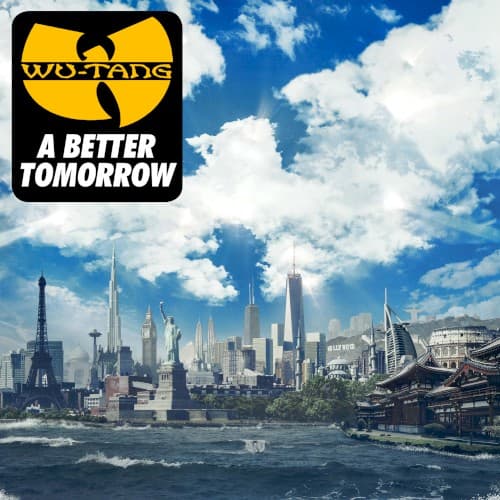
Wu-Tang Clan A Better Tomorrow — When the Hardest Group Went Soft
The album RZA wanted to make and the album Raekwon refused to record for months are the same album, and that is the problem with A Better Tomorrow. Released in 2014 on Warner Bros. Records after years of public infighting, it is the sound of the producer who built the Wu empire trying to pivot the Clan toward inspirational soul-sample uplift while half the crew either stayed home or showed up under protest. The result is not a compromise but a concession: RZA got his way on the sound and the sequencing, and what arrived two decades after their debut is a Wu-Tang album that plays it safe. The thesis here is that maturity means optimism, and optimism means smoothing out the edges that made the group dangerous in the first place.
The friction shows in the credits and the absences. Raekwon and Ghostface appear on a combined six tracks out of fifteen, and even when present they sound like guests fulfilling a contract. The development notes from the FACT SHEET read like a divorce: Raekwon called RZA's plan too humble for the hardest group in the game, RZA responded that they were on different creative paths, and they reconciled only after the release date was set. The music reflects that cold peace. A Better Tomorrow wants to be a statement about survival and legacy, but it lacks the hunger and the friction that made those themes land on earlier Wu records. It is an album about staying together made by a group that was barely speaking.
Soul Samples and Missing Sparks
RZA handles production on twelve of fifteen tracks, with assists from Mathematics, 4th Disciple, and one appearance each from Rick Rubin and Adrian Younge. The sound is built on warm soul loops and Martin Luther King Jr. speeches, a direct echo of Kanye West's mid-2000s template rather than the basement grit the Clan built their name on. RZA's ear for melody has not dulled, but the beats here lack tension. Hold the Heater flips a Johnny Mathis sample into something pillowy and inert. The title track builds on a Harold Melvin and the Blue Notes loop that telegraphs its uplift from the first bar. Even Ruckus in B Minor, the opener co-produced by Rick Rubin, has a menacing low-end but no real danger in the arrangement; it promises chaos and delivers a lecture.
The two exceptions prove the rule. Crushed Egos, produced with Adrian Younge, has the eerie precision and dusty horn stabs that suit the group's strengths: Inspectah Deck and Method Man trade verses over a beat that breathes. Necklace, handled by 4th Disciple, has some of the old knock and enough space for the rapping to sit forward in the mix.
Everywhere else the production is either too polite or too busy trying to make a point. Keep Watch, produced by Mathematics, has a workable soul-funk bounce but the hook from Nathaniel drags it toward adult contemporary. Ron O'Neal aims for blaxploitation cool and ends up generic. Pioneer the Frontier sounds like a beat RZA archived in 2001 and pulled out to fill the runtime.
The writing aims for wisdom and mostly lands on slogans. Method Man still has timing and presence, Inspectah Deck still writes with clarity, but the verses are filled with talk of staying strong, rising above, and coming together, all delivered without the concrete imagery that would make those ideas stick. GZA appears on two tracks and sounds disengaged. Ghostface, who recorded only two songs according to the FACT SHEET, delivers one strong verse on Felt and then vanishes.
Raekwon, who resisted the album's direction publicly, contributes sparingly and never sounds convinced. The group dynamic that made their early records work—nine voices pushing against each other, creating friction—has been replaced by a rotation of members taking turns on inspirational autopilot. Street Life appears on Mistaken Identity but the track goes nowhere. The album wants to sound like grown men reflecting on what they built, but it ends up sounding like men going through motions they no longer believe in.
Sag in the Middle, Speeches at the End
The sequencing front-loads what little energy the album has and then drifts into filler. The opening stretch arrives with some promise, and one early track reminds you what the group used to do well. After that the pacing collapses. The middle stretch is a slog: five consecutive tracks where the tempos sag, the hooks repeat the titles, and the verses blur together.
The back half is weighed down by two interludes masquerading as songs. One samples Martin Luther King Jr.'s I Have a Dream speech over a plodding beat and adds nothing to either. The closing track ends the album on an O'Jays loop and a premise—getting the family back together—that the music itself has already disproven.
At fifteen tracks the album is at least three songs too long, and the excess is filler rather than experimentation. One track interpolates Dusty Springfield and tries for narrative but the writing never catches up to the concept. Another has no reason to exist. The album would have been stronger at ten or eleven tracks, but RZA sequenced it like a statement when he only had half a group's worth of material.
The peaks are isolated and the sags are consecutive, which makes front-to-back listens feel like work. One track has a decent beat but no verse that justifies the five-minute runtime. The best moments are scattered, and the weakest ones sit next to each other and drag everything down.
A Footnote in a Legendary Catalog
A Better Tomorrow is the weakest Wu-Tang Clan album in their catalog, not because it attempts something new but because it abandons what worked without offering a convincing replacement. The group that made menace and chaos into art spent this album trying to inspire and console, and RZA's production—smooth, warm, safe—undercuts the edge that made their voices worth hearing in the first place. The development story in the FACT SHEET makes it clear that this was RZA's vision over Raekwon's objections, and the music sounds like a producer who won the argument but lost the group. Ghostface and Raekwon show up sporadically and contribute little. The verses that do land, mostly from Method Man and Inspectah Deck, are surrounded by filler and motivational talk that has no place on a Wu-Tang record.
This album is for completists only, and even they should lower expectations. The debut at number 29 on the Billboard 200 with 24,386 copies sold in the first week tells you how the fanbase received it, and the mixed reviews tell you the rest. If you are new to the group, start anywhere else; if you are a fan checking in after years away, this will only disappoint.
The two tracks worth hearing are Crushed Egos for the Adrian Younge production and Felt for the one moment where Ghostface sounds alive. After that, the album is skippable. For what to hear next, go backward: their debut remains the essential entry point and their second album proves they could build on it. A Better Tomorrow is what happens when a group tries to mature by sanding off what made them matter. It aged into a footnote fast and deserves to stay there.
Track by track
Track Listing
Ruckus in B minor
SolidCo-produced with Rick Rubin, the opener has a menacing low-end and jagged drums that promise the chaos in the title, but the verses settle into motivational talk that never delivers on the threat. Method Man opens with presence but the writing is generic. Inspectah Deck follows with more energy than most of the album will muster, but the hook is a chant and the song ends without a payoff. It sounds like an intro stretched past its purpose.
Felt
StandoutThe best writing on the album: Ghostface delivers a verse with the specificity and narrative detail that made him essential, moving through a story of loss and survival with economy and no wasted lines. RZA's production is minimal and out of the way. Method Man and Masta Killa follow but neither matches the opener. The track proves what the album could have been if more of the group had shown up engaged, and Ghostface's absence from most of the remaining runtime makes that clear.
40th Street Black / We Will Fight
SolidA two-part track produced by Mathematics and RZA that splits between a street narrative and a call to unity. The first half has some knock in the drums but the writing is broad. The second half pivots to protest and empowerment but lands on slogans. The transition between the two sections is abrupt and the song never coheres into one idea. It feels like two unused verses forced into a single track to fill space.
Mistaken Identity
WeakStreet Life guests on a mid-tempo track about misrecognition and survival. RZA's production has a melancholy loop but no real movement, and the verses describe scenarios without sharpening them into images. Method Man and Cappadonna appear but sound like they are reading from a script. The hook repeats the title and adds nothing. At nearly six minutes the track overstays its premise by half.
Hold the Heater
WeakBuilt on a Johnny Mathis sample that RZA flips into something soft and inert, the track is all cushion and no edge. The verses are about staying armed and staying ready, but the production undercuts the content and the rapping is drowsy. Raekwon appears briefly and sounds disinterested. The hook is forgettable and the song ends without making a case for its existence. Pure filler.
Crushed Egos
StandoutThe album's sharpest track. Adrian Younge's production has the eerie precision and dusty elegance that suits the group's strengths: low strings, spare drums, and a horn stab that punctuates without overwhelming. Inspectah Deck and Method Man trade verses over a beat that breathes, and both sound focused. The writing is still broad—ego, pride, competition—but the delivery has snap and the sequencing gives the verses room. At two and a half minutes it does not overstay. This is what the rest of the album needed more of.
Keep Watch
SolidMathematics builds a soul-funk loop with a workable bounce, but the hook from Nathaniel drags the track toward adult contemporary radio and kills the momentum. GZA, Method Man, Cappadonna, and Inspectah Deck rotate through verses that describe vigilance and survival without offering a single concrete image. The production is competent but the song has no center, and Nathaniel's singing makes it sound like a crossover bid that no one asked for.
Miracle
WeakA five-minute 4th Disciple production with a warm soul loop and verses about resilience and faith. The beat is solid but the writing is motivational filler: talk of blessings, struggle, and triumph with no specificity to make it stick. Method Man, Inspectah Deck, and Cappadonna all appear and all sound half-engaged. The runtime is not earned and the song drifts. Skippable.
Preacher’s Daughter
SolidRZA interpolates Dusty Springfield and builds a track around a narrative premise—attraction, temptation, the preacher's daughter as forbidden fruit—but the writing never catches up to the concept. The verses describe the scenario in broad strokes and the hook repeats the title. Method Man and Inspectah Deck both appear but neither sharpens the story into something visual or specific. The production is pleasant but inert, and the song ends without a resolution or a reason to return.
Pioneer the Frontier
WeakA RZA production that sounds like a 2001 archive cut, all empty space and echoing drums with no real melody or movement. The verses are about breaking new ground and leading the way, delivered with no conviction and no imagery to support the metaphor. Cappadonna, Method Man, and Inspectah Deck rotate through but none of them sound invested. The track has no hook and no reason to exist. Filler.
Necklace
Standout4th Disciple delivers a beat with some of the old knock and enough space for the rapping to sit forward. Ghostface appears and delivers a verse with detail and momentum, the second time on the album he sounds present. Raekwon follows and matches the energy. The writing is still broad—jewelry, status, competition—but the two of them create friction and the production supports it. The track works because it lets the group do what they do well without trying to make it inspirational.
Ron O’Neal
SolidNamed for the Superfly actor and aiming for blaxploitation cool, the track ends up generic. RZA's production has a funk loop and a bassline but no real menace, and Nathaniel's hook is smooth to the point of blandness. Method Man, Raekwon, and Inspectah Deck trade verses about street life and survival, but the writing is vague and the energy is low. The track premiered on The Daily Show according to the FACT SHEET, and it sounds like it was built for that moment rather than for repeat listens.
A Better Tomorrow
WeakThe title track samples Harold Melvin and the Blue Notes' Wake Up Everybody and builds an entire song around the premise of hope and change. Tekitha sings the hook and RZA, Method Man, and Inspectah Deck deliver verses about unity and perseverance, all of it broad and earnest and utterly lacking in the grit or edge that made the group worth listening to in the first place. The production telegraphs its uplift from the first bar and the writing never complicates the message. It is the thesis of the album in miniature: well-intentioned, competently executed, and completely toothless.
Never Let Go
WeakAn interlude pretending to be a song: RZA samples Martin Luther King Jr.'s I Have a Dream speech over a plodding beat and adds Wu-Tang verses about struggle and hope that pale next to the source material. The track is reverent to the point of being inert, and it contributes nothing to either King's legacy or the album's arc. At over five minutes it overstays badly. It feels tacked on to add weight the music itself cannot carry.
Wu-Tang Reunion
SolidThe closer samples The O'Jays' Family Reunion and builds a track around the premise of getting the crew back together, which the album itself has already proven impossible. RZA, GZA, Masta Killa, and others rotate through verses about loyalty and legacy, all delivered with nostalgia but no real conviction. The production is warm and the loop is classic soul, but the song ends the album on a note of hollow sentiment. It is the sound of a group pretending the last two years of infighting did not happen, and the music knows it.