The scorecard
6.5/10 · Good
- Writing25%
- 7.0
- Production25%
- 6.5
- Delivery15%
- 7.5
- Cohesion15%
- 5.5
- Originality10%
- 6.0
- Replay value10%
- 6.0
Cube is sharpest when he aims at institutions and neighborhood reality, as on Ghetto Vet, and loosest on the money, industry and relationship songs that fill the middle of the tracklist.
Six credited producers, Cube among them, give the record hard drums and weight, but the guitar-driven Korn collaboration and the scattered beats stand in for the rolling funk bass that West Coast rap was built on.
After five years away his barking, clipped voice is undiminished, and it carries songs like Ask About Me and the title track further than their beats alone would.
Eighteen tracks across a war-themed disc with a sequel promised, the album bunches its best material at the front and ends on a run of prison songs that repeats a single idea.
The rap-metal crossover fits the Family Values moment, but the rest is a veteran re-running his own themes rather than extending the sound of Los Angeles rap.
A short playlist of the opener, title track, Ghetto Vet and Greed holds up; the full eighteen-track run is much harder to sit through twice.
Ice Cube War & Peace, Vol. 1 (The War Disc) — A Loud Return With Too Many Targets
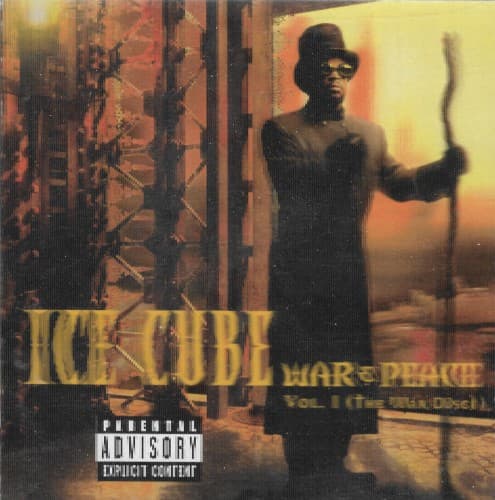
War & Peace, Vol. 1 (The War Disc) is the sound of a West Coast heavyweight coming back after five years and deciding the safest way to prove he still matters is to hit every target at once. Ice Cube's voice is intact. The barking, clipped, prosecutorial delivery that made him the most feared writer in Los Angeles rap is audible from the opening bars of Ask About Me. What has gone missing is selectivity. Eighteen tracks, six credited producers, a rap-metal collaboration, a soundtrack leftover and a closing run of prison songs add up to a record that is loud in every direction and pointed in few.
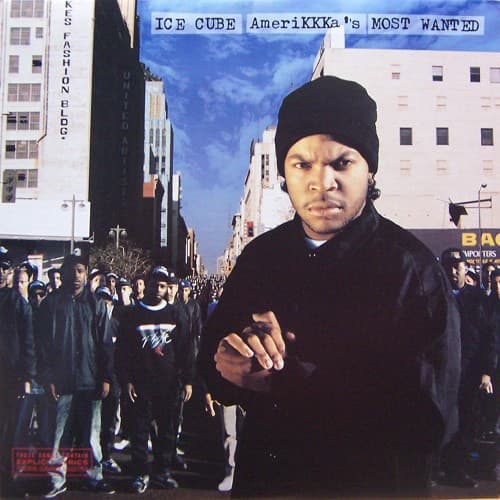
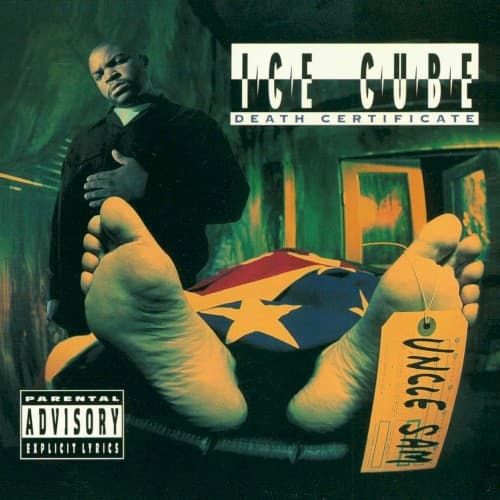
The thesis is simple: this is a good Ice Cube performance wrapped around a middling Ice Cube album. Against the tradition he helped build, it earns its anger but borrows much of its sound. [AmeriKKKa's Most Wanted](/albums/ice-cube/americkkkas-most-wanted/review) and [Death Certificate](/albums/ice-cube/death-certificate/review) had a point of view in every beat and a reason for every song. Here the point of view is mostly in the voice, and the beats and sequencing leave it to work alone. The gangsta rap that Los Angeles exported in the early nineties was lean and funk-fed, and a lot of this record is heavier, busier and more generic than that.
It was still a hit, debuting at number seven and going platinum within weeks, and the commercial result fits the music: a fan base glad to hear him back, served a very large portion. The stakes are modest but real. This was the album meant to show that a founder of West Coast gangsta rap could survive a changed market, and it answers that question only in part. The voice survives, and the editing does not.
Anger Without an Address, Beats Without a Bassline
The writing on The War Disc works best when Cube has a target he can name and a scene he can describe. He has always been a prosecutor on the mic, building a case in short, hard-stopped lines, and when the subject is neighborhood reality, as on Ghetto Vet, the method still produces a convincing argument. When the subject drifts to money, fame and relationship grievances, the same method turns into complaint. The titles of the middle stretch, Cash Over Ass and The Curse of Money among them, signal a writer revisiting familiar ground without a fresh angle, and the verses rarely add detail that the titles have not already supplied. Compare that with the Bay Area hustle-rap tradition, where money songs tend to arrive with slang, street arithmetic and personality; Cube's version is more sermon than inventory.
The production is a different kind of problem. Bud'da, E-A-Ski, K-Mac, N.O. Joe, T-Mix and Cube himself share the credits, and the album sounds like a committee. The drums are hard and the mixes are big, which suits his voice, but the rolling melodic bass that defined Los Angeles rap in the years after his early albums is largely absent. In its place come stiff synth lines, rock guitar and a sense of general loudness. The one place where the stylistic gamble is clear is the Korn collaboration, which fits the Family Values touring circuit he was working at the time. It is a snapshot of that moment rather than a song with lasting purpose, and it sits awkwardly next to the street material around it.
Delivery is the album's real asset. Cube sounds rested and furious, with enough breath control to attack verses in long, angry runs, and his hooks are chanted rather than sung, which keeps the energy from slackening. Even weaker beats such as the one under Dr. Frankenstein improve once he starts rapping over them. The limitation is range. Nearly every song is pitched at the same intensity, so the louder tracks stop registering as peaks. A battle record needs variety in its attacks, and here the attacks are all frontal.
The concrete weaknesses, then, are the middle-album writing, the committee beats and the lack of tonal contrast. The strengths are a vocal performance that never lets up and a handful of songs where subject, beat and voice agree. Greed, carried over from the Gang Related soundtrack, shows what a focused entry sounds like, and it also underlines how much of the surrounding material was not shaped as carefully.
Front-Loaded Fury and an Eighteen-Track Slog
The sequence is the album's biggest structural flaw. The first third is the strongest stretch: Ask About Me opens with a clear statement of purpose, the title track and the social commentary of the early run give the record a spine, and the rap-metal detour arrives while the energy is still high enough to absorb it. A listener who stops after six or seven songs hears a tight, angry comeback and might wonder why anyone complained.
The trouble starts in the middle. The money songs and the relationship songs arrive in a block, and because the production stays hard and mid-tempo, they blur into one extended complaint. There is no change of pace, no lighter relief, no story song with a real arc to break the pattern, and the album does not reward attention here the way Cube's first three records did.
The concept gives the sequencing little to work with. A disc called The War Disc promises aggression, and aggression is delivered in bulk, but the Peace Disc that follows later is where contrast is supposed to arrive, so this volume has to sustain a single mood for roughly seventy minutes.
The closing run leans on prison themes, with several songs in a row leading to Penitentiary at the end. It is a coherent finish in subject, but by then the shape is so familiar that the closer works less as a climax than as the last item on a long list. Cutting six to eight tracks would have helped most: the record would have kept its strongest songs, lost its repeat grievances, and ended before the pacing problem became a listener's problem.
As released, the length is not earned. It reads as a veteran who had five years of material and decided not to choose.
A Strong Voice in Search of an Editor
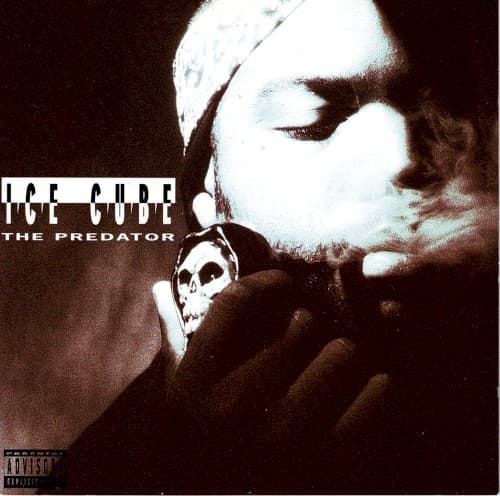
Within Ice Cube's catalog, The War Disc sits clearly below the first three albums. [AmeriKKKa's Most Wanted](/albums/ice-cube/americkkkas-most-wanted/review), [Death Certificate](/albums/ice-cube/death-certificate/review) and [The Predator](/albums/ice-cube/the-predator/review) each had a distinct sound and a thesis, and this album has neither. It does land above [Lethal Injection](/albums/ice-cube/lethal-injection/review), the previous record, because the vocal energy is better, the best songs are better, and it sounds like an artist with something to prove rather than one running down a formula. It also sits well above his 2024 album Man Down in the ratings here. The scores reflect that order: strong delivery, decent writing, uneven production and a sequence that costs the record points.
This album is for Ice Cube completists and for listeners who want to hear how a founder of West Coast gangsta rap handled the late nineties, when rap-metal and big-budget hardcore were popular. It is also for anyone who enjoys the physical sound of his voice on a loud beat. Listeners who want the funk-driven Los Angeles sound should skip it for the early albums, and anyone who dislikes long, one-note records will find the middle hard going.
It has aged unevenly. The rap-metal moment now sounds like a time capsule, and the money and relationship songs have little to add that Cube had not already said. The social commentary and the best street cuts have held up better because they depend on his craft rather than on the sound of 1998.
Start with Ask About Me, Ghetto Vet and Greed, which show the album at its most focused. Then go to The Predator for the version of Cube who had both the voice and the beats, and to Death Certificate to hear the argument he was making at full strength. The most useful way to play this record is as a playlist of six songs, which is what the other twelve are quietly asking you to do.
Track by track
Track Listing
Ask About Me
StandoutA clear opening statement. Cube's voice is placed forward and the delivery is clipped and confrontational, announcing that his five-year absence has not softened him. The beat is heavy rather than inventive, so most of the work is done by the performance, but as a mission statement it earns its place at the start. One of the three or four songs here that justify the album's running order.
Pushin’ Weight
SolidA solid early cut built on the same hard-hitting template as the opener. The hook is chanted and sticky, and Cube's verses keep the pace up, though the beat does not differ much from what surrounds it.
Dr. Frankenstein
SolidThe monster-maker concept gives the song a hook, but the beat is stiff and the writing follows the title more than it extends it. Cube's delivery lifts it above filler.
Fuck Dying
SolidThe Korn collaboration is the album's biggest stylistic gamble and a record of the late-nineties rap-metal crossover that Cube was touring with. The guitars give his voice a new surface to bounce off, and the hook has energy. As a West Coast document it is thin, because the song borrows the sound of its guest rather than building a new one with him. Fun as a curiosity and a fit for the era, but it breaks the album's tone rather than adding variety to it, and it has dated more than the street cuts around it.
War & Peace
StandoutThe title track states the concept of the two-disc project and gives the album its most ambitious writing. Cube frames conflict as a choice rather than a pose, and the performance is controlled and deliberate rather than merely loud. The beat is functional, but the song has a point to make and makes it, which is more than can be said for much of the middle of the record. A key track for understanding what he wanted the project to be.
Ghetto Vet
StandoutThe best example of Cube's social commentary on the album. He writes like a reporter with a prosecutor's temperament, staying with specific neighborhood detail instead of drifting into general anger, and the beat gives the verses room. This is the version of him that made his early albums matter: angry, but with a case to argue and evidence to support it. It deserves to be on any shortlist from the record and stands well above the surrounding tracks in the writing.
Greed
StandoutA holdover from the Gang Related soundtrack, and one of the album's tightest songs. The subject, the beat and the delivery all point the same way, and the cut is short on repeated ideas. It shows how much better the album could have been with more of this discipline.
MP
SolidAnother hard-edged cut, with Cube riding a heavy beat and keeping the pressure up. Competent, but it does little to separate itself from the tracks before and after it.
Cash Over Ass
WeakThe title says most of what the song has to say. The theme is a familiar one for him, and the verses repeat a rough, grievance-driven stance without a fresh angle. A representative sag in the middle of the record.
The Curse of Money
SolidA reflective angle on wealth that should be more interesting than it is. The idea is sound, but the writing stays in general statements, and the beat does not give the reflection much weight. Pleasant enough, though it is replaceable.
The Peckin’ Order
SolidA hierarchy song with a decent flow and the typical album-length intensity. It holds the attention for a verse or two, then falls back into the same mid-tempo grind that characterizes this stretch of the record.
Limos, Demos & Bimbos
SolidThe industry and fame angle gives the song a bit more personality than its neighbors, and Cube sounds comfortable pointing at the business he works in. It is still more complaint than story, and it adds to the glut of similar material in the middle.
Once Upon a Time in the Projects 2
StandoutA sequel in title and in spirit, leaning on his talent for scene-setting. It is stronger as a narrative idea than as a finished song, but its focus on a specific setting makes it one of the better mid-album cuts. It is also a reminder of how much better the album is when Cube tells a story rather than airing a grievance.
If I Was Fuckin’ You
WeakA relationship-themed track that adds to the album's long run of crude, one-note material. It is not offensive so much as redundant, and the beat does not help.
X‐Bitches
WeakAnother entry in the relationship grievance category, with little to separate it from the previous track. Filler in the middle of an already overlong stretch.
Extradition
SolidThe first of the closing run of legal-system titles. The theme is sharper than the money and relationship songs, and Cube sounds more engaged when the subject is the law rather than the people he is arguing with.
3 Strikes You In
SolidA prison and sentencing theme that suits his prosecutorial delivery. Competent and better focused than the middle of the album, though it largely repeats the ideas of the track before it.
Penitentiary
SolidThe closer ties the last run of songs together around incarceration, giving the album a thematic ending. It is more a conclusion by subject than a climax, and by this point the record's repetitions have worn down much of its force, but the finish is at least coherent and delivered with conviction.
Frequently Asked Questions
Is Ice Cube's War & Peace, Vol. 1 (The War Disc) a good album?
How does The War Disc compare to Ice Cube's early albums?
Who produced War & Peace, Vol. 1 (The War Disc)?
Who is featured on The War Disc?
Styles