The scorecard
7.5/10 · Great
- Writing25%
- 7.5
- Production25%
- 7.5
- Delivery15%
- 7.5
- Cohesion15%
- 7.5
- Originality10%
- 7.5
- Replay value10%
- 7.5
Short, concrete images tie sex, money, guns and radio into one argument, with the pointed diss and the Iceberg Slim tribute adding range.
Afrika Islam's SP-1200 and drum-machine beats, including a shrieking 303 bass line on Drama, make a cold, original sound, though the stiff programming dates.
Ice-T's flat, clipped, quick-lipped flow sits in the pocket of the drums and makes the menace feel routine.
The thesis opener and the closing tribute frame a tight thirteen tracks, though the middle stretch has some repetition.
Pairing techno-flavored machine sounds with literary pimp-novel references was unusual for rap in 1988.
The writing and I'm Your Pusher still hold up, while the drum programming and the album's attitudes toward women have aged badly.
Ice-T Power: The Album Where the Reporter Starts Making an Argument
Power is the record where Ice-T stops reporting and starts arguing. On the debut he had a stance and a template; here he has a thesis, and he spends forty-odd minutes proving it from every angle he can find. Sex is power, money is power, a gun is power, a radio playlist is power, and the people who hold it are not as different from one another as they think. The album's sound, built around a small cluster of drum machines in a Los Angeles house studio, matches that argument with a hard, claustrophobic precision. My claim is that Power is the first Ice-T album that works as an album, and that its best songs are among the most clearly written pieces of early West Coast gangsta rap.
That is a bigger statement than it may sound. The West Coast of 1988 was in the middle of a shift: Eazy-E and N.W.A were turning crime narrative into a mass-market product, and the sound of the region was moving away from electro toward something heavier and darker. Ice-T was already ahead of that curve in the sense that he was thinking about the consequences. He recorded the album quickly, at DJ Evil E's home, with Afrika Islam building the beats, and the result sounds like a group that knew exactly what it wanted and had no one to tell it to hold back.
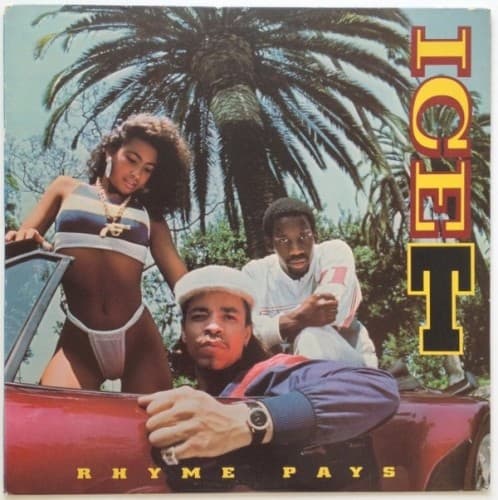
What separates Power from its predecessor, Rhyme Pays, is density. The writing is tighter, the images are more concrete, and the album refuses to give the listener a release. A contemporary reviewer in the New York Times compared its oppressive detail to a novel, and the comparison is apt: the record's strength is accumulation, not any single moment. Its weakness is the same thing viewed from the other side. Some of the programming has dated, a few songs rely on a joke that is funnier as an idea than as a verse, and the album's attitudes toward women are a real flaw that the record's own critics noticed at the time.
On balance, Power earns a strong rating, and it earns it for ambition as much as for execution.
Cold Machines, Flat Voice, Hard Edges
The album's sound is its most distinctive feature. Afrika Islam wrote the beats on an SP-1200 sampler and a Roland 909 drum machine, and one track pairs a Roland 303 bass synthesizer with the sampler, a sound Islam said was mostly heard in techno at the time. That detail explains a great deal about the record's texture. The bass is thin and shrieking instead of round and warm, the drums are stiff and fast, and the sparse arrangements leave nowhere for the voice to hide. Compared with the lush, funk-sampling production that would define the next phase of the West Coast sound, Power is cold. It is closer to a basement than to a lowrider, and that coldness is the point.
The tension between this machine-made sound and the human subject matter is what gives the album its edge. Ice-T's delivery is flat, clipped and quick-lipped, as one contemporary critic put it, and it sits in the pocket of the drum programming with an almost mechanical rightness. He rarely raises his voice, and the effect is to make the violence and the cynicism feel routine. When a guest appears, as Pimpin' Rex does on one of the singles, the contrast with Ice-T's own register shows how deliberately he holds back.
The writing is the album's real engine. Ice-T works in short, concrete images and moves between sex, crime, media and the music business with a consistency of voice that the debut lacked. The feud with LL Cool J gives some of the songs a competitive edge, and the album is better for having an opponent: the diss is witty and pointed, and the joke response to a romantic ballad is a rare moment of comic relief in a record that otherwise allows very little. The tribute to Iceberg Slim near the end shows where the pimp persona came from, and it adds a layer of literary reference that few rap albums of the period bothered with.
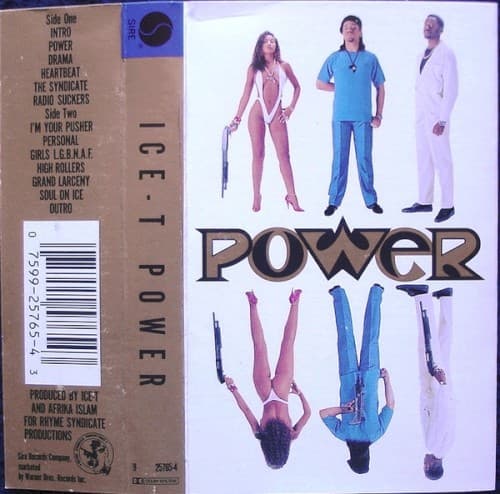
The concrete weakness is the one that the contemporary reviews already named. The album's treatment of women is crude and often hostile, and the sleeve, which several newspapers criticized, signals that the record is not interested in nuance on the subject. The Rolling Stone Album Guide also noted that the drum programming has not aged well, and the stiffness that gives the record its menace can become monotony over a full side.
Still, for a record made quickly in a home studio, the consistency is striking. The sound is built around the voice, the voice is built around the argument, and the argument holds together for the length of the record.
A Closed World Built in Thirteen Moves
The sequence of Power is carefully built around momentum. It opens with a short spoken intro and then goes straight into the title track, which sets out the album's thesis in the first five minutes. That is the right way to begin a record this focused: the listener knows what the argument is before the second song starts. The first half then moves through a run of dark, mid-tempo crime and street songs, each distinct enough from the last to avoid repetition, and each reinforcing the sense of a closed, hostile world.
The center of the record is where the pacing is most deliberate. A pair of singles, one a pointed diss and one a story about a hustler's rise, arrive in the middle, where they refresh the album's energy just as the stiff drum programming begins to wear. The humor of the album's joke song, placed late, gives the second half a shape that the first lacks, and the closing tribute to a pimp-era novelist brings the thematic arc around to its source. The sequence is not perfect, and there are moments in the back half where the tone sags and the programming starts to feel repetitive, but the shape is purposeful.
Where the album slows is in the stretch between the singles. A few tracks in that run sound more like variations than developments: the beats are tight and the verses are fine, but the writing does not add anything the earlier songs had not already said. It is the one section where the length is felt.
At thirteen tracks and about fifty minutes, the running time is earned for the most part. The two short bookends take almost no time, and the songs are rarely stretched past what they need. The album is shorter than the sprawling records that would follow it in the genre, and the economy is a strength. It is the first Ice-T record that feels like a single idea carried through to the end, which is the best argument for hearing it in order.
Where the Template Became a Body of Work
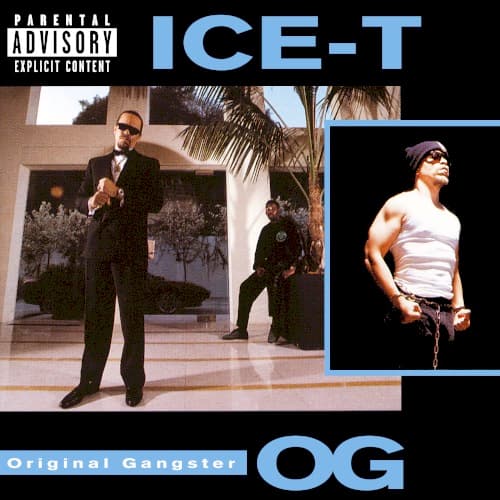
In Ice-T's catalog, Power is the point where the artist found his voice. It ranks above Rhyme Pays because the writing is sharper, the sound is more focused, and the album works as a whole instead of as one great song surrounded by period filler. It ranks below O.G. Original Gangster, the later record that widens the scope and has more sonic variety, though it is the tighter listen. A strong rating is fair: this is the work of an artist at his most disciplined.
Power is for listeners who want to hear gangsta rap built from ideas as well as attitude, who are curious about the early West Coast sound before G-funk took over, or who like a cold, machine-built production style. It is also a good record for anyone interested in how rap feuds shaped albums, since the LL Cool J conflict feeds directly into two of the best songs. It is not for those who need warmth in their beats, who are sensitive to the album's hostile treatment of women, or who want the layered funk production of the following decade.
As for how it has aged, the answer is mixed but favorable. The writing and the delivery have held up, and the sense of claustrophobia is intact. The drum programming is dated, and some of the album's attitudes belong to their time. Its reputation has grown among critics, and the platinum certification suggests it has found an audience over the years.
Start with "I'm Your Pusher", the single that sums up the album's mix of humor and menace, then play the title track to hear the thesis stated plainly, and finish with "Soul on Ice" for the literary tribute that explains the persona. Those three give the full picture.
For what to hear next, go to O.G. Original Gangster to hear the same writer with a wider range and a bigger band, or to Eazy-E for the other, rowdier version of what the genre was becoming in the same year. This is the record where the template became a body of work.
Track by track
Track Listing
Intro
SolidA brief spoken opener that sets the scene and moves out of the way in just over a minute. It does its job as a cold open and is not meant to be more.
Power
StandoutThe album's thesis statement and one of its strongest tracks. Ice-T moves through different forms of power, from sex to violence to money, in a flat, controlled voice that never raises itself above the beat. The programming is tight and cold, and the verses are packed with short, concrete images that make the argument feel earned instead of preached. It is a better opener than most records in the genre could offer, because it tells you what the album is about and then spends the next forty minutes backing it up. A key track and the right place to begin.
Drama
StandoutA track built on a Roland 303 bass synthesizer through the sampler, and the sound is as unusual as that description suggests. The bass shrieks where most rap bass booms, and the effect is tense and slightly alien. Ice-T's flat delivery sits comfortably in the pocket of the beat. It is one of the clearest examples of how the album's cold sound serves its subject, and an unusual moment for the period.
Heartbeat
SolidA tense, rhythm-led track in the album's middle stretch. The beat is tight, the delivery is controlled, and the writing stays in the same cold register as the surrounding songs. Solid and consistent, without adding much to what the record has already said.
The Syndicate
SolidA crew track featuring Donald D and Hen-Gee, both from the group's own circle. The voices give the record a rare moment of ensemble energy and widen its range of timbres. It is a loose, rowdy cut that works best as a break from the album's solitary tone, and the guests hold their own. A solid track and a useful change of texture.
Radio Suckers
StandoutA pointed statement of independence, written to say Ice-T would not bend his music to get played. The attitude is clear and the writing is sharp, and the beat gives the verses room to land. It works as a mission statement for the record as a whole, even if the song is more convincing as an idea than as a piece of music.
I’m Your Pusher
StandoutThe album's best-known single and the one that most clearly combines its wit and menace. The song goes after LL Cool J and borrows from a Curtis Mayfield classic, according to the credits, and the result is smooth, sly and cold in the same breath. Pimpin' Rex's guest vocal adds a dash of real-world color, and Ice-T plays against it with a dry, assured delivery. The hook is easy to remember, and the song's reputation as one of the artist's most memorable records is well earned. A key track and an obvious place to start.
Personal
SolidA mid-album cut with programming credited to Bilal Bashir. The beat is clean and the delivery is steady, but the writing does not distinguish it from the songs around it. Solid, and a little forgettable.
Girls L.G.B.N.A.F.
SolidThe joke response to a romantic hit, according to Ice-T, built on two drum machines wired together. The idea is funnier than the song, and the writing is crude and dated in its attitudes, but the beat has a bounce and the track provides a rare moment of comic relief. Its place in the record's feud with LL Cool J gives it extra context. An uneven but lively track that shows the album's sense of humor, and its limits.
High Rollers
StandoutA single about a hustler's rise, with a guest spot from Kid Jazz. The beat is tight and the story is told with Ice-T's usual flat clarity, and the track has a stronger sense of narrative than many of its neighbors. A solid, confident cut that gave the record a second hit and refreshed the energy of the album's back half.
Grand Larceny
SolidA crime-themed track that fits the record's middle-to-late stretch. The beat is steady and the delivery is consistent, but it sounds more like a variation on the album's themes than a new development. Competent filler within a strong run.
Soul on Ice
StandoutThe tribute to Iceberg Slim, whose books Ice-T read in high school, and the most literary moment on the record. It explains where the persona came from and gives the album a human, almost reflective closing note that the cold sound might not have suggested. The beat is understated and the delivery is more open than usual, which makes the confession land. A thoughtful way to end the main body of the album and a key track for understanding the artist.
Outro
SolidA short closing piece that wraps up the record in under a minute. It is a brief sign-off and little more.
Frequently Asked Questions
Is Ice-T's Power a good album?
Who produced Ice-T's Power?
What is I'm Your Pusher about on Ice-T's Power?
Styles