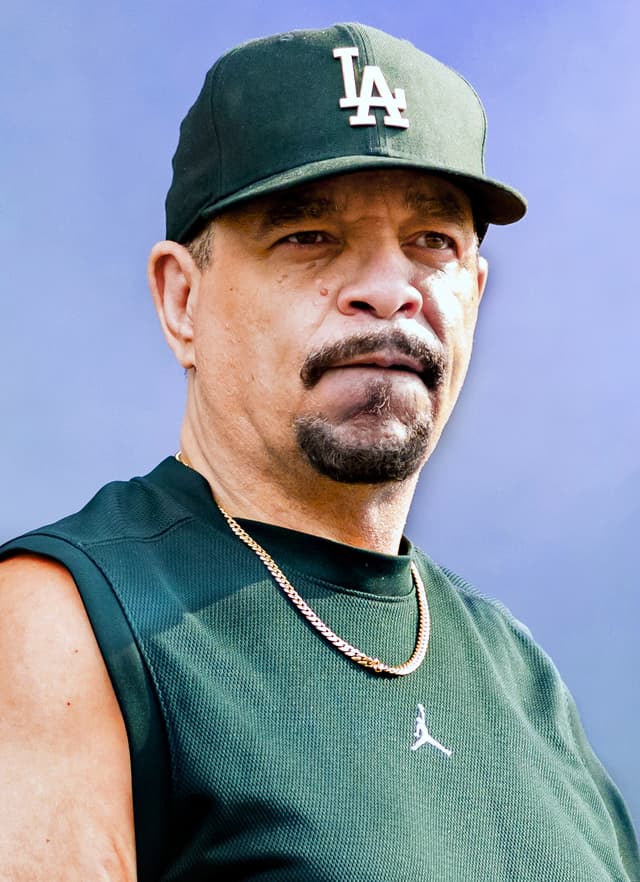
Ice-T: The Los Angeles Storyteller Who Gave West Coast Rap Its Street Reporting
Ice-T was born Tracy Marrow in Newark, New Jersey, and finished growing up in Los Angeles, where he landed in Crenshaw as a teenager after losing both parents. He picked up his name from the pimp novels of Iceberg Slim, whose cadences he recited for friends, and he later served a stretch in the Army before turning his attention to turntables and a microphone. That East Coast birth and Los Angeles education matter, because Ice-T always sounded like an observer with a notebook rather than a participant with something to prove.
His early singles were electro records made in the early 1980s, and he appeared on the Breakin soundtrack, work he has since dismissed. The pivot came when he heard Schoolly D's "P.S.K. What Does It Mean?" and decided hard-edged street narrative was where he belonged. The result was "6 in the Mornin'," built on a minimal 808 pattern, and it is the record most often cited when people trace the origins of West Coast gangsta rap.
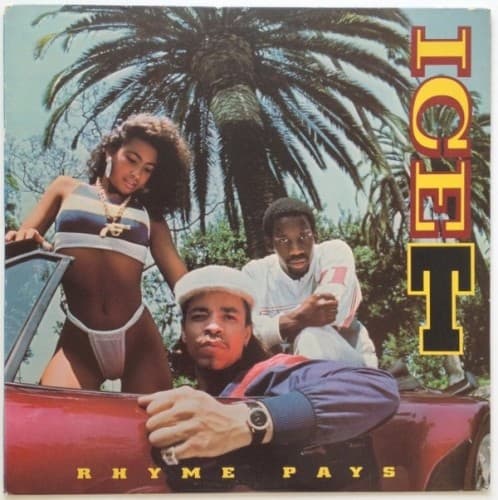
Sire Records signed him, and Rhyme Pays arrived in 1987. From there he built Rhyme Syndicate, put together a run of gold-certified albums, and became one of the few rappers of his generation to fold a second career in rock and a third in television into the same life. This profile follows the rap work first, because that is where the argument about his importance is won or lost.
From 808 Minimalism to Heavy Guitars: How Ice-T Built His Sound
Ice-T's rapping style is conversational and sharply paced. He is not a flashy technician. What he does is lay out a scene, a character and a consequence in tight verses, the way a crime reporter would, and he lets the details carry the moral weight. His voice has a dry, unhurried authority that made even his most violent material feel like testimony rather than boasting.
Musically, his early records lean on drum machines and DJ scratching, with Afrika Islam, DJ Evil E and DJ Aladdin shaping the sound of Rhyme Pays. The party-leaning sound of that debut sits closer to electro and early hip-hop than to the heavier, funk-soaked West Coast records that came later, and you can hear him still working out what his voice was for. By the time of Power, the production leaned harder and the rhymes grew more assured.
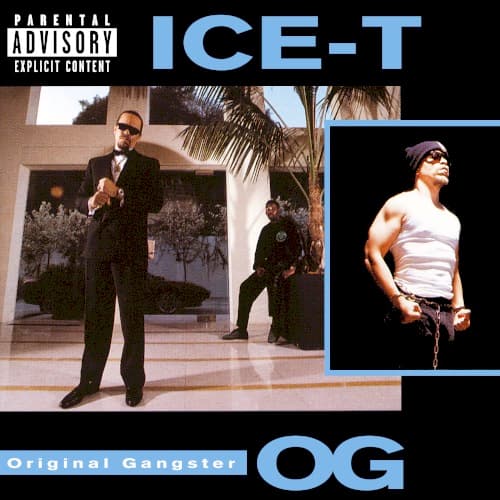
Then there is the rock side. Ice-T had loved heavy metal since his teens, and he formed Body Count in 1990, introducing the band on O.G. Original Gangster with the title track. It was not a gimmick. He collaborated with Slayer on the song "Disorder" for the Judgment Night soundtrack, and he has worked with groups such as Motorhead, Megadeth and Pro-Pain. For a rapper to be credible to both a Crenshaw block party and a metal festival crowd is rare, and it explains why his audience was always wider than the genre's usual boundaries.
Rhyme Pays to Home Invasion: The Albums, the Label Fight and the Pivot to Screens
Rhyme Pays (1987) was the opening statement. It combined party-minded tracks with the gang-life storytelling of "6 in the Mornin'," and it went gold. In the same year he recorded the theme song for Dennis Hopper's film Colors, a movie about gang life in Los Angeles. On our scale the debut lands at 6.9 out of 10, a record with a historic importance that outruns its consistency.
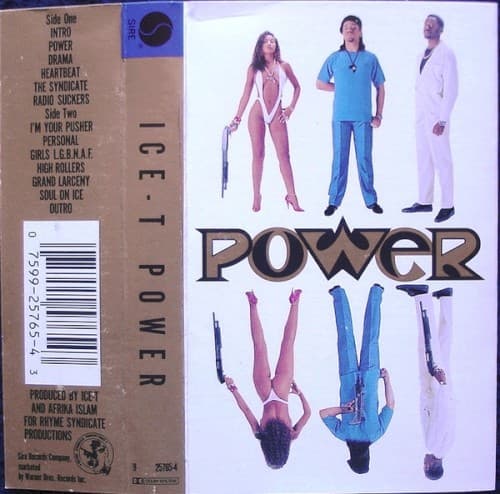
Power followed in 1988 on his own Rhyme Syndicate label and sharpened nearly everything. It is the better-paced album, with a clearer sense of who he was addressing, and we rate it 7.5. That year he co-headlined Public Enemy's Bring the Noise tour, supported by Eazy-E and EPMD, which placed him in the middle of the era's most politically charged touring package. The Iceberg/Freedom of Speech... Just Watch What You Say! came in 1989 and pushed the commentary side of his writing further forward.
O.G. Original Gangster (1991) is the sprawling center of his catalog, also rated 7.5. It is long, ambitious and uneven, but it holds his most complete picture of the man who had been observing street life for a decade and was now interrogating the myths around it. It also carried the first appearance of Body Count, and he took the band on the first Lollapalooza tour that summer, which brought him in front of alternative rock audiences who had never heard a rap record like this.
The turning point came with Body Count's 1992 debut and its track "Cop Killer." The song, written from the point of view of a character taking revenge on abusive police, drew fierce criticism from government officials, the National Rifle Association and police groups. Ice-T argued that it was rock music and that the reaction was an overreaction with racial overtones. Time Warner's music division declined to release his next solo album, Home Invasion, and he left Sire and Warner Bros. Records. The album appeared in 1993 on Priority Records, reached number 14 on the Billboard 200, and included "99 Problems," a title Jay-Z would return to a decade later.
After that, the solo catalog thins out. VI: Return of the Real came in 1996 and The Seventh Deadly Sin in 1999, and Gangsta Rap arrived in 2006 to a mixed response from reviewers who had hoped for a return to his political writing. By then the center of his life had moved to acting, where New Jack City in 1991 launched a screen career that eventually led to his long-running role on Law & Order: Special Victims Unit starting in 2000. Body Count kept going, and the group won a Grammy for Best Metal Performance at the 2021 ceremony for "Bum-Rush."
Why Ice-T Still Matters: A Blueprint for the Crossover Hip-Hop Career
The case for Ice-T rests on three things. He was among the first to bring gangsta rap to Los Angeles, he insisted on a free-speech argument at a time when major labels preferred silence, and he proved that a rapper could build a life far beyond the studio without surrendering credibility. Ice Cube is the obvious peer to compare him with, another West Coast voice who treated rap as reportage and carried that into film.
His influence on later rappers is less a matter of sound than of posture. Artists who frame violence as narrative reporting, and who move between music, film and television, are working in a space he helped widen. The fact that Jay-Z's 2003 song borrowed the title of Ice-T's "99 Problems" is a small but concrete example of how his catalog keeps resurfacing.
There is also the matter of what listeners felt when they first met him. Playing Power in a car or on headphones, you get the sense of someone speaking to you directly, with no hype man and no wink, and that directness is a large part of why the records kept finding new audiences. Live, the same quality carried over into Body Count shows, where the rapper became a front man and the crowd stood closer to a rock audience than a rap one.
Listening to him today means accepting a catalog that is uneven by design. Start with Power for the tightest set, move to O.G. Original Gangster for the full-length statement, and treat Rhyme Pays as the historical document it is. The reviewed albums on this site cover that arc, and together they show an artist who was always more interested in explaining a world than in glamorizing it.