The scorecard
6.0/10 · Mixed
- Writing25%
- 6.0
- Production25%
- 6.5
- Delivery15%
- 6.0
- Cohesion15%
- 5.5
- Originality10%
- 5.5
- Replay value10%
- 5.5
The EP is one long reply to Dr. Dre, and across eight songs the grievance hardly changes, with only the lighter cut and the remix stepping outside it.
Five different producers chase the slow, bass-heavy West Coast sound of the moment, and the tracks are polished but sound like borrowed ideas rather than a style of their own.
Eazy's high, sneering voice still has personality, but it is thinner against these deeper beats and he leans on guests across the longest songs.
Four songs run past five minutes, one nearly eight, on an eight-track EP that has one tight song and a lot of stretch.
As a direct answer to The Chronic, the whole premise is reactive, and the sound mostly follows the template that Dre set.
The lead single and the lighter cut hold up, but the long diss tracks depend on a feud that has lost its urgency.
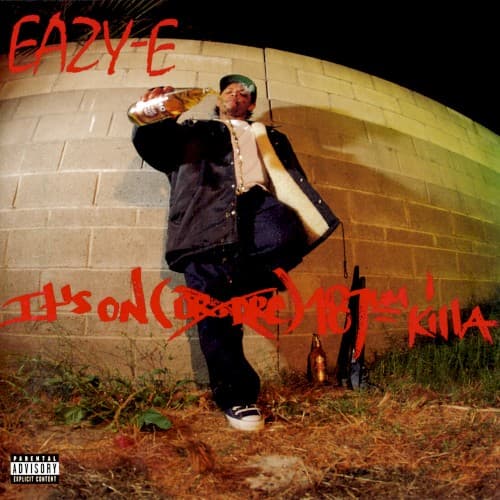
Eazy-E It's On (Dr. Dre) 187um Killa: A Reply That Sounds Like It Lost the Argument
It's On (Dr. Dre) 187um Killa is the sound of a man answering an attack by repeating the attacker's own sound back to him. Dr. Dre's solo debut had gone after Eazy-E again and again, and this EP is the response: eight songs, almost all of them aimed at one target, built on the heavy, slow-rolling West Coast production that Dre had just made famous. It is a fascinating document of a feud and a bit of a weak record, and the second description matters more than the first.
My argument is that the EP is stronger as a commercial event than as music. It sold more than anything else Eazy released, peaking at number 5 on the Billboard 200 and reaching number 1 on the R&B and hip-hop albums chart, and it proves that the audience wanted to hear the feud play out. But the writing rarely rises above the grievance, the production borrows more than it builds, and the voice at the center is clearly outgunned by the one it is attacking.
The West Coast context makes this clearer. A few years earlier the same scene had produced a dense, funk-sampling sound with Eazy at the front, and the central creative team behind it had since split. By 1993 the sound belonged to Dre, and Eazy's record had to compete against the smoother, more melodic version of it on terms that favored his rival. The EP's best moments come when it stops trying to win that fight and leans on Eazy's own persona.
That tension is what makes the project more interesting than it sounds. It is the last release of Eazy-E in his lifetime, a loud and sometimes funny rebuttal, and a reminder of how personal rap feuds became in the early 1990s. Compared with Eazy-Duz-It, it is angrier, longer on the song level and thinner in ideas. It is worth hearing for the two or three songs that earn it, and not much more.
Five Producers, One Target and a Sound Borrowed From the Man Being Attacked
The production is credited to a small group: Rhythm D, Cold 187um, DJ Yella, Dr Jam and Madness 4 Real, with Eazy credited on one song. The sound they chase is the slow, bass-heavy, melodic style that defined the West Coast in the early 1990s, with deep low end, whining synth lines and laid-back drums. It is competent and often pleasant, but it sounds like a response to Dre's template rather than an alternative to it. The sample credits include Dre's own records, which is a pointed move, and also an admission of how much the EP depends on the thing it is arguing against.
Eazy's voice is the album's most distinctive asset, and also its weakest link in this setting. The same high, nasal, mischievous delivery that suited the funk-heavy sound of his debut sounds thin over these deeper beats, and the contrast with the baritone calm of the records he is answering works against him. He compensates with attitude and with a clear commitment to the feud, which gives the performances some energy. But a rapper whose appeal was the comic villain is less convincing as a wounded rival, and the humor that carried his earlier work is mostly absent.
Guests do a lot of the work. B.G. Knocc Out, Dresta, Cold 187um, Kokane and Dirty Red take turns on the longest songs, and their presence broadens the sound while also diluting Eazy's own statement. On several tracks the EP sounds like a posse record built around a feud rather than a solo project. That works as a show of strength, since it lets Ruthless present a crew, but it also means the EP's central voice is often sharing space on his own record.
The weaknesses are structural. The writing is almost entirely reactive, and because eight songs share one subject, the lyrical range is narrow and the insults repeat. The long runtimes are a second problem: songs that run past five minutes carry less content than a three-minute record should, and the beats do not change enough to sustain them. The EP is not short on length, only on ideas, and the longest tracks are the ones that most clearly show that gap.
There is also the question of what the record adds to the genre. It shows how a feud could drive sales, and it documents a moment, but it does not push rap forward the way the group's earlier records had. The best work here is a reminder of how effective Eazy's persona can be, and the worst is a reminder of how much of that persona depended on the people writing and producing for him.
Eight Tracks, Four Over Five Minutes and One Marathon at the End
As a sequence, the EP is heavy at the back and thin at the front. It opens with a brief spoken thank-you, then moves straight into the lead single, which is a confident start. The first two or three songs set the terms of the feud efficiently, and the running order has some momentum while the grievances are still fresh.
The middle is where the shape begins to sag. Several songs run past five minutes, and the effect is of a rapper repeating a point at length rather than developing it. Each track has a different producer and guest list, which gives the EP variety on paper, but the mood and the subject matter do not change enough to justify the runtime. A listener who has absorbed the point by the third song will find little new in the fifth.
The one real change of pace is the shorter song that sets the feud aside. At under three minutes it is the tightest piece on the record, and the fact that it stands out so clearly says something about how much of the rest is padding. It is also one of only two songs without shots at Dre, which suggests that the best version of this project might have been a looser, less obsessed one.
The ending is a marathon. The final track is nearly eight minutes long, with several guest voices, and it works as a posse cut rather than a closer. There is a certain showmanship in ending on such a large scale, but it overstays well past the point where the idea is fresh. The EP finishes by running out of steam, not with a statement.
The length is not earned. Eight tracks and around thirty-five minutes would be a modest runtime for an album, but for an EP built around a single argument it is too much. A tighter edit, with the long songs cut by a third, would have produced a sharper record.
A Chart Success That Ranks Behind the Debut
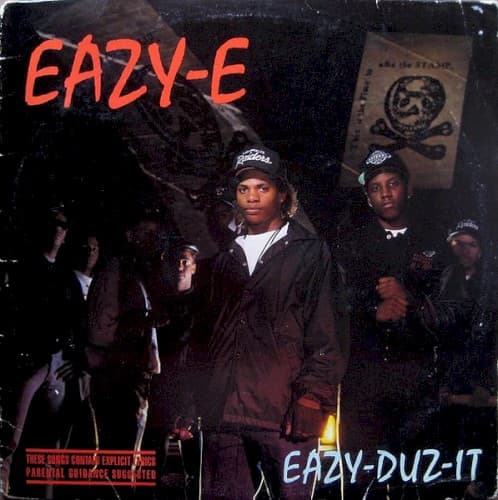
It's On (Dr. Dre) 187um Killa is a mixed record that was a big commercial success, and in this catalog it ranks below Eazy-Duz-It. The debut is funnier, more confident and more influential, and it builds a persona that the EP mostly depends on without improving. The EP has the larger sales and a better-known lead single, but the debut has the better songs and the clearer reason to exist.
Who is it for? Listeners interested in the feud and in the history of how personal conflicts shaped early 1990s West Coast rap, and anyone who wants to hear the song that became Eazy's biggest single. It is also useful for people who know Dre's solo debut and want to hear the other side of the argument. Skip it if you want a consistent, well-written record or a good starting point for Eazy-E. For that, the debut album is far better, and this EP works as a footnote to it.
How it has aged is unkind in places. The best songs still sound good, because the production is polished and Eazy's voice has character. But the diss tracks depend on a conflict that most listeners now know only from history, and the energy that made them feel urgent in 1993 has faded. The record's reputation as a commercial milestone is better preserved than its music.
Start with Real Muthaphuckkin G's for the lead single and the clearest statement of the feud, then Gimmie That Nutt for the lighter, tighter side of Eazy, and Boyz n tha Hood (G-mix) for the update of his oldest signature song. Those three songs show where the EP works, and they are enough to decide whether the longer tracks are worth your time.
For what to hear next, go to Eazy-Duz-It to hear the voice at its best in a more fitting setting, and then to Dr. Dre to hear the record the EP was answering. The most accurate thing to say about this project is that it sold like a victory and sounds like a response.
Track by track
Track Listing
Exxtra Special Thankz
SolidA brief opener of just over a minute that sets the tone. It is functional and mostly a spoken lead-in to the lead single, so there is little to judge beyond its role.
Real Muthaphuckkin G’s
StandoutThe lead single, with B.G. Knocc Out and Dresta, and Eazy's most successful single. It has a music video and a confident, slow-rolling beat from Rhythm D, and the sample credits include his own earlier records, which turns his catalog into ammunition. The attack on Dre is direct and the hook is catchy, and the guests give it the feel of a crew statement. It is the clearest example of the EP doing what it set out to do, even if it runs longer than the idea requires.
Any Last Werdz
StandoutA key track with Cold 187um and Kokane, built on a Gigolo sample and carrying its own video. Cold 187um handles the production, and the song is heavy with menace and a sense of confrontation. It runs just over five minutes and the guest verses carry much of the weight, which dilutes Eazy's presence. It has momentum and personality, but it also shows how the EP leans on repetition of a single idea.
Still a Nigga
SolidA DJ Yella production that continues the feud at over four minutes. The beat has a smoother, more melodic feel and Eazy sounds committed, but the writing is repetitive and the song adds little to what the first two tracks already say. It is a solid but forgettable middle cut.
Gimmie That Nutt
StandoutA key track and one of only two songs without shots at Dre. Produced by DJ Yella with Eazy, it is the tightest song on the EP at under three minutes, and it uses a playful sample that gives it a looser, funnier tone. Eazy sounds more comfortable as a character than as an aggrieved rival, and the song is a reminder of what made his persona work in the first place. It is the best argument for a shorter, less obsessed version of this project.
It’s On
SolidThe title track, produced by Rhythm D and running just over five minutes. It is the EP's central diss, with sample credits that borrow from Dre's own records, and it carries the feud with energy and a clear focus. The beat is polished, but the song is long for its content, and the insults repeat. It is a solid centerpiece that mostly makes sense in the context of the feud.
Boyz n tha Hood (G‐mix)
StandoutA reworking of Eazy's oldest signature song, with Dresta and a Dr Jam production, and the other track without attacks on Dre. The G-mix gives the song a smoother, slower, more modern sound, which is an interesting update, though it loses some of the rawness of the original. At over five minutes it is longer than it needs to be, but it is a welcome change from the feud material.
Down 2 tha Last Roach
WeakA nearly eight-minute closer with Dirty Red, B.G. Knocc Out and Kokane, produced by Madness 4 Real. It works as a posse cut and reaches back to earlier N.W.A material in its sample list, but the length is excessive and the idea runs out well before the song does. It is the clearest example of the EP's problem with stretching thin material.
Frequently Asked Questions
Is It's On (Dr. Dre) 187um Killa a good EP?
How well did It's On (Dr. Dre) 187um Killa sell?
Why did Eazy-E make It's On (Dr. Dre) 187um Killa?
Is It's On (Dr. Dre) 187um Killa better than Eazy-Duz-It?
Styles