The scorecard
7.5/10 · Great
- Writing25%
- 8.0
- Production25%
- 7.5
- Delivery15%
- 7.5
- Cohesion15%
- 6.0
- Originality10%
- 8.0
- Replay value10%
- 7.5
Crime reporting, satire and social argument move together with real purpose, and the rewrite of a Public Enemy classic and the sorrowful "The Tower" are peaks, though some of the long middle stretch is argument more than song.
Seven producers keep the sound varied, from hard breakbeat loops to a droning slow track, though some mid-album beats are routine.
Ice-T's dry, flat, assured voice carries even the weaker material and the guests add contrast rather than competition, though the rap-rock cut shows the deadpan and the band's heaviness not always sitting together.
Clusters of skits and one-minute interludes stall the momentum and make the length felt, even though the strong opening and the ambitious back third show a purpose beyond padding.
Folding a metal-rock cut and social satire into a gangsta rap record pushed the genre beyond its pose in 1991.
The best songs hold up and the social argument still lands, while the skits are the first thing a repeat listener skips.
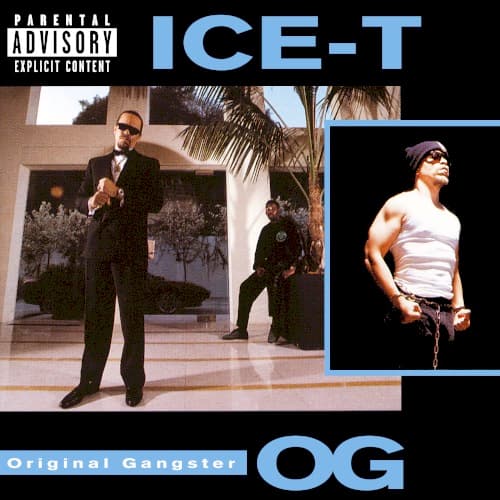
Ice-T O.G. Original Gangster: Twenty-Four Tracks Against the Genre's Own Pose
O.G. Original Gangster is Ice-T's best argument that gangsta rap could be a form of reporting, satire and warning at the same time. It arrived in 1991, after the genre had already become a commercial force, and it does something most of its peers did not: it spends twenty-four tracks complicating the genre's own pose. The streets are real, the violence is real, the humor is dark, and the exit routes are shown to be mostly closed. The central claim of this review is that the record's scale, a sprawling collection of songs, skits and one metal-rock detour, is both its achievement and its flaw, and that the achievement outweighs the flaw.
The ambition shows in the details. Seven producers work on the record, a loose circle of Rhyme Syndicate regulars, guest rappers and a rock band appear throughout, and the album's running order moves from brutal street reporting to bitter satire to social argument without apologizing for any of it. One song rewrites a Public Enemy classic to explain the original's central metaphor, another turns the group's anger toward the rich and famous, and a third lets a rock band loose in the middle of a rap record. Few albums of this period tried so many registers, and fewer still held together as well as this one does.
The context helps to explain why it landed. By 1991 the West Coast sound had gone through N.W.A and the first wave of mass-market gangsta rap, and a number of Ice-T's peers were turning the genre into pure entertainment. His response was to push the other way, toward more detail and more consequence. The record sold well enough to reach the Billboard top fifteen and go gold, and critics, including more than one skeptic, recognized it as his strongest work.
It is not a flawless record. The length is a real problem, and several short tracks are skits that could have been cut. But it is a deeply serious, often funny, and frequently brilliant album, and its best songs belong with the strongest gangsta rap of its time.
Seven Producers, One Dry Voice, and Too Many Skits
The writing is the main strength, and its most distinctive quality is range. Ice-T moves between first-person crime reporting, third-person story, social argument and straight satire, often within a single side of the record, and the changes feel purposeful rather than random. A contemporary critic at the NME praised the record as a set of vignettes from a decaying country, full of devious humor and striking pathos, and the description fits. The comparisons with rivals who peddled the same genre as pure fantasy are fair: here the violence has consequences, the bravado has a price, and the characters tend to end up dead or in prison.
The production is equally varied, and it is where the record's divided character is most audible. Seven producers contribute, among them Afrika Islam, Beatmaster V, Bilal Bashir, DJ Aladdin, Nat the Cat and SLJ, along with Ice-T himself, and the sound moves between hard breakbeat loops, spare funk grooves, a droning, sorrowful slow track and a full-throttle rock cut with a live band. When the beats are good, they are punchy and unfussy, giving the voice room to work. When they are routine, as one critic at Select complained, the record leans on a well-tested recipe of looped breaks and linear drums. That complaint is not entirely wrong, and a few of the mid-album beats do sound more like workable backdrops than like ideas.
Delivery is the quiet reason the album works. Ice-T's voice is dry, flat and assured, and it carries a cynical authority that makes even the album's weaker material watchable. He does not need to shout. He lets the story do the work, and the guests, who include members of his own crew and a rock group, provide contrast rather than competition. The rap-rock cut is the one moment where the album's tone is unsure, since the band's heaviness and the rapper's deadpan do not always sit together, but it is also the track that shows how far the record was willing to stretch.
The concrete weakness is the sheer number of skits and one-minute interludes. More than a third of the track list runs under two minutes, and several of those tracks are jokes or sound effects that interrupt the album's momentum. The Select critic's line that the album works better as a manifesto than as music overstates the case, but there is a grain of truth in it: some of the long middle stretch is argument more than song.
None of this undoes the achievement. The record is richer, funnier and more serious than the gangsta rap that surrounded it.
A Sprawling Documentary With Its Best Scenes in the Back Half
O.G. Original Gangster is a long record, and the question of sequence matters more here than on almost any other Ice-T album. It opens with a pair of short, scene-setting interludes before the first full song arrives, and the effect is to make the listener feel the world of the record before hearing its story. That is a good way to start, and the first half builds steadily, moving through street reporting, satire and a few lighter songs without losing the thread.
The peak comes in the middle and again near the end. The title track and the songs around it carry the album's main arguments, and the long stretch that follows, with its rock detour and its run of crew features, is where the album is at its most varied. The back third is the most ambitious part of the record: a sequence of shorter, darker songs and interludes that move from the grim to the reflective, ending in a slow, sorrowful track that critics singled out and a closing skit that returns the record to its starting point.
The sag is in the clusters of skits. When three or four short tracks arrive in succession, the momentum stalls, and the listener starts to feel the length. Some of the interludes are funny or atmospheric, and a few are essential to the storytelling, but others are throwaways. The vinyl release carried only sixteen of the CD's twenty-four tracks, and the shorter version is, in fairness, a tighter listen.
At twenty-four tracks, the length is only partly earned. The best material comfortably justifies a seventy-minute album, and the structure, with its recurring characters and interludes, has a purpose beyond padding. But a ruthless edit would have made the record stronger, and the skip button is part of the experience. The best way to hear it is as a long, rough, uneven documentary that has several of the genre's best songs scattered through it.
The Broadest Ice-T Record and the One Worth the Full Hour
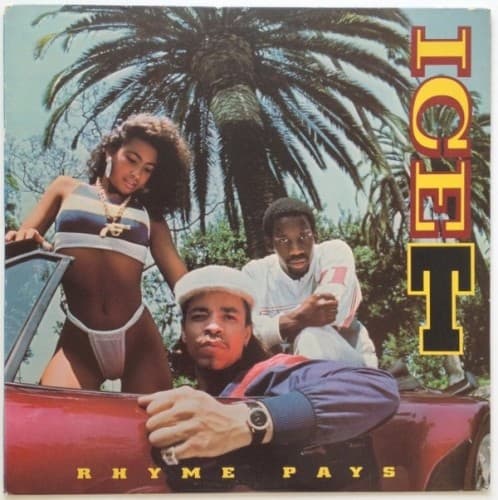
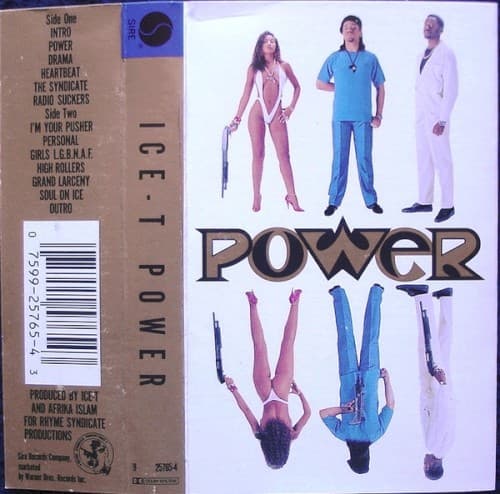
In Ice-T's catalog, O.G. Original Gangster is the broadest and the most ambitious record, and it is widely regarded as his best. It ranks above Power because the range is wider, the writing is funnier and the best songs are stronger, and well above Rhyme Pays because the production is richer and the sense of purpose is clearer. It loses some ground to the earlier records on focus: Power is the tighter listen, and this album's length and its filler are real costs. A rating in the strong range is fair.
The album is for listeners who want gangsta rap with a conscience and a sense of humor, who like long, sprawling records with a point of view, and who are curious about the point where rap and rock met on a major release. It is also a good choice for anyone who wants to understand why Ice-T was taken seriously as a writer. It is not for listeners who need a lean, hook-driven record, who dislike skits, or who are put off by blunt language and violent imagery.
As for how it has aged, the answer is well. The social argument is still relevant, the satire still lands, and the best songs have lost none of their force. The beats are of their time, and the skits are a matter of taste, but the album's reputation has only grown, and its appearance in lists of the best rap albums and in a book of albums to hear before you die confirms it.
Start with "Mind Over Matter" and "The House", which a skeptical critic still called outstanding, then hear "Escape From the Killing Fields" for its rewrite of a Public Enemy classic. If you have time for a fourth, "The Tower" is the sorrowful center of the record.
For what to hear next, go to Power for the same writer in a tighter, colder frame. The strongest argument for this album is that it is still worth the full length.
Track by track
Track Listing
Home of the Bodybag
SolidA short opening skit that sets a grim scene in just over two minutes. It works as atmosphere and little else, but it tells you quickly what kind of record this will be.
First Impression
SolidA brief interlude of under a minute. It is a transitional piece that adds little on its own.
Ziplock
SolidA short skit that fills the gap between songs. Brief and forgettable.
Mic Contract
SolidA full song with Donald D that has the loose, crew-friendly feel of the Rhyme Syndicate circle. The beat is steady, the verses are sharp, and the track shows the album's more playful side without losing the cynical tone. Solid and enjoyable, though not among the highlights.
Mind Over Matter
StandoutOne of the three songs a skeptical critic picked out as outstanding, and the record's strongest early statement. Ice-T's delivery is controlled and quick, the beat is hard and unfussy, and the writing stays with a clear, practical idea about discipline in a hostile world. It shows the album at its tightest: no skit, no joke, just an argument carried by the voice. A key track and one of the best places to start.
New Jack Hustler
StandoutA theme-style cut featuring DJ Aladdin, tied to the film New Jack City, and one of the album's more commercial moments. The beat has bounce, and Ice-T plays the hustler with sly detachment rather than glorifying him. It is a well-made single with a hook that sticks, even if it sits a little apart from the rest of the record's seriousness.
Ed
SolidA short skit of just over a minute. It adds color and nothing more.
Bitches 2
WeakA song with Charlie Jam that continues the artist's long-running argument with the way he writes about women. The beat is fine and the delivery is confident, but the subject matter is crude and the track shows the record's most dated attitude. A weaker entry that adds little.
Straight Up Nigga
SolidA song featuring DJ Aladdin that takes on its charged title with more thought than the title suggests. The beat is solid and the delivery is direct, and the writing makes an argument rather than a boast. An uneven but serious track in the middle of the record.
O.G. Original Gangster
StandoutThe title track and a statement of the album's themes. Ice-T uses the older-gangster idea to look at the genre's own posing, with a calm, authoritative flow that avoids melodrama. The beat is hard and steady, the verses are specific, and the song sets up much of what the rest of the record explores. A key track and a confident piece of writing that earns its place at the center of the album.
The House
StandoutA short piece of under a minute that a skeptical critic still counted among the record's outstanding moments. Brief, sharp and effective for its length.
Evil E – What About Sex?
SolidA short skit with Evil E, a few seconds of humor between songs. Filler.
Fly By
SolidA song with Nat the Cat and Donald D, and a looser, more groove-led track that brings some air into the middle of the record. The beat is funky and the guests blend naturally with Ice-T's voice, but the writing is more atmosphere than argument. A pleasant, mid-weight cut.
Midnight
SolidA longer, moodier song with Randy Mac that slows the pacing and adds a nocturnal tone. The beat is spare and the delivery is relaxed, but at nearly six minutes it stretches a modest idea. Decent, though it might have been shorter.
Fried Chicken
SolidA one-minute skit with Prince Whipper Whip, built on a joke. Brief and disposable.
M.V.P.s
SolidA mid-album cut that sits in a long middle stretch of competent but unremarkable songs. The beat is workmanlike and the delivery is steady, but the writing does not distinguish it from its neighbors. Solid filler within a larger run.
Lifestyles of the Rich and Infamous
StandoutA bad-tempered, out-of-character song with Sean E. Sean that one contemporary critic singled out for its anger. It aims at the wealthy and the famous with unusual fury, and the beat matches with a hard, driving rhythm. The shift in tone is jarring but effective, and it shows that the album's range includes outright contempt. A strong entry that proves the record could still surprise.
Body Count
StandoutThe rock-and-rap crossover that the record is known for, featuring the members of the band of the same name. At more than six minutes it is the longest song, and the heavy guitars and rap flow do not always blend smoothly, but the sheer force of the track makes it hard to ignore. It is a genuine experiment, and one that anticipated a wave of rap-rock collaboration. Not entirely successful, but compelling and a key part of the album's reputation.
Prepared to Die
SolidA brief interlude of under a minute that serves as a dark transition. Atmospheric, not substantial.
Escape From the Killing Fields
StandoutA short song that rewrites Public Enemy's best-known story as an optimistic response and explains the original's central metaphor. At two and a half minutes it is one of the album's smartest moments, a compact piece of writing that is as much commentary as music. The beat is lean and urgent, and the argument is made quickly and clearly. A key track and a good example of how the album uses other records as part of its conversation.
Street Killer
SolidA short skit with Special K, under a minute long. Brief atmosphere.
Pulse of the Rhyme
SolidA rhythm-driven track in the back third of the album, with a steady beat and a focused, rap-first approach. It is a solid reminder of the writer's technical skill, though it does not stand out from the album's better songs.
The Tower
StandoutA slow, droning, sorrowful song with Sean E. Sean, Al Patrome and Mello that critics singled out as a highlight, and the record's emotional center. The beat is sparse and heavy, the voices are subdued, and the writing carries a real sense of consequence. It is the clearest example of the album's ability to move from satire to something much sadder, and it is the one track that justifies the whole length. A key track and the one to remember.
Ya Shoulda Killed Me Last Year
SolidA short closing skit that returns the record to its starting point. A brief, dark sign-off.
Frequently Asked Questions
Is Ice-T's O.G. Original Gangster good?
How many tracks are on Ice-T's O.G. Original Gangster?
Who is on the Ice-T track Body Count?
Styles