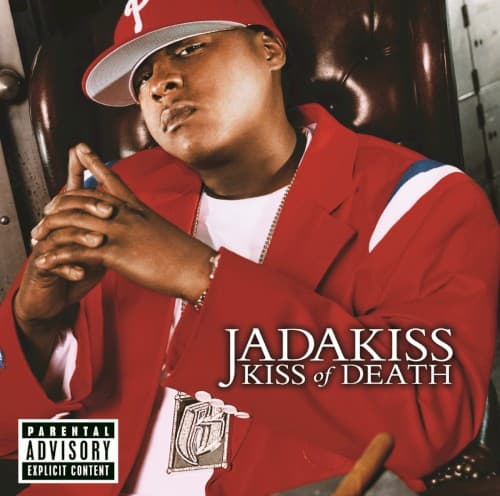
The scorecard
7.0/10 · Good
- Writing25%
- 7.0
- Production25%
- 7.0
- Delivery15%
- 7.5
- Cohesion15%
- 6.5
- Originality10%
- 6.5
- Replay value10%
- 7.0
Jadakiss lands dry punchlines and pointed street commentary on the harder cuts, but the relationship and radio songs fall back on stock sentiment.
The soul-sample and drum-heavy beats give Jadakiss real weight to push against and sound sturdy years later, though the glossy pop-R&B cuts are thin and the sound shifts with every producer.
His raspy, unhurried cadence is distinctive and consistent, and the Styles P and Sheek Louch features give the street songs real weight.
A strong opening and a closing stretch that returns to the crew give the album a real shape, but eighteen tracks, a dozen-plus producers and a soft, radio-driven middle keep it from holding together as a whole.
It sharpens the East Coast street-rap-meets-mainstream template of its moment with a distinctive raspy, deadpan voice, even if it adds no new idea to the formula.
The harder songs hold up on repeat listens and have outlasted the hit that sold the album, though the hook-driven filler is easy to skip.
Jadakiss Kiss of Death — A Great Rapper Fighting His Own Guest List
Jadakiss sounds like a rapper working against his own record label on Kiss of Death. The voice is the draw: a raspy, patient delivery that lets punchlines land a half-beat late, and a way of stacking street reportage with pointed commentary without ever raising the temperature. The problem is the frame around that voice. Eighteen tracks and more than a dozen producers pull the album toward radio, toward guest-heavy duets, and toward hooks that nobody needed him to carry. The thesis here is simple: this is a very good rapper's album that is only about two-thirds a very good album, and the missing third is almost entirely a matter of casting.
The stakes were real. By 2004 Jadakiss was the most visible voice in The LOX, and his second solo record arrived with a major-label budget and the expectation that it would turn critical respect into sales. It did, debuting at number one and spinning off three singles that all reached the Hot 100. The pitch was that he could keep his New York street credibility while winning over a broader audience. The record mostly delivers the second at the expense of the first. The songs built for the charts are competent and, in at least one case, genuinely strong, but they flatten the dry, unflinching tone that made him worth hearing in the first place.
What survives is considerable. When a beat carries real weight, whether a grimy soul loop or hard-edged drums, Jadakiss rides it like a veteran who has never needed to prove he can rap. He is at his best in short, argumentative bursts where every bar has a job. That places the album in a specific lineage: the East Coast street rapper who negotiates with the mainstream rather than surrendering to it, a line that runs from the New York rap Ruff Ryders helped define to the guest-laden blockbuster albums of the mid-2000s. Kiss of Death sits at the crossing point, and you can hear both traditions pulling.
Critics at the time split along exactly that seam. Those who praised it heard a rapper maturing into a broader artist; those who held back heard an album trying to satisfy every audience at once. Both camps are right, which is why the record is more interesting as an argument about what a New York MC was allowed to be in 2004 than as a flawless listen. The rest of this review sorts the part that earns the rapping from the part that earns the radio play.
Grit in the Verses, Gloss in the Hooks
The writing on Kiss of Death works best when it stays narrow. Jadakiss is a rapper of the single sharp line: a deadpan comparison, a reversal at the end of a bar, a bit of political or street commentary slipped between boasts. He rarely builds long narratives here, and he does not need to. The craft is in compression, and the harder songs show a writer who knows exactly how much to say before the beat takes over. The album's best passages feel less like verses than like arguments made in short, flat sentences, which is where his dry tone is a strength rather than a limitation.
The production is where the record gets uneven, and it is uneven by design. The credits run through DJ Green Lantern, Black Key, Scott Storch, Havoc, The Neptunes, Swizz Beatz, Alchemist, Kanye West, Eminem and others, and the sound changes every time the producer does. The soul-sample cuts and the drum-heavy tracks suit his voice perfectly, because the weight underneath gives his understatement something to push against. Havoc's contribution has the lived-in menace of mid-90s New York, and Kanye's beat keeps the soul-chop warmth that made him the producer of the moment. The Neptunes' entry is lean and bouncy, which is a nice change of pace but not a natural home for a rapper this stoic.
That gap between natural settings and imposed ones is the album's central weakness. The pop-R&B tracks give Jadakiss little to work with: the choruses are sung by guests, the verses become a duty to be discharged before the hook returns, and the beats lean on glossy keyboard and drum-machine patterns rather than anything with texture. One of the singles in particular is carried almost entirely by its guest vocalist, and Jadakiss reads as a participant in someone else's record. It is a well-made piece of radio music and he sounds slightly out of place inside it, which is the clearest evidence of the compromise the album makes.
His delivery is the constant that holds the project together. The rasp, the unhurried pacing, and a willingness to leave space between phrases mark him out from nearly everyone working in 2004, and it keeps even the weaker tracks listenable. The guests on the street songs, Styles P and Sheek Louch among them, are used well: they sharpen the mood instead of changing it, and the chemistry of the group shows. The Eminem-assisted group track brings an unexpected jolt of energy and gives the album one of its few moments of real collective menace.
Still, the album's reach is wider than its grip. Few of the hooks are memorable, a criticism several reviewers made at the time, and the sheer number of voices dilutes a personality that is strong enough on its own. Where a tighter record would have trusted the voice, this one keeps hedging, and each hedge costs a little momentum. The result is a skillful rapper's record whose best songs are better than the album's reputation suggests and whose filler is more noticeable than it needs to be.
Heavy Beats Up Front, Radio Bait in the Middle
As a sequence, Kiss of Death starts with the right instincts. A short intro clears the throat, and the first few songs set up the proposition: a hard-edged opener, a big guest-assisted showpiece, and then a run that lets the beat and the voice do the work. The pacing here is good, with enough variation in tempo and mood to hold attention, and the early momentum sells the idea that this will be a record with a point of view.
Then the radio section arrives. The stretch built around the singles and their immediate neighbors is the longest and the softest, and it is where the album loses its focus. The R&B-flavored songs and the glossy duet interrupt the rhythm established earlier, and a skit does little to restore it. The effect is of two albums sharing a tracklist: one for the people who came for the rapping, one for the programmers. You can feel the energy drain across these tracks even when each song is pleasant in isolation.
The back half recovers in stages. A pair of tight, short songs with sample-driven beats restore the intensity, and a run of guest-assisted material that follows keeps the quality respectable. The closing stretch is the strongest sequencing decision on the record: the group track near the end sends the album back to the crew where it started, the title track delivers a hard final statement, and the last song lands a late reflective note. After the detour through the middle, the album seems to remember what it was supposed to be.
Whether the length is earned is the real question. Eighteen tracks is generous for a record that already knows its identity, and trimming four or five of the weaker, more commercial songs would produce a sharper album with better flow. As it stands, the quality is high enough to justify most of the runtime but not all of it, and the best sequence is the one you make yourself by dropping the center of the record. The peaks are real; the valleys are mild but frequent, and they are the reason the record is a very good listen rather than a great one.
Better Than Its Reputation, Smaller Than Its Billing
There is no other Jadakiss album rated on this site yet, so the ranking is a matter of context rather than a list. Kiss of Death is the record where his craft and his commercial ambition meet most openly, and it is better at the first than the second. It debuted at number one and went on to sell well over a million copies, which makes it a commercial high point, but the numbers say more about timing and promotion than about the quality of the writing. Critics at the time scored it as generally favorable, with a Metacritic average of 76, and that sounds about right: a good album with a very good rapper on it, held back by its own packaging.
It is for listeners who want to hear a gifted street rapper work inside the big-budget system of the mid-2000s, and for anyone who thinks that an MC's voice can carry a record even when the production is inconsistent. It will also appeal to fans of The LOX and the Ruff Ryders sound who want to hear Jadakiss at full stretch. It is not for people who want a tightly sequenced statement, and it is not the place to begin if you want a pure boom-bap record with no pop concessions.
It has aged unevenly. The harder songs still sound sturdy, and the soul-sample production gives them a timeless quality that the glossier tracks lack. The R&B hooks and the keyboard-driven duet sound more like a specific moment than the rest of the record does. That divide is the whole story of the album's afterlife: the best songs have outlasted the hit that sold the album.
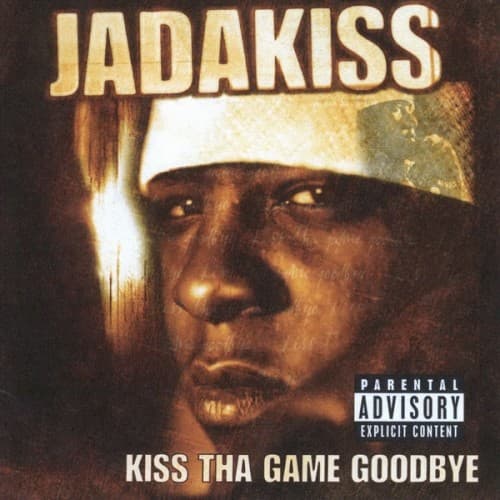
Start with the soul-driven Havoc-produced single, the Kanye West collaboration, and the title track. Those three show the range of the rapper and the production at its best. After that, move to Kiss tha Game Goodbye, an earlier record that Nathan Rabin of The A.V. Club said suffers from the same urge to please every audience, which makes it the natural comparison for the compromise heard here.
The real lesson of the record is that the strongest rapper in the room should have been the producer's priority, and on the best three or four songs he is, which is the reason to come back to it.
Track by track
Track Listing
Intro
SolidA short scene-setter from DJ Green Lantern that gets the album moving without wasting time. It does its job and little more.
What You So Mad At??
StandoutA confrontational opener where the beat gives Jadakiss a tough, clipped pocket to work in and the verses read as direct, argumentative bursts. It sets the voice and tone the album will spend much of its running time trying to maintain, and it is much sharper than the songs built for the charts.
Shine
SolidA five-minute showpiece with Snoop Dogg and DJ Quik, laid-back and sun-soaked with a West Coast feel. The guests fit the mood and Jadakiss adapts well to the slower groove, but at this length the track wanders and never builds to a real peak. Enjoyable, not essential.
Bring You Down
StandoutA harder, drum-forward cut where the writing gets back to short, pointed lines about rivals and hangers-on. The production is functional and gives him room, and the song holds the early energy in place before the radio material takes over.
Time’s Up
SolidThe first single, built on a Scott Storch beat with Nate Dogg on the hook. It is slick and catchy and the hook does most of the persuading, but Jadakiss has a smaller role than the title suggests. It charted modestly and works better as a mood piece than as a vehicle for the rapping, though it is far from the weakest of the radio songs.
Why
StandoutThe strongest single and the clearest argument for the album. Havoc builds a haunted, soulful backdrop around a sampled loop, Anthony Hamilton sings a hook that matches the mood, and Jadakiss delivers a string of pointed questions about politics, violence and everyday contradiction. It is socially aware without being preachy, and it was the highest-charting single from the record for good reason. This is the track that proves the big-label formula could work when the artist was allowed to say something.
U Make Me Wanna
WeakA Mariah Carey duet with a lightweight Scott Storch beat that Rolling Stone dismissed as insipid. It is the clearest case of the album trading its identity for a hit, and Jadakiss sounds like a guest on his own record. Pleasant enough, but forgettable next to the harder material.
Hot Skit
WeakA brief interlude that interpolates a Zapp-style funk idea. It is filler and adds nothing to the sequence.
Hot Sauce to Go
SolidThe Neptunes supply a bouncy, minimalist beat and Pharrell appears on the hook. Jadakiss plays along with a lighter, more playful register than usual, and the song is a fun change of pace. It is a little slight, but the sound is distinctive enough to be welcome.
Real Hip Hop
StandoutA short, hard Swizz Beatz production built around a Curtis Mayfield sample, with Sheek Louch adding gruff support. At under three minutes it makes its case for authenticity quickly and moves on. The beat has the weight his voice needs, and the pairing with Sheek Louch feels natural.
Shoot Outs
StandoutA street-level duet with Styles P and a gritty Elite beat. The two rappers trade verses with an easy chemistry that makes it one of the most convincing group moments outside the LOX posse cut. The storytelling is vivid in a matter-of-fact way, and the song restores the grimy tone that the album lost earlier.
Still Feel Me
StandoutA compact Alchemist beat that gives Jadakiss a stark, minimal backdrop. At under three minutes it is one of the album's best examples of the artist working in a lean, focused mode, and it makes the case for a shorter record.
By Your Side
SolidA soul-sampled love song that borrows from a 70s vocal group record. The sample is warm and the sentiment is sincere, but Jadakiss is not a natural romantic writer and the verses lean on familiar phrases. A decent change of mood that does not stand out.
Gettin’ It In
StandoutKanye West produces and appears, and the soulful beat has the warmth and punch of his best work from the period. Jadakiss gets a smooth, confident groove and Kanye's verse adds a different flavor. It is easy to like and fits the album's high point.
Air It Out
StandoutNeo Da Matrix returns with a hard, driving beat, and Jadakiss responds with some of his most pointed bars on the record. The track has no guest and no hook to dilute it, and the effect is of a rapper allowed to simply rap. A solid, quietly strong entry.
Welcome to D‐Block
StandoutA group track by The LOX with Eminem, who also co-produces. The beat is dark and slightly off-kilter, and the verses are traded with real energy, so that the whole feels like a statement of loyalty to the crew. It is one of the few moments where the record sounds like an event, and it gives the late sequence a lift.
Kiss of Death
StandoutThe title track is a hard, short Red Spyda production with no guest and no hook to speak of. Jadakiss delivers a controlled, menacing verse, and the lean runtime gives it the force that much of the album lacks. It is an effective closing statement before the epilogue.
I’m Goin Back
SolidA reflective closer built on an Atlantic Starr sample, with Nesha on the hook. The mood is looser and more wistful than anything else on the record, and the soulful backdrop gives it a pleasant, nostalgic glow. A reasonable final note, though not a strong one.