The scorecard
7.0/10 · Good
- Writing25%
- 6.5
- Production25%
- 8.0
- Delivery15%
- 7.5
- Cohesion15%
- 6.0
- Originality10%
- 6.0
- Replay value10%
- 7.0
Jay's verses on Streets Is Talking and Soon You'll Understand are tight and purposeful, though the roster verses on Holla and The R.O.C. hold the album's average down.
Just Blaze's soul chops, the Neptunes' lead single and Kanye West's early Scarface cut give the record real polish, and even the Rick Rock tracks lean on bounce more than substance.
Jay stays relaxed and precise next to Beanie Sigel's heavier voice on Stick 2 the Script, and his hooks on the singles land cleanly.
Sixteen tracks that keep handing the microphone to labelmates make the middle stretch drift, and Where Have You Been closes long past the point of interest.
The label-showcase format and the R&B-hook singles repeat what Jay had already done on his previous records, and the attempt to balance solo material with roster introductions adds little that is new.
The Just Blaze run from Streets Is Talking to Soon You'll Understand rewards repeat plays, while the Bleek-led tracks do not.
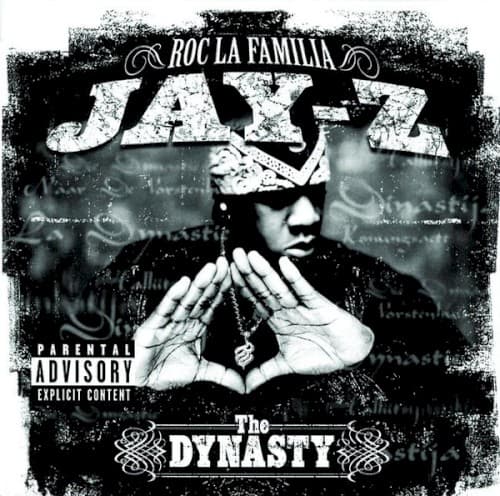
JAŸ-Z The Dynasty: Roc La Familia — A Solo Album Wearing a Crew Jacket
The Dynasty: Roc La Familia is a Jay-Z album that keeps stepping aside for other people, and the surprising part is how rarely that costs him. On Streets Is Talking he shares the song with Beanie Sigel and never tries to win it outright. On Stick 2 the Script he is the calmest voice among rappers who badly want to be the loudest. The argument of this review is simple: this is a label demonstrate dressed as a solo record, and the dressing is where the problems start. With Jay at the microphone and Just Blaze behind him, the record is confident and often excellent. When the spotlight moves to the roster, it loses its grip.
The setup explains the split. The project was first billed as a Roc-A-Fella compilation built around Memphis Bleek, Beanie Sigel, Amil and Freeway, and was then marketed as a JAŸ-Z solo album. It came out in October 2000, entered the Billboard 200 at number one and sold 557,789 copies in its first week, so the commercial bet paid off. The musical bet is more complicated. You can hear a label deciding how much of its future to put on a franchise player's record, and you can hear the franchise player making room.
From a West Coast seat, the record is worth hearing for what it borrows and what it does not. The great crew albums out of Los Angeles were built on a lead voice who anchored everything while a rotating cast ran through the hooks and second verses. Jay gets that structure half right. He brings Snoop Dogg in for one song and treats him like a guest of honor, and he lets Beanie Sigel play the heavy. What he does not have is a sound that the whole cast shares, so the supporting players feel like visitors in someone else's studio rather than members of a movement.
That gap is the story of the album. It has a run of strong Jay solo songs sitting inside a record that would rather be a family photo.
Soul Chops, Radio Hooks and Bleek-Sized Holes
Start with the producers, because the album's best ideas come from them. Just Blaze handles the intro, Streets Is Talking, Stick 2 the Script, The R.O.C. and Soon You'll Understand, and his work has a consistent shape: a sped-up or chopped soul loop, drums with real weight, and room left open for the rapper to move. That consistency does more to hold the record together than any concept does. Bink brings a more traditional boom-bap grain, Kanye West contributes a mournful early beat, and the Neptunes supply the one clear pop hit without it feeling like a different record.
The West Coast comparison is clearest in the Rick Rock material. Change the Game, Get Your Mind Right Mami and Parking Lot Pimpin share a bouncing, synthetic low end and a party-friendly swing that sits closer to California radio than to anything in New York at the time. They are fun in the car and thin on the page. The tradition they borrow from pairs that bounce with a lead voice who sounds lived-in; here the bounce arrives first and the voice is asked to catch up.
As a writer, Jay is in his professional zone. The wordplay is tidy, the boasts are specific about money and status rather than abstract, and he is careful with internal rhyme. What the album lacks is the unplanned detail that made his 1996 debut feel like a confession. He is a polished businessman who raps well, and the polish occasionally sands off the interest. His reflective songs work because he stops performing for the crowd and starts addressing a single listener.
Delivery is the strongest dimension. Jay slows down and speeds up inside a verse without telegraphing it, and he sounds comfortable sharing a track with a heavier, rougher voice. Beanie Sigel is the best of the supporting cast by a wide margin, and his bruised timbre gives the Jay verses something to push against. Memphis Bleek is the weak point. His verses are serviceable when a beat is strong and invisible when it is not, and the record gives him more space than his material earns.
The central weakness is the R&B-flavored middle. Guilty Until Proven Innocent, with R. Kelly, aims for an event and settles for a competent exchange. The guests keep arriving on hooks that sound written for a different artist. The singles landed, but the album-length version of the same strategy feels like a label deciding what a Jay-Z record should contain rather than the rapper deciding what to say.
Four Strong Songs, Then the Roster Takes Over
The sequencing is front-loaded, and it is a good front. The opening run leads with a scene-setting intro, a bouncing crew song, the Neptunes single, and then two Just Blaze productions in a row. By the time the fifth song arrives, the album has shown you its best ideas: Jay in control, Beanie Sigel as the heavy hitter, and a beat that sounds like it was built for a bigger room than the radio.
The center is where the pacing breaks. The record splits its attention between solo Jay material and songs designed to introduce the supporting cast, and the shifts are not smooth. A Jay song gives way to a group posse cut, then to a Memphis Bleek spotlight, and the listener keeps having to recalibrate expectations. Nothing here is a disaster, but the middle of the record contains one of the least memorable stretches of Jay's catalog.
The back half recovers through a handful of tracks. Soon You'll Understand is the clearest example: a solo song in the Just Blaze style that rewards attention and gives the record the one moment of real reflection it needs. The album could have ended with that tone. Instead it keeps going, and the final track runs more than five minutes, which is longer than its ideas justify.
Sixteen tracks over roughly an hour is an ordinary length for the period, but the length is not earned here. The strongest version of this record is a tighter, Jay-led album of ten or eleven songs; the rest is label business. If you take the best material and leave the filler, you get a very good record. If you take the whole thing in order, you get a good record that lasts too long.
A Good Jay-Z Record Hiding Inside a Long One
In the catalog, The Dynasty: Roc La Familia sits in the middle: a notch below Watch the Throne in this site's ranking and far below the focus and honesty of 4:44. That is a deliberate order. Watch the Throne has a bigger ambition and a more coherent sound, while 4:44 is the album where Jay finally writes about himself with no one else in the room. This album has neither. It has a strong run of songs inside a record that is partly someone else's.
It is for listeners who want to hear Jay at the turn of the 2000s, when Just Blaze was defining the Roc-A-Fella sound and Beanie Sigel was the label's best secondary voice. Fans of the soul-sample beat tradition will find a lot to enjoy. Anyone who wants a start-to-finish Jay-Z experience, or who is unsure about label display, should begin elsewhere. Casual listeners can skip the Memphis Bleek features entirely without losing the plot.
It has aged unevenly. The Just Blaze songs still sound sturdy, because soul loops and heavy drums age slowly. The R&B-hook material sounds more like a snapshot of 2000 radio than a lasting statement, and the Rick Rock bounce has dated faster than the sample-driven tracks.
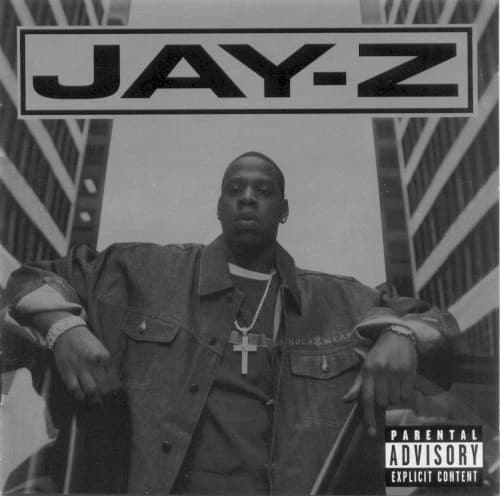
Start with I Just Wanna Love U (Give It 2 Me) for the hit, This Can't Be Life for the album's most serious moment, and Soon You'll Understand for the best solo Jay verse of the set. For the next listen, try Vol.3.. Life and Times of S. Carter, which handles pop crossover and street material with a more consistent sound, and then 4:44 to hear what he does when the guest list disappears. The best way to hear this one is as a playlist of six or seven songs, and those six or seven are very good.
Track by track
Track Listing
Intro
SolidA short Just Blaze scene-setter built on a soul sample. It does its job as an opening and nothing more.
Change the Game
SolidJay, Beanie Sigel and Memphis Bleek trade verses over a Rick Rock beat that uses an EPMD sample. The bounce is immediate and the posse chemistry is real, but nobody says anything that sticks after the song ends.
I Just Wanna Love U (Give It 2 Me)
StandoutThe lead single, produced by the Neptunes, and the album's biggest hit. Elements of a Rick James song and a pair of interpolations give the beat a flirty, elastic feel, and Pharrell's vocals sit just behind Jay without crowding him. Jay writes it as a charm record, light on content and heavy on timing, and the hook is hard to dislodge. It reached number 11 on the Hot 100 and earns the placement. On an album this devoted to street credentials, it is the one moment where pure pop sheen feels natural rather than strategic.
Streets Is Talking
StandoutJay and Beanie Sigel share a Just Blaze production with a patient, weighty loop. Beanie plays the harder voice and Jay answers with smoother phrasing. It is a model of how the two could work together: the contrast keeps both verses interesting, and neither tries to out-shout the beat.
This Can’t Be Life
StandoutKanye West's production draws on a Harold Melvin and the Blue Notes sample and gives Jay, Beanie Sigel and Scarface a mournful, slowed-down bed to work on. The mood is the most serious on the record. Scarface's presence adds a Southern perspective that matches the weariness of the beat, and the three verses talk about the cost of the hustle without sounding like speeches. It is the song that shows what this album could have been with more of this tone and fewer posse cuts.
Get Your Mind Right Mami
SolidRick Rock builds a bouncy beat, reusing the EPMD sample from Change the Game, and Snoop Dogg turns up for a loose, unhurried verse. It is easy listening with a West Coast accent, but Jay's verse reads like a favor to the beat rather than an idea of his own.
Stick 2 the Script
StandoutJust Blaze flips an orchestral sample into something grand, DJ Clue adds his usual shouts, and Jay and Beanie Sigel rap with real force. Jay's phrasing here is precise and almost conversational, which makes the heavier verse that follows feel earned. One of the best pure rap songs on the record, and a clear example of Just Blaze's range.
You, Me, Him and Her
SolidA group cut credited to Dynasty over a Bink beat that samples the Moments. The beat has charm and the group shares it politely, but it plays as an introduction to artists rather than as a song people return to.
Guilty Until Proven Innocent
SolidA Rockwilder production with R. Kelly on the hook. The scale is large and the tone is somber, but the song settles into a competent exchange rather than a memorable one. Kelly's hook is the main reason it stays in the memory at all.
Parking Lot Pimpin’
SolidJay, Beanie Sigel and Memphis Bleek over another Rick Rock beat with Lil' Mo on the hook. It sounds designed for car stereos and does its job there. Outside the car it feels slight.
Holla
WeakA Memphis Bleek showcase produced by B-High and Bleek himself. The beat is serviceable and the rapping is flat, which makes this the clearest example of the album giving space to the wrong person. Filler.
1-900-Hustler
StandoutBink returns with a Ten Wheel Drive sample, and Freeway makes an early appearance alongside Jay, Beanie Sigel and Memphis Bleek. Freeway's raspy delivery stands out against the rest of the cast, and the beat has more grit than most of the record's middle.
The R.O.C.
SolidA Just Blaze beat handed to Beanie Sigel and Memphis Bleek without Jay. Beanie handles it well. Bleek does not match him, and the song sounds like two verses from different weight classes.
Soon You’ll Understand
StandoutA Just Blaze production sampling the love theme from The Landlord, with Jay alone on the microphone. The sample is warm and slightly melancholy, and Jay uses the room to speak plainly and to one listener rather than to a crowd. This is the best version of the writing style the album could have used more often: direct, unhurried and free of performance. It is the strongest argument that Jay did not need the supporting cast to carry this record, and it lingers long after the album ends.
Squeeze 1st
SolidRick Rock provides a beat that interpolates two Notorious B.I.G. songs, and Jay uses it for a tight, confident verse. A good late-album moment, though the borrowed hooks do more work than the writing.
Where Have You Been
SolidA five-and-a-half-minute closer produced by T.T. over a Camilo Sesto sample, with Jay, Beanie Sigel and L. Dionne on vocals. The sample is pretty and the verses are fine, but the song runs longer than its ideas and ends the album on a plateau instead of a peak.