The scorecard
7.2/10 · Good
- Writing25%
- 7.0
- Production25%
- 7.5
- Delivery15%
- 8.0
- Cohesion15%
- 6.5
- Originality10%
- 6.5
- Replay value10%
- 7.5
Jay stays sharp on the boasting records and the cash-and-status detail on Dope Man and S. Carter, but few songs carry a real idea, and the comic touches of earlier records are thinner.
Timbaland's stuttering rhythms on It's Hot (Some Like It Hot) and Snoopy Track, DJ Premier's chop on So Ghetto and Rockwilder's push on Do It Again (Put Ya Hands Up) make this one of the most varied beat sheets of the year.
Jay changes cadence from song to song, rides Timbaland's off-grid drums with confidence, and holds his own against UGK on Big Pimpin'.
The Hova Song intro, interlude and outro pieces fail to tie together a sequence in which a Mariah Carey duet sits next to street cuts, and the final medley track drags.
The Southern guests and Timbaland's rhythm work widen Jay's palette, but the formula of big single plus street record is the one he had already proved.
The Timbaland run and So Ghetto stay fresh on repeat; Things That U Do and the long closing medley are easy to skip.
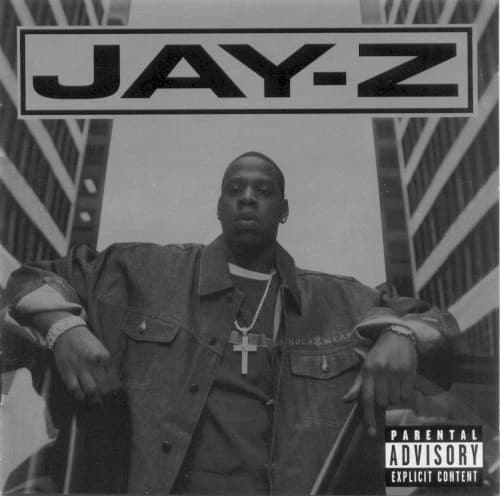
JAŸ-Z Vol.3.. Life and Times of S. Carter — The Street Record That Went Global
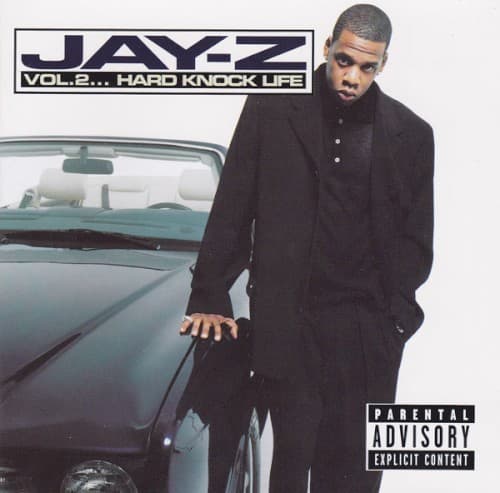
Vol.3.. Life and Times of S. Carter is the album where Jay-Z stopped pretending the street and the pop charts were two different audiences. The consensus calls it a return to his hard roots after the platinum success of Vol. 2... Hard Knock Life, and that is half right. It does go back to street subject matter. What it does not do is retreat from the radio, and the best moments come from the places where the two worlds fold into each other: a Timbaland beat that sounds like the future of Southern rap, a DJ Premier loop that sounds like the past of New York, and a rapper who treats both as home.
The argument here is blunt. This is the record that proved a New York rapper could build a national sound by absorbing everyone else's. Timbaland supplies the rhythms, UGK and Juvenile supply the regional authority, DJ Premier supplies the lineage, and Jay supplies a voice that makes all of it his. That ability to absorb without being swallowed is the real achievement, and it is more interesting than the usual story about returning to form.
It did the numbers to match the ambition. The album entered the Billboard 200 at number one with 462,000 copies in its first week, about thirty percent more than its predecessor, and it went on to triple-platinum certification. Critics at the time praised the flow and the hooks, though not everyone agreed that the wordplay matched his earlier records. That split is fair. The writing here is polished and professional rather than inspired, and the album is carried by sound and delivery more than by ideas.
The cost of that approach is cohesion. As an album it is a loose, sprawling collection, and the sequencing is not where its strengths live. As a catalog of what rap sounded like at the turn of the millennium, it is hard to beat. The case for it as one of JAŸ-Z's best rests on how many songs still sound like a template for what came next.
Borrowing From the South Without Losing New York
Production is the album's strongest argument, and it is a lineage story. Timbaland's contributions are the clearest example: stuttering, off-center drums that leave gaps for the rapper to jump into, and bass that moves like a second voice. Jay has the technical sense to do something unusual with them. Instead of rapping squarely on the beat, he floats across it, landing words in the spaces the drums leave open. That is a skill borrowed from the Southern rappers on the record, and he is generous enough to bring two of them in rather than imitate them.
The New York side of the ledger is just as deliberate. DJ Premier's chopped-loop approach on So Ghetto is the album's most direct link to the tradition Jay came up in, and Rockwilder gives the record two of its heavier, more aggressive beats. The mixture works because the producers are not trying to sound alike. Each song has its own sonic identity, which is exactly what one critic of the period praised, and it keeps a sixteen-track record from turning to mush.
As a writer, Jay is in strong but familiar territory. His rhymes on money, power and the weight of reputation are specific and well constructed, with internal rhyme that rarely repeats itself. The fact sheet notes one critic who found the wordplay and humor thinner than on his earlier work, and that criticism has some basis: there are fewer jokes, fewer story-songs and fewer moments of the confessional edge he had on his debut. The writing is craft more than risk.
The weakest points are the places where the record chases polish at the expense of grit. Two of the heavily produced tracks were singled out in a retrospective review as overwrought, and Things That U Do, the Mariah Carey duet, is the clearest example. It aims for a pop moment and lands somewhere between a ballad and a lecture. The street cuts that surround it feel more honest, and the contrast exposes how thin the pop writing is.
Delivery ties everything together. Jay modulates his tone across the album, sounding cool and amused on the hits and tighter on the street songs. Guests are used well: Amil and Beanie Sigel add texture on the crew records, and the Southern guests arrive with enough presence that they sound like equals rather than ornaments.
Sixteen Tracks, Three Moods, One Long Medley
The sequence begins with a short Hova Song intro and then stacks its strongest material early. The opening stretch moves from a New York boom-bap statement to a run of Rockwilder and Timbaland records, so the record establishes its range within the first twenty minutes. That is a smart structure, because it tells the listener this will not be one sound, and it rewards anyone who stays for the variety.
The middle is where the sag begins. The interlude and the crew songs keep the street energy alive, but the connective tissue is weak. The spoken pieces named after Hova feel like gestures at a concept rather than a concept itself, and the album never explains why a Mariah Carey duet and a gritty street record belong on the same disc. Part of the answer is that they don't; the sequence reads like a playlist of singles and album tracks arranged by commercial instinct.
The last stretch is the weakest part of the design. The record ends with a long medley-style closer that runs well beyond what its ideas can support. The final minutes ask for patience the material has not earned, and a tighter, shorter ending would have left a stronger last impression. After a run of memorable Timbaland tracks, closing on this feels like an afterthought.
The overall length is only partly earned. At sixteen listed tracks, with several short or interstitial, the record runs close to what it can sustain, but a trimmed version without the weakest duet and the long closer would be a stronger album. The best songs would remain, the pacing would tighten, and the street-meets-pop thesis would be easier to hear. As it stands, the album is a collection of excellent individual records connected by a commanding performer rather than a single arc.
The Template Album That Still Has Room to Move
In Jay-Z's catalog, Vol.3.. Life and Times of S. Carter sits above Watch the Throne on this site and below 4:44, and the order is deliberate. Watch the Throne is more ambitious but less consistent in sound, while 4:44 is the album where Jay finally writes with total honesty and no commercial calculation. Vol. 3 is the record where the calculation is most successful: every commercial choice is also a musical one, and the sound is distinct from start to finish in a way that his later collaborations are not.
It is for listeners who want to understand how late-90s New York rap absorbed the South and the pop charts without losing its identity. It is also for anyone who prefers rap built around beats, rhythm and delivery over concept and storytelling. Skip it if you want the confessional intensity of his debut, or if you expect an album that holds one mood from start to finish. The record is more compilation than statement, and the Mariah Carey collaboration and the closing medley will test patience.
It has aged better than most records from its moment. The Timbaland productions still sound strange and forward-looking, and the DJ Premier cut remains a model of how to chop a loop. The pop material sounds more dated than the street material, but even those songs contain lasting hooks. The influence is easy to hear in later records that blend regional sounds into a national one.
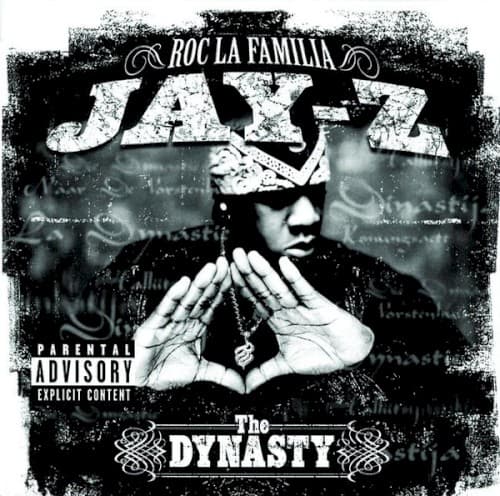
Start with Big Pimpin' for the UGK collaboration and the clearest example of Jay riding a Timbaland beat, So Ghetto for the New York lineage, and It's Hot (Some Like It Hot) for the sharpest single. For the next step, try The Dynasty: Roc La Familia to hear how he handled a label-highlight format a year later, then 4:44 to hear what he sounded like when he dropped the formula entirely. The most useful thing to take from Vol. 3 is that a rapper can sound like himself while borrowing everything else.
Track by track
Track Listing
Hova Song (intro)
SolidA short K-Rob production that sets a confident tone and clears the stage. It works as an introduction, not as a song.
So Ghetto
StandoutDJ Premier's contribution is a chopped loop with a hard, dry snare, and it is the album's clearest link to the New York boom-bap tradition Jay grew up in. Jay raps with a grounded, no-frills intensity and lets the beat do the heavy lifting. A standout for anyone who wants to hear the street side of the record at its leanest, and a reminder that the pop material was a choice rather than a limitation.
Do It Again (Put Ya Hands Up)
SolidRockwilder supplies a hard, clubby beat, with Amil and Beanie Sigel along for the ride. It is built for a crowd and works as one, though the hook is more functional than memorable.
Dope Man
SolidA multi-producer cut that aims for weight and ends up crowded. One retrospective review called it overwrought, and the beat does bury the verse. The writing about the drug trade is competent but not as sharp as Jay's best.
Things That U Do
WeakSwizz Beatz and Mariah Carey for a pop-leaning duet that is the album's clearest bid for radio crossover. The production is glossy to the point of being heavy, and the writing is the thinnest on the record. This is the track most likely to be skipped, and it is the one most responsible for the album's uneven reputation.
It’s Hot (Some Like It Hot)
StandoutTimbaland builds a beat out of stuttering drums and sparse keyboard accents, and Jay raps on top of it as though he has always lived there. The song's rhythm is its hook: the pauses matter as much as the words. It is the sharpest single on the album and the best demonstration of what Jay learned from Southern production. Short, tight and still modern more than twenty years later, it is the sound of a rapper widening his range without losing control of the song.
Snoopy Track
StandoutAnother Timbaland beat with Juvenile alongside Jay. The bounce is infectious and the Juvenile verse gives the song a Southern flavor that keeps it from sounding like a pastiche. The idea is stronger than the hook.
S. Carter
SolidA mid-tempo Amil duet that keeps the album's tone steady. Jay's boasting is detailed and the beat gives him room, but the song sits in the middle of the record without making a case for itself.
Pop 4 Roc
SolidA crew record with Beanie Sigel, Memphis Bleek and Amil, produced by Clue and DURO. It does its job as a label showcase and offers little beyond that. Filler with good intentions.
Hova Interlude
SolidA brief K-Rob interlude. It marks a transition and little else.
Big Pimpin’
StandoutTimbaland and UGK, and the album's most lasting collaboration. The beat is airy and a little strange, the UGK verse brings Southern authority, and Jay slides in between with a relaxed, rhythmic delivery that suits the arrangement. The song works because no one is forced to sound like anyone else: it is a handshake between two regions that sound like equals. It also shows what Jay does best on this album, which is to find the pocket in a beat that is not built for him.
Is That Yo Bitch
StandoutA Timbaland production with Twista and Missy Elliott, built on frantic energy and rapid-fire guest delivery. Twista's speed gives the record a jolt, and Missy brings the personality. A strong late-album curveball.
Come and Get Me
SolidTimbaland again, running more than six minutes. The beat is moody and Jay's verses are focused, but the length stretches the idea. It has atmosphere and little else to hold it up.
NYMP
SolidA Rockwilder production that returns to a harder, more aggressive sound. It is brisk and combative and offers a useful reminder of the album's street-side focus before the closing stretch.
Hova Song (outro)
SolidA short K-Rob closer that mirrors the intro. A necessary bookend, though not a memorable one.
Anything / Jigga My Nigga / Girl’s Best Friend
WeakA long medley-style closer combining three pieces, produced in part by Swizz Beatz. It runs well past what its ideas can support and ends the record on a plateau. Mostly filler.
Frequently Asked Questions
Is Vol. 3 Life and Times of S. Carter a good album?
Who produced Vol. 3 Life and Times of S. Carter?
How well did Vol. 3 Life and Times of S. Carter sell?
What are the best songs on Vol. 3 Life and Times of S. Carter?
Styles