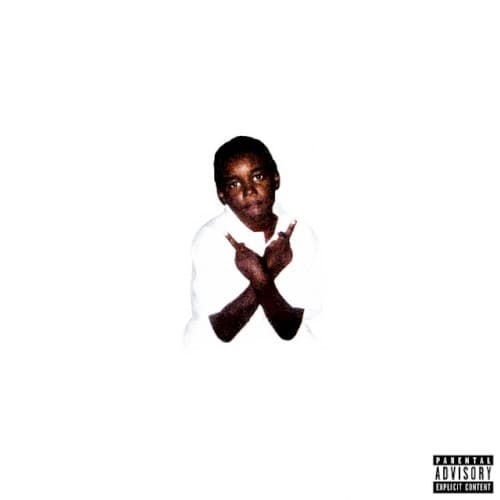
The scorecard
4.5/10 · Weak
- Writing25%
- 3.5
- Production25%
- 5.5
- Delivery15%
- 5.0
- Cohesion15%
- 4.5
- Originality10%
- 4.0
- Replay value10%
- 4.5
The lyrics stack brags about jewelry, drugs and women without distinct images, so tracks like "Going Schitz" and "Turn Up" blur together, with "Fuk 12" a rare point of view.
The beatmaking relay delivers bright, distorted synthesizers and heavy 808s that translate well on phone speakers, with "New" and "MDMA" built around strong synth hooks.
Carson's clipped, Auto-Tuned bark brings energy but little change from song to song, and guests Destroy Lonely and Homixide Gang sound more distinctive on their features.
Twenty tracks and roughly forty-eight minutes stack too many near-identical songs, and the middle stretch invites skipping, even if "The End" closes on a well-placed change of tone.
The record follows the Whole Lotta Red template closely, and critics at Pitchfork and HipHopDX heard Playboi Carti's influence in nearly every beat.
The best songs, especially "Freestyle 2", hold up on repeat and work well as playlist material, though the album as a whole is less rewarding the second time through.
Ken Carson X: The Playlist That Outgrew Its Album
The most important fact about X is that its best-known song stopped being part of it. "Freestyle 2" became a TikTok dance, a platinum single and a track Ken Carson himself calls his defining one, while the album around it collected mixed reviews and a modest chart debut. That split is the thesis of this review: X is a competent, high-energy set of two-minute rage tracks that works better as a playlist to shuffle than as an album to sit through, and the one song that escaped proves the point.
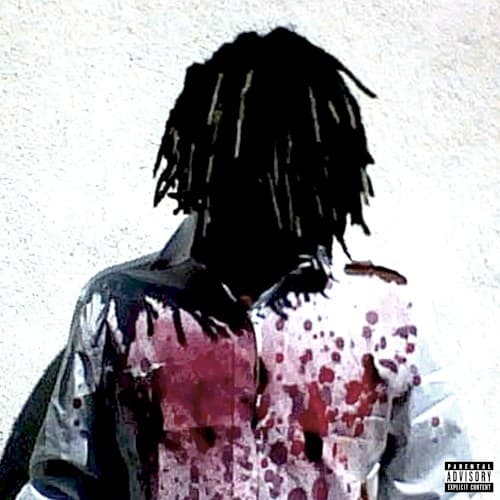
The standard complaint, repeated by Pitchfork and HipHopDX, is that Carson is working in Playboi Carti's shadow. Carti executive produced the record, and both writers heard Whole Lotta Red in its mayhem. The charge is fair but also lazy, because it ignores what the template is for. Rage is built for short attention, big speakers and live crowds, and Carson has said he wanted an album that represented his shows. Judged on those terms the album mostly delivers: songs that rarely pass three minutes, synthesizers that arrive like alarms, and 808s pushed to the front of the mix.
The problem is not borrowing. The problem is how little of the borrowed material has been bent into something his own.
The stakes were higher than the sound suggests. This was an Interscope debut arriving a year after Project X found him an audience inside the rage scene, and the natural expectation was a step up in ambition. What the album offers instead is a step up in volume. Twenty tracks and roughly forty-eight minutes is a lot of runway for a rapper whose range across the record is a bark, a slur of ad-libs and an occasional drop into melody. The album is at its best when it is shortest and least explained, and at its worst when it asks for patience.
Mixed is the honest word. There is real energy here, and some of it is thrilling, but the energy rarely turns into a personality, and a streaming-era listener who skips freely will find the record's best 25 minutes without much effort.
Bright Synths, Interchangeable Boasts, Louder Guests
The production is the album's most reliable asset. The credits are a long relay of beatmakers, with Outtatown and Star Boy appearing on a large share of the tracks, and the sound is unified in a way that suggests a shared brief: bright, distorted synthesizers, heavy 808s and drums that sit slightly behind the vocal in a way that makes everything feel pushed forward. Individual beats have real hooks, and several pivot on glitchy or bleeping synth figures that would work on their own as ringtones. The mix is loud and clean enough to hold up on phone speakers, which matters for music built to live on short-form video.
The weakness is that the beats are doing the work the rapper should be doing. Carson's delivery is a heavily Auto-Tuned, clipped bark, and across twenty tracks it changes less than the beat selection does. Critics pointed to a flow that can drift off the beat and to lyricism that sits at the level of brand names, jewelry and drugs, and the complaint holds up. The writing is not bad so much as interchangeable: boasts are stacked without images or angles that would let a listener tell one song's boast from another's. When a track does have a distinct idea, as on the anti-police "Fuk 12" or the lean, tired closing song, it stands out precisely because the rest is so uniform.
Guests expose the gap. Destroy Lonely and Homixide Gang each appear on their label home turf, and HipHopDX noted that both overshadowed Carson on their features. That is an unflattering result on an album whose own selling point is his personality. Lonely's more erratic cadence and the duo's chemistry sound like people with a voice, while Carson's contributions sound like a performance of a style.
It is worth separating two kinds of repetition here. Rage as a genre repeats by design, the way house music repeats a kick pattern, and criticizing a rage album for sounding like rage misses the target. The repetition that hurts X is different: the same tempo, the same synth timbres, the same bark at the same distance from the microphone for nearly fifty minutes. A playlist hides that by ordering and skipping. An album has to survive it, and this one does not.
The reported working method fits the result. Carson picked a beat first, then went into the booth and often stayed for hours, and the songs sound like instinctive responses to beats, not built structures. That produces energy, and sometimes very good energy, as on the best two-minute bursts, but it also produces a record where the first idea is usually the only one.
Twenty Tracks, Three Songs Worth Keeping
As a sequence, this is a record you can feel the playlist logic inside. The songs are short, with some barely passing a minute and a half, and the album is front-loaded with the heaviest, most synth-forward material. Early tracks arrive in quick succession with almost no setup, and for the first stretch the pacing is a strength: nothing overstays, the tempo stays high, and every few minutes a different beat throws a new sound across the same vocal approach.
The sag comes in the second half. By the time the middle of the album arrives, the tempo and tone have already been established, and the next several songs repeat the formula with smaller hooks. A run of back-to-back tracks around the middle is the stretch where skipping becomes the natural impulse, and where the album's mixed reception feels most deserved. It is a record whose best moments have almost no relation to their position, which is exactly how a playlist behaves and exactly what an album should not.
The single most interesting sequencing decision is the contrast at the other end. The album closes with the lead single, "The End", which drops the Auto-Tune and the swagger for a slower, more melodic turn. It is the only point where the record changes its own rules, and it works because it arrives after nearly forty-five minutes of the opposite. Placing it last was smart. Placing more moments like it earlier would have been smarter.
The length is not earned. Twenty tracks is a streaming-era number, designed to stack plays instead of to shape an arc, and the deluxe Xtended edition adds five more. A tighter run of twelve to fourteen songs would have kept the best of the heat and cut the stretch that gave critics their word for the album: forgettable.
A Mixed Record With One Song That Left
X is a mixed record with one lasting song, and that is how it should be placed. There is no other Ken Carson album rated on this site yet, so its rank is provisional, but against the genre as a whole it sits in the middle: energetic and well produced, thin as writing, and short on identity. It is clearly not the failure that its harshest critics described, since Slant included it among 2022's best hip-hop albums, but it is also not the proof of a new voice that some fans hoped for. HipHopDX put it among the year's disappointments, and the truth sits between those two verdicts.
It is for listeners who consume rage as a mood rather than as a set of albums: people who want a workout or a drive playlist and are happy to skip. It is also a useful document of the moment when Playboi Carti's sound was being imitated at scale and the labels moved in. Skip it if you want lyrical detail, stylistic range or an artist you can describe in a sentence. If the only thing you want is the original, start with Whole Lotta Red, which these critics say X resembles.
How it has aged is simple: the song held up and the album did not. "Freestyle 2" went platinum in 2026, long after the album's release, while the surrounding tracks have faded from the conversation. The album's reputation as a Carti copy has also eased, partly because Carson's later records gave listeners a bigger sample of his output to judge him by.
Start with "Freestyle 2", then "MDMA" for the guest-heavy, high-tempo side of the record, and "The End" for the one moment that sounds like a person and not a style. Next, hear A Great Chaos, the follow-up that Carson says he made without regard for critics, to see what a more confident version of the same approach sounds like. For the sound X is chasing, Yeat's 2 Alive is the closest comparison Pitchfork offered for its harder rapping style. X is a record to mine for three songs, and the best of them has already left it behind.
Track by track
Track Listing
Intro
StandoutThree minutes and fifteen seconds is long for an intro on this record, but it earns the slot by announcing a harder rapping style that Pitchfork compared to Yeat's 2 Alive. It is a loud, confident start, and a fair preview of the album's strengths and its limits: a lot of force, not much variation.
New
StandoutGlitchy synthesizers and thumping bass carry a brag about Carson's changed circumstances. The beat is the star, with its stuttering synth figures giving the track a hook the vocal does not supply. A solid early cut that sets the formula.
Gems
SolidA two-minute entry in the same format: fast tempo, bright synth, Auto-Tuned bark. Pleasant and interchangeable with its neighbors.
Nobody
SolidThrashing synthesizers and 808s dominate this one, and the beat is aggressive enough to cover for a vocal that mostly rides along. Its best quality is momentum. It is solid without being memorable.
Go
StandoutShort, bleepy and high-tempo, with Carson running through the usual list of jewelry, women and money. At under two minutes it does not stay long enough to wear out, and that economy helps it. Fun, if disposable.
MDMA
StandoutThe first guest feature, with Destroy Lonely, and one of the hyperactive peaks of the album. Slant's critic read Carson's verse as a sneer in the same spirit as the cover art, and the speed and snarl fit that description. The track has a clear hook and a beat with real drive, and it earned a music video when the deluxe edition arrived. The weakness is the guest: Lonely's looser, stranger cadence makes Carson's rhythm sound more rigid by comparison. Still, it is among the best uses of the record's formula, and a natural pick for a first-time listener who wants the loud side of the album.
X
SolidThe title track runs barely over two minutes and works as a mood piece more than a statement. The synthesizers sit high and bright, and the vocal is brief. Fine, but it does not justify the namesake slot.
PDBMH
SolidCarson runs through a catalog of drugs in a sped-up, Auto-Tuned flow that Pitchfork heard as slightly reminiscent of Young Thug. The comparison flatters the song, which has the speed but not the melodic invention. A decent changeup in tempo.
Money Hunt
StandoutUnder two minutes of upbeat, loose energy, and one of the places where HipHopDX heard fun. It is the least strained track in the first half, and the lightness helps. Good and over quickly.
South Beach
StandoutA slower, more laid-back delivery against disorienting synthesizers, which makes this a real change of texture. The contrast works, and the track gives the album a moment to breathe in its middle stretch. Solid and distinct.
Going Schitz
WeakA vulgar boast with the usual brag and little else. It is a short, forgettable stretch of attitude, and it is the kind of track critics had in mind when they complained about a lack of identity.
Same Thing
WeakThe title is an accidental review of its position on the album: another loud, short, Auto-Tuned track in the same lane as its neighbors. Filler.
Freestyle 1
SolidThe longest track on the album at nearly four minutes, and the one Carson recorded at the New York studio where he finished the record. It stretches the formula further than most of the album does, and the extra length is not fully used. Compared with its sequel it is looser, less hooky and easier to forget. It has a good beat and a decent flow, but the song never gives you a reason to remember it, and it works best as the lead-in that makes the next track feel sharper. A solid piece of the album's middle that benefits from the contrast.
Freestyle 2
StandoutThe reason the album is remembered. Carson stutters through a run of half-formed ad-libs over a huge beat, and the looseness is the hook: it sounds like a person improvising with total confidence, which is what the rest of the record rarely achieves. The opening verse became a three-step dance on TikTok, with more than 70,000 videos made with it, and the song was certified platinum in July 2026. Its success says something about how streaming reshapes an album's value, since a two-minute burst that works as a clip outlived the forty-eight minutes around it. It is a better song than its context deserved, and the clear high point of X.
Fuk 12
SolidThe shortest track on the record at about a minute and a half, and an anti-police statement that gives the album a rare point of view. It is brief and blunt, and the lack of development is a pity, but at least it has something to say.
Murda Musik
SolidThe second Destroy Lonely feature. The beat is dark and punchy, and the guest again sounds more distinctive than the host. Solid, though it repeats the pattern set by the earlier collaboration.
Delinquent
SolidThe Homixide Gang feature, and a clear example of a guest overshadowing the lead, as HipHopDX noted. The beat is strong and the group's chemistry gives the track a different energy, but Carson's part sounds like a placeholder next to theirs. Good track, mixed result for the album.
Get Rich or Die
SolidEnergetic flexing over a driving beat, with a pitch change at the end that is the most interesting moment. Otherwise it is a standard entry in the late-album run.
Turn Up
WeakAnother sub-two-minute burst of energy without a distinct hook. It does what the title says and little more, and it is interchangeable with the tracks around it. Filler.
The End
StandoutThe lead single and the album's closer, and the one track where Carson drops the Auto-Tune and the posture. He sings in a slower, mellow mode that he describes as laid back, and HipHopDX heard a heart under the lean and other substances. It is a welcome change from the rest of the record, and a hint of what a more personal Carson might sound like. The writing is still simple, and the vocal range is limited, but the contrast is effective, and the album ends on its most human note. If the record had more moments like this earlier, the verdict on it would have been kinder.