The scorecard
7.7/10 · Great
- Writing25%
- 6.5
- Production25%
- 8.0
- Delivery15%
- 8.5
- Cohesion15%
- 8.0
- Originality10%
- 8.0
- Replay value10%
- 7.5
The hooks and put-downs are sharp and quotable in rhythm, but across nine tracks the subject rarely moves past attitude, and the album's stated idea of tracing how anger builds is stronger in the sequencing than in the verses.
Kenny Beats keeps every beat lean and abrasive, and the sample flips on Hatin and Relative give the tape two distinct textures, though a few instrumentals are more vehicle than idea.
Rico Nasty moves from a scream to a sneer to a sung melody inside a single song, and the control of that range is the reason the tape works.
At roughly eighteen minutes with a skit in the middle, nothing overstays, but the tape ends right when its calmer last stretch gets interesting.
Rap-metal and punk-rap crossovers existed before 2019, but few put a rapper's full range of temper at the center the way this one does.
Projected: the short runtime and the energy of the opening run invite repeat plays, while the thinner lyrics will keep it behind her fuller records.
Rico Nasty Anger Management: Temper as a Craft, Not a Setting
Anger Management is the sound of a rapper discovering that volume is a skill and not just a setting. Across nine tracks and roughly eighteen minutes, Rico Nasty screams, snarls, sings and sneers over beats that give her nowhere to hide, and the argument of this review is that the tape works because Kenny Beats built a cage tight enough for her chaos to take shape. It is the best case on record for Rico as a rapper with discipline rather than only attitude. It is also a slightly lesser record than the longer follow-up, because a project this short leaves several of its best ideas as sketches.
The circumstances explain the sound. The two of them cut the whole thing in a five-day session in early 2019 and released it as a surprise on April 25, 2019, and the speed is audible. These songs have the clipped confidence of first instincts that nobody got a chance to second-guess, and almost none of them wastes a bar. Rico has said the point was to show the buildup that leads someone to anger and not only the explosion, and the running order does follow that idea, starting in a snarl and ending somewhere much calmer.
The lineage matters here. Hip-hop has always had a loud wing, from Run-DMC trading guitars for drum machines to the Beastie Boys, and the 2010s brought a generation of rappers who treated punk and metal as raw material rather than novelty. Critics filed this tape under trap, punk rap and nu-metal, and all three labels fit. What separates it from the pile of rap-rock experiments is that Rico does not borrow the genre's costume. She borrows its pacing, the way a verse can sit in a held breath and then detonate, and she turns that into a rap flow with real swing.
The stakes are about what kind of artist she is. If Anger Management were only intensity, it would be a good gym tape and nothing more. It is closer to a thesis statement for a rapper who can be funny, vulnerable and furious in the same four minutes, and that is rarer than it sounds.
Kenny Beats Builds the Walls, Rico Nasty Tests Them
The production is the frame, and it is deliberately narrow. Kenny Beats is credited as producer on every track, with Baauer on two of them and several uncredited co-producers rounding out the later songs, yet the tape sounds like one room. Drums are loud and dry, bass is distorted rather than rounded off, and synth lines arrive in short stabs that leave plenty of air for the voice. That space is the key choice. A lot of rap-rock crossovers drown the rapper in guitars; this one strips the sound down until the only thing left to follow is her.
The sample work gives the tape its two best surprises. One track flips a Jay-Z hit into something sneering and unrecognizable, and another leans on a smooth, hazy R&B sample that Rico slips into without losing her edge. Moving between those two textures is how the project avoids sounding like a single trick repeated nine times. Compare that to the mid-2010s trap tradition, where the beat often sets one mood and the rapper rides it; here the beats keep changing the rules and she keeps adjusting.
Her delivery is the real instrument. She can shift from a shouted ad-lib to a nasal sing-song in half a bar, she lands punch lines on the beat's weakest count so they hit harder, and when the melody takes over she does not sound like a rapper dutifully attempting a hook. The vocal control also explains why the harshest songs never turn to noise. Underneath the scream there is always a pocket, and she stays inside it.
The writing is where the tape thins out. Rico is good at the short, sharp line: a taunt, a dismissal, a flex that doubles as a threat. She is less convincing when a song asks for a second idea. Several verses repeat the same posture with different insults, and the album's own theme, the slow build toward anger, is carried more by the order of the songs than by anything she actually says about it. HipHopDX called the project half-baked, which is too harsh, but the complaint has a kernel of truth: some tracks feel like strong openings to songs that stop before they develop.
A second, smaller weakness is the mix of moods. When the tape slows down for its melodic songs, the energy dips for a moment before the new texture takes hold, and the transition is not always graceful. Still, the ambition is clear and mostly earned. This is a rapper using a short runtime to try on several versions of herself, and the production is disciplined enough to let each one land.
Eighteen Minutes From Snarl to Slow Burn
The sequence is the best argument the tape makes for itself. It opens with a run of short, hard songs that establish the temper at full volume, and the first four tracks pass with almost no breathing room. By the time the skit arrives at the midpoint, the listener has been shouted at, flattered and challenged, and the interruption works like a deep breath before the second half.
What follows is the part critics noticed most: the temperature drops. The songs after the skit stretch out their melodies, allow more singing, and let the production leave gaps where the first half had none. The effect is that the project reads as a cycle, rising, breaking and settling, which fits the anger-to-acceptance reading of NME, and it gives a tape this short a shape it would not have had if it simply held one level throughout.
The pacing is mostly right, but not flawless. The first half peaks so hard that the middle can feel like a step down, even when the songs there are good, and one or two tracks in the back half ride a single idea slightly longer than they have earned. The skit itself is brief and fine, though it does little that the music was not already doing. A few of the late songs also feel under-finished next to the density of the opening, which supports the sense that more time could have helped.
Length is the other question. Eighteen minutes is a deliberate choice and a smart one, since a longer version of this temper would have started to repeat itself, and nothing here wears out its welcome. At the same time, the best moments, especially on the closing stretch, point toward a fuller record that this one does not quite become. "Cold" opens with the right level of menace, and "Again" closes by trading force for something closer to resolve; between them the tape travels a real distance in a short space. That is the right amount of ambition for the runtime, even if it leaves the listener wanting another act.
A Short Tape With a Long Shadow Over Her Catalog
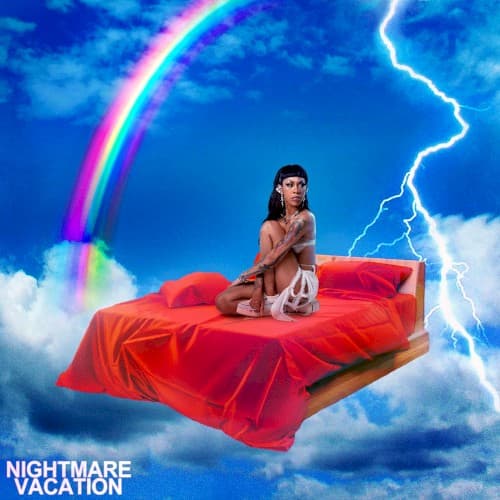
Anger Management ranks just below Nightmare Vacation in this catalog, and the gap is mostly about scale. Both put on display a rapper whose vocal control is far beyond what the loud, messy reputation suggests, but the later release is a fuller album with more room for variety, while this one is a sharper, shorter statement that shows the blueprint. The scores agree: the delivery and originality marks are high, the writing is the ceiling, and the length keeps replay value from climbing further.
It is a record for listeners who want rap with punk velocity and are willing to follow a rapper who treats her voice as a weapon and a melody instrument in equal measure. Fans of the crossover tradition from Run-DMC to the Beastie Boys will hear a modern branch of that lineage. Anyone who needs dense, writerly verses or a lyrical argument will find less here, and should probably skip it for something more pen-driven. Listeners who bounce off screaming vocals in the opening songs may also tire quickly, though the later half is gentler.
It has aged well in the sense that matters: the sound still feels like a specific moment and a specific partnership, not a trend. The punk-rap and metal elements read as part of how Rico builds songs rather than as a gimmick, which is why the tape holds up while many genre mashups of the same period do not. The Rolling Stone line about a long-term partnership between rapper and producer looks sensible, though the real test is how much further the pairing can stretch.
Start with "Cheat Code" for the pure adrenaline, "Relative" for the proof that she can sing without sacrificing bite, and "Again" for the closing change of temperature. After that, move to Nightmare Vacation, which builds a bigger room around the same voice. The best thing this tape does is prove that her fury was never the whole act, and the worst thing it does is stop just as that becomes the most interesting thing about her.
Track by track
Track Listing
Cold
StandoutThe opener sets the temperature and the rules at once: a stripped, menacing beat with room for her voice to stalk across it. It works as a statement of intent rather than a full song, which is exactly the job of an opener on a tape this short. Rico keeps the performance coiled instead of explosive, and that restraint is smart, because it leaves headroom for everything that follows. It earns its spot by making the rest of the tape sound like an escalation.
Cheat Code
StandoutBaauer is credited as a producer here, and the beat has the hard, lurching bounce of club trap pushed toward distortion. Rico rides it with a bark that lands on the offbeat, turning each line into a punch, then drops into a quick, almost sing-song run that keeps the track from becoming one-note. The hook is built for repetition and is hard to dislodge. It is one of the purest hits of adrenaline on the project, and the track to play for anyone who wants to know what the tape sounds like at full volume. The only knock is that it states its attitude and moves on without a second idea.
Hatin
StandoutThis one flips a Jay-Z record into a much meaner shape, and the contrast between the borrowed swagger and her snarl is the fun of it. The sample is chopped enough to feel like a prop she can kick around instead of a nostalgia hit, which is the right way to handle a famous source. Her flow is bouncy and impatient, and the song moves fast enough that the repetition in the writing barely registers. A confident, aggressive middle-weight track that earns its place by sounding like nothing else in the sequence.
Big Titties
SolidBaauer returns for a beat that is simple and loud, built for a chant-along hook. Rico plays the song as a comic brag, and her bravado works because she is clearly in on the joke. It is lighter on ideas than its neighbors and the writing is the most one-dimensional on the tape, but the sheer energy and the beat's weight make it hard to dislike.
Nasty World (skit)
SolidA short interlude that marks the midpoint and lets the tape catch its breath. Fine as a pause, but it adds little the music was not already saying.
Relative
StandoutThe tape turns here. A smooth sample from an R&B record anchors the beat, and Harry Fraud is listed as a co-producer without a formal credit, which fits the softer, hazier texture. Rico sings more than she raps, and the surprise is how little of her bite she gives up in the process; the melodies still carry a clipped, impatient edge. It is the clearest evidence that her range is a skill and not only a pose, and it makes the slower back half feel earned rather than like a retreat. The song is also where the album's idea about anger as a process becomes audible, since the temper has not disappeared, only changed shape.
Mood
SolidSplurge is credited with vocals on this track, and the guest adds a different texture without pulling the song away from Rico's pocket. The writing stays on attitude more than on narrative, so it is a solid middle track rather than a highlight, though it keeps the momentum intact after the shift in tone.
Sell Out
StandoutNils is a co-producer here without a formal credit, and the beat sits in a cleaner, more melodic frame than the opening run. Rico leans into the hook rather than trying to out-shout it. It is a strong entry in the back half, where the tape trades ferocity for control, though the verses are thinner than the chorus and a little repetitive.
Again
StandoutThe closer is the quietest and most reflective song on the tape. Jozzy is credited as writer and The Crate League as co-producers without a formal credit, and together they give it a calmer, more open sound that follows the anger-to-acceptance arc critics described. Rico sounds weary instead of furious, and the change in tone gives the whole project its emotional landing. It is the track where you hear what the opening songs were building toward, and it ends the tape on a subdued note rather than a final explosion. That choice is risky on a record sold on volume, and it pays off.