The scorecard
6.2/10 · Mixed
- Writing25%
- 6.0
- Production25%
- 6.5
- Delivery15%
- 7.0
- Cohesion15%
- 5.5
- Originality10%
- 5.5
- Replay value10%
- 6.0
Mike's streetwise, church-raised bark gives "Scared Straight" and "Home of the Brave" real weight, but the skit-and-gimmick songs like "Sex, Drugs, Rap & Roll" thin out the ideas.
The André 3000 and Mr. DJ cuts pop with Atlanta bounce, while the in-house Swiffman and Cool & Dre tracks are competent but far less distinctive.
His gravel-voiced, sergeant-in-the-booth cadence holds its own beside OutKast on "A.D.I.D.A.S." and carries even the weaker beats.
Sixteen tracks swing between street records, love songs and rock-flavored experiments with no consistent through-line, and the late stretch sags.
The loud, gospel-meets-trunk-rattle persona is his own, but much of the sound sits inside the lane OutKast had already paved in Atlanta.
A handful of tracks hold up well and the rest feel like period pieces from the early-2000s Atlanta major-label machine.
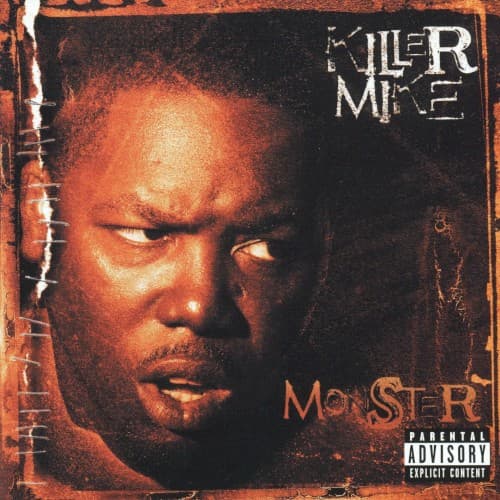
Killer Mike Monster: Atlanta's Loudest Newcomer Gets the Keys to Stankonia
Killer Mike's debut is at its best when he stops trying to be a star and simply barks over a beat that knows how to move. The voice is the first thing you notice on Monster: a gravel-throated, deacon-meets-drill-sergeant bellow that makes most early-2000s Southern rappers sound polite. When the production gives him something to push against, the album crackles. When it doesn't, he is left shouting in a well-appointed room.
That is the thesis, and it explains both the album's reputation and its limits. Monster is a loud, hungry, uneven first record whose best third is stronger than its footnote status suggests, but whose sprawl keeps it from working as a complete statement. It sounds like a young artist given every resource Atlanta could offer and asked to prove he could do everything at once.
The resources were real. The record came out in March 2003 on OutKast's own Aquemini Records, with Columbia behind it, and it reached number 10 on the Billboard 200. Sessions took place at Stankonia Recording and several other Atlanta rooms, and you can hear the city in the low end: slow, rolling, built for car speakers on a humid night. The guest list leans heavily on the family, with OutKast, Big Boi and Sleepy Brown all turning up, and a remix that pulls in T.I., Bone Crusher and Bun B.
The stakes for a debut like this are simple: does the new voice have enough personality to survive the company it keeps? On the evidence of the strongest cuts, yes. Mike never gets swallowed by the famous names around him, and his pulpit-style delivery gives the record an identity the beats alone could not. What he lacks, at this stage, is an editor. The album runs through street records, love songs, a punk-adjacent novelty and a serious closer, and not every experiment earns its slot.
This review treats Monster as what it is: a promising, flawed, frequently thrilling debut. It is not the album that later made Killer Mike a critical favorite, but it explains where that voice came from, and it still has a few songs worth playing loud.
A Pulpit Voice Over Rolling Atlanta Bass
Monster works because of delivery first, production second and writing third, and the ranking matters for understanding where it falls short. Mike's voice is the engine. He raps in short, punched phrases with the stress landing hard on the last syllable of the line, which gives his verses the feel of a sermon delivered by someone who might also throw you out of the building. That cadence turns even routine street talk into something physical. It is also why he can share a track with Big Boi on "A.D.I.D.A.S." without losing the room.
The production credits are a mix of marquee and in-house names. André 3000 handles a few of the most memorable beats, Mr. DJ supplies bounce, and Swiffman and Cool & Dre cover a large part of the remainder. The difference in quality between those camps is audible. The André 3000 productions have an odd, bent sense of rhythm that gives Mike room to growl, while the more conventional tracks lean on familiar early-2000s major-label textures: big drums, glossy keys, a hook that is more functional than memorable. Nothing is bad, but only some of it is distinctive.
Lyrically, the record has two modes. The first is the street narrator with a conscience, the man who describes hustling and its costs without glamorizing either; "Scared Straight" and "Home of the Brave" live in that mode, and it is where Mike sounds most like himself. The second is the party-and-provocation mode, and here the writing is thinner. "Sex, Drugs, Rap & Roll" and "Creep Show" go for shock and swagger rather than detail, and they suggest an artist who knew he needed novelty to stand out on a major label more than he needed it to say anything.
That tension is the album's main weakness. A debut is allowed to throw ideas at the wall, but Monster keeps changing costumes from song to song, and the shifts in tone are abrupt enough to blunt the better material. The love songs and the rock-flavored detours are not poorly made. They simply feel like they belong on a different, more careful record.
The guest spots are mostly an asset. The OutKast-adjacent cuts give the record its strongest moments, and the remix near the end turns into a genuine Southern posse cut, with a lineup that reads like a snapshot of where Atlanta and Houston overlapped in 2003. Fass Black, Slimm Calhoun and the rest of Mike's camp add local color without stealing focus. The mix keeps his voice at the front, which is the right call: when the vocal sits high, the album has authority, and when the beats compete with it, the album blurs.
What Monster lacks is restraint, not talent. Strip the weakest third and you have a very good, very Southern debut.
Sixteen Tracks, Three Records Fighting for Space
As a sequence, Monster opens strongly and then spends a long middle stretch changing its mind. The start is a spoken-word intro that leads straight into a title track built to announce a presence, and the run through the first handful of songs is the album at its most confident: loud, quick, and loaded with the Atlanta family names that sold the record. The energy is front-loaded on purpose.
The trouble begins as the record settles into its second act. Songs that would work as single-serving curiosities, a love song here, a rock-and-roll gag there, a skit-adjacent novelty after that, arrive in an order that never builds momentum. There is no argument being made from track to track, only a series of attempts. After a heavy opener, the change of mood into the softer songs feels like a different album starting, and the return to harder material later does not feel earned so much as scheduled.
The late album has two high points that rescue the run. One is the anthemic remix, which restores the posse-cut energy and reminds you why this record had so much behind it. The other is the short closer, which is more stripped-down and serious in tone than most of what came before it, and which makes you wish more of the preceding songs had been written with the same focus.
Length is the other problem. Sixteen listed tracks is too many for an artist still defining himself, particularly when several are short or novelty-driven. A tighter sequence of ten or eleven songs, front-loaded with the street records and the Outkast-orbit cuts, would make a leaner and more convincing debut. As it stands, the pacing rewards the listener who knows when to skip.
A Promising Debut That Still Sounds Like Atlanta, 2003
Monster is a good debut that sits well below the standard Killer Mike would later set. On this site it currently stands alone in his catalog, and the honest position is mid-table for the artist: a record with a few excellent songs, a clear voice and too much clutter. It is less focused than his later work and less polished than a classic debut should be, but it contains the raw material of a major rapper, and the best songs have held up better than the sound around them.
The album is for listeners who love early-2000s Atlanta, for fans of OutKast who want to hear the extended family at work, and for anyone tracing Mike's development from this loud, gospel-flavored rookie to the sharper writer of later records. If you care about the Southern major-label era, when a rapper could get a Columbia budget and a legendary studio, it is a useful document. Listeners who want a tight, consistent album should look elsewhere, as should anyone who wants the political fire without wading through the novelty songs.
It has aged unevenly. The tracks built on André 3000 productions and the posse-cut energy still move. The more generic major-label cuts sound like period pieces, and the novelty tracks feel dated in a way the better songs do not. That is a fair summary of the whole record: its high points are strong enough to hold, and its low points are the sort of thing a young artist makes before learning what to cut.
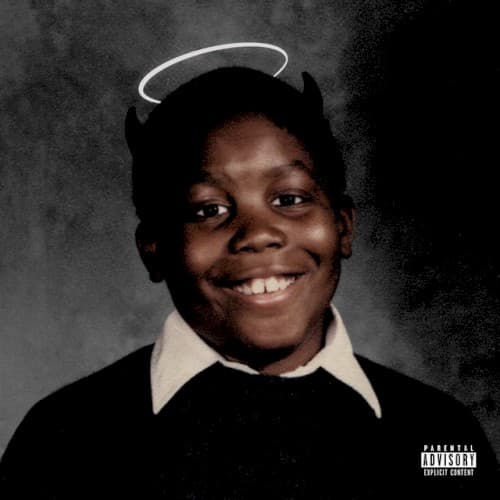
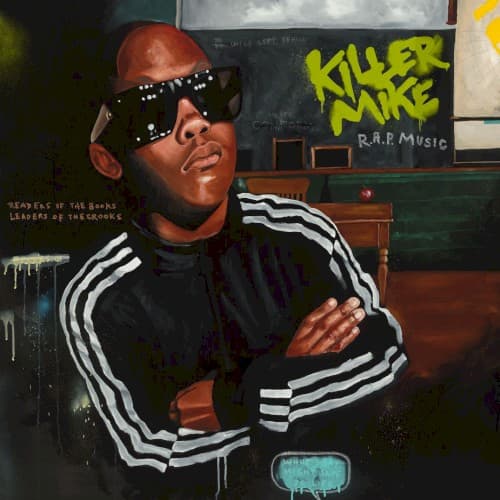
For a first listen, start with "A.D.I.D.A.S." for the Big Boi chemistry, "Scared Straight" for the street-with-a-conscience writing, and "Re‐Akshon (remix)" for the Southern posse-cut payoff. Then skip ahead to R.A.P. Music, the El-P collaboration that shows what Mike became once the guardrails came off, and to Michael for the later, more personal gospel-and-soul statement. The distance between those records and this one measures how much he grew, and "Monster" is where the voice first got loud enough to be heard.
Track by track
Track Listing
Monster (intro)
SolidA short spoken-word opener featuring Big Rube, built to set a tone rather than stand as a song. It does its job quickly and gets out of the way.
Monster
StandoutThe title track, produced by Mr. DJ, is Mike introducing the voice: clipped lines, heavy stresses and a beat designed to let him dominate it. It is brief at just over two minutes, which keeps the boast from wearing out its welcome and gives the album a fast, confident start.
Akshon (Yeah!)
StandoutProduced by André 3000 and featuring OutKast, this is the record's calling card and the clearest sign of where Mike came from. The beat is off-kilter in a way that suits his bark, and the guests add color without overwhelming the host. It is the song that best explains why Aquemini Records signed him, and it pairs a jittery rhythm with an unmistakably Atlanta bounce. Mike treats the opportunity as a challenge and rides the groove like someone who knows he is being watched, and the hook is built for shouting along in a car with the windows down.
Rap Is Dead
StandoutA defiant statement track produced by Grover Dill and Scott Fargus, taking aim at a rap scene Mike claims has lost its spirit. The conceit is a little familiar for 2003, but the energy sells it, and his voice carries the sermon-style complaint better than the writing alone would. It works as manifesto and as a warm-up for the more personal material that follows, though the argument is louder than it is detailed.
Scared Straight
StandoutOne of the best writing showcases on the album, produced by Swiffman. Mike moves through hardship and consequence with a street narrator's eye and a preacher's sense of moral weight. The beat is plainer than the André 3000 productions, but the record does not need flash; the verses do the work. It is the song that shows what kind of writer he could become, and it is a good starting point for anyone curious about his storytelling instincts.
All 4 U
SolidA softer, more personal cut produced by Cool & Dre, listed with a subtitle on the credits as a song for someone close to him. It shows range and sincerity, but the smooth arrangement is generic for the period and the hook does not carry as much weight as the verses.
A.D.I.D.A.S.
StandoutMr. DJ produced this track and Big Boi and Sleepy Brown lend their voices to the chorus. It is the album's best collision of Mike's growl and Atlanta funk, built on a lurching groove that makes room for each voice. Big Boi's smoother flow makes Mike's gruffness feel even more distinct, and Sleepy Brown's hook gives the track a melodic center that most of the record lacks. If one song explains the early-2000s Aquemini sound, this is it.
Creep Show
SolidFeaturing Bizarre and produced by Swiffman, this is a darker, stranger detour. The weirdness is enjoyable in the moment, but it reads as shock value rather than an idea, and the track is more memorable for its guest than its writing.
U Know I Love U
SolidA relationship song featuring J-Sweet and produced by André 3000, with a looser, more melodic feel than the street material. It is pleasant and well made, but the shift in mood stalls the album's momentum, and Mike sounds more at home when he is not asked to play it smooth.
Home of the Brave
StandoutSlimm Calhoun appears on this Cool & Dre production, a weightier, more solemn cut. The beat has a solemn weight that matches Mike's tone, and the verses return to the moral seriousness that anchors his best work. It is one of the album's stronger mid-section cuts and a preview of the more political artist he would become.
L.I.V.E.
SolidProduced by Swiffman, a competent, energetic track that keeps the pace but does not leave a strong impression. Mike is committed, the beat is solid, and the song is simply part of the middle stretch rather than a highlight.
Blow (Get Down)
SolidRock D the Legend guests on a party-minded cut produced by Blue Eyes and Silo Slugsworth. It is energetic and club-friendly, but the writing is basic and the track blends into the pack of mid-album songs.
Sex, Drugs, Rap & Roll
WeakProduced by Teeth Malloy and White Boy Leroy, this is the most obvious novelty on the record: a rock-flavored provocation that leans on its title more than its content. It shows Mike willing to experiment, but the experiment is thin, and it is the clearest example of the album's inconsistent tone.
Dragon
SolidFass Black joins Mike on a Mister C-Lo and Blue Eyes production, a gritty street cut that works better than the novelty songs around it. The beat is functional, the verses are direct, and it keeps the late album from drifting further.
Re‐Akshon (remix)
StandoutThe remix of the album's lead single is a proper Southern posse cut, with T.I., Bone Crusher and Bun B joining Mike over an André 3000 beat. The guest lineup reads like a snapshot of the Atlanta-and-Houston axis in 2003, and each rapper brings a distinct voice to a track that feels bigger than the original. Mike holds his ground against the heavyweights, which says a lot about the confidence of the delivery. It is a late-record rescue, restoring the energy the middle stretch had lost, and the closest thing to a victory lap on the album.
Hard Nard
StandoutFeaturing Stephen Carrington and produced by Swiffman, this short closer is the most stripped-down and serious-sounding track on the record. It leaves a stronger final impression than several of the songs that precede it.