Big Boi's Journey from OutKast Foundation to Solo Architect
Antwan André Patton emerged from East Point, Georgia as the grounded counterweight to André 3000's cosmic experimentation, forming half of OutKast while simultaneously building a parallel identity as Big Boi. Where hip-hop history often fixates on the flamboyant partner, Big Boi quietly constructed a catalog that emphasized consistency over reinvention, technical precision over conceptual leaps. His career represents a paradox: forever linked to one of rap's most celebrated partnerships while methodically proving he never needed it to justify his craft. The Dungeon Family sessions that birthed OutKast's early sound revealed Big Boi's instinct for pocket-riding flows and street-level storytelling, qualities that would anchor every album even as Organized Noize, DJ Cutmaster Swiff, and later collaborators pushed the production into stranger territories. His approach to verses has always prioritized syllabic density and rhythmic interplay over punchline pyrotechnics, a technical foundation that allowed him to adapt across decades without compromising identity.
When OutKast reached cultural apex with Speakerboxxx/The Love Below, Big Boi delivered the half that hip-hop purists championed—trunk-rattling beats, quotable hooks, and verses that never sacrificed clarity for abstraction. That duality defined his position: the rapper's rapper in a duo celebrated for breaking boundaries. His solo emergence wasn't rebellion but natural extension, a chance to center the aesthetic OutKast's experimentalism sometimes overshadowed. From Atlanta's underground to mainstream ubiquity and back to independent sovereignty, Big Boi's trajectory maps Southern hip-hop's evolution without the dramatic pivots that typically define legacy careers. He aged into elder statesman status not through reinvention but through refinement, proving durability matters as much as innovation.
Pocket Precision: Big Boi's Technical Framework and Production Chemistry
Big Boi operates in the tradition of flow technicians who treat beats as rhythmic puzzles to solve rather than canvases for personality projection. His vocal delivery sits comfortably in the mid-range, never straining for tonal distinctiveness but instead finding identity through cadence variation and breath control. Listen to how he navigates the Organized Noize production on early OutKast material—he locks into the pocket with mechanical precision, then shifts his internal rhyme schemes to create tension against the steady groove. This isn't flashy technique; it's architectural, building verses that reward repeated listening as the syllabic patterns reveal themselves. Where André 3000 floated above beats, Big Boi burrowed into them, using the bass frequencies as anchor points for his rhythmic placement. That grounded approach gave OutKast's maximalist production a foundation, preventing the sonic experimentation from losing its head-nod imperative.
The production partnerships that shaped Big Boi's sound extend beyond Organized Noize's Dungeon Family innovations. He cultivated relationships with Cutmaster Swiff, Scott Storch during his pre-pop dominance, and later with Scar and Ribbeano for his solo work, always seeking collaborators who understood Southern hip-hop's bass-heavy fundamentals while embracing melodic complexity. His beats favor live instrumentation over sample-heavy construction—horns, keyboards, and guitars processed through hip-hop filters rather than chopped breaks. This gives his catalog a warmth that contrasts with the clinical perfection of much 2000s production. The funk inheritance runs deep, not through obvious P-Funk samples but through groove architecture: syncopated bass lines, crisp snare patterns, and space for instrumental flourishes. When he raps about Cadillacs and corner stores, the production matches that tangible world rather than escaping into abstraction.
Vocally, Big Boi refined a technique built on breath control and syllable stacking—fitting maximum information into minimum space without feeling rushed. He rarely uses melodic inflection or sung hooks personally, preferring to hire capable vocalists for those moments while he handles the rhythmic heavy lifting. This division of labor reflects an understanding of his strengths: precision over range, clarity over experimentation. His voice aged remarkably well, losing none of its rhythmic accuracy even as the content matured from youthful bravado to veteran perspective. The style remains identifiable across decades because it was never built on gimmicks that date quickly.
From Dungeon Family Sessions to Solo Sovereignty: Big Boi's Career Arc
Big Boi's origin story roots in Atlanta's Dungeon Family collective, where he and André 3000 formed OutKast in the early 1990s under the mentorship of Organized Noize. Their debut Southernplayalisticadillacmuzik introduced the partnership dynamic that would define both careers—André as the unpredictable creative engine, Big Boi as the technical anchor keeping everything connected to hip-hop's rhythmic traditions. That first album's regional success proved Southern rap could compete artistically with coastal dominance, but it was ATLiens and Aquemini that established OutKast as generational talents. Big Boi's contributions often flew under critical radars fixated on André's eccentricity, yet his verses on tracks like "Elevators" and "Rosa Parks" demonstrated how technical precision could match conceptual ambition. By the time Stankonia arrived with "B.O.B." pushing genre boundaries into drum-and-bass territories, Big Boi had proven his adaptability—he could ride any production without losing his essential identity.
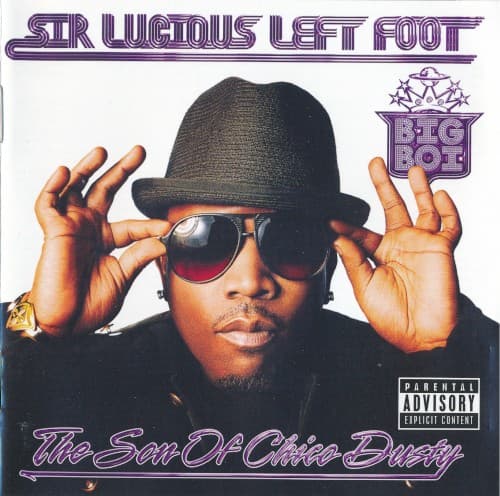
The commercial and critical peak arrived with Speakerboxxx/The Love Below, a double album that functioned as dual solo projects under the OutKast banner. Big Boi's Speakerboxxx half spawned hits like "The Way You Move" while maintaining credibility with album cuts that satisfied purists. His half sold millions and garnered Grammy attention, yet the narrative focus remained on André's half—a dynamic that likely accelerated Big Boi's solo ambitions. When OutKast entered indefinite hiatus after Idlewild's lukewarm reception, Big Boi faced the challenge every group member confronts: proving individual viability. Label politics delayed his proper solo debut Sir Lucious Left Foot… The Son of Chico Dusty until 2010, but the wait proved worthwhile. The album received widespread critical acclaim for its cohesive vision, adventurous production, and Big Boi's refusal to chase contemporary trends. Tracks featuring Gucci Mane and Yelawolf demonstrated collaborative range, while the production—handled by multiple collaborators including Organized Noize, Lil Jon, and Salaam Remi—maintained sonic adventurousness without sacrificing groove.
Sir Lucious Left Foot established Big Boi as more than OutKast's other half, but subsequent albums faced diminishing commercial returns even as quality remained consistent. Vicious Lies and Dangerous Rumors (2012) and Boomiverse (2017) found him navigating an industry increasingly indifferent to veteran artists without viral moments or streaming dominance. The albums featured guest appearances from Phantogram, Killer Mike, and Snoop Dogg, showcasing Big Boi's willingness to experiment with sonic textures while never abandoning his core approach. Critical reception stayed positive, but cultural conversation moved elsewhere. This positioned him in the uncomfortable middle ground many legacy artists occupy—too established to benefit from underdog narratives, not commercially dominant enough to command mainstream attention. His response was continued productivity and selective touring, building a sustainable career model that didn't require constant relevance.
The business side of Big Boi's career reflects hard-won independence. After label frustrations delayed his initial solo emergence, he eventually gained greater control over release schedules and creative direction. This allowed for projects like his collaborative EP with Phantogram as Big Grams, demonstrating artistic curiosity without commercial pressure. He remained active in Atlanta's music community, supporting younger artists while maintaining his own output. The OutKast reunion performances at festivals in 2014 reminded audiences of the partnership's chemistry, but Big Boi's post-reunion solo work made clear he wasn't waiting for André 3000 to dictate his creative timeline. This professional autonomy came at the cost of mainstream ubiquity, a trade-off he seemed to accept as the price of artistic self-determination.
Big Boi's Enduring Influence on Southern Hip-Hop's Technical Standards
Big Boi's legacy operates on two levels—his contributions to OutKast's genre-redefining run and his underappreciated solo catalog that proved he never needed the partnership to justify respect. Within OutKast's context, he provided the rhythmic anchor that allowed André 3000's experimentation to function. Without Big Boi's pocket-perfect verses grounding tracks, OutKast's sonic adventurousness might have collapsed into self-indulgence. He modeled how technical precision could coexist with regional authenticity, influencing a generation of Southern rappers who prioritized flow mechanics without sacrificing street credibility. Artists like Future, Young Thug, and Travis Scott operate in OutKast's sonic aftermath, but it's often Big Boi's production choices—live instrumentation, melodic basslines, vocal layering—that echo through their work rather than André's genre-hopping unpredictability.
As a solo artist, Big Boi's influence runs deeper in producer circles and among rap purists than in mainstream consciousness. His willingness to collaborate with indie-leaning artists like Phantogram and his embrace of live instrumentation over sample-based production anticipated the genre-blending that would dominate 2010s hip-hop. Yet he never received full credit for this forward thinking, perhaps because his core aesthetic remained rooted in Southern funk traditions rather than pivoting toward trending sounds. His technical approach—syllable-stacking, breath control, rhythmic variation within consistent tonal delivery—became textbook fundamentals for aspiring lyricists even if his name rarely surfaces in greatest-rapper debates. The consistency of his solo output, maintaining quality across label changes and shifting industry economics, offers a template for sustainable veteran careers in an age obsessed with breakthrough moments.
Culturally, Big Boi represents Southern hip-hop's technical sophistication, countering lazy narratives that reduce the region's contributions to crunk energy and trap aesthetics. His catalog proves Atlanta produced elite-level lyricists who could match coastal technical standards while bringing distinct regional flavor. The respect he commands among peers—evidenced by continued collaborations and festival bookings—reflects industry understanding of his contributions even when mainstream recognition lags. His legacy is that of the essential player whose individual brilliance sometimes gets obscured by the team's success, the technical master whose consistency paradoxically makes him easier to overlook than flashier, less reliable talents. Hip-hop history will continue reassessing Big Boi's contributions as OutKast's legend solidifies and his solo work gains the retrospective appreciation it deserves.