The scorecard
6.5/10 · Good
- Writing25%
- 6.5
- Production25%
- 6.5
- Delivery15%
- 7.5
- Cohesion15%
- 6.0
- Originality10%
- 5.5
- Replay value10%
- 6.5
The plain confessional lines on Death Ain't Easy and Backdoor land because they avoid ornament, but the street material in the middle repeats the same ideas in slightly different words.
The piano-and-drum template is moody and cohesive, yet a long producer list yields beats that sound interchangeable outside the title track and Stay Down.
Durk's strained, half-sung voice makes a three-note hook feel like a confession, and the performances on Backdoor and The Voice are the best on the record.
A flat, similar-sounding middle and sixteen tracks that could be thirteen weaken the sequence, though short runtimes and an economical opening keep it moving.
Melodic Chicago trap with piano loops was well established by 2020, and the album's freshest element is the emotional context rather than any new sound.
The best five or six songs will hold up as a playlist, but the sameness of the middle suggests the full album will not get frequent repeat listens.
Lil Durk The Voice: Grief as a Hook, and Where It Runs Thin
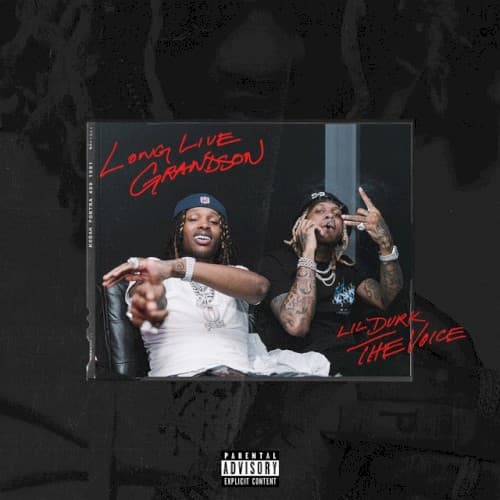
The Voice works best when it stops trying to be an album and lets a man grieve in public. Lil Durk made it in the weeks after King Von died, dedicated it to him, and put a photo of the two of them on the cover. The record is at its strongest in its shortest, plainest moments, when the chorus is barely there and the voice cracks open over a piano figure. It is at its weakest when it reverts to routine Chicago melodic trap, and that happens more often than the circumstances deserve.
That tension is the whole story of the record. Durk is a rapper whose instrument is strain: a ragged, half-sung delivery that makes ordinary sentences sound like confessions. Here the strain has a real cause, and it gives the better songs a weight that most of his catalog only gestures at. The problem is that sixteen tracks in about forty minutes means a lot of songs where the cause is mentioned and the music does nothing new with it. Grief is a subject, not a structure, and the album leans on it to hold together material that would otherwise blur.
Heard against the West Coast tradition, the record looks different. There, the memorial song has its own rules: you honor the dead by making the beat bigger, the groove warmer and the storytelling more exact, so the loss has a place to sit. Durk works the other way around, with thin, wet piano loops and hooks that repeat a feeling rather than build a scene. That is a legitimate choice, and sometimes a devastating one, but it is also why the album tends to run together. The pain is real; the specificity is intermittent.
This review argues that The Voice is a good, sincere, uneven Lil Durk album that is carried by its emotional center and held back by interchangeable beats. It is worth hearing for its first third and for the handful of songs where Durk lets the mask slip. It is not the record that turns him from a dependable melodic street rapper into a great album artist.
Strained Vocals Over Piano Loops That Start to Blur
The core sound is a bank of melancholy piano loops, ghostly vocal samples and sparse trap drums, built by a long list of producers. TurnMeUpJosh shows up on several of the key songs and gives the album its most consistent palette, and Metro Boomin supplies the beat for the one outright guest highlight. The trouble is that a long credit list does not produce a variety of ideas. As Allmusic noted, the instrumentation is often interchangeable, and the better moments come when the record leaves that template. Where the production commits to a texture, as on the title song, the album gains an identity. Where it settles for the house piano, it sounds like a playlist assembled from the same folder.
The writing is direct and mostly unadorned. Durk is not a wordplay rapper and does not pretend to be. His strength is the plain confessional line: a sentence about survival, loyalty or a loss, delivered as if he is saying it to one person. On the stronger songs that directness is worth more than cleverness, because it avoids the trap of dressing grief in metaphors it does not need. On the weaker ones it becomes repetition. Several tracks say the same thing about the streets, the money and the distrust in slightly different words, and the album would be sharper with less of that.
Delivery is where the record earns most of its credit. Durk sings and raps in the same strained register, bending pitch and leaning on the ends of lines until they crack. It is recognizable in two bars, and it is why a three-note chorus can still land. His hooks are better than his verses, as is typical of the style. The risk is that the voice sits in one emotional gear for the entire runtime. There is anger in the performance but little lightness, so the album asks to be felt on nearly every track.
The guest list is used with some care. A collaboration with a singer and a fellow trap star leans into the melodic side of the record, and a shorter appearance from Chicago's Booka600 brings a rawer edge. They add contrast without stealing the album, which is a smart choice for a project this personal. But too many guests are treated as ornaments, and the features rarely push Durk to write differently.
The clearest weakness is the middle, where tracks with similar tempos, similar piano loops and similar hook shapes stack up. The individual songs are competent; collectively they flatten. In the West Coast tradition, a run of this length would be broken up by a change in groove, a skit with a point, or a long storytelling verse. Here the producers are many but the structure is not. The album has feeling to spare and variation to borrow.
A Sharp Opening and a Long, Level Middle
The sequence opens well. The first stretch moves quickly, sets the emotional terms and gets to the title song and the lead single without wasted time. These early tracks are short, often under three minutes, and that economy suits the material. Durk does not stretch a hook past its welcome, and the album feels like it is in motion rather than lingering over its own sadness.
The peak comes in the first third, when the writing and the beats are most closely matched. After that the pacing becomes the main problem. The middle of the album settles into a run of songs at nearly the same speed, with the same melodic contour, and the energy drops without any structural reason. A change of texture would have helped: a drier drum pattern, a harder beat, a guest with a different voice. Instead the sequence keeps offering the same mood in smaller doses.
There is a late recovery. The closing run does not sag as badly as the center, and a few songs near the end give the record a human ending rather than a fade-out. Short runtimes help; the whole project is over before the sameness becomes punishing. Even so, sixteen tracks is two or three more than the material supports, and the album would feel tighter at thirteen.
The sequencing also handles its biggest emotional beat with restraint, which deserves credit. The tribute does not arrive as a single grand statement but is distributed across the record, with the dedication felt rather than announced. That choice keeps the album from becoming a funeral program. It also makes the casual street songs feel slightly out of place when they interrupt. The record is trying to be both a memorial and a regular Durk project, and the transitions between the two modes are not always graceful.
The deluxe edition added twelve more tracks, which only confirms the issue. This is an artist who makes more music than a coherent album can hold, and the standard edition is the better argument for him.
A Sincere Record That Needed an Editor
Without other Lil Durk albums rated on this site yet, the placement has to be relative to the genre. The Voice sits in the good-but-not-essential tier: a heartfelt melodic trap record with a strong beginning, a real emotional spine and too much sameness. It stood out commercially, climbing to number two on the Billboard 200 in its third week and giving Durk his third top-ten album, which suggests that the sincerity reached an audience that wanted more than a checklist of street records.
This album is for listeners who respond to voice and feeling more than to lyrical density. If you like Chicago melodic rap, if you have followed King Von's career, or if you want a modern example of how a rapper can use trap's tools for mourning, this is a rewarding listen. It is also a good entry point to Durk, because the best songs state his appeal quickly. It is less suited to anyone who wants intricate rhyming, left-field production or a plot. Fans of the West Coast tradition of narrative detail may find it thin, and listeners who need variety will find the middle stretch long.
Start with the title track for the clearest statement of who Durk is, then play Backdoor for the record's most direct handling of loss, and finish with Stay Down for the best use of its guests and the most polished beat. Those three give you most of what the album does well. Everything else is optional, and several tracks are skippable.
For what to hear next, look for the deluxe edition's extra songs only if you are already invested, and otherwise move to Lil Durk's other work for a broader sense of his range. For a contrast in how a Southern rapper handles melody and mood, Young Thug is the obvious comparison: stranger, looser and less burdened by gravity, which makes it a useful reminder of what The Voice gives up for its seriousness.
The Voice will age as a document of a particular moment more than as a set of songs, and that is both its strength and its limit: the best minute here is a man hearing his friend's absence, and the other thirty-nine are mostly there to carry it.
Track by track
Track Listing
Redman
SolidA very short opener that functions as a statement of intent rather than a full song. It gets the album moving without ceremony, and the lean runtime keeps Durk from overstating his case. It is fine as a doorway, but nothing here is memorable enough to return to on its own.
Refugee
StandoutAnother compact track that sets a tense mood with a clean, dark loop and a hook that sticks quickly. Durk sounds focused, and the writing stays direct. It is solid rather than special, a good second track on a record that is still building its tone.
Death Ain’t Easy
StandoutA key track and the emotional anchor of the early album. The beat leans into a mournful loop that gives Durk room, and the additional vocals from King Von turn the hook into something close to an actual presence rather than a nod. The song works because it does not try to explain the grief; it lets the repetition do the work. The verses are plain, even blunt, and that suits the subject. It is among the clearest reasons the record deserves attention, and it is exactly where the album is closest to the memorial tradition it points toward.
The Voice
StandoutThe title song is the best statement of Durk's identity on the record. The beat is built around a melodic figure that lets his strained delivery carry the hook, and the performance is controlled without losing its edge. The verses are not especially inventive, but they are confident and clear about the persona he is selling. As a lead single it makes a strong case and also shows the limits of the formula: it is catchy, a bit grand, and a little too sure of itself. Still, it is the song to play for someone who has never heard him, because it shows how a three-note chorus becomes a signature.
Backdoor
StandoutOne of the album's strongest tracks and its most direct handling of loss. The piano loop is sad without being syrupy, and Durk's voice breaks at exactly the right places in the hook. The writing stays specific enough to feel personal and general enough to speak to anyone who has lost a friend. The song benefits from restraint: no guest, no big drum switch, just a man and a loop. It is the best argument that the album's grief is more than a marketing angle. A tighter record would put this at the center and build around it rather than leaving it as one highlight among many.
Still Trappin’
StandoutA collaboration with King Von that carries obvious emotional weight because of the circumstances. The beat is bouncier than the surrounding material and gives the album a brief change of pace. Von's presence adds contrast, and the pairing sounds natural. As a piece of music it is good but not exceptional; as a document it matters. The song also shows how much the record depends on context, since the listener supplies much of the feeling.
Stay Down
StandoutThe most polished song here, with Metro Boomin on the beat and 6lack and Young Thug on the hook and verse. The production is clean and spacious, and the guest voices give it a different texture from the rest of the record. Durk handles the melodic assignment well, and the song proves he can work in a more radio-ready setting without losing his tone. It is a bit glossy for an album about loss, but it works as a pop-leaning high point and a useful change of tone.
Free Jamell
SolidA solid duet with YNW Melly that leans on shared melodic instincts. The beat keeps the pressure low, and both rappers sound invested in the subject. The song is purposeful, but the hook is not distinctive enough to stand out from the other mid-tempo cuts around it.
Misunderstood
SolidA mid-album track with a moody beat and a familiar defensive posture. Durk's delivery is committed, but the lyrics repeat ideas heard earlier and the melody does not add much new. It is competent filler rather than a mistake.
Not the Same
SolidA short reflective cut about change and distance. The beat is understated and the hook is serviceable, but neither is memorable. It fits the mood and then disappears.
India, Pt. 3
SolidPart of an ongoing series within Durk's catalog, and it plays like a continuation rather than a standalone track. The melodic flow is pleasant and the pace is brisk, but the writing feels routine. A fan of the earlier chapters will appreciate it more than a newcomer.
Coming Clean
SolidA confessional title that promises more than the song delivers. The verses are earnest and the hook is soft, but the beat is generic piano trap and the track leaves little trace. This is where the middle of the album starts to blur.
Going Strong
SolidA steady, mid-tempo song with a determined tone and a pleasant hook. It does what it sets out to do, but it adds nothing to the portrait of Durk beyond what earlier tracks already did. Fine, forgettable and an example of the sequence running on momentum.
Changes
StandoutOne of the shortest tracks and a modest success. The melody has a light, bittersweet quality, and Durk sounds relaxed in a way that is rare on the record. It earns a pass for variety more than for depth.
Lamborghini Mirrors
StandoutBooka600 adds a harder, more street-level contrast to Durk's melodic style, and the beat has more edge than most of the late album. It is a welcome jolt after a run of similar-sounding songs. The hook is simple but effective, and the guest verse gives the track a different pulse. Not a standout, but a useful reset.
To Be Honest
SolidA reflective closer that ends the record on a quiet, personal note instead of a big statement. The beat is subdued and Durk's performance is honest, if not especially inventive. It is a fitting ending for the mood of the album, though it does not leave the strongest final impression.
Frequently Asked Questions
Is Lil Durk The Voice a good album?
What is The Voice by Lil Durk about?
What are the best songs on Lil Durk The Voice?
How did Lil Durk The Voice perform on the charts?
Styles