The scorecard
5.8/10 · Mixed
- Writing25%
- 5.5
- Production25%
- 6.5
- Delivery15%
- 6.0
- Cohesion15%
- 5.5
- Originality10%
- 5.0
- Replay value10%
- 5.5
Resume and Don't Judge Me turn the camera on Durk's own choices with real specificity, but the album leans on stock street-record imagery everywhere else.
DJ L, C-Sick and Metro Boomin supply tight, slick drill-to-trap beats, yet the Young Chop and R&B-leaning cuts blur into a generic major-label sheen.
His strained, Auto-Tuned croon carries genuine hurt on the best songs and wears thin when the same melodic shape repeats track after track.
The tracks between Higher and Why Me restate the same mood at the same tempo, so the twelve-song run sags in the middle.
Pairing drill grit with Auto-Tune melody was already in the air by 2015, and Durk's version rarely sounds more distinct than its peers.
The first half and a handful of later songs reward return visits, while the filler stretch makes the full album a poor repeat listen.
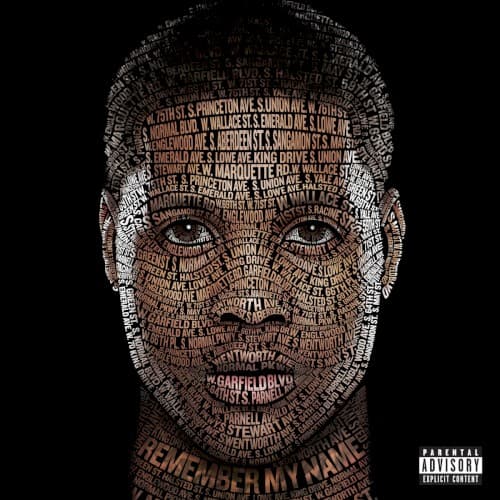
Lil Durk Remember My Name: A Drill Rapper Learns to Sing His Own Grief
The best moment on Lil Durk's debut is not a single. It is the stretch around Resume, where the hook and the verses stop performing toughness and start auditing it. Durk sounds tired there, a young man tallying what the street cost him, and the Auto-Tune that elsewhere feels like a fashionable coat suddenly sounds like the only way he could get the words out. That is the album's real argument: Remember My Name works when the melody is a wound and fails when it is a formula.
That tension defines the record. Durk arrived on Def Jam in 2015 as one of Chicago's most visible drill voices, and the label wanted a rap album with radio manners. What he delivered is a hybrid. There is the hard-edged street reporting he built his name on, and there is a sung, aching register that borrows from the R&B-tinged rap of the moment. The first half of the album fuses them with conviction. The back half mostly repeats the idea until it stops meaning anything.
Critics were divided at release, and the split is easy to hear: those who wanted drill purity heard dilution, those who wanted a pop crossover heard too much gloom.
My position is somewhere between them. This is a promising, uneven debut, better than its mixed reception suggests in its opening stretch and weaker than a loyal fan might admit once the sequence loses momentum. It also helps to read it against its era. Drill had already pushed Chief Keef and others into the national conversation, and the next obvious question was whether those voices could carry a full major-label project. Durk's answer is yes in fragments, not yet in totality. The rest of this review explains where the fragments are, why the sound only half serves him, and who will still get real value from the record.
Gloss Over Grit: How Remember My Name Sounds
Remember My Name is built from a patchwork of producers, and the credits matter because the beats are where the album's identity wavers. DJ L and C-Sick, the drill specialists, deliver the sharpest work: clipped drums, cold keys and enough space for Durk to ride a bounce instead of fighting it. Metro Boomin brings a spacious, ominous trap sheen on Amber Alert. Young Chop, a name tied to the Chicago sound, contributes several cuts that keep the tempo mid-paced and the mood heavy. London on da Track, Vinylz, FKi and B Wheezy round out a roster that reads like a major label spreading its bets.
The problem with spreading bets is a loss of signature. By the time the album is two-thirds through, the beats share a tempo, a palette and a gloss that makes them interchangeable. The hard drill tracks hit with the weight of a young man on a block; the lighter, more melodic ones could belong to nearly any rapper signed that year. The mix flatters Durk's voice, but it also files down the roughness that made his mixtape work feel dangerous.
As a writer, Durk is at his best when he is specific about consequences. The self-reflective songs carry the weight of someone who has watched friends disappear and is trying to justify his own survival. The weakness is that this specificity does not extend across the full record. Too many verses fall back on tough-guy shorthand: loyalty speeches, warnings to rivals, a recurring defensiveness about being judged. That defensiveness is itself an interesting subject, but the album rarely digs into it beyond a few songs. When the writing relies on stock phrases, the Auto-Tune stops sounding emotional and starts sounding like a tic.
His delivery is the album's most divisive element and the one that deserves the closest listen. He pushes his voice into a strained, sing-song upper register, tuned just enough to blur the line between rap and melody. On Tryna' Tryna', the cadence is bouncy and confident; on the slower songs it turns plaintive. The range is narrower than it should be across twelve tracks, though, and by the midpoint the same pitch contour and the same sad-to-defiant arc have appeared too many times. It is a distinctive instrument. It is not yet a versatile one.
The guests are used sparingly and mostly well. Jeremih fits the R&B-leaning single naturally, and Logic adds a contrasting, more technical rhythm to a DJ L beat. Neither steals the song. That restraint is a point in the album's favor, because the record is meant to be about Durk, even if the sound occasionally makes him harder to locate.
A Strong Opening Stretch and a Long Slide
As a sequence, Remember My Name front-loads its energy. The opening run moves with purpose: a short, aggressive opener, a spacious Metro Boomin cut, then the radio single that tries to bridge the album's two moods. The balance between menace and melody feels deliberate, and the pacing keeps the listener leaning forward. Songs are short, most under four minutes, which suits a mixtape-minded artist and keeps any one idea from outstaying its welcome.
The trouble begins in the middle. After the peak of the early songs, the tracklist settles into a long plateau where tempos match, moods match and hooks lean on the same pattern. There is no real change of pressure, no skit to reset the room, no left turn to break the sameness. A few songs lift the energy briefly, but the dips between them are deeper than the lifts are tall. This is where the criticism about filler lands hardest. It is not that any single track is offensive; it is that the sequence offers no reason to keep listening past a certain point.
The late stretch recovers some ground. The closing sequence returns to the harder, more personal tone of the opening and reminds you what the record could have been if it had trusted that mood more consistently. The deluxe additions bring guests and extra weight, but they extend a runtime that is already carrying slack, and the album would hit harder if trimmed to its best eight or nine songs.
Twelve tracks is not excessive on paper. The pacing makes it feel longer than it is, which is the clearest sign that the album's length is not fully earned. A more disciplined tracklist, with the strongest personal material grouped together and the redundant mid-tempo cuts cut away, would have made a stronger case for Durk as an album artist and not just a mixtape one. As it stands, the record is a good playlist wearing the shape of a debut.
A Promising Debut That Never Quite Locks In
Remember My Name is a decent, flawed first album by a rapper who would later prove he could do much more. The catalog on this site has no other Lil Durk albums yet, so the ranking is relative to the genre: it sits in the good-but-uneven range, with a high point in its personal songs and a low point in its repetitive middle. It is better than the weakest reviews claim and not as convincing as the warmest ones suggest.
Who is it for? Anyone curious about the Chicago drill-to-melody pipeline of the mid-2010s will find a useful snapshot. Fans of Durk's mixtape work will recognize the voice and appreciate the polish. Listeners who want a cohesive, front-to-back statement should skip the full album and go straight to the best tracks. The record also rewards people who care about the emotional side of street rap, because its strongest moments treat survival as a burden and not a trophy.
How has it aged? Better than an Auto-Tune record from that moment might have. The melodic-drill mix that sounded like a compromise in 2015 now reads as an early version of a style that became common, which gives Durk some credit as a participant if not a pioneer. The weaker songs have aged worse, because they are the ones that sound most like their peers.
Start with Resume, Don't Judge Me and Tryna' Tryna'. Together they show the writing, the melody and the bounce at their best. If you want to hear where drill's grit met a bigger-budget gloss in a more raw form, Chief Keef is the natural next stop, and his early work is rougher where Durk is smoother. For a counterpoint on the R&B side of the equation, the guest on Like Me, Jeremih, is worth exploring on his own terms. The verdict, in one sentence: this is a debut whose best three songs are worth more than the other nine combined.
Track by track
Track Listing
500 Homicides
SolidA short, hard-hitting opener from C-Sick that sets the street-reporting tone quickly. The drums are clipped and the pace is brisk, and it plays more like a mixtape intro than a statement. It does its job without leaving much behind.
Amber Alert
StandoutMetro Boomin gives Durk an expansive, ominous bed, and the rapper responds with a controlled, menacing delivery. The song benefits from more room than most of the record, and the hook lands without overreaching. One of the cleaner fusions of trap atmosphere and drill attitude on the album, if not a personality-defining one.
Like Me
StandoutThe single, built with Jeremih on the hook, is the album's most obvious attempt to cross over. The sung chorus is smooth and the beat is polished, and it shows Durk's melodic side at its most accessible. The cost is that it also becomes the template: much of the rest of the record echoes its structure without matching its hook. A solid single that casts a long and slightly repetitive shadow.
Lord Don’t Make Me Do It
SolidA gloomy FKi production with a prayerful, desperate mood. Durk sounds believable here, and the plea at the center gives the song a stake. It does not escalate much, but the tone works.
Don’t Judge Me
StandoutOne of the album's stronger self-defenses, produced by B Wheezy. Durk speaks directly to critics and relatives who question his path, and the writing carries a rare mix of defiance and vulnerability. The melody supports the message instead of decorating it, which is exactly when the Auto-Tune works. A key track in understanding what the record is trying to say, and one of the three best songs here. It would be stronger with a slightly tighter hook, but the verses carry it.
Tryna’ Tryna’
StandoutLogic joins on a DJ L beat that bounces harder than most of the album. Durk rides the rhythm with confidence, and the contrast with Logic's more technical cadence gives the song a spark the middle of the album lacks. The writing is straightforward but the performance sells it. A highlight, and proof that DJ L's drill instincts suit Durk best of all the album's producers.
Higher
SolidAnother DJ L production that keeps the energy up but lacks the hook or the verse that would make it memorable. Competent and forgettable, and the first sign that the album is repeating itself.
Resume
StandoutThe emotional center of the album. Young Chop supplies a heavy, restrained beat, and Durk uses it for an honest accounting of his reputation and what it has cost him. The delivery is tired in a way that reads as real, and the Auto-Tune lands as feeling and not as gloss. The writing is specific about the weight of what he has done and what people expect from him. It is the song that best justifies the album title, because it makes you want to remember the person and not just the name. Best on the record.
What Your Life Like
SolidA second Young Chop beat, with Durk questioning how others would handle his circumstances. It has real moments of resentment and fatigue, and the hook is effective, but it follows a pattern the album has already established. Good, not essential.
Why Me
SolidLondon on da Track provides a bright, melodic backdrop for a song about survivor's guilt and bad luck. It reaches for the R&B-leaning mood of the single and mostly gets there, but the writing circles the same complaints without adding detail. Filler-adjacent, though pleasant enough.
Ghetto (Grew Up)
SolidA deluxe-edition bonus with Hypno Carlito and another Young Chop beat. It is the right kind of heavy for the end of the record, and the guest adds a rougher texture. It does not rewrite the album's story, but it fits the mood.
Remember My Name
SolidThe title track, with King Popo, closes the deluxe edition as a statement of intent. It tries to sum up the album's premise, but it is more declarative than revealing. A fine closer that feels like a footnote after Resume has already made the case.
Frequently Asked Questions
Is Lil Durk's Remember My Name good?
Who produced Remember My Name?
What is the best song on Remember My Name?
Styles