The scorecard
6.2/10 · Mixed
- Writing25%
- 6.5
- Production25%
- 6.5
- Delivery15%
- 7.0
- Cohesion15%
- 5.0
- Originality10%
- 5.5
- Replay value10%
- 6.0
The grief verses on "Sad Songs" are built from specific, hard-to-fake detail, but the choruses and the threat-heavy cuts like "Big Dawg" fall back on broad or familiar drill phrasing.
Chopsquad DJ and Metro Boomin supply tough, spare beats that suit Durk, while the Dr. Luke ballads on "All My Life" and "Stand by Me" soften the sound to the point of blandness.
Durk's strained, melodic cadence carries conviction across the record and sells the pain on "Pelle Coat" and "Never Imagined", though many shorter songs run on near-identical structures.
Twenty-one tracks in just under an hour swing between therapy session, street rap and country crossover with no connective tissue, and the closing stretch repeats ground already covered.
Putting a therapy concept inside a mainstream drill album is a real step beyond his earlier catalog, but the street cuts and the radio gambles are well-worn formulas.
The best five or six songs hold up well on repeat listens, as a projection of how the grief material will age, while the filler and the crossover singles are likely to be skipped.
Lil Durk Almost Healed: Grief as a Hook, and Where the Hook Gives Out
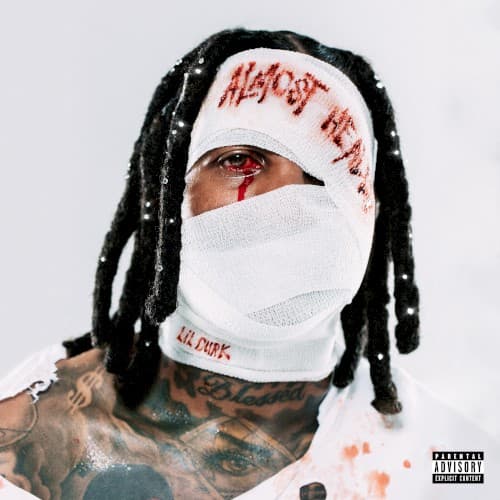
Almost Healed is at its best when Lil Durk stops performing for the playlist and starts talking to a therapist, to a lost brother, and to himself. The record opens with a short exchange alongside Alicia Keys that sets a contract: this is a session, an album built to work through grief, and for roughly the first third of the running order that contract holds. Then the tracklist keeps going for another dozen-plus songs, and the contract is quietly renegotiated into something more ordinary, a big-budget Chicago street album with a few crossover swings attached.
That tension is the thesis. Durk has a real subject here, and the fact sheet is clear about where it came from: the loss of his brother and a stated habit of using the booth as stress relief. When the writing stays close to that subject, the record carries a weight that most drill-adjacent releases of its size never reach. When it pivots to threats, car brags and a country-star hook, the same voice sounds like it is working from a template. The title promises a person who is not finished, and the sequencing too often treats healing as a marketing angle instead of a condition.
The stakes go beyond one rating. Durk arrived with the largest platform of his career, a third-place debut on the Billboard 200 and a guest list that runs from J. Cole to Future to a Juice WRLD verse, and the question for a record that wide is whether the pain reads as a point of view or a mood board. It reads as both, in alternating stretches. Next to his 2015 album Remember My Name, this is far more ambitious and far more polished, and also less certain about what it is for. A listener raised on the West Coast tradition of the album as a single argument, records that held one temperature from the first track to the last, will notice the missing discipline first and the real feeling second.
A Committee of Producers and One Voice Holding It Together
The sound is assembled by committee. The credits run to dozens of names: Chopsquad DJ is responsible for a cluster of the early songs, Dr. Luke handles the two most radio-minded cuts, and Metro Boomin, Zaytoven and Wheezy turn up for the street material. A committee that large can produce a coherent record only if someone is steering, and here the steering comes from Durk's voice rather than from any shared palette. That is the album's glue and also its limit. The beats that serve him best are the plain ones, with enough space around the drums for him to sound tired and exact.
The worst are the glossy ones, where pop-structured chord changes and oversized sung hooks flatten the grit he normally trades on. The jump from a Chopsquad DJ street cut to a Dr. Luke ballad is not a change of mood so much as a change of artist.
His delivery is the most consistent element, and the best argument for the record. Durk raps in a strained, bent melodic register that sits somewhere between chant and croon, with a rasp that makes even mundane lines sound like they cost him something. He is not a technical rapper in the way the West Coast's pen-first tradition prizes, from Ice Cube's courtroom clarity to Kendrick Lamar's structural games, and he does not try to be. What he has is conviction and a gift for the sticky phrase, and on his best verses those two things are enough. The guests mostly meet him at that level. Future and 21 Savage bring familiar weather, while J. Cole is placed where a reflective second voice is needed.
The writing is more uneven than the performance. The strongest passages are domestic and specific, the kind of detail that cannot be faked, and critics at Slant noted exactly this about the grief material. The trouble is that the same album asks the listener to accept menace and mourning from the same narrator with almost no transition, and the hooks rarely help bridge them. Where Durk addresses generational trauma, the choruses go for broad emotional strokes that soften what the verses establish. Where he returns to threats, the writing falls back on standard drill vocabulary that adds nothing new to a very crowded form.
There is also a repetition problem. Many of the shorter songs run on near-identical structures: a short verse, a melodic hook, a second verse that restates the first, and an exit before two and a half minutes. Individually that is efficient; over twenty-one tracks it makes some cuts interchangeable, which is the concrete weakness that drags the middle of the record.
Front-Loaded Pain, Back-Loaded Filler
Almost Healed is a front-loaded album. The first stretch is built like a statement: a spoken-style opener, a lead single with real emotional ambition, and then a run of songs that keep the grief close even when the beats get harder. By the time the Metro Boomin and Zaytoven material arrives, the record has already made its best case, and the middle section spends that credit without replacing it. Tracks of two to three minutes arrive in quick succession with guests rotating in and out, and the effect is of a playlist that has been left on rather than of a sequence that has been planned.
The pacing problem is mostly arithmetic. The listed lengths add up to just under an hour across twenty-one songs, which means the average track barely clears two and a half minutes, and that is a format built for streaming skips rather than for an arc. Short songs can be a virtue, as the best street albums prove, but they work when each one adds a new angle. Here the album occasionally circles back to a mood it has already covered. A brisker version, perhaps thirteen or fourteen tracks, would keep the sorrow and drop the sprawl, and the reviews that complained about cohesion were pointing at exactly this.
The late stretch has a few useful moments. A short guest appearance from Juice WRLD lands more as an emotional cameo than a collaboration, and it works because it is brief. The sequencing then spends its last stretch on the pop gamble of "Stand by Me", which arrives when attention is lowest and clashes with the tone of the best material from earlier. It would have made a more honest close to end quietly after a personal track such as "Sad Songs", which sits in the first half but contains the album's real argument.
Compared with West Coast records that treat the closing track as the destination, this one just stops. The final song gives some resolution, but nothing in the order of play builds toward it, and the listener leaves with a collection of strong passages rather than a single shaped experience.
Better Than Remember My Name, Smaller Than Its Own Ambition
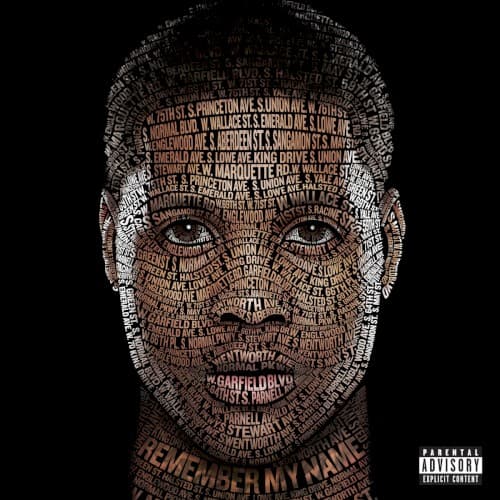
Almost Healed ranks clearly above Remember My Name, the earlier album rated on this site at 5.8. The older record is the work of a younger artist with a narrower brief; this one has a subject, a voice that has grown into it, and a few songs that stand up to hard listening. It does not reach the level the title and the pre-release talk implied, and the score here reflects that gap. The best parts of the album are good enough to carry a higher number, while the structure is loose enough to hold it back.
Who is it for? Anyone who wants to hear what a mainstream drill-era Chicago rapper sounds like when he tries to write about loss without a wink, and anyone who follows Durk closely enough to want the full range of what he can do. Fans of melodic street rap in the vein of Future will find plenty to enjoy. Listeners who need a record to hold one tone, or who find pop crossovers a dealbreaker, should skip most of the second half. The Morgan Wallen collaboration in particular is the kind of song that the reviews at HipHopDX singled out as approval-seeking, and the objection is fair.
How will it age? The grief material will hold, because it is built on details rather than on trend sounds. The radio-oriented songs will date quickly, since they depend on a moment in mainstream rap's flirtation with country and pop. The platinum certification that arrived later is a measure of reach and not of quality, but it does show the record found its audience.
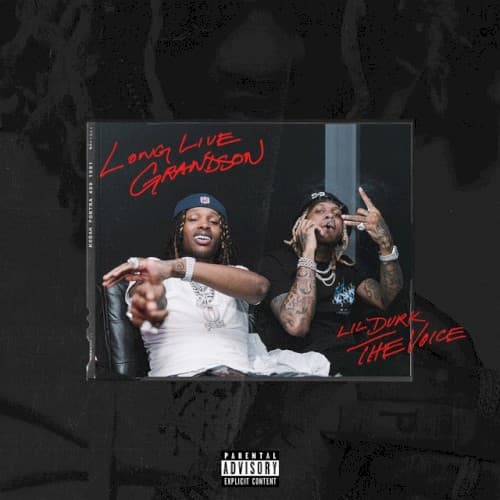
Start with "Sad Songs", "Pelle Coat" and "Never Imagined", in that order: the first for the writing, the second for the sound, the third for the best guest chemistry on the record. After that, move to The Voice, the 2020 album that this project was first conceived as a sequel to, and compare how Durk handled the same ambition with a tighter running order. Then return to Remember My Name to hear how far the voice has come. If the album had stopped at fourteen songs it would be a strong record; at twenty-one it is a strong record buried under its own extras.
Track by track
Track Listing
Therapy Session
StandoutA short framing piece with Alicia Keys, who also produced it. At under a minute and a half it works as a statement of intent more than a song, and it sets up the therapy concept the album then follows only intermittently.
Pelle Coat
StandoutThe second single, produced by Chopsquad DJ, and the clearest picture of what Durk sounds like when the beat is built for him. Weighty and melodic, it balances hard-edged confidence with a strain in the voice that gives the swagger some cost. It is one of the tracks to play first.
All My Life
SolidThe lead single, with J. Cole and production by Dr. Luke. The ambition is genuine, since it takes on generational trauma and structural violence, and Cole's presence suits the theme. But the chorus is broad and sugary, and critics at Slant called it suffocatingly sappy; that is the right word. Admirable, uneven, and a little too polished for what it describes.
Never Again
SolidA Chopsquad DJ cut that returns to a harder register after the single. Short and focused, it does its job without becoming a highlight, and it keeps the early momentum rather than building on it.
Put Em on Ice
SolidAnother Chopsquad DJ production at just over two minutes. It is serviceable street rap in a sequence that has plenty of it, and little distinguishes it from its neighbors.
Big Dawg
SolidA Chief Wuk collaboration that puts the threat side of the album front and center. Whatever its merits as a performance, its placement right after the reflective material creates the tonal whiplash that critics noted, and it is easier to enjoy as a standalone track than as part of this record.
Never Imagined
StandoutFuture joins on a Chopsquad DJ and Ghostrage production, and this is the guest spot where the chemistry is easiest to hear. The two voices share a pained, sung-rapped register, and the song gives the album a rare moment where the features reinforce the theme rather than interrupt it.
Sad Songs
StandoutThe center of the album. The verses are built from concrete, painful detail, with the miscarriage imagery that Slant highlighted as the most vivid writing here, and Booka600's added vocals give the hook a second human texture. The beat, by Touch of Trent and Haze, stays out of the way. If one song justifies the therapy framing, it is this one, and it deserves a place among Durk's strongest writing.
Before Fajr
SolidA brief Southside-led production at two minutes flat. It reads as a moment of reflection that fits the record's mood, though it ends before it can build, and it works better as a mood than as a song.
War Bout It
SolidMetro Boomin produces and 21 Savage appears. This is a straight street record, competent and lean, and it benefits from the pairing even though it adds little to the album's emotional argument.
You Got Em
SolidA short, multi-producer track that blends into the middle run. Fine on its own, forgettable in sequence.
Grandson
SolidKodak Black features, with Zaytoven and Metro Boomin sharing production. Two of the more distinctive names on the credits do not translate into one of the more distinctive songs; it is a competent entry in a crowded stretch.
300 Urus
WeakA Wheezy and Juke Wong production that leans on the car-and-money material the album uses to balance its heavier themes. At more than three minutes it is one of the longer songs in the second half, and not one of the better ones.
Same Side
WeakRob49 guests on a track with five producers. It is a typical rotation of feature and hook, and nothing here would be missed if it were cut.
B12
SolidA mid-length track that continues the album's gradual loss of focus. It has the shape of a Durk street song without the sharper edges of the best ones.
At This Point We Stuck
SolidUnder two minutes, produced by ATL Jacob, Major Seven and Emzy. Its brevity helps, and it is closer in spirit to the personal material than its neighbors, but it passes before it makes a case.
Cross the Globe
SolidJuice WRLD appears on a Charlie Handsome and Wheezy production. Short and mostly valuable as a presence, it reads as a tribute-style cameo rather than a full collaboration, which suits the album's themes of loss.
Dru Hill
SolidA five-producer track at nearly three minutes, with a melodic lean that points back toward the more emotive songs. Good enough, though it does not do much that earlier tracks have not done already.
Belt2Ass
WeakProduced by RunItUpNick, Indiyah, LMC and Yeahthismoh. Another street cut in a late stretch that already has too many, and it contributes to the sense that the album stopped editing itself.
Stand by Me
WeakThe Morgan Wallen collaboration, co-produced by Dr. Luke, and the third single. It is the clearest example of the album chasing a crossover audience at the expense of its own identity. HipHopDX called it desperate for approval, and while that is harsh, the song does sit awkwardly beside the grief material. The hook is pleasant and impersonal, and it is the weakest of the major singles.
Moment of Truth
SolidThe closer, produced by Lam, Lufye and AK. It brings the album to a calmer finish and returns to the reflective tone of the opening, but arrives too late and too quietly to give the sequence the resolution its title implies.