The scorecard
6.6/10 · Good
- Writing25%
- 6.5
- Production25%
- 7.5
- Delivery15%
- 7.0
- Cohesion15%
- 5.5
- Originality10%
- 6.0
- Replay value10%
- 6.5
Freestyled stream-of-consciousness verses supply loose, funny asides, but boasts repeat across twenty-one tracks and few songs build toward a point.
Mannie Fresh's bouncing synth-and-bass arrangements on Go DJ and Bring It Back are the most reliable thing on the record, even if the palette narrows late.
The syrupy, behind-the-beat drawl and quick catch-up flows are distinctive and agile, though the hooks and guest turns rarely match them.
Nearly eighty minutes, two skits, two short interludes and a sagging back half dilute a strong first third.
The off-the-cuff New Orleans voice is his own, but the street-and-club template was already standard Cash Money fare.
The singles and a handful of Fresh beats hold up, while the filler between them rewards a playlist more than a front-to-back listen.
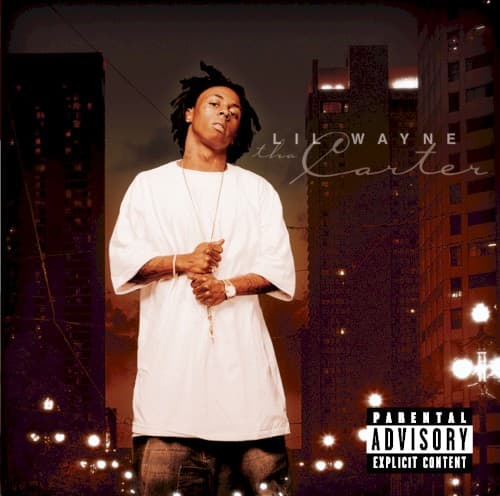
Lil Wayne Tha Carter: A Freestyler's Strong Ten Songs Inside a Bloated Twenty-One
Tha Carter works when Lil Wayne stops trying to write and lets the words fall out of him. On the best Mannie Fresh beats here, the stream-of-consciousness approach turns into a rolling, slurred, slightly dizzy bounce that nobody else in 2004 was making, and the record is most alive when the rhymes sound like they surprised him too. The same method has no brakes, though. Twenty-one tracks and nearly eighty minutes of it leave a strong ten-song album buried inside a bloated one.
That is the thesis, and it explains both the pleasures and the fatigue. The project was first meant to arrive in late 2003, got folded into the Da Drought mixtape after a change in direction, features and legal trouble, and came back as an album shaped by what tastemakers and radio wanted, still delivered, in Wayne's own words, our way. You can hear that tug of war. There is a New Orleans record here that sounds loose, funny and a little reckless, and there is a label-approved record with singles, Birdman cameos and club cuts that keep dragging it toward the dance floor.
For anyone arriving from the later run of Lil Wayne albums, Tha Carter is a sketch of what he would become rather than the thing itself. The elastic voice is already in place, and so is the habit of treating a bar as a toy to be turned over until it breaks. What is missing is selection. Tha Carter II would sharpen the punchlines and tighten the pacing; this one is happy to let a good verse and a throwaway share the same song, and then to repeat the pairing for another hour.
So is it good? Parts are very good, the whole is decent, and the gap between those two judgments is the reason it sits in the middle of the catalog rather than near the top.
Bounce on the Beat, Drift in the Verses
Mannie Fresh is the spine of the record. He produced the bulk of it, and his sound here is built from hard synth stabs, bass that moves like a car bouncing on its springs, and drum programming with the clipped swing of New Orleans rather than the stomp of the Lil Jon crunk wave that Rolling Stone said had made much of this obsolete. Fresh's tracks are lighter on their feet, closer to cartoon than to riot, and that suits a rapper whose voice sounds like it is smiling. Raj Smoove handles Tha Heat and Who Wanna, Leslie Brathwaite does We Don’t, and the handoffs are smooth enough that the record never feels like a compilation of producers.
The writing is the contested part. According to the fact sheet, Wayne deliberately avoided developing rhymes with intention and entered a stream-of-consciousness state, freestyling much of the material on the spot. You can hear it in the best way: a syrupy drawl that stretches vowels, lands late on the beat, and then catches up with a burst of internal rhymes. Songs such as This Is the Carter have a conversational looseness, and the throwaway asides land because they do not sound rehearsed. AllMusic made the same point, crediting the less measured rhymes for being all the better for it.
The cost is that association runs out. A verse assembled from one boast after another rarely builds, and the album's street themes, money talk and mistreated rivals are familiar, so the sparks have to come from phrasing alone. By the time Hoes and Only Way arrive, the same movements are repeating with less invention. Weak hooks make it worse. Several choruses are chants or guest vocals that reuse a template instead of giving the verses something to push against, and Birdman's turns, however much they reinforce the Cash Money brand, are the least interesting voice on the album.
The weakness the critics named, filler, is therefore not a matter of bad songs so much as redundant ones. Nothing on the second half is offensive; it is just a rewrite of the first half with the energy turned down a notch. If the album had been cut to the singles, the Fresh showpieces and a few of the better solo cuts, the same creative method would have read as confident. Stretched to twenty-one tracks, it reads as a rapper who has not yet learned that his best instinct needs an editor.
Delivery is the saving grace. Wayne's flow is already agile in a way the writing is not, shifting from a lazy drawl to a rapid-fire stack without losing the pocket, and Fresh leaves him room to do it.
A Hot First Act and a Long Walk Out
As a sequence, Tha Carter front-loads its strengths. Walk In sets a short, brash tone, and the first stretch of songs moves with real momentum: a single, a hometown anthem, a posse-style cut with Fresh in the room, and a tight run before the first skit breaks it up. The sound is dense, the bounce is steady, and Wayne still sounds hungry. In that opening third the album plays like a confident statement from a rapper who knows he is the future of the label.
Then the length starts to show. Two On the Block skits and a pair of short interludes break up the rhythm without adding much, and the middle of the record settles into mid-tempo club songs and street boasts that all share a similar cadence. The guest slots from Reel and Birdman give the voice some variety on paper, but they rarely change how a track moves. The back half has real highs, especially the Jazze Pha collaboration late in the order, but they arrive after long stretches where the album coasts.
What the sequencing needed was a harder edit and one or two sharper changes of pace. The mood barely shifts between a street tale and a club cut, so the length is not earned by variety or by an arc. Twenty-one tracks was normal for the era of the double-length rap album, and the sheer volume does show Wayne's output, but a leaner program would have been stronger. As is, the final stretch plays like a long walk out of a party where the best songs were already played.
In short, the sequencing is serviceable and the opening is excellent, and everything after it depends on how much you value the voice by itself.
Good Hooks, Better Future: Where Tha Carter Sits
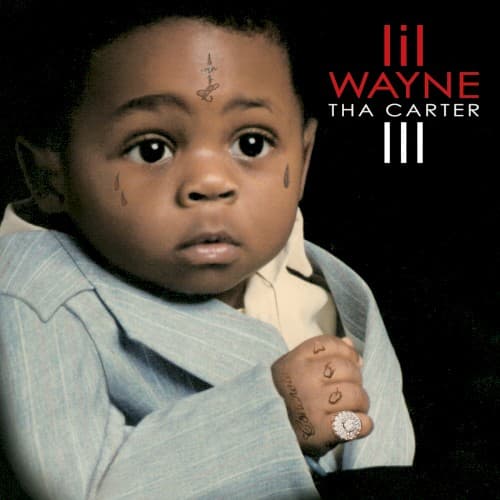
In the catalog, Tha Carter lands in the middle. It is clearly a step above Rebirth, which scored 3.8 here, because everything it attempts mostly works: the bounce is real, the voice is distinctive and the singles still sound like fun. It is also a clear step below Tha Carter II at 7.6 and Tha Carter III at 7.9, which shared this album's ambition but had sharper writing, tighter structure and fewer songs content to coast. The ranking is deliberate: a 6.6 here reflects a record whose production and delivery are strong, whose writing and sequencing are not, and whose best songs carry more than their share of the weight.
The album is for listeners who want to hear how the Wayne voice formed and who enjoy New Orleans bounce at its brightest. It is also useful for anyone building a Mannie Fresh playlist. Skip it if you want a front-to-back classic or a sharply written lyrical statement; the critics' complaint about filler is correct, and Stereogum's later view that it feels quaint now is fair. Rolling Stone's observation that the crunk wave made much of it obsolete also holds for the weaker half.
Start with Go DJ, which was his first mainstream hit as a lead artist and still carries the clearest argument for the Fresh-and-Wayne chemistry. Follow it with Bring It Back, the lead single, and then Earthquake, the Jazze Pha collaboration that interpolates Al Green. After that, sample the rest as taste dictates and ignore the skits.
To hear what the loose method becomes once he tightens it, go next to Tha Carter II, where the same drawl is paired with sharper structure. For the commercial peak of the same ambition, move to Tha Carter III. Together they make Tha Carter sound like what it was: a promising, overlong first draft of a rapper's best period.
Track by track
Track Listing
Walk In
SolidA short opener that sets the Cash Money tone with a quick announcement of intent and not much more. It does its job as a curtain-raiser and is gone before it can overstay.
Go DJ
StandoutThe song that made Wayne a mainstream lead artist, reaching the top 15 of the Hot 100, and it earns it. Mannie Fresh builds a bright, bouncing frame, and Wayne rides it with a pushy, playful flow that sounds designed for a crowded room yet never loses the New Orleans swagger. The hook is simple but sticky, and the verses show the best version of the freestyle approach: quick, funny and loose without drifting. It is the clearest case on the album that a crowd-pleasing single and a distinctive voice can be the same thing.
This Is the Carter
StandoutA showcase for the stream-of-consciousness method, with Mannie Fresh credited as a featured voice and producer. Wayne sounds comfortable and amused, stacking asides on a thick, rolling beat. It is not as tightly built as the singles, but it captures the persona the series would trade on, and it has more personality than most of the cuts around it.
BM J.R.
SolidCredited to Mannie Fresh and Batman, it is a solid rap workout where the beat does most of the carrying and Wayne coasts through familiar boasts. Enjoyable without leaving a mark.
On the Block #1
WeakA skit under twenty seconds. Filler.
I Miss My Dawgs
StandoutWith Reel on the hook, this is one of the album's few tonal changes, a more reflective turn that lets Wayne sound a little less armored. The writing is still plain, but the shift in mood helps, and the Mannie Fresh and Raj Smoove production keeps the track from turning maudlin.
We Don’t
SolidLeslie Brathwaite handles the production, with Birdman on the hook. The beat sounds a little different from the Fresh material around it, but the song is a standard-issue team anthem that does not do much with the change.
On My Own
SolidReel returns for a song about self-reliance, with Fresh again on the board. The theme fits Wayne's solo footing, though the verses stay safe and the hook is more functional than memorable.
Tha Heat
StandoutA Raj Smoove production that sounds slightly more modern than the Fresh bounce. Wayne uses the extra space for a looser, more conversational pass, and the track is among the better solo cuts in the middle of the record.
Cash Money Millionaires
SolidA label anthem that sells the brand more than the song. Fresh gives it a big, swaggering beat, but it is exactly the kind of track that makes the album feel like a corporate showcase, and the verses are interchangeable with a dozen others on the record.
Inside
SolidA minute and a half interlude from Mannie Fresh that works as a quick palate cleanser. Brief, harmless and mostly a placeholder.
Bring It Back
StandoutThe lead single, produced by Mannie Fresh, who also appears on it, and the album's purest expression of the New Orleans bounce. The rhythm is built to move a room, with a bouncy synth line and rubbery bass, and Wayne's drawl sits behind the beat with exactly the right amount of laziness before catching up on the turnarounds. The writing is light, but the song does not need more; it is a groove track whose entire purpose is to feel good, and it succeeds. It also shows what Fresh could do when he and Wayne trusted the beat to carry the idea.
Who Wanna
SolidAnother Raj Smoove beat with a crisp, modern feel. Wayne sounds energetic and the delivery is sharp, though the song leans on repeated challenges and does not add much beyond attitude.
On the Block #2
WeakA second short skit, about twenty seconds, that adds nothing. Filler.
Get Down
SolidBirdman appears again on a Mannie Fresh club cut. The beat has enough bounce to carry it, but the song is routine, and Birdman's contribution is the weakest part.
Snitch
SolidA street-minded Fresh production that gives Wayne a harder, more serious canvas. His voice stays loose, and the contrast helps, but the writing is still more attitude than narrative.
Hoes
WeakWith Mannie Fresh credited as a featured voice, this is a bounce-heavy club number built on a theme that wears thin quickly. The beat is fine; the song is among the clearest signs that the album ran long.
Only Way
WeakBirdman returns on a Mannie Fresh beat that rehashes ideas the record has already covered. Competent and forgettable, with nothing that justifies its slot this deep in the sequence.
Earthquake
StandoutCo-produced by Mannie Fresh and Jazze Pha, who also guests, this is the album's third single and its most polished attempt at crossover appeal. It interpolates and samples Al Green's Let's Stay Together, which gives the track a warmer, more melodic base than anything else on the record, and Wayne adjusts his flow to match, easing off the quick-fire delivery for a smoother pass. At more than five minutes it is the longest cut here, and it feels a touch indulgent, but it is a welcome change of texture late in the running order and one of the few songs that sounds like a deliberate choice rather than a leftover.
Ain’t That a Bi★★h
SolidA Mannie Fresh closer proper that reverts to the album's default bounce and boasts. Decent, but it adds little to what came before and arrives too late to change the final impression.
Walk Out
SolidA brief outro of just over a minute that mirrors the opener. Fine as a bookend, and no more.
Frequently Asked Questions
Is Lil Wayne's Tha Carter good?
Who produced Tha Carter?
What were the biggest songs from Tha Carter?
Genres
Styles