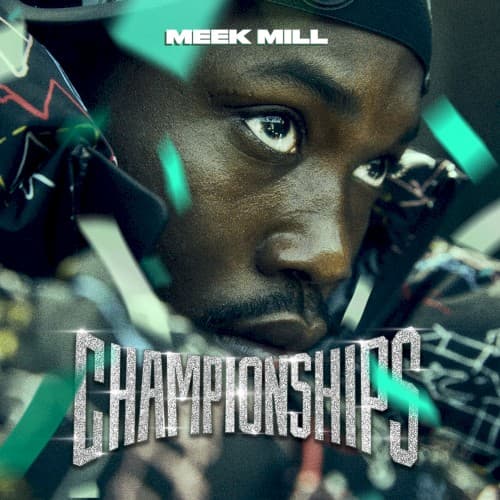
The scorecard
6.9/10 · Good
- Writing25%
- 7.0
- Production25%
- 7.5
- Delivery15%
- 8.0
- Cohesion15%
- 6.0
- Originality10%
- 5.5
- Replay value10%
- 6.5
"Trauma" and "What’s Free" put prison, loyalty and freedom into plain, specific verses, though the boasts and love songs are familiar.
Sample-driven beats on "Intro", "Trauma" and "What’s Free" pair old records with hard drums, and Wheezy, Tay Keith and Hit-Boy keep the trap cuts sharp.
Meek's hoarse, forward-leaning bark varies more than on earlier records, and Cardi B on "On Me" and Drake on "Going Bad" sharpen the guest slots.
The first third argues a clear case and the middle is well paced, but 19 tracks and a blurry back half dilute it.
The post-prison perspective is distinctive for the moment, while the sound stays within mainstream trap and street rap.
The core songs are built for repeat plays, and the personal material holds up beyond the headlines, though the back half is easy to skip.
Meek Mill Championships: Winning Back the Right to the Word
Championships is a record about who gets to call himself a winner, and Meek Mill answers the question with more patience than his reputation suggests. The Philadelphia rapper built his name on urgency, a shouted, ceiling-rattling delivery that treats every bar as an alarm. On this album he keeps the urgency but gives it an argument. The wins he counts are not only chart positions and jewelry. They include getting out of a prison sentence, speaking for people still inside the system, and staying whole enough to rap about it. That is the album's thesis, and it is a more interesting one than the usual street-rap victory lap.
The fact sheet places the album after a stretch that turned Meek into a public figure for reasons beyond music: a sentence for a parole violation, five months in state prison, a release while his appeal moved forward, and public support from figures such as Jay-Z. He said he wanted to use his situation to shine a light on the criminal justice system. It would be easy for an album made in that shadow to become a lecture, and the reason Championships mostly avoids that is the music. Meek does not stop rapping to explain himself. The politics arrive inside the verses, at the same speed as the boasts.
Who the album speaks for matters here. Meek addresses the neighborhood he came from, the other men who have lived through probation and sentencing, and the family that waits on the outside. At the same time, he addresses the club and the radio, and the record moves between those rooms without apologizing. It does not turn the pain into a talking point, and it does not hide the pleasure. Some of its best moments are the ones where both register at once.
The result is not flawless. At 19 tracks it carries filler, and a handful of guest-heavy songs feel like obligations. But the core is strong, and the argument holds: a convincing, well-sequenced street-rap album from an artist who sounds less like he is trying to prove something and more like he already has.
Plain Language, Old Samples, A Voice Like a Stadium
The writing is plainspoken and direct. Meek is not a dense lyricist, and he does not try to be one here. His strength is conviction, the way a line about loss or loyalty is delivered with enough force that the simplicity becomes an asset. He moves between three modes: the trauma verse, where he talks about prison, the court system and the toll on the people around him; the boast, where he counts his money and his enemies; and the love song, where he turns the same intensity toward women and family. The first mode is the best, because the details feel earned and the stakes are real. The boasts are fine but familiar, and the love songs are the least distinctive.
Production is the album's biggest advantage. The credit list is long, with Papamitrou, Don Cannon, Bangladesh, Wheezy, Tay Keith, Hit-Boy, Cardo and others, and the album sounds like a deliberate mix of Philadelphia grit and contemporary trap rather than a random pile. Samples carry a lot of weight: the opening leans on Phil Collins, one early song leans on Mobb Deep, another turns a Notorious B.I.G. record into a bed for a long, conversational street song, and a Beyonce sample lifts a club cut. The pattern is that old, emotionally loaded records are filtered through hard drums, which suits Meek, whose delivery turns that tension into momentum.
Delivery is where the album is most convincing. His voice is a muscle, a hoarse, forward-leaning bark that can sound like a chant at a stadium. On earlier records that voice could flatten into a single register. Here he varies the pitch and lets the verses breathe, shifting down for the reflective material and ramping up when the beat demands it. The guest list is large, and the collaborators who work best are the ones who change his energy rather than copy it, whether that is a Cardi B verse that crackles or a Drake appearance that reunites two old collaborators.
The weaknesses are length and a few lazy mid-album choices. The back half contains several songs that sound like the same song with different guests, and a few of the trap-leaning cuts feel designed more for streaming playlists than for the album's argument. The Latin-leaning single and a couple of the melodic hooks pull the tone sideways. These are not disasters, but they dilute the focus that makes the first half so effective. The album also lacks a truly great closing statement; it ends well but not memorably, and a tighter version would have felt more like a finished argument.
A Strong Argument That Runs Out of Breath
The sequence is the album's quiet strength. It opens with a sample-driven intro that establishes the mood before a single rapper speaks, then moves into a pair of songs that hit hard on the personal and the political. By the time the first guest arrives, the listener already knows what the album is about, and the features arrive as supporting evidence rather than distractions. That structure gives the first third real force. It feels like an opening argument.
The middle of the record is where the pacing is most deliberate. A long, sprawling conversation of a song gives way to a run of shorter, harder cuts, and the contrast keeps the album from settling into one tempo. The best stretch is the middle run in which a Drake reunion, a Tay Keith bounce, and a club-friendly single arrive in quick succession. It is the part of the album that proves Meek can balance anthem and statement without making either feel like a compromise.
The back half is where the energy softens. After the peak, the album settles into a series of mid-tempo trap tracks and guest features that blur together, and the running time starts to show. Nineteen songs is a lot for a record this focused, and the last third does not earn all of its length. The final songs do bring back some of the opening gravity, but they arrive after a lull, and the closing run feels more like a stretch of good material than a finale.
Even so, the sequence works better than most albums of this size from the period. Streaming-era records often treat the tracklist as a bucket, but Championships has a shape: argument, celebration, fatigue, recovery. If it were shortened by four or five songs, it would be one of the better-paced rap albums of its year. As it stands, it is a strong record that asks the listener to be patient with the sag in exchange for the highs.
The Album That Makes the Case for Meek
Championships is the album that justifies Meek Mill's reputation, and it is the best argument for him as an album artist rather than a mixtape one. There are no other Meek albums rated on the site yet, so the ranking question is open, but the fact sheet reports that critics widely treated it as his best to date, and the record's focus supports that view. It is more disciplined than a typical Meek project and more emotionally direct than most of its peers.
It is for listeners who want street rap with a sense of consequence, for anyone curious about how the American legal system shows up in a rapper's life, and for fans who like loud, sample-heavy production. It is also a good record for people who came to Meek through the headlines and want to know what he sounds like when he is not on the news. Skip it if you want a minimal, lyric-dense album or if you have little patience for long guest-heavy track lists.
It has aged well. The personal material has not dated, the production still sounds current, and the best songs hold up as examples of how to blend conviction with club energy. The album went platinum and debuted at number one, which suggests an audience that stayed with it.
Start with "Going Bad" for the Drake reunion and the most direct statement of the album's mood, "Trauma" for the clearest example of the personal writing, and "On Me" for the Cardi B appearance that critics singled out. If you want more of the same energy, go back to Wins & Losses for the album that preceded this one, or move to a peer such as Rick Ross to hear the Maybach Music approach in a different register. Championships is a record about earning a win the hard way, and it sounds like it was earned.
Track by track
Track Listing
Intro
StandoutA grand, slow opener built on a Phil Collins sample, It sets the stakes with ceremony rather than speed, and the weight of the sample tells the listener that this record is about consequence. Short of a full song, but a strong start.
Trauma
StandoutThe album's emotional anchor. Don Cannon and Rance Dopson build the beat from a Mobb Deep sample and a softer rock record, and Meek uses the space to write about what he has lived through, in plain, heavy language. The delivery is controlled rather than shouted, which makes the details land harder. It is the song that best explains the album's purpose and the first one to play for someone who knows him only from headlines.
Uptown Vibes
SolidFabolous and Anuel AA join Meek on a bright, bilingual-leaning street-club cut, one of the promotional songs. It adds a Latin color to the album and gives the middle of the first act a lighter feel. Fun, but not essential.
On Me
StandoutCardi B steals the verse, and Bangladesh's production gives the song a heavy, bouncing frame. Meek sounds confident, but the guest is the draw. A strong, loud single-style cut that shows how the album handles celebration.
What’s Free
StandoutA long conversation of a song built on a Notorious B.I.G. sample, with Rick Ross and Jay-Z alongside Meek. At over six minutes it is the album's most ambitious piece, a meditation on freedom that connects directly to its central theme. Jay-Z's presence feels earned, and the three voices complement each other. It runs a little long, but this is the record's most serious moment and one of its best.
Respect the Game
StandoutA jazz-tinged beat built on a Lonnie Liston Smith sample gives Meek a smoother surface than usual. He sounds reflective and in control, and the track is a good example of the album's range. A solid mid-tempo cut.
Splash Warning
SolidFuture, Roddy Ricch and Young Thug join in a short trap cut from ATL Jacob. It is brisk, loud and forgettable, with the guests doing most of the work. A radio-ready burst that adds little to the album's argument.
Championships
StandoutThe title track uses a soul sample to give Meek a triumphant, almost gospel setting. He sounds victorious without sounding hollow, and the song works as a thesis statement. A key track, though not the strongest.
Going Bad
StandoutDrake reunites with Meek over a Wheezy and Weiss beat, and the song became a single. The hook is simple and the beat is heavy, while both rappers trade lines with ease. Critics called the reunion a high point, and it works because the tension between them is gone. Easy to replay, and one of the clearest pop-leaning successes on the record.
Almost Slipped
StandoutA mid-tempo cut from Maaly Raw and The Trillionaires with a thoughtful, subdued mood that suits the album's themes. A quiet highlight of the back half.
Tic Tac Toe
SolidTay Keith supplies a hard, stomping bounce for Kodak Black. It is one of the album's most aggressive beats, but the song feels more like a vehicle for the guest than a statement from the host. Decent, not special.
24/7
SolidElla Mai joins on an R&B-leaning song that lifts a Beyonce sample into a smooth, late-night setting. It is a single with crossover appeal and a break from the harder material. Pleasant but a little soft.
Oodles O’ Noodles Babies
StandoutA promotional single built on a Mother's Finest sample, bouncy and confident. Meek rides it with an easy swagger, and he performed it on late-night television the day it came out. A fun, upbeat song that stands out in the middle of the album.
Pay You Back
Solid21 Savage adds a cold, deadpan verse over production from Wheezy and Cubeatz. The contrast with Meek's heat is the point. Competent, but it sits close to a dozen similar trap songs.
100 Summers
StandoutHit-Boy delivers a short, punchy beat at under three minutes. Meek stays sharp and compact, and the brevity helps. A tight, effective cut.
Wit the S***s (W.T.S)
WeakMelii adds a guest turn over C-Sick's production. It is short and breezy, with little to distinguish it from other club-minded songs. Filler.
Stuck in My Ways
StandoutCardo produces a moody beat built on a horror-film sample. Meek writes about stubbornness and resilience, and the song fits the album's themes without becoming a statement. Solid.
Dangerous
SolidJeremih and PnB Rock join in a smooth single from Prince Chrishan and Hitmaka. It is one of the album's most commercial songs, with a catchy hook and a laid-back mood. Effective, but a little out of step with the weightier material.
Cold Hearted II
StandoutA closing track that samples The Weeknd and interpolates a DMX song, running just over five minutes. It brings back the darker tone of the opening and gives Meek space to reflect. A strong closer that returns to the album's central tension.
Frequently Asked Questions
Is Meek Mill Championships a good album?
What are the best songs on Championships?
How well did Championships sell?
What is Championships about?
Styles