Scorecard: 8.5/10 · Essential
How we score- Writing(25%)
- 9.0
Kane's rhyme schemes are intricate and multi-syllabic throughout, with vocabulary and wordplay that remain sharp across battle raps, love attempts, and Afrocentric themes.
- Production(25%)
- 8.5
Marley Marl's sparse James Brown drums and minimal sampling create a lean, hard sound that gives Kane's voice maximum space, though The 45 King's contribution on "Set It Off" shows what a fuller arrangement could do.
- Delivery(15%)
- 9.0
Kane's flow is technically astonishing—locomotive speed on "Raw" and "Set It Off," controlled precision on "Ain't No Half-Steppin'," with clarity that never wavers even at top velocity.
- Cohesion(15%)
- 7.0
The album front-loads its battle showcases, then splits unevenly between a stilted love track, a guest showcase with Biz, a DJ interlude, and an Afrocentric closer that feels tacked on rather than sequenced.
- Originality(10%)
- 8.5
Kane's multi-syllabic technique and locomotive cadences were more advanced than most 1988 rappers, establishing a technical standard that peers would spend years catching up to.
- Replay value(10%)
- 8.5
The three classics remain essential, the mid-tempo showcases hold up, but "The Day You're Mine" and the interlude are permanent skips, making this a strong highlights album rather than a front-to-back listen.
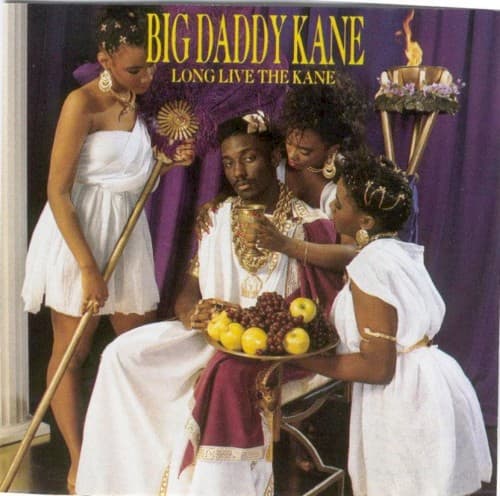
Big Daddy Kane Long Live the Kane — The Speed That Made Everyone Else Sound Slow
The argument for Long Live the Kane is audible in the first thirty seconds of the title track: Big Daddy Kane raps faster and more intricately than almost anyone in 1988, and he does it with a clarity that makes the technique look effortless. Multi-syllabic rhymes stack on top of each other, internal patterns double back, and the flow accelerates without losing enunciation. This is a debut that established a technical standard most of his peers would not reach for years. The album's reputation rests on three tracks that became underground classics and sample sources for a generation, but the full record reveals both the power of that technique and the limits of an album built almost entirely to reveal it. Kane spends ninety percent of Long Live the Kane proving he can outrap anyone, and on those terms he succeeds completely. The question is what happens in the other ten percent, and whether an album of battle highlight can hold together as a sequence.
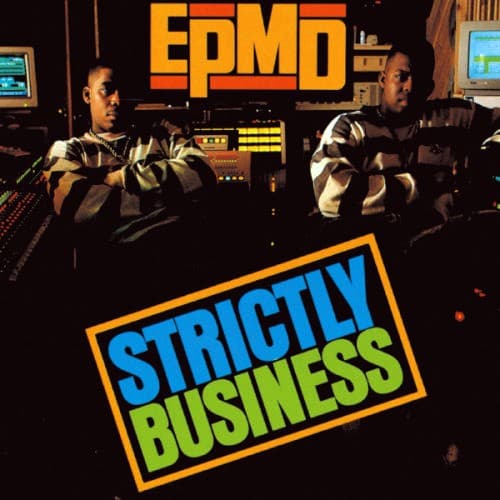
The context matters less than the sound. This is a Cold Chillin' Records release from the Juice Crew era, with Marley Marl handling production on all but one track, and it arrived in the same year as records by Eric B. and Rakim, EPMD, and Slick Rick. Kane's technical advantage over that field is the album's thesis. Where Rakim worked in a lower register with longer, more conversational phrases, and where Slick Rick used storytelling to carry the rhythm, Kane built his style on speed, precision, and the kind of multi-syllabic wordplay that forced listeners to rewind bars just to catch how the rhyme scheme worked. The album does not argue that Kane has more to say than his peers; it argues that he can say it faster, with more internal rhyme, and without stumbling. Long Live the Kane is the sound of a technical standard being set in real time, and the album's flaws come from the fact that technique alone cannot carry ten tracks.
Marley Marl's Spare Drums and the Space They Leave for Kane
The production across Long Live the Kane is almost aggressively minimal. Marley Marl's signature is fast-paced drums built from James Brown breaks, with samples used so lightly that the beats feel like scaffolding rather than arrangements. On "Ain't No Half-Steppin'," the beat is a kick, snare, and a brief horn stab; on "Raw," it is barely more than a drum pattern and a bassline.
The sparseness is deliberate, and it works because it gives Kane's voice all the room it needs. When he hits top speed, there is nothing in the mix to compete with the flow, and the clean separation between voice and beat makes every syllable audible. This is functional production that knows its job is to stay out of the way, and Marley Marl executes that job with discipline. The one exception is "Set It Off," produced by The 45 King, which layers a sped-up James Brown sample into a hook and gives the track a fuller, more dynamic feel. The contrast shows what the rest of the album sacrifices for minimalism: energy that comes from arrangement rather than just from rapping.
The writing is where Kane separates himself. His rhyme schemes are built on multi-syllabic patterns that were uncommon in 1988, and he uses internal rhyme to create density without losing momentum. On "Ain't No Half-Steppin'," he rhymes "battle," "rattle," "cattle," and "Seattle" in quick succession, then shifts the pattern mid-verse without breaking the flow. On "Set It Off," the speed increases and the rhymes get tighter, packing three and four syllables into end rhymes that still sound natural.
The vocabulary is more advanced than most battle rap: words like "immaculate," "strategy," and "adversary" appear in verses that also include wordplay and punchlines, showing that Kane can code-switch between technical display and direct communication. The subject matter is almost entirely self-assertion. Track after track, Kane explains that he is better than other rappers, that his technique is superior, and that challengers will lose. This works because the technique backs up the claim, but it also means the album has little thematic variety. When Kane steps outside of battle mode, the results are uneven.
"The Day You're Mine" is the album's most obvious misstep. Kane attempts a love song over a drum machine beat that sounds dated even by 1988 standards, with singing that undercuts rather than supports the concept. The track feels like an obligation, as if a debut album in this era required at least one attempt at crossover appeal, and the stilted rhythm and awkward pacing make it a permanent skip. "I'll Take You There" tries a similar idea with better results, using a more natural groove and less forced singing, but the writing still lacks the precision of the battle tracks. The weakness is not that Kane cannot write about anything other than his own skill; it is that the album does not give him material that plays to his strengths when he tries.
Three Classics, Then Diminishing Returns
The album front-loads its best work. The first stretch opens with a clean statement of purpose, follows with Kane at top speed, and pushes the velocity even higher while adding more dynamic production. By the time the sixth track arrives, the album has already made its case three times over, and the question becomes whether the remaining tracks can justify the runtime.
The answer is mixed. The middle section includes a back-and-forth highlight with Biz Markie that works as a piece of Juice Crew history but does not advance the album's argument. A DJ interlude stops the momentum entirely. The closing run ends with an Afrocentric theme that feels sincere but underdeveloped, as if Kane felt obligated to include a conscious track without fully committing to the idea.
The pacing problem is structural. Long Live the Kane sequences its peaks early, then scatters the remaining tracks without a clear logic. The love songs break up the battle reveal without offering a strong enough alternative, and the guest appearances feel like obligations rather than choices that serve the album. At forty-five minutes, the runtime is not excessive by later standards, but the album would be stronger at thirty-five, with one love song and the DJ interlude removed. What remains is a highlights album disguised as a full statement: three tracks that belong on every golden age essentials list, three or four tracks that show Kane's range without quite justifying their inclusion, and two tracks that most listeners will skip after the first listen.
A Technical Standard and a Warning About Building Albums on Technique Alone
Long Live the Kane ranks as Big Daddy Kane's most important album because it introduced the style that would define him and influence a generation of technical rappers. "Raw," "Set It Off," and "Ain't No Half-Steppin'" remain essential listening for anyone studying flow, and Kane's clarity at high speed set a bar that most 1988 rappers could not touch. In the catalog context, this is the album that made Kane's reputation, and it contains more classics than most golden age debuts. The problem is that it is also an uneven album that proves technique alone cannot carry a full statement. When Kane sticks to battle demonstrate, the writing and delivery are flawless; when he tries love songs or Afrocentric themes, the album reveals that he has not yet figured out how to adapt his style to other subjects. This makes Long Live the Kane essential for the highs but frustrating as a complete listen.
Who this is for: listeners who want to hear where the technical standard for multi-syllabic battle rap was set, fans of Marley Marl's sparse golden age production, and anyone building a foundation in late-eighties East Coast hip-hop. Who should skip it: listeners who need thematic variety or cohesive sequencing, and anyone who finds pure technique demonstrate repetitive after three or four tracks. Start with "Ain't No Half-Steppin'," then "Set It Off," then "Raw." If those three tracks work, the rest of the album will provide context; if they feel like variations on a theme, the album will not change that impression. For the next step, try It's a Big Daddy Thing, which refines the approach and adds more variety, or go to Rakim's Paid in Full for a different model of technical excellence in the same era. Long Live the Kane is a debut that set a standard and then struggled to build an album around it, and thirty-five years later, the three classics still sound like the future while the rest of the album sounds like 1988.
Track Listing
Long Live the Kane
▲The title track opens with a clear thesis: Kane can rap faster and more intricately than his peers, and he will prove it for the next five minutes. The rhyme scheme is built on multi-syllabic patterns that stack internal rhymes on top of end rhymes, and the flow accelerates without losing clarity. Marley Marl's production is sparse drums and a minimal bassline, giving Kane's voice all the space it needs. The writing is pure self-assertion, with Kane cataloging his superiority over unnamed rivals, and the delivery backs up every claim. This is a strong opener that states the album's case without overplaying it, and the technique on display is advanced enough to justify the confidence. The track works as both an introduction and a mission statement.
Raw (remix)
▲This is Kane at top speed. The remix uses the same beat as the original single, and Kane uses it to demonstrate the locomotive flow that became his signature. The rhyme schemes are tighter than the title track, with more internal patterns and faster transitions between ideas, and the clarity never wavers even when the syllables pile up. The subject is still battle rap, with Kane dismissing rivals and asserting dominance, but the sheer technical display is enough to carry the track. Marley Marl's production is minimal to the point of absence, just drums and a faint bassline, and the sparseness works because it keeps the focus on the rapping. This became an underground classic for good reason: the flow is as advanced as anything in 1988, and the track has not lost energy.
Set It Off
▲The 45 King's production gives this track more energy than anything else on the album. The beat is built on a sped-up James Brown sample, with a sampled hook that adds movement and dynamics, and Kane responds by pushing his flow even faster. The rhyme schemes are intricate, the wordplay is dense, and the delivery hits a velocity that few 1988 rappers could match. This is the album's peak in terms of pure technical execution, and the fuller production makes it more immediately engaging than the Marley Marl tracks. The writing is still self-assertion, but the speed and precision make the boasts feel earned rather than repetitive. The track became a classic for the same reason "Raw" did: it set a technical standard and backed it up with audible evidence.
The Day You’re Mine
▼This is the album's weakest track by a significant margin. Kane attempts a love song over a drum machine beat that sounds stiff and dated, with singing that undercuts the concept rather than supporting it. The rhythm is awkward, the pacing drags, and the writing lacks the precision of the battle tracks. Kane's flow sounds uncomfortable in this context, as if he has not figured out how to adapt his multi-syllabic technique to a slower, more melodic structure. The track feels like an obligation, as if Cold Chillin' required at least one crossover attempt on every debut, and it does not age well. Most listeners will skip this after the first listen.
On the Bugged Tip
●A mid-tempo showcase with a feature from Scoob Lover. The production is looser than the battle tracks, with a more relaxed groove, and Kane adjusts his flow to match the rhythm. The writing is less focused than "Raw" or "Set It Off," with Kane rapping about general superiority rather than specific challenges, and the feature verse adds variety without adding much substance. This is a solid album track that does not reach the level of the classics but does not drag the album down either. The track works as a breather between the high-speed showcases and the love song, and it shows that Kane can operate at different tempos without losing technical control.
Ain’t No Half‐Steppin’
▲The album's most enduring track. Marley Marl's production is built on a horn stab and minimal drums, and Kane uses the space to deliver one of the most quotable and technically impressive verses of the golden age. The rhyme scheme is intricate without sounding forced, with multi-syllabic patterns that shift mid-verse and internal rhymes that add density. The flow is controlled and deliberate, slower than "Raw" or "Set It Off" but more precise, and the writing balances wordplay with direct communication. Kane's vocabulary is more advanced than most battle rappers, using words like "immaculate" and "strategy" in verses that also include punchlines and boasts. The track became a sample source for dozens of later artists, and it remains the best example of Kane's ability to combine speed, clarity, and complexity in a single performance. This is the track that justifies the album's reputation.
I’ll Take You There
●Kane's second attempt at a love song works better than "The Day You're Mine" but still feels like a detour. The production is smoother, with a more natural groove, and the singing is less intrusive. Kane's flow adjusts to the slower tempo, and the writing is more relaxed, but the track lacks the precision and energy of the battle showcases. This is a competent execution of a concept that does not play to Kane's strengths, and while it charted higher than the pure battle tracks, it has not aged as well. The track is skippable but not embarrassing, and it shows that Kane could attempt different styles even if he had not yet mastered them.
Just Rhymin’ With Biz
●A back-and-forth showcase with Biz Markie that works as a piece of Juice Crew history but does not advance the album's argument. The production is minimal, just drums and space, and Kane and Biz trade verses without a clear structure or theme. The chemistry is loose and conversational, and the track has charm as a document of two friends rapping together, but the writing is less focused than the solo showcases. Biz's verse is playful and off-kilter, which contrasts with Kane's precision but does not create a strong dynamic. The track became a sample source for later artists, which speaks to its influence, but as an album cut it feels like filler. This is pleasant but inessential.
Mister Cee’s Master Plan
●A DJ interlude featuring Mister Cee. This is a showcase for scratching and turntable technique, with no rapping from Kane. The track functions as a breather and a nod to the Juice Crew's DJ culture, but it stops the album's momentum entirely. As a standalone piece of DJ work it is competent, but as an album track it is skippable. This is the kind of interlude that was common on late-eighties hip-hop albums, included more out of obligation than necessity, and it has not aged well. Most listeners will skip this.
Word to the Mother (Land)
●An Afrocentric closer that shifts the album's focus from battle rap to cultural consciousness. The production is spare, with minimal drums and no melodic elements, and Kane's writing addresses African heritage and identity with sincerity but without the depth that later conscious rappers would bring to similar themes. The track feels underdeveloped, as if Kane wanted to include a statement about his roots but had not yet figured out how to integrate that theme into his style. The flow is controlled and the delivery is earnest, but the writing lacks the specificity and imagery that would make the message resonate. This is a well-intentioned closer that does not quite land, and it suggests that Kane's range was still developing. The track is worth hearing once for context but does not hold up on repeat listens.