The scorecard
6.7/10 · Good
- Writing25%
- 6.5
- Production25%
- 7.5
- Delivery15%
- 7.0
- Cohesion15%
- 5.5
- Originality10%
- 6.0
- Replay value10%
- 7.0
The pimp posture gets thin past the fourth strip club boast, though punchlines land hard when concepts are tight—Area Codes flips phone digits into a cross-country playa itinerary, Coming 2 America turns 90s comedy into an immigrant hustle flex.
Timbaland's stutter on Rollout, Organized Noize's live bass on She Said, Bangladesh's crisp snares throughout: this is Southern rap with New York studio money, every beat hitting where it needs to.
Ludacris rides each production with a different pocket—clipped and fast over Timbaland, lazy and mocking over Organized Noize—though guests are mixed and eighteen tracks is too many to sustain the energy.
Eighteen tracks with four skits and three different moods: party rap, shock comedy, and scattered introspection that never connects; Saturday and Cold Outside feel like they wandered in from different projects entirely.
Taking Redd Foxx cadence and Eddie Murphy exaggeration into Dirty South rap was still fresh in 2001, but the guest list and regional spread execute a crossover formula more than they invent a new one.
The singles still work in 2025 because the humor is specific and the hooks are simple, but deep cuts sag under their own length and half the pimp talk was already tired by 2001.
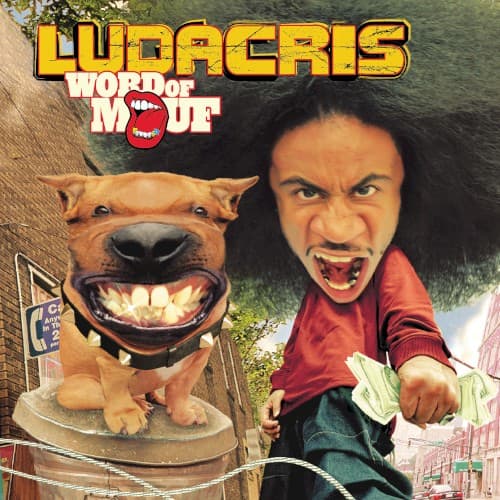
Ludacris Word of Mouf — When Atlanta Rap Got the Million-Dollar Studio Treatment
Word of Mouf is the sound of Southern rap cashing its first major-label check and renting every name producer it can afford. Ludacris recorded this across six studios in four cities—PatchWerk and Dungeon in Atlanta, Hit Factory and Quad in New York, Hypnotized Minds in Memphis—and the album sounds like it, every beat polished to radio gloss, every hook sung by someone with a deal. Timbaland's work on Rollout alone justifies the budget: those hand-clap stutters and that wheezing synth bass turned a song about nosy people into a crossover smash without sanding off the Atlanta in Ludacris' voice. Bangladesh, Organized Noize, Swizz Beatz, Jazze Pha—this is the Disturbing tha Peace crew proving they could compete with New York and still sound like the South.
The thesis Ludacris offers is that shock humor and technical rapping could coexist in mainstream Southern hip-hop, that you could be Redd Foxx and Rakim at the same time. He wins that argument for about forty minutes. Then the album keeps going.
Eighteen tracks is too many when six of them are variations on the same strip club brag and three are skits that stop the momentum. The high points—Coming 2 America's immigrant hustle narrative flipped into a punchline marathon, Area Codes turning phone digits into regional playa mythology—prove Ludacris had the pen and the charisma to carry a concept. The low points prove he did not yet have the editor. Word of Mouf is an 8.5 album stretched to seventy-three minutes, and the difference between those numbers is the filler.
Eighteen Studios, One South, Too Many Tracks
The production roster reads like a 2001 industry Rolodex, and the regional spread matters. Timbaland was still the best at making rap drums sound like machines breaking, and Rollout gets his best trick: a beat that sounds off-time until you realize the snare is exactly where it needs to be. Bangladesh handles five tracks and gives Ludacris the hardest drums on the album—Coming 2 America opens with a military snare roll that never lets up, Get the Fuck Back rides a two-chord loop so stiff it dares you not to nod. Organized Noize brings the live instrumentation that made OutKast albums feel expensive, and She Said has a bass line that walks instead of thumps, the kind of Stax soul flip that Atlanta producers could do in their sleep by 2001.
Jazze Pha sings and produces on two tracks and manages to make his own hooks sound like features, which is either generous or lazy. Swizz Beatz gives Cry Babies the alarm-clock riff he was putting on every Ruff Ryders record that year, and it works here because Ludacris yells over it instead of trying to ride it smooth. KLC from Beats by the Pound shows up for Move Bitch and delivers exactly what that title requires: a one-note bass stab and a tempo fast enough that Mystikal sounds like he is trying to catch a bus.
Ludacris adjusts his delivery to every beat, which is the technical skill that justifies the album's length even when the writing does not. Over Timbaland he clips his syllables and leans into the stutter; over Organized Noize he stretches words into two or three syllables and lets the bass do the work; over Bangladesh he raps in double-time bursts and then stops completely for the punchline. The Eddie Murphy and Redd Foxx comparisons from the reviews are accurate—he exaggerates every voice, turns every threat into a joke, makes every sex rhyme sound like a toast at a bachelor party. It works when the concept is tight: Area Codes is a song about regional groupies that somehow never names a city without making it a brag, and the Nate Dogg hook is so simple it could have been written on a napkin. It stops working when the concept is just "more strip club music," which describes at least four deep cuts here.
The guest spots are a mixed roster. Three 6 Mafia on Go 2 Sleep is the album's best pairing—Ludacris raps fast, they rap slow and mean, the contrast makes both sound better. Twista on Freaky Thangs is a technical display with no reason to exist beyond the speed, and Jagged Edge singing the hook adds nothing. Mystikal on Move Bitch is the only guest who matches Ludacris for volume, and that song works because it knows what it is: a fight anthem that does not pretend to be deep.
Shawnna on Get the Fuck Back gets ten seconds and wastes none of them. I-20 appears on five tracks and sounds like the Disturbing tha Peace artist who did not get his own single yet. The weaker moments are when Ludacris lets the guests take over, which happens twice: Cold Outside is a six-minute R&B song with Chimere that belongs on a different album entirely, and Fate Wilson appears on four tracks without adding a memorable line.
The writing is where the album splits. When Ludacris is working a concept, he is among the best punchline rappers of the early 2000s. Coming 2 America flips the Eddie Murphy movie into a verse about African royalty landing in Atlanta with drug money and supermodel ambitions, every line a setup for the next joke. Area Codes is a phone-number roll call that never stops moving: 404, 770, 313, the joke is that he has groupies everywhere and the execution is that he names them all without repeating a rhyme scheme.
Growing Pains is an attempt at introspection that scans as sincere, Ludacris rapping about childhood poverty without exaggeration, but it is surrounded by songs where every woman is a whore and every threat ends in murder, which makes the sincerity feel like a quota. The pimp posture is exhausting by track twelve. Saturday is a strip club anthem where the punchline is that it is Saturday, and Block Lockdown is a posse cut where nobody says anything that sticks past the last snare hit.
Seventy-Three Minutes, Eight Great Songs, Too Much Space Between
The album front-loads its best material and then coasts. The first stretch delivers three strong openers in a row, each one a different style—comedy concept rap, technical flex, regional posse cut. Then the momentum stalls with a beat that sounds like every other similar production from 2001. The next two tracks recover it: both let Ludacris rap over live music instead of stiff drums, and both feel like actual songs instead of punchline vehicles.
Three skits in eighteen tracks is not excessive by 2001 standards, but these are long—two pass a minute—and they kill the pacing twice. The middle section contains the album's loudest moment and its most replayable: a fight anthem designed to be shouted in a car with the windows down. The next track drops the energy to a slow roll, a hook about weekend strip clubs that sounds like it was recorded at half-speed. It is a fine song in a vacuum, but sequenced after the previous banger it feels like the album is apologizing for having fun.
The back half sags under its own length. Six tracks in a row where only one has a reason to be on the final cut. The freestyle is two minutes of fast rapping over no beat, which is a skill demonstration that adds nothing to the album's argument.
One deep cut is six minutes of R&B that stops the record completely. The closing stretch includes a posse cut where a crew member gets more time than Ludacris and uses it to say less. The album would be an 8.5 if it ended earlier and included only two tracks from the rest. At seventy-three minutes it is a 7.5, which is still good but no longer tight.
A Crossover Victory That Gave Away Too Many Bonus Tracks
Word of Mouf is Ludacris at his funniest and his most technically sharp, which means it is among the best mainstream Southern rap albums of the early 2000s. It is also eighteen tracks long, which means it is not among the best-sequenced. The argument the album makes—that you could be Redd Foxx and Rakim, that Southern rap could be shock comedy and technical skill at the same time—lands for anyone willing to skip five or six deep cuts. The singles still work because they are specific: Rollout is a song about nosy people that never names who they are, Area Codes is a phone-number joke that never stops finding new area codes, Move Bitch is a fight song that sounds like a fight. The deep cuts mostly do not work because they are generic: strip club anthem number four sounds like strip club anthem number two, and the skits are too long to justify their placement.
This is an album for anyone who wants to hear Southern rap with a major-label production budget and a crossover single strategy that worked. It is not an album for anyone who needs a concise listen—there is no ten-track version of Word of Mouf that keeps all the best moments, because the best moments are spread across eighteen tracks and surrounded by filler. Start with Rollout, Move Bitch, and Area Codes, which are the singles that still sound correct in 2025. Add Coming 2 America and She Said, which are the deep cuts that prove Ludacris could write a concept. Skip the skits, skip Cold Outside, skip Block Lockdown unless you need to hear I-20 rap for seven minutes.
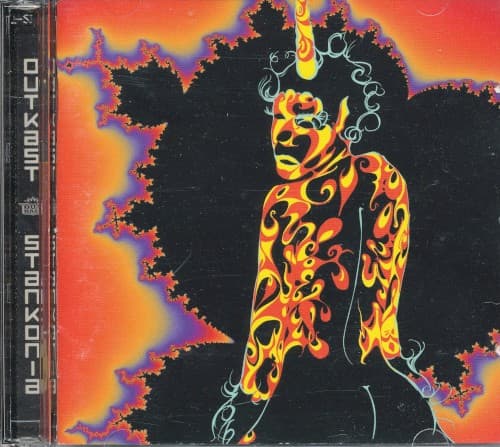
The album holds up because the humor is specific and the beats were expensive. The jokes are not all good—half the album is pimp talk that was already tired by 2001—but the ones that land are precise enough that they still work. The production is not all necessary—eighteen tracks is six too many—but the best beats here are among the best rap beats of the year, and Timbaland's work on Rollout alone justifies the Def Jam South advance. If you are looking for the best Ludacris album, this is it by default until the site reviews the rest of his catalog. If you are looking for the tightest Ludacris album, this is not it. After Word of Mouf, play Back for the First Time to hear where this sound came from, or check Stankonia by OutKast to hear what the same producers did with artists who knew when to stop recording.
Track by track
Track Listing
Coming 2 America
StandoutBangladesh opens the album with a military snare roll that never stops, and Ludacris flips the Eddie Murphy movie into a verse about African royalty landing in Atlanta with drug money and supermodel ambitions. Every line is a setup for the next joke—he is coming to America with recipes for getting rich, with accents that shift mid-verse, with punchlines about immigration that land because they are specific instead of broad. The production is all drums and no melody, which keeps the focus on the wordplay, and Ludacris adjusts his flow three times in four minutes without losing the thread. This is concept rap that earns its concept, and it sets the standard the rest of the album will struggle to match. The only weakness is that it ends on a punchline instead of a button, which makes the transition to Rollout feel abrupt.
Rollout (My Business)
StandoutTimbaland's beat is the best production on the album: hand-clap stutters, a wheezing synth bass that sounds like a machine trying to breathe, and a snare pattern that feels off-time until you realize it is exactly where it needs to be. Ludacris raps about nosy people asking about his money, his cars, his relationships, and he never names who they are, which makes the song feel universal instead of petty. The flow is clipped and fast, every syllable landing on a different part of the beat, and the hook is simple enough to yell in a car. This is the crossover single that worked because it sounded like nothing else on the radio in 2001—Southern rap with New York studio gloss, a complaint song that feels like a celebration. Still sounds correct in 2025.
Go 2 Sleep
StandoutBangladesh gives Ludacris and Three 6 Mafia a hard drum loop with no bass, just snares and hi-hats, and the contrast between Ludacris rapping fast and Three 6 rapping slow and mean makes both sound better. This is a posse cut that works because the guests are not trying to outrap each other—they are trading threats over the same beat, and the threats are funny instead of serious. I-20 and Fate Wilson add verses that do not detract, which is the best you can say about most Disturbing tha Peace guests. The production is stiff enough that it never grooves, but the song is not trying to groove. It is trying to sound tough, and it succeeds until the last verse, which drags.
Cry Babies (Oh No)
SolidSwizz Beatz gives Ludacris the alarm-clock riff he was putting on every Ruff Ryders record in 2001, and Ludacris yells over it instead of trying to ride it smooth, which is the right choice. The song is about rappers complaining, women complaining, and Ludacris not caring, which is a thin concept stretched to six minutes. The punchlines land in the first verse—he compares crying rappers to infants and then lists their complaints one by one—but by the third verse he is repeating himself. The beat never changes, which is the Swizz Beatz formula, and it works for three minutes. At six it is exhausting. This is the first moment on the album where the length is a problem.
She Said
StandoutOrganized Noize brings the live bass and the Stax soul flip that made OutKast albums sound expensive, and Ludacris raps over it in a lazy drawl that matches the groove instead of fighting it. The song is about a woman lying to her man about where she was last night, and Ludacris plays both sides of the conversation, shifting his voice for every line. The wordplay is sharp—she said she was at her sister's house, he knows she was at the club, the punchline is that he does not care as long as she comes back—and the production gives him space to let every joke breathe. Fate Wilson sings the hook and adds nothing, but the beat and the writing are strong enough to carry it. This is the best example on the album of Ludacris adjusting his flow to fit the production instead of rapping over it.
Area Codes
StandoutJazze Pha's production is a slow synth loop with a bass line that bounces instead of thumps, and Nate Dogg sings the simplest hook on the album: area codes, phone numbers, groupies in every city. Ludacris raps a verse that is just a list—404, 770, 313, 404 again—and somehow never repeats a rhyme scheme or a punchline. Every city gets a joke, every joke lands, and the song never stops moving even though the beat is half-speed. This is punchline rap at its most efficient: no wasted lines, no exaggeration beyond what the concept requires, no moment where Ludacris sounds like he is trying too hard. The song holds up in 2025 because the humor is specific—these are real area codes, real regional brags—and the hook is so simple it could have been written on a napkin. Top three track on the album.
Growing Pains
SolidP. King gives Ludacris a slow soul loop with a sung hook from Fate Wilson and Keon Bryce, and Ludacris raps about childhood poverty without exaggeration—no lights, no heat, family struggling, the specifics matter here. The writing is sincere, and the delivery is calm instead of loud, which makes the verse feel like an actual memory instead of a commercial for struggle. The problem is the placement: Growing Pains is surrounded by strip club anthems and pimp talk, which makes the sincerity feel like a quota instead of an argument. The song works in a vacuum, but sequenced between Area Codes and Move Bitch it feels like an apology for having fun. This would be stronger if the album had committed to introspection more than once.
Move B***h
StandoutKLC from Beats by the Pound delivers exactly what the title requires: a one-note bass stab, a tempo fast enough that Mystikal sounds like he is chasing something, and drums that hit so hard they distort. Mystikal yells the hook, Ludacris yells the verses, I-20 yells his verse, and the whole song is designed to be shouted in a car with the windows down. This is a fight anthem that does not pretend to be deep, and it works because it knows what it is. The punchlines are simple—get out the way, move, I am coming through—and the execution is loud enough that the simplicity does not matter. Still gets played at sporting events in 2025, which means it outlasted most of the Billboard rap chart from 2001. Top three track on the album.
Saturday (Oooh! Ooooh!)
SolidOrganized Noize gives Ludacris a slow bass line and a Sleepy Brown hook about weekend strip clubs, and the whole song sounds like it was recorded at half-speed. The production is fine—live instruments, no stiff drums—but the concept is thin: it is Saturday, time to go to the club, that is the whole song. Ludacris raps two verses that do not add anything beyond what the hook already said, and Sleepy Brown sings like he is falling asleep mid-chorus. Sequenced after Move Bitch this feels like the album apologizing for being loud. It is a fine song in a vacuum, but it kills the momentum.
Keep It on the Hush
SolidJazze Pha produces and sings the hook, and the beat is a quiet synth loop with no bass, which is the opposite of every other song on the album. Ludacris raps about keeping affairs secret, and the punchlines land in the first verse—do not tell your friends, do not post pictures, keep it quiet—but by the second verse he is repeating the same advice in different words. The song is too long at four and a half minutes, and Jazze Pha's hook is more annoying than catchy. This is filler disguised as a deep cut.
Word of Mouf (freestyle)
WeakTwo minutes of Ludacris rapping fast over no beat, with 4-Ize adding a verse that does not stick. This is a technical demonstration with no reason to exist on the album—it does not advance an argument, it does not fit the sequencing, and it is not funny or memorable enough to justify stopping the music. Freestyles belong on mixtapes, not on seventy-three-minute major-label albums.
Get the F*** Back
SolidBangladesh brings back the hard drums from the album's opening, and Ludacris trades verses with Shawnna, I-20, and Fate Wilson over a two-chord loop that never changes. Shawnna gets ten seconds and uses them better than anyone else on the track—her flow is faster than Ludacris', her punchline lands harder, and she is gone before the verse gets boring. I-20 and Fate Wilson add verses that sound like they were written in the studio five minutes before the take. Ludacris raps the first and third verses and sounds tired, which is the first time on the album his energy has dropped. The beat is strong enough to carry the song, but the writing is not. This needed one fewer guest and one more draft.
Freaky Thangs
WeakBangladesh produces another hard drum loop, and Ludacris brings Twista and Jagged Edge for a sex song that is all speed and no substance. Twista raps faster than Ludacris, which is the technical showcase, but neither of them says anything memorable. Jagged Edge sings the hook and adds nothing—this is R&B grafted onto a rap song because someone thought it would help the single chart. The production is fine, the flows are fine, and the whole song is unnecessary. This is filler.
Cold Outside
WeakSix minutes of R&B with Chimere singing most of it and Ludacris rapping two short verses that feel like guest spots on someone else's song. The production is slow, the hook is long, and the whole track belongs on a different album. This is the worst sequencing decision on Word of Mouf—an R&B ballad placed between two posse cuts, stopping the album completely. Skip it.
Block Lockdown
WeakBangladesh produces the longest track on the album, and I-20 gets more time than Ludacris, which is a problem because I-20 does not have the writing or the charisma to carry seven minutes. Ludacris raps two verses that sound like he recorded them on a different day and then let his crew finish the song. The beat is a hard drum loop with no variation, and by the fourth minute it is exhausting. The hidden track Welcome to Atlanta starts at 4:25 and lasts three and a half minutes, which means this is actually two songs stitched together, and neither one is strong enough to justify the length. Block Lockdown is a posse cut where nobody has anything to say, and Welcome to Atlanta is a regional anthem that works as a single but feels tacked on here. This should have been two separate tracks, or one shorter track, or cut entirely.