The scorecard
7.0/10 · Good
- Writing25%
- 6.5
- Production25%
- 8.0
- Delivery15%
- 6.5
- Cohesion15%
- 6.5
- Originality10%
- 7.0
- Replay value10%
- 7.5
Metaphor-heavy writing about drugs, childhood and death stays vague too often, with mid-album verses blurring into mood, though it lands hardest when it commits to a scene, as in the boast-then-admission of Do You Have a Destination? and the baby-boy story on Funny Papers.
Thundercat's bass, Taylor Graves's keys and hazy organ and piano loops give the record a live-room warmth, and the gradual subtraction of that warmth toward the closer is the best craft on the album.
The half-sung, slurred murmur sits at one temperature for long stretches and limits the dynamic range, though it suits the material and the pitched-down voice on Shangri-La is a smart change of register.
The first seven tracks share a tempo and color and the 14-song run is longer than the ideas inside it, though the bright-to-dark arc is deliberate and the last third tightens.
A band-in-a-room jazz and neo-soul approach with a rapper-singer in the middle was uncommon for its period, but it sounds like a close cousin of Faces rather than a new direction.
As a projection, the warm sound and reticent writing should hold up on repeat, while the sameness of the middle stretch will keep some listeners skipping to the final third.
Mac Miller Balloonerism: The Sunniest Sounding Record About Not Making It Through the Night
The most revealing moment on Balloonerism comes at the very end, when an automated voicemail keeps cutting into an eleven-minute closer and Mac Miller stops picking up. Everything before it is dressed in organ chords, rubbery bass and tambourine, and the album's argument is that the bright dress is the point: a record that sounds like a warm afternoon while a man circles thoughts of death. That is a sturdier idea than the usual posthumous clean-up job, and it is why this release is better than its backstory suggests.
The backstory is a streaming-era oddity. The songs were assembled between roughly 2013 and 2016, shelved, leaked in 2020, and rebuilt by fans into rival tracklists before the estate issued an official sequence in January 2025. That history matters only because it sets the test: does the sanctioned version beat the bootleg folklore? Mostly yes, with a catch. The first half is easy and pleasant but lighter than it believes, and the case for the album is made in the last third, where the production darkens and the writing stops hiding behind charm.
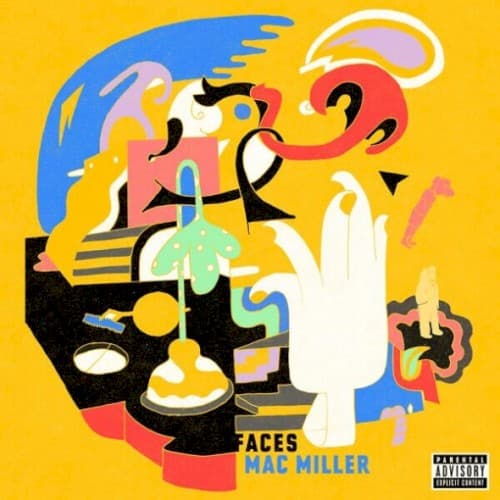
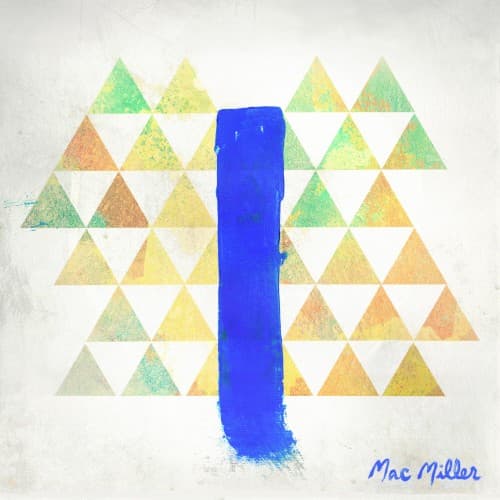
Within the catalog it lands in the middle, far above the frat-rap era of Blue Slide Park and a clear step below Faces, the tape made around the same time that this record keeps echoing. Critics heard a bridge between the early Mac Miller and the singing-heavy albums that followed, and that reading holds up on the ear. The sessions with Thundercat give the bass lines a loose, conversational feel that keeps the sad material from turning heavy-handed. The stakes are modest but real: it fills in the missing link between his 2013 and 2014 experiments and the records that came after, and it does so without asking the listener to forgive anything.
Warm Bass, Cold Thoughts: How a Band Sound Carries the Weight
The sound is built around musicians playing in a room. Thundercat's bass is on most of the record, and the credits show a small circle of players around it: Taylor Graves on keyboards, Jameel and Ronald Bruner on keys and drums for the lead single, and Dylan Reynolds adding vocals and guitar near the end. The producer credits run through Larry Fisherman, Graves and Thundercat in different combinations, and E. Dan's mix keeps everything slightly hazy, with drums sitting back while organ and piano loops do the melodic work. The result is closer to a jam session with a rapper in the middle than to a beat tape, which is why the album feels like a place rather than a collection of singles.
The writing works by suggestion. Drugs, depression and nostalgia for childhood run through nearly every song, but Mac rarely sets a full scene; he reaches for a metaphor, drops in an image of a playground or a magician, and moves on. When it lands, as in the song where a boast about success collapses into an admission of disconnection, the vagueness reads as someone not yet ready to say the plain thing. When it does not, the lines blur into mood and the listener is left holding atmosphere without an argument.
His delivery sits in a half-sung register, closer to murmuring over the groove than performing on top of it. That suits the material. He bends pitch, lets syllables slur, and switches to a lowered voice or a character voice when the subject turns to death. It also limits the dynamic range: for long stretches the vocal sits at one temperature, and the hooks are hummed more than they are built.
The weakness is the unfinished feel. Songs were reportedly completed within a day with little revision, and some of them behave that way, ending by dissolving into another loop rather than resolving. The middle of the record leans on the same device several times: a woozy guitar or bass figure, a love song that is really about getting high, a verse that circles a vice without confronting it. Friendly Hallucinations and Stoned are pleasant, but they cover similar emotional ground at a similar speed, and the album's best ideas are not in them.
What rescues the sound from sameness is the way the darkness arrives over time. As the album goes on, the brightness is thinned out, the drums disappear on one track, harp and muffled playground noise take over on others, and the same warm palette starts to sound haunted. That slow subtraction is the most deliberate craft on the record, and it is what separates this from a folder of old demos.
A Slow Fade From Daylight: Pacing, Peaks and the Long Exit
Sequenced well, the record opens with a half-minute instrumental of tambourines and maracas that works as a doorbell, then moves straight into the longest stretch of its brightest music. The first seven tracks are the easiest listening, full of organ, bass and singing about women, hallucinations and the pull of getting high. They are also where the album sags: the songs share a tempo and a color, and a listener moving through on a playlist could lose track of where one ends and the next begins.
The turn arrives with Shangri-La, where the drums drop away, the voice drops in pitch and the subject becomes death in plain terms. From there the sequence tightens. Short pieces of found sound and trip-hop break the songs up, a harp and a guest character appear, and each track is lighter on charm and heavier on consequences. This back half is the best argument for the official tracklist over the fan edits, because the order of the dark material is what makes it land.
The length question is answered by the closer. At nearly twelve minutes, Tomorrow Will Never Know is the one place where the album uses its running time as an argument rather than a convenience: the muffled playground, the distant ringing phone and the voicemail that keeps replaying turn a song into a scene, and the ending leaves the listener inside it instead of resolving it. Whether that stretch is fully earned is debatable, since it asks for patience that the first half never trained. Overall, the fourteen tracks run longer than the ideas inside them, and a tighter cut would drop one or two of the mid-album love songs without losing the arc.
Between the Frat Years and Faces: A Mood Piece Worth Keeping
In the Rap Album Reviews catalog it ranks above Swimming at 7.1 and far above Blue Slide Park at 4.8, but below Faces at 8.1. The order is deliberate. Faces has sharper writing and a more frightening center, while Swimming is the tidier record. Balloonerism trades polish for atmosphere, and its best moments have a looseness the later album does not try for. Its limits are the vague writing and the sameness of the middle, which is why it cannot sit alongside Faces.
It is for listeners who already like Mac Miller's slower, stranger side, for fans of live-band hip-hop with a soul and jazz lean, and for anyone curious what the leaked versions were reaching for. Skip it if you want hooks and punchlines; critics called it a mood piece, and the lyrics reward patience more than quick listening. Anyone expecting a lost classic with banger energy will find the pace too even.
It has aged into its place quickly: the songs sound as if they could have come out at any point since 2014, and the mixing keeps them from sounding like a time capsule. Because the sound is warm and the writing is reticent, it should hold up on repeat, though the middle stretch is where replay value thins. Start with DJ's Chord Organ for the sound collage and the SZA turn, Shangri-La for the darker pivot, and Tomorrow Will Never Know for the full statement. Then go to Faces for the sharper version of the same impulse, and to Swimming for how those ideas were tidied into a finished album. The last twelve minutes of Balloonerism say more about where Mac Miller was heading than anything that comes before them.
Track by track
Track Listing
Tambourine Dream
SolidA half-minute instrumental of tambourines, maracas and distant drum skins. It is a doorway rather than a song, and it does its small job of setting the room.
DJ’s Chord Organ
StandoutA five-minute opener that begins as a sound collage of distant vocal harmonies, soft organ chords and slowly building drums before anything resembling a verse arrives. It was composed on the chord organ of Daniel Johnston, and Thundercat's additional vocals stand in for the expected Mac hook, which makes it feel like a band piece rather than a rapper's single. SZA arrives mid-song with a strutting verse over a circusy organ riff, and she has said the track is unchanged from its original recording, which shows in how live and unpolished it feels. The cost is patience, since the collage section asks a lot of someone cueing the album up for the first time. Still, it sets the template of warmth with a strange edge that the rest of the record follows.
Do You Have a Destination?
StandoutA daydreamy cut where ad-libs, backing vocals, a distorted voice and piano riffs circle a boom-bap-flavored beat. Mac brags about a lavish life, then admits he feels disconnected from it, and that swerve is the first real sign of what the album is about. The writing is blunt here rather than coy, and the beat gives the sentiment room instead of crowding it. It is among the strongest early tracks because the contrast between luxury and emptiness is stated in the first minute and the production never pushes the point.
5 Dollar Pony Rides
StandoutThe lead single is a groovy, boom-bap-leaning song about a girl, with keys from Jameel Bruner, drums from Ronald Bruner and bass from Thundercat. Mac sings about fleeting pleasures and loneliness, and about wanting to give a lover what she needs rather than material things, which gives the song a tenderness the rest of the first half rarely matches. The bass and soft soul vocals carry the ending, and the hook is the most immediate on the record. It is a smart single because it sounds easy while saying something a little sad, though it is also the album's lightest major statement.
Friendly Hallucinations
StandoutThundercat's smooth bass line and a catchy hook anchor a song that sounds like a haunted house with the lights left on, and SZA adds vocals. The lyric is about drugs and what they cost his friendships, and the hook gradually turns into a trance-like chant. It is easy to like and a little too comfortable, since the music is warmer than the confession deserves.
Mrs. Deborah Downer
SolidCrashing cymbals and slow Thundercat bass back a song in which Mac confronts where he would be without drugs. It is distorted but hopeful, with additional vocals from Ashley All Day, and the self-questioning gives it more bite than the nearby love songs. The idea is stronger than the execution, which drifts.
Stoned
SolidA woozy-guitar song that compares getting high to heaven, with a woman at its center. Smooth and anthemic, but it walks ground the previous two tracks already covered, and it is the clearest example of the mid-album sameness.
Shangri‐La
StandoutThe pivot of the record. The drums are gone, the synths are bright, and Mac raps in a pitched-down, sultry voice about dying young. It was likely recorded around the summer of 2014 at Rick Rubin's studio of the same name, which fits its skeletal, rap-forward approach. After the band feel of the first half, the sparseness is a shock, and the shift from romance and substances to mortality drives everything after it. At under three minutes it does not overstay, and it is stronger for that.
Funny Papers
StandoutA simple beat and a bittersweet piano tune carry a song about childhood and the loss of innocence. Mac opens in a silly old-Hollywood voice, then tells a story about a baby boy who asks why his loving mother brought him into a cruel world. The pensive, nostalgic tone and the clash between the playful voice and the bleak story make this the album's thesis in miniature. It is also one of the better-written moments, because the story contains an actual scene.
Excelsior
SolidAn interlude of real-world sounds, screaming children and trip-hop beats, ending on a magician's word as Mac recalls wanting to be a magician. A brief, effective change of texture rather than a full song.
Transformations
SolidDelusional Thomas, the pitch-shifted horrorcore alter ego, joins Mac for what plays as a conversation between two sides of one head. The darker psychosis themes make this the closest the record gets to menace. It is a striking idea and a short one, though the character voice can wear thin.
Manakins
SolidA harp-led, psychedelic track on which Mac talks about dying while the arrangement drifts, with additional vocals from Dylan Reynolds. It adds emotional weight without changing the pace, and the floating production does the work the lyrics only hint at. Atmospheric rather than memorable.
Rick’s Piano
StandoutIt opens with a knock-knock joke built around Rick Rubin, then settles into a song about Mac's time with a keyboard at Rubin's studio. He asks what death feels like and whether heaven exists, and he lands on the promise that the best is yet to come. Dylan Reynolds adds vocals and guitar, Thundercat the bass. The humor is a grace note that makes the hope feel earned, and it is the last bit of lightness before the closer.
Tomorrow Will Never Know
StandoutNearly twelve minutes of muffled children at play, a telephone ringing in the distance and an automated voicemail that keeps going, under lyrics about death, suicide and pressure. Mac wonders whether God will give him a break and decides it will not matter, and by the end he has stopped answering the calls. It is painful and very deliberate as sequencing: the production gradually removes comfort until the room feels empty. It is long, and a casual listener will skip it, but it is the one track that justifies the album as a complete statement. It is best heard in order and in full.