The scorecard
6.3/10 · Mixed
- Writing25%
- 6.5
- Production25%
- 6.5
- Delivery15%
- 6.5
- Cohesion15%
- 6.0
- Originality10%
- 6.0
- Replay value10%
- 6.0
The addiction verses on Lost/Sun Comes Up and Day You Die are specific and unflattering, though the inspirational turns on several songs undercut them.
Budo's warm drums, strings and soft keys unify fifteen tracks and give the verses room, but the sound stays safe and rarely takes a risk.
His strained double-time cadence fits anxious material and Heroes is sharp, while the mass-chant hooks sound manufactured against the rawer verses.
The confessional second half hangs together, but the commercial singles up front and the trap-leaning cut interrupt the arc and the length runs long.
The recovery subject is new for him, though the sound is a refined version of his familiar formula rather than a new direction.
The confessional songs should hold up better than the chant-driven singles, but the repeated theme limits how often the whole record rewards a full run.
Macklemore Ben: The Ledger After the Singalong
Ben works best when Macklemore stops trying to be the most likable person in the room. The strongest stretch of this record is a rapper admitting that sobriety is a daily negotiation rather than a redemption arc, and doing it over beats that leave the confession room to breathe instead of crowding it with a singalong. That is the thesis: Ben is the best-argued album of his solo career because it swaps his old habit of sermonizing for something closer to a ledger, and it only stumbles where the sermon comes back.
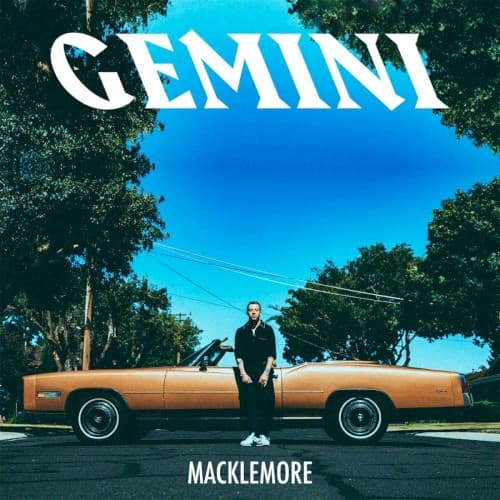
The stakes were higher than the modest chart result suggests. Six years separated this record from Gemini, the recording stretched from 2020 to 2022, and by his own account the pandemic-era relapse shaped the darker material. A return after that long a gap, in a rap market that had moved well past the Thrift Shop years, could easily have become a nostalgia package. Instead the album leans on one collaborator, Budo, who produces or co-produces nearly every track, and that single-hand approach gives it a consistency his earlier solo records never had.
The rollout tells you how the camp balanced art and commerce. Five singles came off a fifteen-track album, and they are spread across the sonic range: a big chanting opener with Tones and I, a pop-dance cut with Windser, a trap-leaning duet with NLE Choppa, a boom-bap cut with DJ Premier, and a radio-friendly closer to the campaign with Collett. Debuting at number 18 on the Billboard 200 was a respectable landing, not a comeback spike, and the reviews split accordingly, with some critics hearing his most honest work and others hearing the same over-sincerity that cost him goodwill before.
My read sits closer to the first camp, with reservations. The honesty is real and audible. The corniness is also real. What makes Ben worth hearing is that the former outnumbers the latter by a clear margin.
Budo's Warm Drums and the Cost of the Moral
Ben is built on Budo's warmth. Almost every beat here favors live-sounding drums, soft keys, strings and horns that sit slightly behind the vocal, and that choice matters because Macklemore's strongest instrument is not his voice but his pen. When the production stays out of his way, as it does on the confessional middle of the record, the writing gets the space it needs. Budo is credited on every track except one, and the sound holds together across guests as different as a pop duo, a young trap rapper and a boom-bap legend.
The writing is where the album earns its upgrade over Gemini. Macklemore is specific about addiction in a way he rarely was: the logistics of relapse, the bargaining with himself, the way shame turns into more drinking. He also does better at looking inward than outward. Earlier albums reached for big social statements and a punchline every four bars; here the bars are plainer, the images are domestic, and the stakes are a marriage, a child and a body that keeps a record of bad decisions. He raps with a quick, slightly strained cadence that suits anxiety better than swagger, and he is at his best when the delivery tightens into double-time lines that sound like a mind racing.
The album's problems are consistent ones. Macklemore cannot resist the inspirational turn, and a few songs end on a moral that the verse had not earned, with a chorus that tells the listener how to feel after a verse that already did the work. Several hooks lean on the mass-chant formula that made his name, and those hooks sound manufactured next to the rawer verses around them. The trap-flavored cut with a guest rapper reads as a radio calculation rather than a creative need: the guest turns up, the beat switches gears, and the song never connects to the album's emotional spine. The middle of the record also repeats its own theme, with several songs circling relapse and regret without adding a new angle.
Guest choice is mixed but mostly sensible. The female vocalists add contrast to a record dominated by one man's guilt, and Morray, near the end, brings a weary gravity that suits the closer. DJ Premier's contribution is a clean, hard-edged shot of New York drum programming that gives the album one moment of genuine rap craft instead of mood. What the guests cannot fix is the length. Fifteen tracks with a handful of three-minute songs saying similar things asks for patience, and the weaker choruses are the first things to go when you trim a playlist.
Overall, the sound is competent, tasteful and emotionally appropriate rather than adventurous. Budo and Macklemore are playing it close to safe, which is a fair strategy for a record about stability, but it keeps Ben from the kind of sonic risk that would raise it into the upper tier.
From Stadium Chants to a Quiet Close
Ben is front-loaded with the songs designed to win a crowd, and it only gets honest once the crowd noise fades. The opening run is the commercial pitch: a stadium chant, a feel-good pop-dance single, a nostalgic cut about a past year, a dance-pop collaboration. It is polished and effective, and it also makes the first quarter of the album feel like an advertisement for the record that follows. The sequencing is a risk in itself: listeners who came for the singles may stop before the album reveals its actual subject.
The turn arrives with the DJ Premier collaboration, and from there the album settles into its real material. Addiction, parenthood, mortality and apology fill the stretch from the middle of the album to the penultimate track, and the pacing improves because the songs stop competing with each other for radio attention. The long track in the center, Lost/Sun Comes Up, is the structural hinge: it breaks the three-minute rhythm of everything around it and lets a verse run long enough to build real tension before the beat lifts.
The sag comes in the back half. After the emotional peak, a trap-inflected single and a couple of mid-tempo reflections arrive in a row, and the album loses its focus on the one question it keeps raising, whether a person can stay well when the old temptations remain. Pacing improves again in the home stretch, with a closer that finally lets the guilt breathe instead of resolving it.
The length is not fully earned. Fifteen tracks lasting a little under an hour is a standard modern running time, but this album would be tighter at twelve, with the pop-leaning singles trimmed and the confessions kept. As sequenced, it asks the listener to climb through a promotional first act to reach a gripping second one. Still, the arc is deliberate, and the ending lands with more restraint than anything earlier in Macklemore's solo catalog. A record that rises from performance to disclosure over its running time is a better design than a compilation of strong singles, and Ben comes close to being that kind of record.
Honest, Uneven and His Best Solo Statement
Within the site's catalog there are no other Macklemore albums rated yet, so the ranking rests on what the record itself shows. Against his own earlier work, Ben is his most coherent solo statement: the writing is more specific, the production is more unified, and the tone fits the subject. Gemini stretched toward pop in a way that diluted him, and Ben corrects for that without abandoning the pop instincts that made him a star. The professional reception, a mixed-to-positive 71 on Metacritic, matches what I hear: admirable more than flawless, honest more than adventurous.
Who is it for? Anyone who wants a rap album about recovery that does not turn into a self-help pamphlet, and anyone who drifted away from Macklemore after the big singles era and wonders whether the later work was worth finding. Who should skip it? Listeners who want technical rapping, dense wordplay or hard beats. The record is warm, earnest and often plain-spoken, and if sincerity grates on you, the choruses will grate louder than the verses can compensate for.
For durability, the singles will date faster than the confessional cuts, because the chant-driven hooks depend on a particular moment while the quieter songs depend only on the writing. The album should age better than its chart position suggests, mostly because it finally gives the artist an adult subject and treats it without a punchline.
Start with Heroes for the sharpest rap craft, then Lost/Sun Comes Up for the clearest picture of what the album is trying to say, and finish with Taillights for the quietest, most unguarded ending. Skip the singles on a first pass unless you want the commercial case for the record.
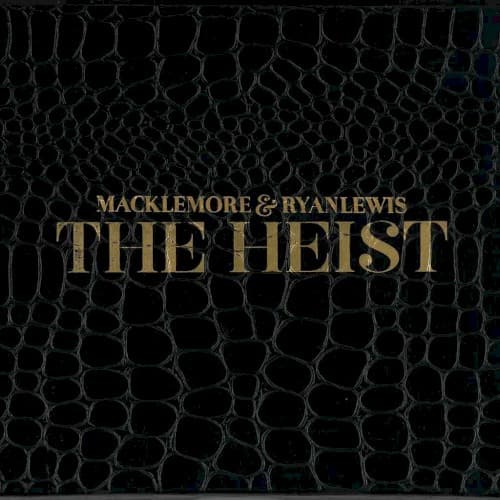
For what to hear next, Macklemore & Ryan Lewis's The Heist is the obvious comparison to understand how far the writing has moved from the early crowd-pleasing style, and Gemini is the necessary contrast to hear what Budo's steadier hand fixed. Ben is the album where the Macklemore persona finally admits it has a body, a family and a limit, and that admission is the reason it works.
Track by track
Track Listing
Chant
SolidThe opener is a calculated crowd-starter, built around a stadium-sized group refrain and a bright guest hook from Tones and I. The production, from Budo with Macklemore, is huge and rhythmic, and it announces that the old Macklemore is still available for festival crowds. The verses talk about wanting a clean start, which is enough to justify its place as an opener, but the chorus does most of the work and the writing is thin next to what follows. It is effective, a little generic, and it sets expectations the rest of the album does not meet.
No Bad Days
SolidA sunny, upbeat song with Collett that argues for gratitude and presence, directed by his young daughter in its video. The production is easy and melodic, and the message is pleasant but slightly sugary. It is the album's most radio-ready track and the one with the least edge, closer to a wellness poster than to the confession around it. Pleasant enough to hum, and the first sign of the album's sentimental streak.
1984
StandoutA nostalgia cut with production from Budo, Sam Wish and Tyler Dopps that gives the verses a driving, rolling momentum. Macklemore uses the year as an anchor to look at where he came from and what he has become, and the details feel personal. It is one of the better early cuts, a sign that he can write about memory without lapsing into slogan.
Maniac
SolidA pop-dance single with Windser that borrows club energy for a song about being out of control. It is catchy and clean, and the guest vocal is a smooth foil. It also fits awkwardly beside the confessional songs, because its glossy surface treats the same instability as something to dance to.
Day You Die
StandoutA mortality song with Sarah Barthel on the hook, and one of the album's more convincing mood pieces. The beat is restrained, the vocal is haunted, and Macklemore keeps the verses plain instead of reaching for a grand statement about death. It is among the best pairings of guest and subject on the record.
Heroes
StandoutThe strongest rap on the album, with DJ Premier's drum programming supplying a hard, clipped bounce that suits a more technical Macklemore. He rides the beat with sharper internal rhymes than almost anywhere else, and the lyric turns the idea of heroism into a critique of mythmaking rather than a flattering portrait. It is short, tight and has no wasted bars. This is the track that reminds you he can rap in the conventional sense when a beat demands it, and it is the clearest case for hearing the album on its merits instead of its singles. A highlight, and the best answer to critics who say the album lacks craft.
Grime
StandoutA mid-album verse showcase with a gritty, restless beat. Macklemore stays in a dense, quick delivery and keeps the writing blunt. It is solid more than special, the kind of track that proves the technical ability is still there.
I Need
StandoutA plain-spoken confession about dependency and need, with a minimal arrangement that lets the lines carry the weight. The honesty is clear, though the hook repeats the central idea a few times too often. A good song that rewards patience.
Lost/Sun Comes Up
StandoutThe structural center of the album and its most ambitious song, nearly six minutes long and split into two movements. The first half sits in the darker register, with a long, winding verse about being lost in addiction and the toll on the people around him, and the beat refuses to resolve. The second half, with Jackson Lee Morgan, opens into a lighter, more hopeful texture, and the shift feels earned because the first half did not rush to comfort. The writing is more detailed here than on the singles, and the arrangement uses strings and space in a way that gives the story shape. It is the track to play if you want to know what Ben is actually about. A highlight and probably the best song he has recorded as a solo artist.
Faithful
WeakA trap-leaning single with NLE Choppa that tries to widen the audience. The guest delivers a polished verse and the hook is smooth, but the song sits outside the album's emotional logic and reads as a strategic add rather than a necessary one. It is competent, forgettable and the most obvious radio gesture on the record.
Tears
SolidA short, quiet song with production from Naz and Dopps, one of the few tracks without Budo. It lets Macklemore be vulnerable about grief and fatigue without a chorus to point the way. The less-processed sound is a welcome change of texture, though it does not develop beyond its mood.
Sorry
StandoutAn apology song with Livingston that works because it is specific about what he is apologizing for instead of offering a blanket gesture. The melody is soft, the vocal is warm, and the tone avoids self-pity. Decent, if a touch long on repetition.
God’s Will
SolidA faith-and-fate meditation with Vic Daggs II that adds a gospel-leaning warmth. Macklemore questions whether a plan exists without insisting on an answer, which is a better move than the lectures he used to give. A thoughtful track with a slightly flat hook.
I Know
WeakA short, lighter track with Charlieonnafriday that reads as a breather before the closer. It is pleasant, forgettable and mostly filler between two stronger ideas.
Taillights
StandoutThe closer with Morray has the gravity the album needed at the end. The production is spare and slow, Morray's weary voice adds depth, and Macklemore's final verse ends on acceptance without a tidy resolution. It is a restrained, unguarded finish and one of the best-sequenced endings in his catalog. The song works because it does not try to win the listener back after the album's long confession; it simply closes the door gently. A highlight.