The scorecard
7.1/10 · Good
- Writing25%
- 7.0
- Production25%
- 7.5
- Delivery15%
- 7.0
- Cohesion15%
- 7.0
- Originality10%
- 7.0
- Replay value10%
- 7.0
Self-awareness and social argument give the verses real purpose, but the sermonizing in places crowds out the humor and detail that make the best tracks work.
Ryan Lewis produced every track and layers live strings, brass, piano and choir parts into arrangements that sound bigger than the budget implied.
Macklemore is clear, earnest and rhythmically comfortable, and he moves from comic to solemn without losing control, though the earnestness can tip into lecture.
Fifteen tracks swing between party songs, confessional pieces and issue records, and the album's second half loses momentum next to its front-loaded hits.
A self-released rap record that carried a marriage-equality song and a thrift-store novelty to the top of the pop charts had few precedents in its moment.
The singles are durable and the best deep cuts hold up, while the heavier message tracks reward fewer repeat listens than the lighter ones.
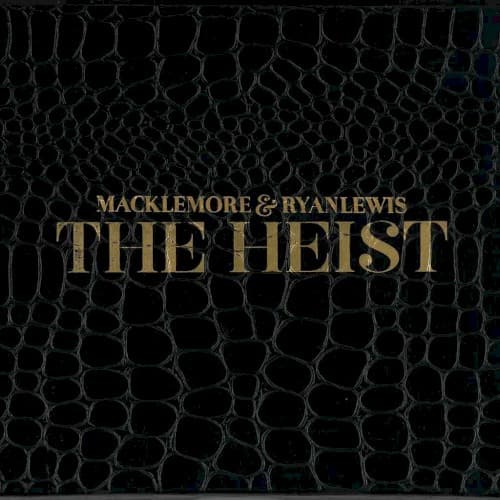
Macklemore & Ryan Lewis The Heist — The Independent Album That Beat the Machine at Its Own Game
The Heist is best understood as a business plan that happens to be a very good album. Its central achievement is not a single song but a position: a rap record made, recorded and released without a major label, that ended up at the top of the pop charts anyway. The music is why that worked, and the strategy is why it mattered. Without the strategy the album would have been a respected regional debut. With it, the record became one of the most discussed rap releases of its decade.
The facts of the release explain the argument. Macklemore & Ryan Lewis put the album out in October 2012 on their own label, Macklemore LLC, distributed through the Alternative Distribution Alliance, and the fact sheet describes it as independently self-produced, self-recorded and self-released with no mainstream promotion or support. The duo recorded it in Seattle over roughly three years. Only after release did they hire the radio promotion department of Warner Music Group, for a small percentage of sales, to help push the singles. That is a deliberate, narrow use of industry machinery, and it is the clearest sign of a career built on selective dependence instead of full independence or full surrender.
The commercial results validate the choice. The album debuted at number two on the Billboard 200 with 78,000 copies, behind only Mumford & Sons, and 83 percent of that first week came from digital downloads. Thrift Shop reached number one on the Hot 100, and Can't Hold Us followed it there months later. The album went gold within about six months and had sold roughly 1.49 million copies in the United States by early 2016. It also won the Grammy for Best Rap Album, and the duo took Best New Artist, at the January 2014 ceremony.
This review argues that the album's reputation as a calculated crossover obscures how well it is made. The production is rich, the singles are distinct from one another, and the artist is willing to be both ridiculous and sincere. Its weaknesses are real, mainly in tone and sequencing, and they are the weaknesses of an album that wants to do everything at once. The strategic reading and the artistic reading end up pointing the same way.
Live Strings, Plain Speech and a Wide Angle
The most distinctive thing about The Heist is how it sounds. Ryan Lewis is credited as producer on every song, and the personnel list shows a large cast of live musicians: violin, viola and cello, trombone and trumpet, piano, upright bass, a school choir and a string section on one track. The arrangements use these elements to fill out songs that could have been built from loops and samples alone. That richer palette gives the record a warmth and scale that most independent rap of its moment did not have, and it is the strongest argument that the album earned its reach.
The rapping is the second pillar. Macklemore writes in a clear, direct style with a good sense of internal rhyme and an ear for rhythm, and he is comfortable switching from a joke to a plea within a single song. His strength is range of subject, from thrift-store humor to personal struggle to political argument, held together by a consistent voice. That voice is sincere almost to a fault, and the sincerity is both what sets him apart from rivals and what some critics found tiring.
The weaknesses are tied to that sincerity. At its best the writing is specific and self-aware, and the praise from critics who admired its astute observations and its self-criticism is earned. At its weakest, it explains what it means. The Rolling Stone critique, that virtuousness overwhelms the more modest charms of the record, identifies a real tendency: a message track can state its position so clearly that there is nothing left for the listener to work out. The album's mix of party songs and issue songs also creates a tonal tension that the sequencing does not always manage.
Delivery works well in the context of the album's ambitions. Macklemore is not a technician in the sense of dense multisyllabic rhyme, but he is clear, rhythmic and expressive, and he lets a hook land. He is best when the material gives him something to play against, such as a brass line or a guest vocalist, and slightly less compelling when he carries a song alone.
The guest list is well chosen and mostly used with restraint. Singers and rappers appear on the singles and several of the deeper cuts, and the album gives each guest a defined role rather than letting them crowd the lead. Schoolboy Q and Ab-Soul add credibility from a different rap lane, which reads as a strategic choice as much as a creative one. The overall effect is an album that is accessible without being thin, and a debut that is more confident than most.
Front-Loaded Hits and a Slower Second Half
The Heist opens with its strongest argument. The first five tracks contain the three biggest singles in the sequence, plus a personal statement of intent, and the album moves quickly from a sincere opening to a party song, a crowd-pleaser and a political centerpiece. That is smart sequencing for a record that needed to hook a new audience quickly. Anyone who stops after the first third will have heard most of what made the album a phenomenon.
The middle of the record is more varied and less consistent. Several tracks work in the register of personal reflection or industry commentary, and a run of guest-led songs gives the ear a change of voice. The pacing here depends on the listener's interest in the specific subject of each song, and the transitions between humor and seriousness are not always graceful. A listener who came for the singles will notice the drop in momentum.
The late stretch is quieter and more personal. The closing tracks take a reflective tone, and the album ends on a lower energy than it began with, which is a defensible choice for a record about ambition and its costs but a harder sell for a casual listener. The order does give the album a shape, moving from public triumph to private reckoning, and that arc is the strongest case for the sequence as designed.
Is the length earned? Mostly, with reservations. Fifteen tracks is a lot for a debut, and the second half contains songs that would have been cut from a tighter edit. The deluxe edition adds three more, which is a business decision for completists and not a creative need. The core album is long enough that its best moments sit at the start, and its strength is that even the weaker songs are well produced. The album holds together because the production is consistent even when the writing is not.
A Debut That Changed What Independent Could Mean
No other album by this duo is rated on the site yet, so the ranking that matters is against the genre. The Heist sits in the great band for its moment, with strong production, a distinctive voice and unusually clear commercial and cultural impact, and it is held just short of essential by sequencing and tone. The scores place it around seven, a deliberate verdict that agrees with the generally positive reviews and the Metacritic average of 74 without claiming perfection.
The album is for listeners who want rap with melody, message and warmth, and who are curious about how an independent act reached the top of the pop charts. It is also an important record for anyone interested in how careers are built, because the combination of self-released music and selective industry help is a real strategy with real results. People who want dense technical rap, hard-edged street narrative or sustained darkness should skip it, as should anyone who finds sincerity grating. The jokes are good and the sermons are earnest, and the balance will not work for everyone.
As a career decision, the album is a clear success. It proved that the duo could reach a mass audience on their own terms and win major awards without a major-label launch, and it set expectations that any follow-up would have to meet. How it has aged is a mixed story, because the best singles remain strong while some of the more topical material reads as a snapshot of its moment. The sales, the awards and the Christgau placement at number seventy-two on a year-end list show how widely it registered.
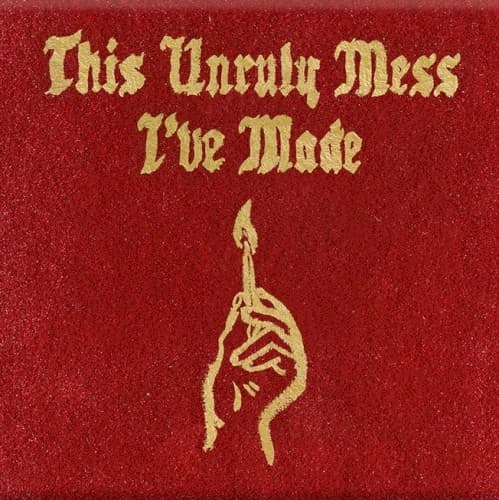
Start with Thrift Shop, Can't Hold Us and Same Love, which together show the range of the album in three very different registers. For a deeper cut, try Neon Cathedral to hear the production at its most ambitious. If you want to see what happened next, hear This Unruly Mess I've Made, the duo's follow-up, which takes the same approach into harder subject matter with less commercial luck. The most accurate way to put it is that The Heist is a record whose business model and whose music were built from the same raw material: the willingness to be unmistakably itself.
Track by track
Track Listing
Ten Thousand Hours
StandoutAn opening statement of purpose at just over four minutes, with a live-bass foundation and backing vocals that set the album's warm, hand-played tone. The title frames the record as an argument about work and persistence, and it works as a mission statement for a duo whose career was built on doing it themselves. The delivery is measured and earnest, and the production is more spacious than the party songs to come. It is a strong, honest opener, even if it is more declaration than story.
Can't Hold Us
StandoutThe second single, released in 2011, and the track that eventually reached number one for five consecutive weeks in 2013. Ray Dalton sings the hook over a horn and string arrangement with a real sense of lift, and the rapping is fast, confident and clear. It is a victory-lap song that works because the production gives it genuine momentum. The hook is the star, and the verses serve it well. It is the album's most reliable crowd-mover and a case study in how a single can grow slowly into a hit.
Thrift Shop
StandoutThe album's biggest commercial success, with Wanz on the hook and DV One on scratches. It reached number one on the Hot 100 for six non-consecutive weeks and sold over six million copies in the United States. The track's joke is sustained by a simple, bouncy beat and a clear sense of comic timing. It is the album's best argument that humor and craft can coexist, and it is an unusual number one because it sounds like nothing else on the radio.
Thin Line
SolidA guest-led track with Buffalo Madonna, running over four minutes. It shifts the album toward a more reflective register after the party songs and gives the ear a change of texture. The writing is sincere and the arrangement is restrained, though the song does not have the hook strength of the singles that surround it.
Same Love
StandoutThe third single, with Mary Lambert on the hook, released in July 2012 in support of Washington state's Referendum 74 on marriage equality. It peaked at number eleven on the Hot 100 and reached number one in Australia and New Zealand. The piano, strings and cello give the arrangement a hymn-like quality, and the verses are direct about the subject and about homophobia in hip-hop. It is the album's most significant statement, and the earnestness is a strength here because the subject deserves it. It is more speech than song in places, but it is among the most important singles of its moment.
Make the Money
SolidA short track at under four minutes with trumpet and piano, and one of the more direct treatments of the album's industry themes. It is brisk and well produced, though it does not stand out from the larger songs around it.
Neon Cathedral
StandoutFeaturing Allen Stone, with electric piano and a string section from the Seattle Rock Orchestra. This is the album's most ambitious production, and it gives the track a rich, layered sound that sets it apart from the rest of the sequence. The writing is introspective and the hook is melodic. It is a deep cut that rewards close listening and shows what the live-band approach can achieve. It deserves to be better known.
BomBom
SolidA nearly five-minute track with The Teaching, driven by live drums, upright bass and trumpet. The groove is loose and organic, and it gives the middle of the record a different energy. A solid, band-heavy cut that runs a little long.
White Walls
StandoutA fifth single in the campaign, with Schoolboy Q and Hollis, released to radio in October 2013 and eventually reaching number fifteen on the Hot 100. The track is a car-culture song with a cross-coast guest that gives the album credibility with a different rap audience. The verses have swagger and the hook is smooth. It is lighter than the album's message tracks and is an effective change of mood.
Jimmy Iovine
StandoutFeaturing Ab-Soul, and the track whose title puts industry politics directly into the tracklist. It is a pointed, rhythmically sharp cut that gives the album a harder edge. The guest verse adds contrast, and the production keeps the tempo steady. A good example of the album's career-conscious side.
Wing$
StandoutThe duo's debut single from 2011, produced by Ryan Lewis, with a choir, organ, strings and brass behind the lead vocal. At nearly five minutes it is one of the longer songs, and it uses the live ensemble more fully than almost any other track. It is an early statement of the group's themes, and it still sounds distinctive. The pacing is deliberate and the message is plain, but the arrangement carries it well.
A Wake
SolidA three-and-three-quarter-minute track with Evan Roman, in a more personal and subdued register. It is solid and sincere but sits in the part of the album where the energy is lower.
Gold
SolidA track featuring Eighty4 Fly that runs just over four minutes. It continues the album's late-stretch reflection with a clear, steady groove. Competent, though not a highlight.
Starting Over
StandoutFeaturing Ben Bridwell of Band of Horses, with guitar, trumpet and violin. This is one of the album's most personal tracks, and the guest vocal gives it a warmth and gravity that the late-album material needs. The writing is candid and the arrangement is unhurried. It is a strong, affecting track, and it makes the closing stretch worth the patience.
Cowboy Boots
SolidThe closer, with banjo, backing vocals and a gentle arrangement over just over four minutes. It brings the album to a low-key, reflective ending, which suits the record's themes of ambition and its costs. A quiet, understated finish.