Scorecard: 6.8/10 · Good
How we score- Writing(25%)
- 7.5
The title track and "Where Are They Now" deliver sharp cultural criticism, but tracks like "Play On Playa" and "Money Over Bullshit" settle for autopilot punchlines.
- Production(25%)
- 7.0
Will.i.am's rock-sample aggression on the title cut works, Kanye's soul flip on "Still Dreaming" is elegant, but Storch phones it in and the Stargate track sounds like a Kelis album leftover.
- Delivery(15%)
- 7.0
Nas raps with controlled anger on "Who Killed It?" and matches Jay bar-for-bar on "Black Republican," but coasts through the back half with a distant, disengaged flow.
- Cohesion(15%)
- 5.5
The first six tracks argue a thesis, then the album forgets what it came to say and pads out seventeen tracks with guest cameos and radio grabs.
- Originality(10%)
- 6.5
Declaring hip-hop dead in 2006 was provocative enough to start arguments across the South, but the album's actual solutions are mostly nostalgia and star power.
- Replay value(10%)
- 6.0
The title track and "Black Republican" still hit, but the bloat and the uneven back half make this an album you return to for moments, not as a whole.
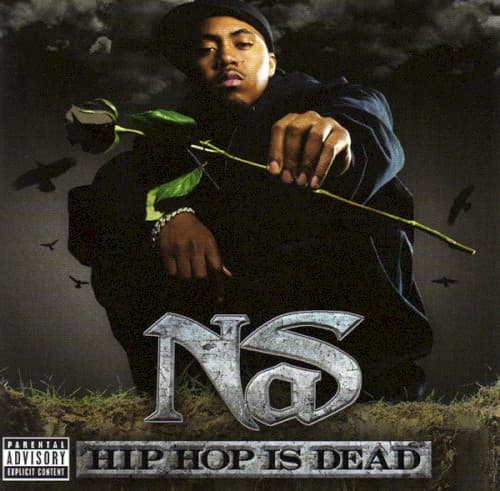
Nas Hip Hop Is Dead — The Diagnosis That Forgot the Cure
Nas spent the first half of 2006 picking a fight. He announced the title Hip Hop Is Dead from a stage in May, gave interviews about the industry's loss of power and vision, and watched Southern rappers line up to defend crunk and snap music against a perceived New York elitist. The controversy worked exactly as planned: everyone was talking about Nas again, and his first album for Def Jam debuted at number one.
The problem is that the album underneath the provocation never commits to its own argument. The first six tracks deliver the sharpest state-of-the-union address Nas had written since Stillmatic, naming names and pointing at the collapse of lyrical standards with the controlled anger of someone who watched his lane shrink. Then the album blinks.
It pads out to seventeen tracks, books guests who have nothing to do with the thesis, and ends up proving the title right by example: a bloated major-label product chasing radio spins and unearned victory laps. Hip Hop Is Dead is Nas at his most conflicted, diagnosing the disease in one breath and selling out the prescription in the next. This is not a bad album. It is a frustrating one.
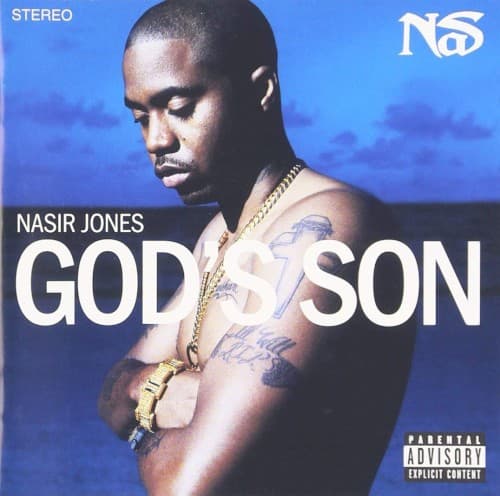
When Nas focuses on the critique, he is as precise as he has been since God's Son, and the production from will.i.am and Kanye West gives him confrontational, expensive beats that sound nothing like the boom-bap nostalgia trip you would expect from the title. The question is whether an album this unfocused can make a case that holds up past the controversy. Nas wanted to rebuild hip-hop by owning it, but he handed Def Jam and Columbia a compromise record that does not trust its own convictions.
The Sound of Saying One Thing and Rapping Another
The production on Hip Hop Is Dead splits into two camps: the confrontational first act and the comfortable second act, with almost no overlap in approach. Will.i.am handles the title track and its sequel with rock-sample aggression that was already dated in 2006 but works here because it sounds like an argument, not a party. The chop on the opening statement is blunt-force and unsubtle, exactly the tone Nas needs to bark his dissent. Kanye West contributes two tracks: one flips a Marvin Gaye sample with the kind of orchestral swell that would define Graduation a year later, and the other builds a hymn that gives Nas room to preach without shouting.
These are the album's best-sounding moments, and they share a willingness to sound expensive and serious at the same time. The rest of the producers treat this like a standard Nas album. Scott Storch delivers two tracks that could have been cut in 2003 and sound tired even for him: one recycles his own keyboard runs, and another wastes a Snoop Dogg feature on a nothing beat that belongs on a mixtape.
L.E.S. returns for four tracks, including the Jay-Z collaboration, and his stark loops are the closest the album gets to the Illmatic-era sound Nas was supposedly defending. Stargate produces a Kelis-assisted track that sounds like it was meant for her album, not his. Dr. Dre gives one cut a muted, expensive polish that does not match the energy The Game brings to the booth, and the track sags under its own production budget. The sequencing makes the tonal whiplash worse: after six tracks of argument and edge, the album pivots to guest demonstrate and radio reach, and Nas stops sounding like he believes what he came to say.
Nas raps with focus on the title track, cataloging the shift from rapping to dancing, from bars to ringtones, and he does it with enough specificity that you can see exactly what angered him. On one early cut he runs through a list of fallen peers and wonders aloud what happened to the gatekeepers, and the writing is sharp enough to sting. But by the middle stretch he has abandoned the thesis for autobiography and mood. The back half coasts on star power: the Jay-Z reunion is solid but says nothing about the state of hip-hop beyond proving that Nas can still share a booth with his former rival.
His flow on the weaker tracks is distant and automatic, the sound of a rapper who knows he can get away with less. The album needed more edges and got more polish instead.
The Argument That Quits Halfway
Hip Hop Is Dead front-loads its thesis and then forgets it. The first stretch builds a case: the opening cuts set the stakes and name the problem, and the title statement delivers the indictment. The pacing here is tight, the sequencing purposeful, and Nas sounds like he has something to prove. Then the Jay-Z reunion arrives, and the album shifts from mission to victory lap.
The feature display becomes the centerpiece of the second act, and everything afterward is either a guest display or a mood piece that has nothing to do with the title. The middle section is gorgeous at moments, but it pulls focus away from the argument. The back stretch is filler dressed up with big names, and the closing statement arrives too late to mean anything after multiple tracks of bloat.
The sequencing tells you everything about what went wrong. Nas had a tight, angry eight-track album, and Def Jam wanted a seventeen-track event. The length is not earned. The album sags in the middle, picks up briefly, and then drags through more tracks that should have been bonus cuts.
By the final stretch, the thesis is long gone, and what is left is a standard Nas album with a controversial title. The peaks are real, but the album does not trust them enough to let them stand alone.
A Diagnosis Without a Prescription
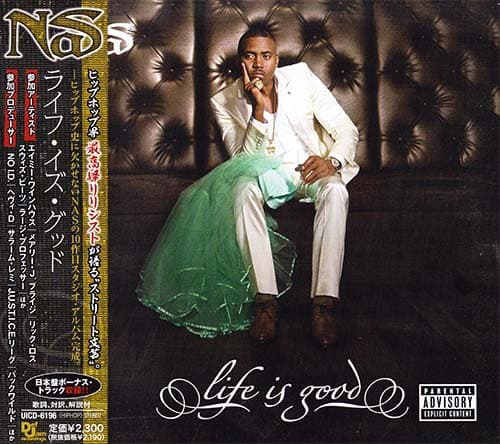
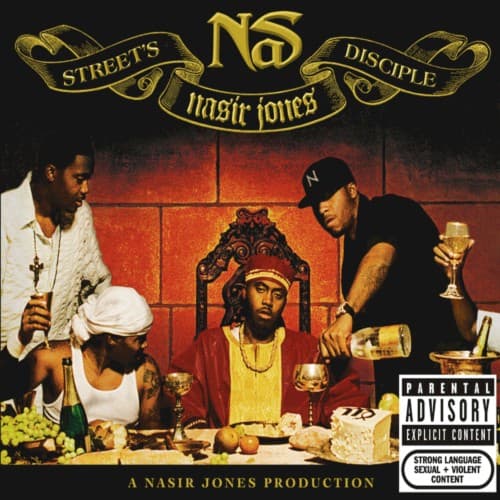
Hip Hop Is Dead ranks in the middle of Nas's catalog, better than the unfocused mess of Street's Disciple and the compromised second half of I Am, but nowhere near the focus of Stillmatic or the maturity of Life Is Good. It is his most provocative album since the Ether era, and it wastes the provocation on a tracklist that could not decide whether it wanted to fight or sell. The first six tracks are essential for anyone who wants to understand how Nas saw hip-hop in 2006, but the back half is skippable unless you are completist about his guest-verse era. The album went gold and earned a Grammy nomination, but it has aged poorly compared to the records it was arguing against: Kanye's Graduation, released the next year, proved that ambition and commercialism could coexist, while Nas gave interviews about ownership and handed in an album designed by committee.
Start with the title track, "Who Killed It?," "Where Are They Now," and "Black Republican." Those four tracks make the case the album title promised. If you want to hear Nas in a softer mode, "Still Dreaming" and "Can't Forget About You" are well-crafted even if they belong on a different album. Skip "Play On Playa," "Blunt Ashes," and "Let There Be Light" unless you are working through the whole discography. If this is your entry point to Nas, go back to Stillmatic for the focused version of this anger, or forward to Life Is Good for the version of Nas who learned to edit himself. Hip Hop Is Dead is a missed opportunity: the best argument Nas made in the 2000s, undermined by the same industry bloat he came to critique.
Track Listing
Money Over Bullshit
●An unremarkable opener that sets the tone without making a case. The L.E.S. and Wyldfyer beat is hard and spare, and Nas raps about survival and priorities, but the writing is autopilot street talk with none of the specificity the title track will bring three songs later. It works as table-setting but not much else.
You Can't Kill Me
▲Nas in defiant mode, rapping about resilience and legacy over another stark L.E.S. loop. The production is minimal, almost claustrophobic, and Nas sounds more engaged here than on the opener, but the writing is still general. It is a solid album track that gains weight from its placement in the sequence, setting up the argument to come.
Carry On Tradition
●Scott Storch recycles his own keyboard formula, and Nas follows suit, delivering punchlines about chains and credentials that sound like unused verses from It Was Written. The track is competent but inessential, a reminder that even when Nas is rapping well, he can waste a verse on nothing. Filler disguised as star production.
Where Are They Now
▲The first track where the thesis comes into focus. Nas runs through a roll call of fallen peers and disappeared voices, asking what happened to the gatekeepers and the standards they enforced. The Salaam Remi production is understated, and Nas raps with specificity and frustration, naming the shift from substance to spectacle without sounding preachy. One of the album's sharpest moments, and the track that justifies the title.
Hip Hop Is Dead
▲The argument in full. Will.i.am's rock-sample chop is blunt and aggressive, and Nas catalogs the genre's decline with the controlled anger of someone who watched his lane shrink in real time. He points at snap music, at dancing over rapping, at the collapse of lyrical ambition, and he does it with enough detail that the critique lands even if you disagree. The hook is clumsy and will.i.am's ad-libs are unnecessary, but the verse work is among the best writing Nas did in the 2000s. This is the track that started the arguments, and it earned them.
Who Killed It?
▲The sequel to the title track, with Nas and will.i.am trading blame and theories over another hard, sample-driven beat. Nas points fingers at labels, at artists, at listeners, and at himself, covering enough ground that the track feels comprehensive rather than scattershot. The production is aggressive without being overbearing, and Nas sounds locked in. The thesis peaks here, and the album never recovers its focus after this track ends.
Black Republican
▲The Jay-Z reunion, five years after the reconciliation and a decade after the peak of their rivalry. The L.E.S. beat is cold and minimal, all piano stabs and empty space, and both rappers sound sharp but not urgent. Jay raps about wealth and power, Nas matches him with his own version of the same, and the track works as a showcase but says nothing about hip-hop's state beyond proving the two can share a mic without incident. Solid craftsmanship in service of brand management.
Not Going Back
●A Kelis-assisted track that belongs on one of her albums, not here. The Stargate production is sleek and melodic, built for radio, and Nas raps about ambition and resilience in the most general terms. Kelis sounds great, the hook is catchy, and the track has nothing to do with the album's argument. A concession to Def Jam's playlist goals.
Still Dreaming
▲Kanye West flips Marvin Gaye's "Right On" with orchestral elegance, and the track soars. Chrisette Michele handles the hook, Kanye contributes a verse about his own contradictions, and Nas raps about legacy and doubt over one of the album's most expensive-sounding beats. It is beautiful, it is well-constructed, and it is Kanye's track, not Nas's. The writing is reflective rather than confrontational, and the mood shift from the title track is so extreme that the album loses its thread.
Hold Down the Block
▼A street anthem that says nothing the first seven Nas albums have not already said better. Mark Batson's production is functional, and Nas delivers the kind of block-corner talk he can write in his sleep. Filler.
Blunt Ashes
●An introspective mood piece produced by Chris Webber that has no reason to exist on this album. Nas reflects on regrets and lessons learned, and the writing is competent but generic. It belongs on a different project entirely.
Let There Be Light
●Kanye's second production is a hymn, and Nas preaches about faith and redemption over swelling organs and Tre Williams on the hook. The track is earnest and well-meaning, but it is tonally disconnected from the album's thesis and too long for its own good. Another concession to breadth over focus.
Play On Playa
▼Scott Storch wastes Snoop Dogg on a lazy, recycled beat that sounds like a rejected G-Unit track. Nas and Snoop trade verses about women and money, and neither sounds interested. The weakest track on the album by a wide margin.
Can't Forget About You
▲Will.i.am flips Nat King Cole's "Unforgettable" into a wistful nostalgia piece, and Chrisette Michele delivers the album's best hook. Nas reflects on old relationships and lost friends, and the writing is warm and specific enough to stand out in the album's bloated back half. The production is lush without being overdone, and the track works as a breather. It has nothing to do with hip-hop being dead, but it is one of the album's most complete songs.
Hustlers
●Dr. Dre's production is expensive and muted, and The Game outshines Nas on his own album. Marsha Ambrosius handles the hook with soul, The Game raps with urgency about survival and ambition, and Nas coasts through his verse with distant, disengaged bars. A well-produced track that exposes how checked-out Nas sounds when he is not arguing.
Hope
●The closing statement arrives too late to matter. Nas reflects on struggle and perseverance over a subtle L.E.S. loop, and Chrisette Michele returns for another hook. The writing is earnest and the sentiment is genuine, but after three filler tracks in a row, the album has lost the authority to end on a note of uplift. A decent song that cannot rescue the sequencing around it.
The N…
▲A bonus track that did not appear on the standard U.S. release. Salaam Remi produces, and Nas raps about reclaiming the slur and the identity it carries. The writing is defiant and the production is solid, but the track's exclusion from the main album tells you everything about how willing Def Jam was to let Nas follow his instincts.