![[untitled] by Nas album cover](/_next/image?url=https%3A%2F%2Fv8ewju5eansilllx.public.blob.vercel-storage.com%2Fcovers%2Fnas-untitled.jpg&w=640&q=75)
Scorecard: 6.6/10 · Good
How we score- Writing(25%)
- 7.5
Nas connects race, history and politics through dense imagery on America and Testify, but Project Roach devolves into cliché and several late tracks repeat the same arguments without adding new ideas.
- Production(25%)
- 6.0
Stargate and Jay Electronica deliver urgent, stripped beats on America and Queens Get the Money, but Mark Ronson's Fried Chicken sounds like a novelty and the sequencing pairs incompatible textures, making the album feel like three separate EPs.
- Delivery(15%)
- 7.0
Nas raps with measured authority on Sly Fox and Untitled, cutting through the noise, but the sung hooks on Hero and We're Not Alone dilute the urgency and Busta Rhymes sounds grafted onto Fried Chicken.
- Cohesion(15%)
- 5.5
The album opens with five focused tracks, then loses discipline: Fried Chicken breaks the tone, Project Roach is ninety seconds of filler, and the final run from Y'all My Niggas to Black President feels like tacked-on reminders rather than a resolved argument.
- Originality(10%)
- 7.0
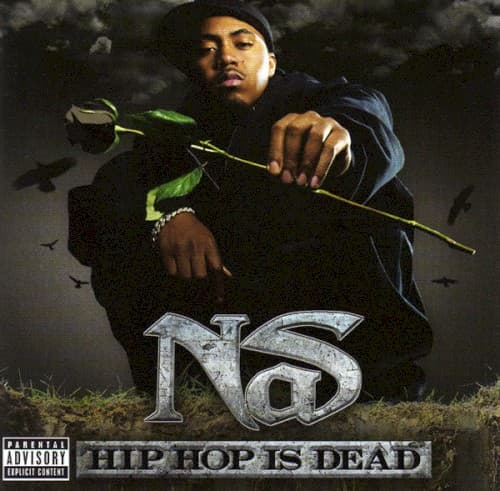
The censored title gesture and the explicit linking of Obama's candidacy to slavery's legacy on Black President gave this album a specific 2008 urgency that Hip Hop Is Dead only gestured at, even if the concept outran the craft.
- Replay value(10%)
- 6.0
The best five tracks reward focused listening, but the uneven production and the blunt repetition of the thesis across fifteen songs make full playthroughs feel like homework once the novelty of the controversy fades.
Nas Untitled — The Album That Blinked
Nas opened the summer of 2008 by daring the industry to say the word, then let the industry win. The untitled album—originally announced as Nigger before label pressure and state pension threats forced the capitulation—was meant to reclaim the slur through a concept album that tied the epithet to slavery, self-hatred and institutional racism. What arrived instead was a record with a censored title and a cover image of whip scars forming the letter N, a halfway measure that satisfied no one. The bravest gesture was the pullback itself, and that is the album's problem: it is a protest record that flinched.
The music inside the controversy is Nas at his most didactic and least patient. He wants to connect the violence of chattel slavery to the violence of mass incarceration, the failures of black leadership to the seductions of commercial rap, the hope of Obama's candidacy to the centuries of blood beneath it. The writing on the best tracks—America, Sly Fox, Testify—earns the ambition with imagery that is specific and damning. But fifteen songs is too many for a thesis this blunt, and the production, credited to ten different hands, never settles on a sound. What starts as a focused indictment ends as a diffuse sermon, and the album that wanted to force a conversation about language ends up stuck in the middle distance between courage and caution, saying more than Hip Hop Is Dead but less than it needed to.
Between Urgency and Overreach
The writing holds the album together when the production cannot. Nas connects historical racism to present conditions through layered imagery: on America he juxtaposes the founding fathers' slave ownership with modern gang violence and police brutality, making the throughline explicit without sloganeering. On Testify he flips a courtroom scene into a parable about complicity, letting the details accumulate until the verdict becomes inevitable. When he is working with concrete images rather than abstractions, the album does what God's Son only sketched—it argues rather than preaches.
But the production never commits to a direction. Jay Electronica gives Queens Get the Money a brittle piano loop that sounds like winter in Queensbridge, all space and threat. Stargate strips America down to handclaps and a single bass note, making the rage feel contained and more dangerous for it. DJ Toomp's sample flip on N.I.G.G.E.R. (The Slave and the Master) pulls soul into drone, giving Nas a backdrop heavy enough for the subject. These are the album's clearest moments, when the beat serves the argument.
Then Polow da Don arrives with Hero, a radio bid with a Keri Hilson hook that sounds designed for a different album. Cool & Dre and the Game deliver Make the World Go Round as a Chris Brown highlight, complete with AutoTune that has aged terribly. Mark Ronson turns Fried Chicken into a funk pastiche that plays like satire but lands like a skit stretched to three minutes, and Mark Batson's Testify, despite Nas's strong performance, feels slight next to the weightier production elsewhere. The album needed a single sonic vision—stic.man's stripped militancy on Sly Fox and Untitled, or Salaam Remi's soul authority on You Can't Stop Us Now—but it got a playlist.
Delivery-wise, Nas is focused when the concept demands it. He raps with clipped precision on Sly Fox, naming Fox News by name and dismantling their framing without losing his temper. On the title track Untitled he measures every syllable, making the case for reclaiming the slur with the care of a closing argument. But the sung hooks—Hero's uplift, We're Not Alone's vague optimism—soften the blow, and guest spots are wasted: Busta Rhymes barks through Fried Chicken without adding anything, and Chris Brown's presence on Make the World Go Round is pure label politics. The Last Poets deliver Project Roach as spoken word over minimal drums, and it sounds like exactly what it is: filler to pad the runtime and gesture at lineage.
When the Concept Collapsed Under Its Length
The album opens with purpose. The first three tracks form a strong run, moving from Nas's Queens authority to a historical roll call to a wider survey of black pain and resilience. The sequencing feels deliberate, building the case before naming the targets. Then the fourth song pivots to inspiration, and the album loses its shape.
The middle sags under its own seriousness. Two consecutive tracks form the album's best one-two punch, naming the enemy and connecting the dots, but they are surrounded by weaker material. One song restates the thesis that the title and cover already made, and a two-minute spoken-word break stops momentum rather than building it. By the time the album reaches the back half, Nas is repeating himself—community, loyalty, shared struggle—and the words feel like obligation rather than discovery.
The final stretch tries to recover urgency but instead stacks redundancies. One track gestures at spirituality without landing it, and the closer, which samples 2Pac and Obama speeches over somber keys, plays like a victory lap for a campaign that had not yet been won. The song has not aged well: what felt hopeful in July 2008 now reads as naive, and Nas's faith in electoral politics sounds like the weakest argument on a record that otherwise refuses easy answers. The album needed to end thirty minutes earlier, with the case made and no encores. Instead it sprawls, mistaking length for weight.
The Argument That Outlasted the Album
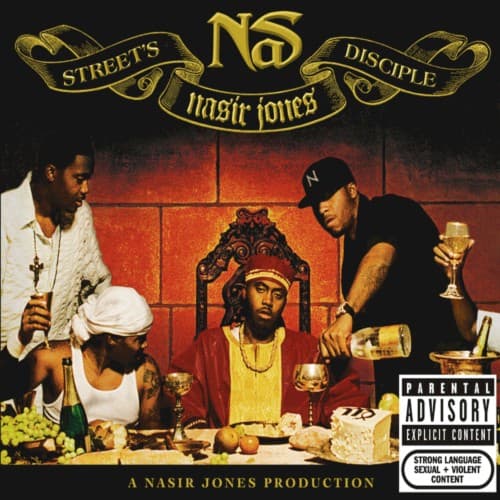
This is Nas's most politically explicit album and his least patient, a record that wanted to shame America into a conversation and ended up lecturing the already convinced. It ranks in the middle of his catalog: more ambitious than I Am and God's Son, more focused than Street's Disciple, but nowhere near the discipline of Illmatic or the craft of It Was Written. It is better than Hip Hop Is Dead because it has a thesis rather than a mood, but it is worse than Stillmatic because it never relaxes into the music. The concept overwhelms the songs, and the songs are uneven enough that the concept is all that remains.
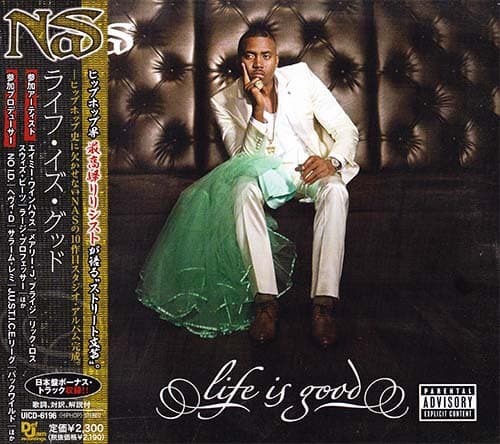
The album is for Nas completists and for listeners interested in how hip-hop engaged with race and politics in the Obama era, before the backlash and the reckoning. It is not for anyone looking for the lyrical acrobatics of early Nas or the commercial smoothness of Life Is Good. Start with America and Sly Fox to hear the album's strongest argument, then Untitled for Nas at his most careful. Queens Get the Money and Testify are worth the time. Skip the back half unless you want to hear every variation on the same point.
If this clicks, try Stillmatic for a more musically satisfying version of Nas's righteous anger, or Dead Prez's Let's Get Free for a clearer, leaner political statement that does not compromise. The untitled album is not a failure—there are six or seven tracks here that justify the controversy—but it is proof that a bold concept and a censored title do not add up to a great record. Nas wanted to reclaim a slur and indict a system. He did half of each, and the album lives in that gap, more important than it is listenable.
Track Listing
Queens Get the Money
▲Jay Electronica's brittle piano loop sets the tone: minimal, cold, all threat and no comfort. Nas opens by reclaiming his borough, connecting Queensbridge to global power through dense internal rhymes and historical references that move from ancient Egypt to modern wealth without stumbling. The verse builds authority without raising his voice, a reminder that Nas at his best does not need to shout. It is one of the album's clearest statements, proof that the concept works when the execution is surgical.
You Can’t Stop Us Now
▲Salaam Remi interpolates the Whatnauts into a rolling soul backdrop, and Nas responds with a litany of black achievement and resilience. The writing here is broad—inventors, activists, athletes, all named in quick succession—but the momentum carries it. Eban Thomas handles the sung hook without overselling it. The track works as a bridge between the album's anger and its hope, even if the list format means it lacks the specificity of the album's best moments.
Breathe
●Dustin Moore and J. Myers build a spartan beat around a single vocal sample, giving Nas room to survey police violence, poverty and survival without clutter. The writing is clear and the delivery is measured, but the track does not add much to the argument that You Can't Stop Us Now already made. It is solid without being essential, the kind of song that works in sequence but does not demand repeat listens on its own.
Make the World Go Round
▼Cool & Dre and the Game deliver a syrupy beat built for radio, and Chris Brown sings the hook with AutoTune that has aged worse than anything else on the album. Nas and the Game trade verses about loyalty and struggle, but the production undercuts any edge the writing might have had. The track feels like label compromise, an attempt to reach the audience that Hero was already chasing. It is skippable.
Hero
▼Polow da Don's drums are too clean and Keri Hilson's hook is too hopeful for an album that opened with whip scars on the cover. Nas raps about the music industry's control over artistry and the responsibility of being a public figure, but the song is structured like an inspirational single and it never reconciles that tension. The writing is serviceable but the production is pure compromise, the sound of a concept record trying to cross over. It does not work.
America
▲Stargate strips the production to a handclap and a bass note, and Nas uses the space to lay out the contradictions at the country's foundation: freedom built on slavery, democracy built on genocide, wealth built on exploitation. The writing is specific—he names the founding fathers, connects their slaveholding to modern mass incarceration, and refuses to let the mythology stand. The verse is dense enough to require multiple listens, and the beat never distracts from the argument. This is the album's thesis in four minutes, and it is the best track here.
Sly Fox
▲stic.man from Dead Prez produces a militant stomp, and Nas aims directly at Fox News, dismantling their framing of black life and calling out their fear-mongering by name. The writing is polemical in the best sense: clear, specific, uninterested in nuance because the target does not deserve it. The track works because Nas does not hedge—he names the enemy and makes the case without softening the blow. It is the album's second-best argument, and the rare moment where the didacticism feels earned.
Testify
●Mark Batson builds a minimal courtroom scene in sound, and Nas flips the perspective: the accused becomes the witness, the system becomes the defendant. The writing is clever without showing off, letting the structure do the work. But the production feels slight compared to the weight of America or the fury of Sly Fox, and the track ends before the idea fully develops. It is a good concept that needed another verse or a heavier beat to land with force.
N.I.*.*.E.R. (The Slave and the Master)
●DJ Toomp flips a soul sample into something darker, giving Nas a backdrop heavy enough for the album's central argument: the slur as a tool of oppression and the attempt to reclaim it as an act of resistance. The writing here is careful, tracing the word's history and its present-day use without flinching. But the track also restates what the title controversy and the cover image already communicated, and by the album's halfway point the thesis is clear. This feels like redundancy, even if the execution is strong.
Untitled
▲stic.man delivers sparse drums and a single piano line, and Nas uses the space to make his most measured case for reclaiming the slur. The verse is calm, methodical, and specific—he walks through the logic without raising his voice, trusting the argument to carry itself. It is the most successful version of the album's thesis because it does not overreach. The track works as a counterpoint to the fury of Sly Fox and the density of America, proof that Nas can modulate his approach when the moment requires it.
Fried Chicken
▼Mark Ronson builds a funk pastiche that sounds like satire, and Nas and Busta Rhymes trade verses about stereotypes, fast food, and self-hatred. The concept—using fried chicken as a symbol of both cultural pride and exploitation—could work, but the production is too playful and Busta's performance is too cartoonish. The track breaks the album's tone and plays like a novelty, the weakest moment in the back half.
Project Roach
▼The Last Poets deliver spoken word over Eric Hudson's minimal drums, and it sounds exactly like what it is: a gesture at hip-hop's lineage that adds nothing to the album's argument. At under two minutes it is filler, a placeholder that stops momentum rather than building it.
Y’all My Ni**as
●J. Myers delivers a looped soul sample, and Nas raps about loyalty, community, and shared struggle. The writing is competent but the track restates ideas the album already covered on You Can't Stop Us Now and Breathe. By this point the concept is exhausted, and the song feels like obligation rather than discovery. It is not weak, but it is unnecessary.
We’re Not Alone
●stic.man builds a hazy, slow-motion backdrop, and Mykel sings a hook about faith and resilience. Nas raps about spirituality and collective survival, but the writing is vague compared to the specificity of the album's best tracks. The song gestures at hope without earning it, and at nearly six minutes it drags. The sequencing is wrong—this should have been cut or moved earlier, not placed in the final stretch where the album needs to close, not drift.
Black President
●DJ Green Lantern layers 2Pac's I Wonder If Heaven Got a Ghetto over Obama speech samples, and Nas closes the album by connecting Obama's candidacy to the centuries of violence and hope that preceded it. In July 2008 this felt urgent; in hindsight it feels naive, a victory lap for a campaign that had not yet faced the backlash. The song has not aged well, and the optimism undercuts the album's sharper arguments. It is a weak ending for a record that wanted to indict rather than inspire.