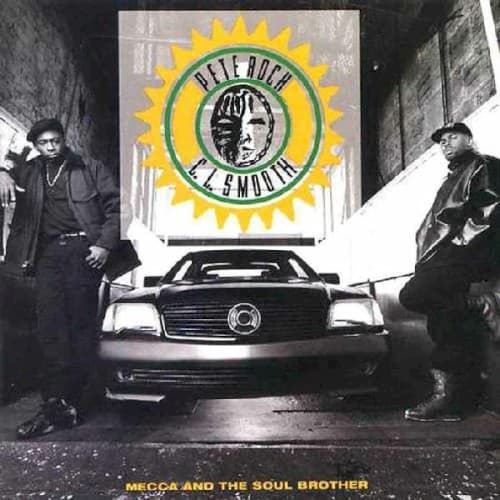
Pete Rock & CL Smooth Mecca and the Soul Brother — The Album That Proved Jazz and Hip-Hop Were Always the Same Language
No other 1992 release treated soul samples like sacred text the way this album did. While West Coast G-funk dominated radio and hardcore boom bap owned New York streets, Pete Rock sat in his basement with a SP-1200 and a crate of records his father probably bought new, building something that sounded like neither coast and both at once. He was not flipping samples. He was having conversations with them, letting horn sections breathe between kick drums, trusting empty space the way most producers feared it.
CL Smooth arrived with a different kind of confidence. No battle scars in his voice. No street corner bravado. Just the calm authority of someone who had read books, lived in the world, and decided that intelligence was not something to hide behind slang.
His delivery moved like a man walking through his own neighborhood at dawn — unhurried, observant, present. Every bar landed on beat without sounding locked to a grid.
The duo's chemistry came from opposite energies meeting at the exact right time. Pete Rock's production philosophy leaned toward warmth and texture, building tracks that felt like autumn afternoons. CL Smooth wrote like someone documenting his generation's interior life, the thoughts that came after the parties ended and the block quieted down.
What happens when a producer and an MC both refuse to rush? When neither chases trends or dumbs down their vision for radio play? Mecca and the Soul Brother answered that question by ignoring it entirely, creating a sound so complete that arguing about its greatness feels like arguing about whether water is wet.
The Sound of a Producer Who Refused to Compete
Pete Rock's genius lives in restraint. While DJ Premier was chopping breaks into machine-gun patterns and RZA was building grimy dungeons from dusty vinyl, Pete Rock let his samples exist as full thoughts. Horn stabs from Tom Scott records, bass lines from Cannonball Adderley sessions, drum breaks that felt live even when looped — he treated every element like a band member, giving each room to solo. His mixing philosophy favored warmth over punch, preferring tracks that felt like sitting in a room with musicians instead of standing in front of speakers.
The SP-1200's twelve-second sample time forced creativity, but Pete Rock turned limitation into signature. He built entire atmospheres from brief instrumental phrases, looping them so smoothly that seams disappeared. No jarring transitions. No awkward chops.
Just sound that rolled forward with the momentum of a river. Eddie Harris, James Brown, George Benson — he pulled from jazz and soul catalogs like a historian, always digging past the obvious breaks everyone else had already flipped.
CL Smooth's vocal approach matched the production's elegance. His flow moved in long, considered phrases, rarely breaking for breath, never sacrificing clarity for speed. He wrote about gentrification, broken families, nostalgia, ambition, and everyday survival without once sounding preachy or desperate for validation.
The content stayed rooted in Afrocentric pride without the heavy-handedness that dated other conscious rap from the era. His voice carried weight because it never tried to sound heavy.
But is the album perfect? The back half includes moments where the formula grows predictable, where another jazz loop and another smooth verse starts feeling like exactly what you expect. A few cuts lack the spark that makes the standouts essential.
When you have already heard Pete Rock build three gorgeous soundscapes in a row, the fourth one needs to do something different or risk sounding like an exercise. Some tracks here sound like exercises.
Still, the duo's commitment to their aesthetic created a template that underground rap would mine for decades. No hard drums. No aggressive posturing. Just two artists trusting that craft and soul would be enough.
The Journey Through Mecca's Neighborhood
The opening stretch establishes dominance immediately, three tracks that announce arrival without raising voices. Pete Rock's production moves from triumphant to playful to introspective before CL Smooth has even finished introducing himself. By the time the fourth track arrives, the album has already made its case — this will not sound like anything else competing for your attention in 1992.
The middle section shifts into social commentary and personal reflection, the duo's ambition expanding beyond pure vibes into actual statements. Tracks here build on the foundation without repeating it, Pete Rock varying his palette enough to keep momentum alive. Then everything stops for the album's centerpiece, a moment so complete that the tracklist could have ended there and the album would still be considered essential.
The back half struggles with sequencing. After reaching an emotional peak midway through, the remaining cuts feel like they are working to justify their existence rather than extending the narrative. A few tracks coast on formula where earlier moments innovated. The album does not collapse, but it does lose the tightness that made the first half feel inevitable.
Why This Belongs in Every Serious Collection
Within Pete Rock's catalog, Mecca and the Soul Brother sits at the peak. His later work explored other textures and partnered with other voices, but nothing matched the cohesion and vision of this debut. As a producer, he would refine his technique, but he would never again find an MC who complemented his sound this perfectly. CL Smooth's subsequent solo work proved he could stand alone, but the magic required both of them in the same room at the same time.
This album rewards patient listeners. Fans who need aggressive drums and combative energy will find little here. This is for people who want hip-hop that breathes, that trusts silence, that values mood as much as bars.
Put this on during a long drive and it will soundtrack the entire trip without once demanding you skip forward. That quality — the ability to exist as a complete listening experience rather than a collection of singles — feels rarer every year.
Essential tracks to start with: the opening statement, the fourth track's easygoing groove, and the centerpiece ballad that every hip-hop fan already knows. For similar albums, check the jazzy introspection of A Tribe Called Quest's The Low End Theory, the soulful depth of The Pharcyde's Bizarre Ride II, or the laid-back intelligence of Digable Planets' Reachin'. Pete Rock's influence echoes through everyone from 9th Wonder to J Dilla, producers who learned that soul samples and careful sequencing could build entire worlds.
Twenty years later, this album sounds exactly like 1992 and completely timeless at once. The production has not aged because warmth never goes out of style. CL Smooth's writing has not dated because intelligence and reflection remain rare enough in hip-hop to feel fresh whenever they appear.
Very few albums achieve what this one did — making thoughtfulness sound effortless, making jazz rap sound essential, making an entire aesthetic feel like the only logical way forward. And then the culture moved in a completely different direction, leaving this perfect document behind like a message in a bottle.
Track Listing
Return of the Mecca
▲The horn stabs hit like an announcement, Tom Scott samples flipped into a fanfare that demands attention without aggression. Pete Rock builds the beat around space, letting each element breathe before the next one enters. CL Smooth opens with the confidence of someone who already knows he belongs, no introduction necessary, just pure arrival. His flow rides the pocket perfectly, never rushing, every syllable landing exactly where it should. The way he weaves Afrocentric pride into conversational bars makes the content feel lived-in rather than studied. This is how you open an album when you have nothing to prove and everything to show. No weak moments. No wasted bars. Just a statement of purpose executed with surgical precision.
For Pete's Sake
▲An instrumental interlude that showcases Pete Rock's ear for melody and texture. The bassline walks like a jazz musician soloing at midnight, while horn loops float overhead like smoke in a dim club. This is not filler. This is Pete Rock proving he can hold attention without an MC, building atmosphere that most full songs cannot match. The SP-1200's grit gives everything warmth, a lo-fi quality that modern digital production cannot replicate. Forty seconds in, a piano phrase enters and the entire track shifts into a different emotional register, demonstrating the kind of compositional thinking that separated Pete Rock from every other producer mining jazz records in 1992. This earns its two minutes.
Ghettos of the Mind
▲The Cannonball Adderley flip here sounds like sunlight through a window, warm and golden and slightly faded. Pete Rock's drums knock without overwhelming the sample, a delicate balance that lesser producers would have ruined by overcompensating. CL Smooth uses the track to explore internal struggle and systemic oppression without sloganeering, his writing sharp enough to make points without underlining them. The way he connects personal memory to larger social commentary demonstrates the kind of lyrical maturity that most rappers never develop. The hook works without being catchy, a repeated phrase that anchors the song without pandering. This could have been a single in an alternate universe where radio played intelligent rap.
Lots of Lovin'
●The most playful cut on the album, a G-funk-adjacent groove that Pete Rock builds around a bouncing bassline and hand claps that sound like a party in progress. CL Smooth shifts into smoother, more relaxed territory here, writing about romance and good times without falling into corny territory. The beat has levity that the earlier tracks avoided, proof that the duo could loosen up without losing their identity. It is not a throwaway, but it is not essential either. The kind of track that works in sequence but would not make a best-of compilation. Still, the production alone justifies its existence, Pete Rock's ear for melody doing heavy lifting when the content stays light.
Act Like You Know
▲A direct challenge to anyone sleeping on their skills, the kind of track that walks the line between confidence and aggression without tipping into battle rap. The bassline here is monstrous, a low-end rumble that anchors everything while Pete Rock layers horn stabs and vocal samples overhead. CL Smooth's flow tightens up, his delivery more forceful than usual, proving he can match energy with the harder-edged rappers dominating 1992 without abandoning his style. The scratches hit at exactly the right moments, Pete Rock's DJ instincts elevating transitions that other producers would have left flat. This is the track to play for someone who thinks CL Smooth sounds too soft.
Straighten It Out
●A posse cut that brings in Rob-O and Grand Puba, turning the album into a brief showcase for the wider Soul Brother crew. Pete Rock's beat here leans harder than most of the album, drums hitting with more punch, the sample work slightly rougher around the edges. CL Smooth holds his own against the guest verses, but the track exposes a minor weakness — when surrounded by other voices, the album loses some of its cohesion. Grand Puba's verse is solid but shifts the tone slightly, his delivery more aggressive than CL's usual approach. Still, the energy stays high and the production remains impeccable. A necessary palette cleanser before the album returns to its core sound.
Soul Brother #1
▲The title track beyond the remix, a pure celebration of Pete Rock's production prowess. The jazz loop here is immaculate, a piano-and-horn combo that sounds like it was recorded live in the studio rather than sampled from a 1970s record. CL Smooth delivers some of his sharpest writing, weaving references to hip-hop history and personal achievement into bars that never feel like résumé-reading. The way Pete Rock chops the break demonstrates his understanding of rhythm and momentum — every drum hit lands with purpose, nothing wasted, nothing excessive. This would have been a standout on most albums. Here it is simply another example of what happens when two artists operate at the peak of their abilities.
Wig Out
●An instrumental that lets Pete Rock stretch into slightly darker territory, the sample work moodier than the album's earlier interludes. The drums hit harder here, a heavier snare giving the track more bite. This feels like a late-night vibe, something to play when the energy has shifted from celebration to contemplation. It earns its place by offering contrast, proving Pete Rock could build atmosphere in multiple emotional registers. Not essential, but not skippable either.
Anger in the Nation
▲A three-part suite that addresses systemic racism, police brutality, and generational trauma with the kind of lyrical weight that most conscious rap attempts and fails to achieve. CL Smooth's writing here is remarkable, moving from broad social critique to personal anecdote to direct address without once sounding preachy or didactic. Pete Rock's production shifts across the track's movements, the beat evolving as the content deepens. The way the duo structures this as a journey rather than a single statement demonstrates ambition that few hip-hop albums in 1992 could match. This is the kind of track that proves hip-hop can carry serious content without sacrificing artistry. The emotional weight here is real, the anger justified, the execution flawless.
They Reminisce Over You (T.R.O.Y.)
▲The single greatest Pete Rock production ever committed to wax, a tribute to the duo's fallen friend Trouble T-Roy that transcends its dedication to become a universal meditation on loss and memory. The horn loop from Tom Scott and the Californian Dreamers' "Today" is so perfectly chopped that it sounds like Pete Rock composed it from scratch. Every element serves the emotion — the drums knock without overwhelming, the bassline supports without dominating, the sample breathes with a melancholy that words cannot capture. CL Smooth delivers his finest performance, writing that balances specific detail with universal feeling, his voice carrying grief without breaking. The way he structures the verses, moving from childhood memories to the present moment, demonstrates storytelling skill that most novelists would envy. This is the track that defines the album, the song that casual fans know even if they have never heard another Pete Rock & CL Smooth cut. Thirty years later, it still hits exactly the same way, proof that real emotion never ages. Perfect.
On and On
●The transition back from the album's emotional peak is graceful, Pete Rock building a mid-tempo groove that allows breathing room after the previous track's weight. CL Smooth returns to more general lyrical territory, writing about perseverance and skill without forcing profundity. The beat rides a simple loop, effective but not memorable, the kind of track that serves the album's flow without demanding attention on its own. Solid but not essential. After reaching such heights, returning to standard album material feels slightly anticlimactic, though the execution remains clean throughout.
It's Like That
●A harder-edged moment that finds CL Smooth in battle mode, his delivery more aggressive without abandoning the measured flow that defines his style. Pete Rock's beat here is stripped-down and punchy, focusing on drums and a minimal sample that creates space for the vocals to dominate. This is the duo proving they can operate in multiple registers, that their jazz-rap aesthetic does not prevent them from going head-to-head with harder acts. The track works, but it also exposes a minor limitation — when CL Smooth tries to sound tough, he loses some of the effortless authority that makes his calmer moments so effective. Still, the production carries it, and the variety helps the album's back half from becoming monotonous.
Can't Front on Me
●CL Smooth addresses critics and doubters directly here, the content more defensive than the album's earlier confidence suggested necessary. Pete Rock's production stays solid, a mellow groove built around a tasteful sample and understated drums, but the track lacks the spark that made earlier cuts essential. This feels like an album track in the truest sense — competent, professional, but not memorable. The hook does not quite land, and the verses, while technically proficient, do not offer the insight or storytelling that defined the album's peaks. It belongs in the sequence but would not be missed on a shorter tracklist.
The Creator (remix)
●A reimagining of an earlier release, the remix treatment giving Pete Rock's production a slightly different texture without fundamentally altering the track's identity. The beat is excellent, layered and warm, but coming this late in the album it does not register with the impact it might have had earlier. CL Smooth delivers solid verses, his writing focused on artistic integrity and creative vision, but the content feels familiar after an album's worth of similar themes. This is the kind of track that hardcore fans appreciate for the craftsmanship while casual listeners skip past. Not weak, just redundant at this point in the tracklist.
Mecca and the Soul Brother (remix)
●The title track returns in alternate form, Pete Rock reworking the production with a slightly different sample flip and drum pattern. The changes are subtle enough that back-to-back listens reveal the differences but casual listening blurs them together. CL Smooth's performance remains strong, his verses carrying the same intelligence and precision that defined the original. But placing a remix of an earlier album track this deep into the sequence feels like padding, a choice that weakens the tracklist's momentum rather than enhancing it. The execution is flawless, but the inclusion feels unnecessary. Die-hard fans of the duo will study the production differences; everyone else will wonder why this is here instead of a new idea.
The Basement
●The album's longest track, a six-minute-plus deep cut that finds the duo stretching out and experimenting with structure. Pete Rock's production here is looser, less focused on hooks and more interested in creating a sustained vibe. CL Smooth rides the beat with long verses that meander through various topics without a strict narrative thread, his flow relaxed to the point of drowsy. This is a basement-tape vibe made official, the kind of track that rewards attentive listening but does not demand it. At this point in the album, the length works against it — after an hour of material, six minutes feels indulgent. Strong enough to justify its existence, not strong enough to escape the skip button on repeat listens.
If It Ain't Rough, It Ain't Right
▲A late-album banger that argues for authenticity and credibility in hip-hop, CL Smooth's verses more pointed than usual. Pete Rock's beat here is excellent, a hard-hitting groove that balances the album's jazzy aesthetic with legitimate knock. The drums punch harder than most of the preceding tracks, a reminder that the duo could compete sonically with the harder-edged acts dominating New York in 1992. This should have appeared earlier in the tracklist where its energy would have provided better contrast. Buried this deep, it arrives too late to shift the album's momentum. Still, the production alone makes it worthwhile, Pete Rock proving once again that his range extended beyond mellow vibes.
Skinz
▼The album closes with its weakest moment, a sex rap that feels completely out of character for a duo that spent seventeen tracks building a reputation for intelligence and substance. CL Smooth's writing here is competent but uninspired, the kind of content that every rapper in 1992 felt obligated to include. Pete Rock's beat is solid but unremarkable, a serviceable groove that does nothing to elevate the mediocre content. After an album that proved hip-hop could be soulful, thoughtful, and emotionally resonant, ending on a track about casual sex feels like a failure of nerve, a concession to commercial expectations that the rest of the album confidently ignored. This is the track that prevents a perfect score, a misstep that reminds you even great artists make questionable decisions.