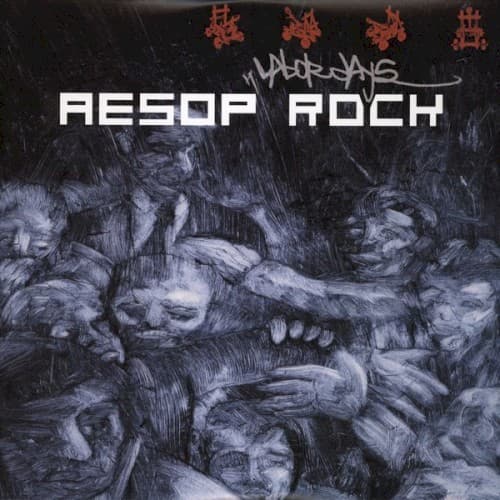
Aesop Rock Labor Days — When the Underground Declared War on Day Jobs
Remove this album from the timeline and the entire second wave of backpack rap loses its manifesto. Before Labor Days, underground hip-hop wanted validation from the mainstream — wanted Hot 97 spins, wanted TRL slots, wanted the industry to notice. Aesop Rock walked into Definitive Jux's concrete basement in 2001 and recorded forty-seven minutes that said fuck all that.
This is the album that turned alienation into philosophy and the nine-to-five grind into dystopian poetry. While Rawkus was chasing major-label distribution deals and trying to make conscious rap palatable for suburban moms, Def Jux built an entire aesthetic around refusing to be understood.
The timing matters. By 2001, the indie boom was dying. Company Flow had dissolved. Mos Def and Talib Kweli were flirting with crossover appeal.
The underground needed someone willing to be truly underground — not as a stepping stone but as a destination. Aesop delivered production so gray and claustrophobic it sounded like commuter trains at dawn, and verses so dense they required three listens just to parse the syntax. This was not accessible. It was not trying to be.
Does anyone outside the true believers actually enjoy listening to this front to back? That question haunted the album's reception then and still lingers now. Critics praised the ambition while admitting they had no idea what half the bars meant. Fans memorized entire verses without fully decoding them. The album sold enough to prove a market existed for rap this uncompromising, but never enough to threaten the charts.
Concrete Basements and Thesaurus Raps
Blockhead and Aesop himself handle most of the production, constructing beats that sound like industrial equipment breaking down in slow motion. The sonic palette is all minor keys, dusty piano loops chopped into anxious fragments, drum breaks that shuffle instead of knock. Nothing here bumps. Nothing here is designed for clubs or car stereos.
These are headphone beats for fluorescent-lit cubicles and late-night city bus rides. The opening title track uses what sounds like factory machinery as percussion. Blockhead's work throughout treats melody like an inconvenience, burying it under layers of atmospheric grime. When a hook does emerge, it arrives distorted and half-swallowed, as if the album itself resents being catchy.
Lyrically, Aesop writes like someone trying to cram a novel into sixteen bars. His vocabulary is famously dense — the man uses words most rappers need dictionaries to define — but the real trick is how he weaponizes abstraction. He rarely says anything directly. Instead he builds elaborate metaphorical systems where office drones become sci-fi villains and minimum-wage shifts become existential crises.
The perspective is second-person imperative, hectoring and urgent, like a manifesto read at gunpoint. His voice is nasal and deliberately unmusical, prioritizing enunciation over melody. When he does attempt singing, it sounds like someone who has never heard R&B trying to reverse-engineer a hook.
The album's greatest weakness is its own density. There are stretches where the wordplay becomes so tangled it collapses into noise, where the listener gives up trying to decode and just lets the syllables wash over them. That might be intentional — Aesop has said he writes to be felt as much as understood — but it also means whole songs can vanish from memory despite multiple listens.
The lack of dynamic range becomes exhausting. Every track feels equally urgent, equally claustrophobic, until urgency itself becomes monotonous. Can you maintain focus when nothing ever shifts gear or offers breathing room?
Thematically, Labor Days is a concept album about work under late capitalism, examining alienation, wage slavery, creative compromise, and the impossibility of authentic selfhood when your labor is owned by someone else. It is also about art as the only meaningful resistance to that system, which gives the whole project a self-righteous undertone that either resonates completely or grates immediately. There is no middle ground with this album. You either submit to its vision or bounce off entirely.
The Grind From Opening Bell to Clock-Out
The sequencing mirrors a workweek's psychological arc — the dread of Monday morning, the grind of midweek repetition, the fleeting hope of Friday, the hollow freedom of weekends spent too tired to do anything meaningful. The first stretch hits like alarm clocks you cannot silence, establishing the album's grey-sky aesthetic immediately and refusing to let up. By the middle section, the pacing shifts from frantic to suffocating, trading speed for weight. Tracks bleed into each other not through interludes but through sheer thematic consistency, each one another cubicle in an endless office hallway.
The back half introduces moments of near-hope before crushing them. The closing run offers no resolution, no escape, just the knowledge that Monday comes again. The sequencing is meticulous in its bleakness, constructing an emotional journey with no redemption arc. Some will call that honest.
Others will call it exhausting. The album understands that work does not end, it just pauses long enough for you to dread its return. The flow reflects that — relentless, cyclical, designed to trap you in the loop.
The Blueprint for Staying Underground Forever
In Aesop Rock's discography, Labor Days sits near the top — less playful than None Shall Pass, more focused than Bazooka Tooth, the purest distillation of his early vision. This is the album where he figured out what he wanted to say and said it without compromise. Fans of dense, literary rap who treat lyrics like puzzles will find this endlessly rewarding. Casual listeners expecting hooks or groove will bail before track three.
If you need your hip-hop to nod your head to, this is not it. If you need your hip-hop to make you feel smart for decoding it, this is your Bible.
The album aged gracefully by never trying to sound current. In 2001 it sounded like it was recorded in a bunker. In 2025 it still sounds like it was recorded in a bunker. The claustrophobia is timeless.
The critiques of wage labor have only become more relevant as gig economy hellscapes and algorithmic management have replaced traditional nine-to-fives. Younger listeners discovering this now report the same experience fans had in 2001 — three listens of confusion followed by sudden clarity, followed by obsessive repeat plays.
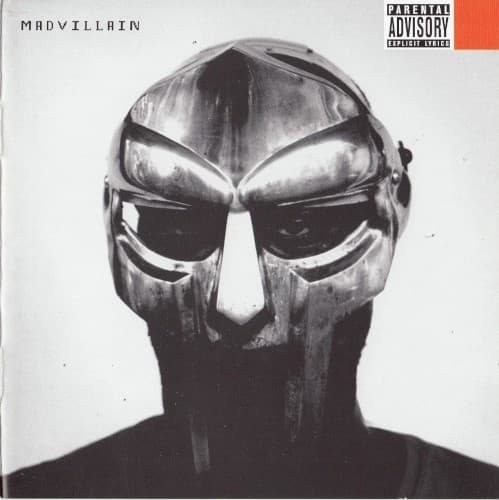
Essential tracks to start with: the title opener, the bleak anthem in the middle section, the narrative storytelling standout. Similar albums worth exploring: Cannibal Ox's The Cold Vein for more Def Jux dystopia, Themselves' The No Music for equally abstract paranoia, Billy Woods' Known Unknowns for contemporary descendants of this sound. Labor Days influenced an entire generation of underground rappers to prioritize vision over accessibility, for better and worse. Every art-rap album that followed — from Madvillainy's playful abstraction to Atrocity Exhibition's fractured chaos — owes something to this blueprint.
This is not the album you play at parties. It is the album you play alone at three in the morning when the weight of another workweek ahead feels unbearable. It offers no solutions, no comfort, just the cold acknowledgment that you are not crazy for hating this. Sometimes that is enough.
Track Listing
Labor
▲The album opens with mechanical clanking and a beat that sounds like factory equipment grinding gears. Aesop's voice enters mid-thought, already agitated, establishing the record's central thesis in the first eight bars — work is not noble, it is theft of your finite hours on earth. The production is skeletal, just drums and dissonant keys, leaving space for his syllable-dense verses to breathe. No hook, no relief, just a mission statement delivered with the urgency of someone who knows most listeners will not make it past the intro. The choice to open this way is confrontational, daring you to keep listening.
Daylight
▲The closest thing to a single this album offers, built around a hypnotic piano loop and one of Aesop's few actual choruses. The beat shuffles rather than knocks, Blockhead layering strings that sound like they are drowning under water. Lyrically it contrasts the optimism of daytime creativity with the paranoia of night, though Aesop's delivery makes both sound equally threatening. The hook is sticky in spite of itself, repeating a simple mantra until it burrows into your skull. This was the song that introduced thousands of listeners to Aesop's style, which means it is also the song that made thousands of listeners realize they were not ready for the rest of the album. The music video — animated, surreal, vaguely unsettling — became a minor MTV2 fixture and briefly suggested this project might cross over. It did not.
Save Yourself
▲A paranoid spiral disguised as advice. The production is all jittery hi-hats and bass that rumbles just below audible range, creating a sense of unease that never resolves. Aesop's flow here is jagged, full of internal rhymes that trip over themselves in their rush to get out. He is warning someone — maybe himself, maybe the listener — about the dangers of compromise, of letting the system grind you down into something unrecognizable. The second verse contains some of his most vivid imagery, painting wage slavery as a slow-motion apocalypse. No hook again, just two long verses and an outro that fades like someone walking away mid-sentence.
Flashflood
●The beat here feels waterlogged, everything submerged under murky production that makes the whole track sound like it is playing from the bottom of a well. Aesop's voice is mixed lower than usual, forcing you to lean in and strain to catch the wordplay. The subject matter is drowning — literal and metaphorical, personal and societal — and the production mirrors that sense of going under. This is one of the album's more abstract moments, where even fans who have memorized the lyrics admit they are not entirely sure what the narrative is. The effect is more atmospheric than intellectual, using sound to convey panic rather than relying on literal meaning.
No Regrets
▲The album's narrative centerpiece and its most emotionally direct moment. Aesop tells the story of Lucy, an artist who spends her entire life painting in obscurity, never selling a piece, never seeking recognition, dying alone with her work unseen. The production is somber, built around a melancholy piano loop that actually resolves into something resembling a melody. The storytelling is linear and clear, a rarity on an album this dense, and the final image — Lucy's paintings discovered after her death, finally appreciated when she cannot know it — hits with devastating simplicity. This is the track skeptics point to when they claim Aesop can write accessible songs when he wants to. It is also the track that proves he usually chooses not to. The contrast between this and the rest of the album is jarring, which might be the point.
One Brick
●Aesop and Slug from Atmosphere trade verses over a minimal beat that sounds like it is missing half its elements. The chemistry is awkward — Slug's more conversational style clashes with Aesop's density — but the thematic fit is perfect, both of them examining the futility of individual resistance in a system designed to crush it. Slug's verse is the more grounded of the two, rooted in concrete detail, while Aesop spirals into abstraction. The track ends abruptly, no resolution, like a conversation that got too heavy and both parties just walked away.
The Tugboat Complex Pt. 3
●The beat here is lopsided, drums hitting off-kilter like someone stumbling uphill. Aesop's flow is equally unsteady, lurching between rapid-fire bursts and sudden pauses. The content is self-lacerating, examining his own failures and contradictions as an artist trying to critique a system he is still part of. The title references earlier installments in his discography, suggesting this is part of an ongoing internal dialogue. The track never quite coheres, which might be intentional — the tugboat as metaphor for something pulling you in directions you do not want to go, never quite reaching shore. Some will hear this as brilliant and messy. Others will just hear messy.
Coma
●A two-minute interlude that barely qualifies as a song. Aesop whispers over what sounds like a EKG monitor beeping in the background, the production so minimal it feels like negative space. The lyrics are fragments, half-thoughts, the verbal equivalent of fading in and out of consciousness. This works as a palate cleanser, a moment to breathe before the album's second half kicks in, but on its own it is more interesting as concept than execution.
Batttery
▲The second half opener, and the album's angriest moment. The production is harsh, drums mixed so loud they distort, bass frequencies that rattle speakers. Aesop's delivery is relentless, no breaks, no pauses, just verse after verse of venom directed at the machinery of capital. The wordplay here is dizzying, dense enough that even dedicated fans admit needing lyric sheets to catch everything. The title misspelling is never explained, which feels very on-brand for an album this willfully obscure. This is exhausting in the best way, a controlled detonation of frustration that refuses to let up until the beat cuts.
Boombox
▲The production nods to old-school boom bap, which makes this one of the more traditionally hip-hop moments on the album. Blockhead flips a dusty soul sample, chops it into stuttering loops, and lets Aesop ride the pocket with a flow that is almost relaxed by his standards. The subject is nostalgia for a version of hip-hop that prioritized craft over commerce, which was already a tired argument in 2001 but Aesop sells it through sheer conviction. The hook is sung — badly, purposefully — and somehow works because the off-key warble matches the lo-fi aesthetic. This track could have appeared on a Def Jux compilation and fit perfectly.
Bent Life
▲Aesop examines the slow contortions people undergo to fit into systems that were never designed for them. The beat is claustrophobic, all sharp angles and uncomfortable silence, leaving too much space for the words to land heavy. His flow here is elastic, bending around the beat in ways that mirror the title's concept. The imagery is vivid — bodies twisted into cubicle shapes, minds reshaped to accept the unacceptable. No resolution, no hope, just documentation of the damage.
The Yes and the Y'all
▲A head-nod moment, relatively speaking. The production here is the album's grooviest, built on a bassline that actually moves and drums that hit on the beat instead of around it. Aesop's flow loosens up, more conversational, though the content is still dense enough to require multiple listens. This feels like a concession to accessibility without actually compromising the album's vision — a brief moment where you can just vibe before the bleakness returns. The hook is minimal but effective, a call-and-response structure that almost invites participation.
9-5ers Anthem
▲The album's thesis rendered as a mission statement. The production is triumphant in a minor-key way, strings swelling like a warped national anthem, drums marching in lockstep. Aesop delivers what amounts to a manifesto for everyone trapped in dead-end jobs they hate, offering solidarity instead of solutions. The perspective is collective first-person, speaking for an entire generation of wage slaves who see through the lie but lack the power to escape it. The hook is chanted, almost punk rock in its simplicity, designed to be shouted back. This became a cult favorite, the song fans quoted in their away messages and spray-painted on underpasses. It aged into an anthem for gig economy burnout, somehow more relevant now than it was in 2001.
Shovel
●The album ends on exhaustion, not resolution. The beat is slow, trudging, drums that sound like they are running out of battery. Aesop's voice is worn, his flow less frantic than defeated. The lyrics circle back to the album's opening themes, creating a loop that suggests this is not a journey with an endpoint but a cycle that repeats every Monday morning. The final bars offer no comfort, no escape, just the cold acknowledgment that tomorrow you wake up and dig the same hole again. The track fades out mid-thought, unfinished, which is either brilliant or frustrating depending on your tolerance for ambiguity. It leaves you exactly where you started, which might be the most honest ending this album could offer.