The scorecard
6.1/10 · Mixed
- Writing25%
- 5.5
- Production25%
- 7.0
- Delivery15%
- 6.5
- Cohesion15%
- 5.5
- Originality10%
- 5.5
- Replay value10%
- 6.0
Verses stay in club bravado and boasts with little specific imagery, and lines on tracks like When I Pull Up at the Club are interchangeable.
DJ Paul and Juicy J turn out bright, bouncing beats on Stay Fly and Side 2 Side, and the David Banner co-production on Half on a Sack adds a looser texture.
Chanted hooks and flexible cadences carry the singles, and guests like Remy Ma and Paul Wall add lift, even if the main verses are plain.
The hits are front-loaded and the mid-tempo club stretch from Roll Wit It to Don’t Cha Get Mad runs together before the posse cut revives it.
The polished crossover sound is well done but follows the template of its moment and trades away much of the group's earlier strangeness.
The three big singles stay fresh, while the deep cuts settle into pleasant period pieces.
Three 6 Mafia Most Known Unknown — Big Hits, Thin Verses and the Cost of Going Mainstream
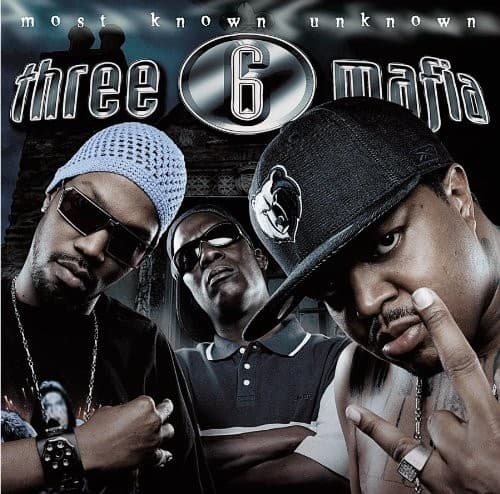
Most Known Unknown is the sound of Three 6 Mafia getting what they spent a decade chasing and discovering that success has a cost in focus. Its best songs are among the biggest and most durable the group ever made. Its worst stretches are party-guest roll calls that could be attached to almost any Southern rap album of 2005. The thesis is that this is a great singles record wrapped in a merely decent album, and the gap between those two things is the whole review.
The hits are not a matter of opinion. Stay Fly pairs a bright, bouncing beat with a crew of guests and a hook that sticks on first contact, and Poppin’ My Collar and Side 2 Side follow with the same instinct for a simple, repeatable phrase. The album opened at number 3 on the Billboard 200 and number 1 on the Top R&B/Hip-Hop Albums with 125,000 copies sold, went gold within a week, and reached platinum by mid-2006. That commercial peak topped the group's 2000 release, and you can hear why: DJ Paul and Juicy J had learned to compress their menace into three-minute radio shapes without losing the swing.
What gets lost in the translation is the strangeness. Earlier Three 6 Mafia records sounded like they were recorded in a basement and meant to scare you. Here the drums are cleaner, the hooks are friendlier, and the verses lean on boasting rather than eerie detail. That is not automatically a downgrade, and the production is often excellent. But the writing rarely rises above the beat, and the guest list grows so long that the group itself sometimes feels like one voice among many.
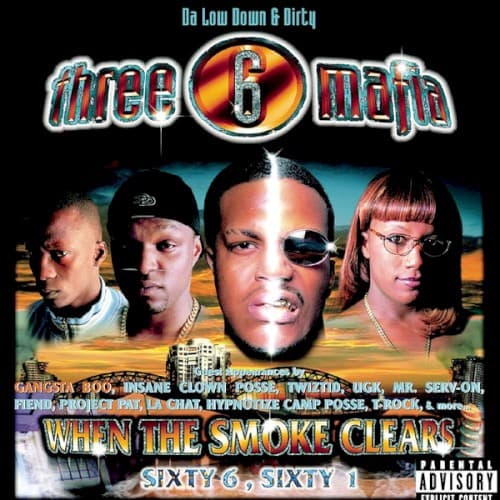
Judged against the group's catalog, including When the Smoke Clears: Sixty 6, Sixty 1, this is the commercial high point and a slightly lower artistic one. Anyone curious how Three 6 Mafia became a mainstream force should start here, with the understanding that the singles do most of the work.
Bright Beats, Chanted Hooks and a Guest List That Gets Crowded
DJ Paul and Juicy J produce the whole record, with David Banner credited alongside them on Half on a Sack, and the production is where the album earns most of its points. The beats are bigger and brighter than their older work, built from crisp snares, rolling low-end and synthesized melodies that feel designed for a club system and a car stereo at once. The Memphis bounce is still there, in the triplet hi-hats and the heavy, slow-footed kicks, but it has been tuned for a wider audience. The best tracks leave plenty of space for a hook and let the instrumental carry as much personality as any rapper.
Delivery is the other strength. DJ Paul and Juicy J are not the most technical rappers, but their cadences are flexible, and the group's trademark double-time runs and chanted refrains give each song a physical push. Hooks are the real currency: short, sticky and built to be shouted back. The guest rappers are mostly well-chosen for sound if not for substance. Young Buck and 8Ball & MJG bring distinct textures to Stay Fly, while Mike Jones and Paul Wall fit the bright, Houston-flavored swing of Swervin’ so naturally that the song feels like a trade-off between two scenes rather than a cameo.
The writing is the weak point. Most verses stay within the narrow borders of club bravado, car and jewelry boasts, and sex talk, with very little specificity or storytelling. The group has always been more about rhythm and attitude than about lyric craft, and earlier records disguised that with sheer strangeness; here, with the strangeness reduced, the limits show more clearly. Lines run together, ideas repeat across songs, and several verses could swap between tracks with no loss of meaning.
The guest-heavy format creates a second problem. With so many names attached, the album often feels assembled rather than written. A few songs, such as When I Pull Up at the Club, sound like a rotating cast passing a microphone around a cipher, with the group's own personality fading in the middle. The absence of Lord Infamous, who was in jail during the sessions according to DJ Paul, also leaves the lineup thinner, and the remaining members are asked to hold a lot of weight over seventeen tracks.
What saves the album is how well the production and hook craft cover these gaps. When a beat is strong and the chorus is catchy, as on the opener and on the major singles, the thinness of the verses barely matters. When neither is quite there, the record settles into pleasant but forgettable mid-tempo club fare. That pattern, great highs and a wide, flat middle, defines the whole experience.
Front-Loaded Hits and a Flat Middle Stretch
The sequence is front-loaded in the best way. A short opener sets the tone, and then the album delivers its biggest song almost immediately. Putting the hit that early is a confident decision: it tells the listener what the group can do before the record asks for any patience. The next several tracks keep the quality high, moving between party tunes and darker, heavier material with enough contrast to feel balanced.
The middle is where the pacing starts to slip. After the first run of strong songs, the album spends a long stretch on mid-tempo club tracks that share the same tempo, the same hook structure and the same kind of guest-verse arrangement. Individually they are fine, but in sequence they run together, and the skit sitting among them does nothing to restore momentum. A tighter selection, dropping two or three of the weaker club songs, would have kept the energy from sagging.
The closing stretch recovers some ground. The crew posse cut brings back the rotating-mic energy the group does best, and the remix of the lead single acts as a victory lap, adding new guests and a slightly different feel. The outro is short and unobtrusive, which suits an album that is already longer than its ideas strictly require.
At seventeen tracks and over an hour of music, the length is only partly earned. There are enough standout songs to justify the running time, but not enough variety to sustain it from start to finish. The record plays best as two or three clusters of excellent songs separated by flat patches, which is a common problem for albums built around radio singles. The sequencing never feels careless, but it does feel cautious: nothing is risked, and little is surprising once the first few tracks have passed.
The Commercial Peak That Trades Strangeness for Polish
Within the catalog, Most Known Unknown ranks just below When the Smoke Clears: Sixty 6, Sixty 1, which sits at 7.1 on this site. The earlier record is tighter and has a stronger sense of identity; this one is bigger, brighter and more commercially successful, but it trades some of the group's character for polish. The production and hooks are as strong as ever, which is why the score stays solid, but thinner writing, a long guest list and a flat middle keep it from matching the earlier album.
It is for listeners who want the group's most accessible, radio-ready work, and for anyone interested in the mid-2000s moment when Southern rap dominated the charts. Fans of Houston and Memphis crossovers in particular will find a lot to like. It is less suited to people who want dense lyricism or the stranger, scarier side of the group's early catalog, and listeners who dislike crude subject matter and club-oriented bravado will find little to hold onto beyond the beats.
The album has aged better in its singles than as a whole. Stay Fly, Poppin’ My Collar and Side 2 Side still sound fresh, and the bounce in the production holds up. The rest of the record has settled into a pleasant period piece, fun to revisit but rarely essential.
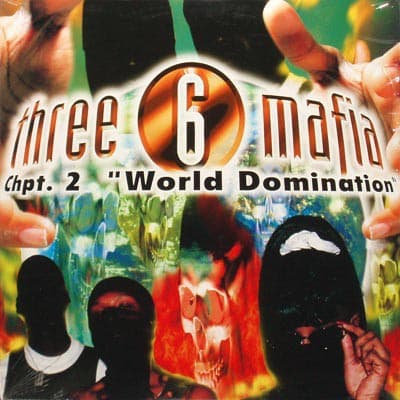
Start with Stay Fly, Poppin’ My Collar and Side 2 Side. Those three explain the album's commercial success and show the group's pop instincts at their sharpest. If you want a fuller picture of the crew's range, move to When the Smoke Clears: Sixty 6, Sixty 1 for the tighter, more focused version of the same ambition, or to the earlier Chapter 2: World Domination (see the Three 6 Mafia page) for the rawer sound that this record deliberately left behind.
For most listeners, the best version of this album is the three singles and one or two deep cuts, and everything else is optional.
Track by track
Track Listing
Most Known Unknown Hits
SolidA short opening piece that sets up the album's party-first, hit-oriented attitude. It is brief and functional, a mood-setter rather than a song.
Stay Fly
StandoutThe album's calling card and its best song. A bright, bouncing beat, a chanted hook that sticks on first listen, and a trio of guests, Young Buck and 8Ball & MJG, who each bring a different texture. The group's own verses are simple, but the rhythm is so tightly locked that the simplicity becomes the point. It is a clear example of the group compressing its menace into a pop shape without losing the swing. The delivery is relaxed and confident, and the track earns its place as one of the defining Southern rap singles of its year.
Roll Wit It
SolidA mid-tempo cut with Project Pat that leans on his drawl against a steady, slightly darker beat. The hook is easy and the groove is good, though the writing is generic and the song fades from memory quickly.
Don’t Violate
SolidA harder, more aggressive track featuring Frayser Boy. The beat has a heavier knock and a more threatening tone, which is welcome after the party-minded opening run, but the verses rely on stock bravado.
Swervin’
StandoutA smooth, bouncy collaboration with Mike Jones and Paul Wall that sounds like a Houston and Memphis handshake. The hook is catchy, the guests slide easily into the pocket, and the beat has enough warmth to make the track feel effortless. One of the album's most enjoyable moments.
Knock tha Black Off Yo Ass
SolidA heavy, clipped posse-style track with Project Pat. The beat is menacing and the hook is blunt, but the song is more attitude than content, and it repeats its idea across four minutes.
Poppin’ My Collar
StandoutOne of the album's biggest songs, with a simple, instantly repeatable phrase at its center and Mr. Bigg on the guest spot. The production is clean and punchy, the hook is built for shouting, and the song's short running time keeps it sharp. A major highlight and a model of the group's pop instincts.
Hard Hittaz
SolidA harder, slower track with Boogiemane that returns to the group's darker side. The beat is heavy and the delivery is gritty, but the writing is thin and the song does little that earlier records had not already done.
Side 2 Side
StandoutA major single and the album's second pillar. The beat is slick and spacious, with a hook that is easy to remember and a bounce that fits both clubs and radio. In the original version the track relies on the group alone, which keeps the focus tight. It is a strong example of the polished, mainstream direction and holds up well on repeat listens.
Half on a Sack
StandoutCo-produced with David Banner, this is one of the more distinctive beats on the album, with a looser and slightly stranger feel than the surrounding tracks. The rapping is workmanlike, but the production gives the song its own identity.
Skit
WeakA very short skit at under half a minute. It adds nothing musically and interrupts the flow.
When I Pull Up at the Club
SolidA club-focused cut featuring Paul Wall and Mr. Bigg. The beat is smooth and the hook works, but the verses are interchangeable and the song stretches past its welcome at four and a half minutes. Competent but forgettable.
Pussy Got Ya Hooked
SolidA sex-themed track with Remy Ma, who brings a sharper, more technical flow than most of the album. The guest verse is the best part, though the song itself leans on shock rather than craft.
Don’t Cha Get Mad
WeakA mid-tempo club song with Lil Flip and Mr. Bigg. Nothing is wrong with it, but nothing sticks either, and it is one of the clearest examples of the album's flat middle stretch.
Body Parts 3
StandoutA posse cut that brings together the whole Hypnotize camp, with Boogiemane, Frayser Boy, Lil Wyte, Chrome Korleone, Grandaddy Souf and Project Pat all taking turns. The beat is heavy and the energy is high, and it works as a throwback to the crew's cipher roots. It is long and uneven, as posse cuts tend to be, but it brings back some of the old grit.
Stay Fly (Still Fly remix)
SolidA victory-lap remix of the lead single. The new guest lineup and slightly altered feel keep it fun, but it cannot match the original's chemistry, and its placement this late makes it feel like a bonus rather than a finale.
Outro
SolidA short closing track that wraps up the album without much ceremony. Functional, forgettable and mercifully brief.
Frequently Asked Questions
Is Most Known Unknown worth listening to?
How well did Most Known Unknown sell?
Why is Lord Infamous missing from Most Known Unknown?
Genres
Styles