The scorecard
7.1/10 · Good
- Writing25%
- 6.5
- Production25%
- 8.0
- Delivery15%
- 7.0
- Cohesion15%
- 6.0
- Originality10%
- 7.5
- Replay value10%
- 7.5
The hooks and chants are sharp and the posse cuts have personality, but the verses lean on repeated boasts and hostility, and a track like Take a Bump adds little beyond attitude.
DJ Paul and Juicy J make dark, rattling Memphis beats cleaner and bigger than their earlier work, and Sippin’ on Some Syrup and Who Run It carry real low-end weight.
The group's chopped, stuttering Memphis cadence and the tight hand-offs on M.E.M.P.H.I.S. and Who Run It sound like a unit that has worked together for years.
Twenty-two tracks with a handful of skits and filler cuts make the album uneven, and the sag between Tongue Ring and Touched Wit It is long.
No one else was combining Memphis horror textures with radio-ready hooks in 2000, and the collaboration with UGK and Project Pat bridged two Southern regions.
The big singles and the Memphis posse anthem still hit hard, though the long tracklist means most listeners will return to the same half dozen songs.
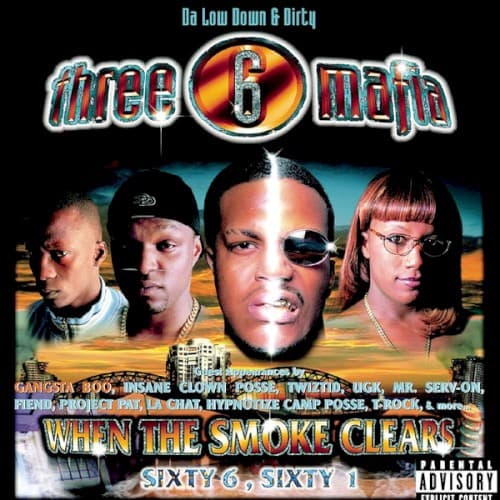
Three 6 Mafia When the Smoke Clears: Memphis Gets a Bigger Room and Keeps Its Teeth
The hook on Sippin’ on Some Syrup moves like someone dragging their feet on purpose, a slow, syrupy chant that sits over a dark beat and makes slowness sound like power. It is the clearest argument for what this record does. When the Smoke Clears: Sixty 6, Sixty 1 takes the grimy, horror-tinted Memphis sound Three 6 Mafia built in the 1990s and gives it a cleaner, heavier mix without sanding off the menace. The result is the group's most commercially successful record, and it is a strong one, but it is also a bloated one.
That is the thesis: this is a great singles album wrapped in a good album, and the gap between those two things is the story. The best songs here, including Who Run It, I’m So Hi and the Memphis anthem, rank with the best Southern rap of 2000. They are built on tight group chemistry, stuttering triplet-style flows that bounce off the beat, and production that sounds big in a car and unsettling through headphones. But the album runs twenty-two tracks, and a good part of that length is filler, skits and repeated aggression that does not earn its slot.
The Southern context matters. In 2000 the region's rap scene was splitting into different dialects: Houston's slowed-down syrup culture, Atlanta's emerging polish, New Orleans's bounce, and Memphis's darker, more percussive sound. This album collects voices from several of them. UGK and Project Pat turn up on the lead single, Big Gipp brings an Atlanta voice to another track, and the Hypnotize Camp Posse fills out the home crowd. The album peaked at number 6 on the Billboard 200 and went platinum, and for a group that had mostly built its audience from regional circulation, it showed that Memphis could reach a national crowd on its own terms.
What follows argues that the record deserves its reputation for the best of its songs and loses points for how much it asks you to sit through to reach them.
Triplet Bounce, Dark Synths and a Mix Built for the Trunk
DJ Paul and Juicy J produced every track, and the main change from their earlier work is polish. AllMusic notes the cleaner production compared with the group's previous albums, and that is audible in the low end, which is thicker and more controlled, and in the drum programming, which hits hard without the lo-fi haze of the older records. The beats still lean on eerie keyboard lines, rattling hi-hats and a heavy, plodding kick, and the horror atmosphere is intact, but the mix finally gives the bass room to breathe. That is a real gain: this is music designed for car speakers, and the sound now matches the ambition.
The rapping is the second pillar. Memphis flow in the Three 6 style is rhythmic first and lyrical second, with short, chopped phrases that land on the beat like percussion and then hand off to the next voice. The members trade lines fast enough that a verse feels less like a monologue and more like a chant, and the collective effect is the album's best feature. The hooks are simple, repetitive and sticky in the way Southern hooks tend to be, and in the better songs they are the center of gravity. Guests are used well. UGK and Project Pat stretch the lead single into something wider than a Memphis record, and the Hypnotize Camp posse cut gives the home team a moment to show depth.
The weaknesses are structural and lyrical. The writing leans heavily on hostility, bragging and contempt, and over twenty-two tracks the same subjects return again and again without fresh angles. The details that make a Southern rapper's world vivid, the specific streets, habits and characters, appear in flashes but not often enough. Several mid-album tracks are built around a threatening tone more than an idea, and the hook-less ones sound more like mood pieces than songs. A track like Take a Bump is serviceable, but it is exactly the kind of cut that makes the tracklist feel longer than it needs to be.
The skits and interludes add to the problem. They help set a tone early, but a handful of them do not repay repeat listening and slow down an album that has no shortage of heavy material. AllMusic's complaint that the length produces some filler is fair: the best twelve or thirteen songs would make a tighter and more consistent record. What the album does well, it does with real authority, and the production gives the weaker tracks enough sonic weight to keep them from collapsing. But it is clear that the quality is not evenly spread.
Twenty-Two Tracks: A Hot Start, a Long Middle and a Strong Finish
The sequencing starts well. A short intro and an interlude set a dark, theatrical tone before the record reaches Sippin’ on Some Syrup, which is the first real peak and arrives early enough to hook a casual listener. The next few tracks keep the energy up, mixing hostile group songs with the hit single, and the first third of the album plays like a confident show: loud, rhythmic and quick to move.
The middle is where the album loses its grip. Between the opening run and the late posse songs, there is a long stretch of similar tempos, similar hooks and similar attitudes, interrupted by a skit that does not add much. These tracks are not bad, but they are interchangeable, and anyone listening front to back will notice the momentum fade. This is where the album's length stops feeling like generosity and starts feeling like a lack of editing. A cut of five or six tracks would have made the sequence stronger without losing any of the highlights.
The last third recovers well. The album brings in the larger posse cuts and the guest-heavy collaborations, which add variety in voice and tone after the long middle, and then closes on its strongest anthem, Who Run It, followed by a brief outro. The late run is the best-paced part of the record, because each song has a clear identity: a home-city celebration, an unexpected crossover collaboration with Midwest rap groups, and a hard-hitting closer. That unevenness is the shape of the album: strong start, weak middle, strong end.
The length is only partly earned. The top tier of songs justifies a long record, but the filler dilutes it, and the best way to listen is to treat the album as a collection of strong moments connected by weaker ones. Played in order it is exhausting; played selectively it is excellent.
The Platinum Pivot: Great Songs, Too Many of Them
With no other Three 6 Mafia albums rated on the site yet, there is no ranking to defend, but the case for this record is straightforward. It is the point where the group's Memphis sound reached the widest audience, and it holds up as a strong, commercially smart statement of that sound. The best of the record is among the best Southern rap of 2000, and the weakest stretch is long enough to keep the overall score in the good-to-great range rather than at the top.
It is for anyone curious about how Memphis rap went mainstream, and for fans of Southern rap who want chanted hooks, rattling low end and collective chemistry. It is also a very good gateway into the group's wider catalog, because it combines the dark identity of the earlier records with a mix that sounds like a major release. It is not for listeners who need consistent writing or tight sequencing. If you cannot tolerate twenty-two tracks of similar aggression, you will want a playlist rather than the album.
In terms of age, the production has held up better than the lyrics. The beats still sound heavy and strange, and the hook-driven songs remain influential across the South. The more hostile material reads as dated in tone, which is true of much of the era's hardcore rap, but the musical identity is distinctive enough to survive that.
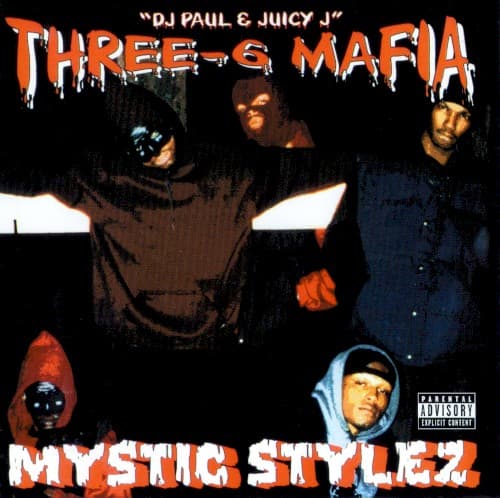
Start with Sippin’ on Some Syrup, Who Run It and I’m So Hi, which together show the group's range from slow-motion menace to big anthem energy. For more of the Hypnotize Camp's gravitational pull, Project Pat is a natural next artist, and the group's earlier Mystic Stylez shows the rawer, lo-fi version of the sound before the polish. The sharpest way to put it is that this record proves Memphis could fill a bigger room, and it also proves the group needed an editor to fill it well.
Track by track
Track Listing
Intro
SolidA short scene-setter under a minute long that establishes the dark, theatrical mood. Functional and quick.
44 Killers (interlude)
SolidA brief interlude that extends the menacing tone before the first full song. Atmosphere over substance, and over quickly.
Sippin’ on Some Syrup
StandoutThe album's lead single and its clearest peak. The tempo is slow and woozy, the hook is a drawn-out chant, and the guests from UGK and Project Pat widen the song beyond Memphis. The beat is dark but spacious, and the repeated hook works like a mantra, so the song feels hypnotic rather than aggressive. It captures the cross-regional bounce of Southern rap at the turn of the decade, and it is the track to play for anyone who wants to understand why this album broke through. The verses are not deep, but the sound and the interplay of voices carry it completely.
Weak Azz Bitch
SolidA hostile track with a feature from La Chat, driven by attitude and a heavy beat. It is energetic, but the content is one-note and adds little beyond the album's established mood.
Just Like Us
SolidA mid-length group track with a steady groove and the expected hand-offs between voices. Competent and on-brand, though it does not carry a distinct hook or idea that makes it stand apart from the neighboring songs.
I’m So Hi
StandoutOne of the album's best-known songs, and for good reason. The groove is loose and hazy, the hook is simple and memorable, and the group's trading lines give it a communal feel that matches the subject. It plays more relaxed than much of the record, which makes it a welcome change of tempo and a strong example of how the group can make an easy-listening Southern anthem without losing its darker identity. A good song that earns its reputation through melody and mood more than lyricism.
Mafia Niggaz
SolidA group-identity track that leans on swagger and collective chemistry. The beat is solid and the delivery is tight, but it covers familiar ground and does not stay with you after it ends.
Hook Up W/ Hoes (skit)
WeakA short skit that adds nothing musically and is easy to skip.
From da Back
SolidA steady, bass-heavy cut that works as a car-speaker showcase. The groove is strong and the rhythm of the verses is the main attraction, though the writing is basic and the song fades from memory quickly.
Fuck Y’all Hoes
WeakAn aggressive track that relies on a hostile hook and repetition. It fits the group's tone but offers little new, and it is one of the cuts that makes the middle of the album feel long.
Where da Cheese At
SolidA bouncy, money-focused track with a lighter feel than the surrounding aggression. The hook is catchy and the beat has a nice swing, making it a small relief in the middle of the sequence, even if the lyrics are surface-level.
Tongue Ring
SolidA mid-album song with a smooth groove and a more relaxed vocal tone. It is not a highlight, but it gives the sequence a bit of variety and is easy to listen to.
Barrin’ You Bitches
WeakAnother hostile group song that stays in the album's most repetitive lane. The beat is heavy, but the idea is thin and the track is a strong candidate for trimming.
Whatcha Know
StandoutA collaboration with Big Gipp that brings an Atlanta voice into the Memphis frame. The change in cadence is refreshing, and the track benefits from the contrast between the group's chopped delivery and the guest's smoother flow. It is a good example of the album's regional curiosity, even if the song itself is more interesting as a pairing than as a statement.
Act Like You Know Me (Point ’Em Out)
SolidA group track with a confrontational stance and a steady groove. It has energy and a clear hook, but it follows a pattern the album has already established several times.
Take a Bump
SolidA short, mood-driven cut that is serviceable but lightweight. It works as a brief change of pace rather than a song with its own identity.
Touched Wit It
StandoutA guest-heavy track with Fiend, La Chat and Mr. Serv-On, which gives it a bigger cast and a wider range of voices. The shifts between rappers keep the song alive, and the heavier beat anchors it. This is the point where the album begins to recover from the long middle, and the variety of delivery makes it more interesting than the group tracks that precede it.
M.E.M.P.H.I.S.
StandoutThe home-city anthem, built as a posse cut with the Hypnotize Camp Posse including Project Pat, La Chat, T-Rock, M.C. Mack and Young Buck. The extended cast gives the song a block-party energy, and each voice brings a different texture to the same beat. Long at nearly five minutes, it earns the space by letting the personalities come through, and it works as a statement of local pride more than as a lyrical showcase. One of the album's strongest group performances and a good argument for Memphis as a scene with depth.
Just Anotha Crazy Click
StandoutA crossover collaboration with Insane Clown Posse and Twiztid, bringing two Midwest horror-leaning acts into the Memphis sound. The pairing is natural, because both sides lean on dark, theatrical imagery, and the track benefits from the extra energy. It is more of a curiosity than a classic, but it is a memorable curiosity and a sign of the group's willingness to connect scenes.
Who Run It
StandoutThe album's best closing argument and one of its most well-known songs. The beat is huge, the hook is built for crowds, and the members hand off lines with the kind of precision that comes from long familiarity. It sounds like a victory lap and a challenge at the same time, balancing swagger with real musical force. The mix is the clearest demonstration of the cleaner production on this record, with the low end hitting hard and the rhythm locking in. If you only play one track from the second half, play this.
Put Ya Signs
SolidA late-album cut with a steady groove and a call-and-response feel. It is solid and well-made, but it sits in the shadow of the stronger songs around it.
What’s Next (outro)
SolidA short outro that closes the record quickly. It does the job without adding much.
Frequently Asked Questions
Is When the Smoke Clears a good Three 6 Mafia album?
Who produced When the Smoke Clears: Sixty 6, Sixty 1?
What are the best songs on When the Smoke Clears?
Styles