The scorecard
7.3/10 · Good
- Writing25%
- 6.5
- Production25%
- 8.0
- Delivery15%
- 7.0
- Cohesion15%
- 6.5
- Originality10%
- 8.5
- Replay value10%
- 7.5
The horror and occult imagery is committed and consistent across sixteen tracks, but the writing leans on shock and repetition more than on craft or variety of subject.
Thin drums, crawling bass and a cold, tape-saturated sound recorded on 16-track reel-to-reel give DJ Paul and Juicy J's beats a menace that later, cleaner records never matched.
The group's stacked, triplet-heavy tongue-twisting cadences and hushed vocal tones carry the posse cuts, even where the guest slots on 'Live by Yo Rep (Bone Dis)' and 'Mystic Styles' run uneven.
The mood never breaks, which is the strength, but several songs run past five minutes on one idea, and the screwed 'Big Bizness (screwed)' arrives as a short detour late in the sequence.
In 1995 almost nothing else paired Memphis tape-hiss minimalism with this much occult horror and this kind of rolling vocal pattern, and the record is cited as a forerunner of crunk and trap.
The best half rewards repeat listens and still sounds distinct, while the weaker mid-album tracks blur together on a straight run-through.
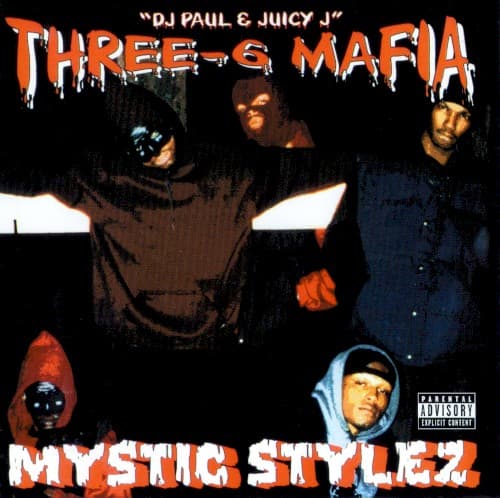
Three 6 Mafia Mystic Stylez: A Memphis Nightmare That Sounds Better Murky
Mystic Stylez works because it never tries to sound better than it is. The drums are thin and boxy, the basslines crawl instead of bounce, and the rapping arrives in a hushed, tongue-twisting rush that feels built for the hours after midnight. Three 6 Mafia's debut is a mood first and a set of songs second, and that ordering is both the source of its influence and the reason it falls short of a flawless record.
The argument here is simple. As an act of sound design, this is one of the most important Southern rap records of the mid-1990s, and the best of it still plays as genuinely unsettling. As an album to sit through in one go, it is uneven, repetitive in its subject matter, and stretched across sixteen tracks when twelve would have hit harder. Both of those things are true at the same time, and the score reflects that split instead of rounding up to the record's reputation.
The context that matters is small. The album was produced entirely by DJ Paul and Juicy J and recorded on 16-track reel-to-reel tape at a studio in northern Memphis, and you can hear the tape in the way the low end smears and the highs fold in on themselves. Horrorcore is the usual label, with the occult, graphic violence and drugs as the raw material, but the label undersells how much of the effect comes from restraint. These beats leave a lot of empty space, and the voices fill it slowly.
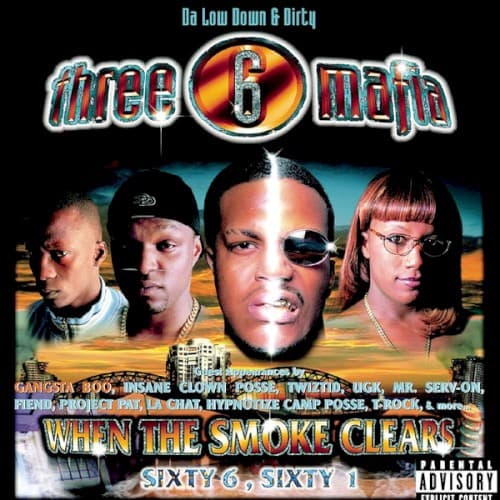
It also matters what the record is not. It is not a polished Southern rap debut in the way UGK or Geto Boys records of the same period were, and it does not have the pop reach of what Three 6 Mafia would later make with a bigger budget. Its closest comparison in their own catalog is the more expansive When the Smoke Clears: Sixty 6, Sixty 1, which trades some of this menace for range and finish. What Mystic Stylez has instead is a singular atmosphere, and the question for a new listener is how much of that atmosphere they need before the repetition starts to cost them.
Tape Hiss, Triplets and a Basement Full of Bass
The production is the main event, and the credit goes to DJ Paul and Juicy J, who produced the whole record. Their approach is subtraction. A drum machine knocks out a slow, heavy pattern, a bass tone sits low enough to rattle, and a small number of eerie melodic figures drift above it. Nothing is crowded and nothing is cleaned up. Recording to 16-track reel-to-reel tape gives the mix a grain that sounds like a deliberate aesthetic even if it began as a limitation, and it is the reason the album's dread feels physical instead of staged. The sound is darker and more foreboding than what the group made later, and on the strongest tracks that darkness is the whole argument.
The delivery is the second pillar. The rappers stack syllables into fast, triplet-leaning runs and then drop into a slow, almost murmured register, and the contrast between those two gears is what gives the verses their pull. The pattern is closer to a chant than to conventional bar-by-bar rapping. It is easy to see why this style travelled: the rhythm is simple to follow, the phrases are built to be shouted back, and the vocal layering turns hooks into crowd noises. Several tracks, 'Tear da Club Up' among them, make the chant itself the point, and they work because the beat leaves room for it.
The writing is where the record is weakest. The subject matter is narrow by design, a rotation of violence, intoxication, occult imagery and loyalty to the click. Within that range the images are vivid and the commitment is total, but the verses rarely develop an idea across a full song. Many tracks restate the same threat in new wording, and the shock value that carries the first few songs wears down by the middle of the tracklist.
There is also very little emotional range. Even when the tempo shifts, the tone of menace does not, and the album gives the listener no point of contrast, no moment where the rapper steps out of the persona and says something plainer. That is a choice, but it caps what the writing can achieve.
The guest and posse material is mixed. The extra voices on 'Live by Yo Rep (Bone Dis)' and 'Mystic Styles' add texture and keep the groups' collective identity front and center, though not every guest verse matches the group's own pocket, and a few feel interchangeable. The diss track aimed at Bone Thugs-n-Harmony also dates the record slightly, since its energy depends on a feud the group later described as a misunderstanding. Still, the aggression in the performance is real and the beat is good enough to survive the context. The ideas are thin, the sound is deep, and this album asks the listener to value the second over the first.
Sixteen Tracks, One Long Night Shift
The sequencing is more about accumulation than build. The album opens with a short spoken scene-setter and then drops straight into a run of heavy, mid-tempo tracks that establish the template quickly. That opening stretch is the strongest part of the record. Each song adds a different shade of the same dread, the pacing feels controlled, and the first radio single, 'Da Summa', arrives early enough that the listener already knows what the group sounds like when it sharpens the formula into something catchy.
The middle is where the album sags. Tracks run long, often past the four and a half minute mark, and several rely on a single loop and a single mood without a bridge, a beat switch or a change of rap texture to reset the ear. Played in order, this section can feel like one extended song cut into pieces. Nothing in it is bad, but little of it is distinct enough to be remembered separately, and that matters on a sixteen-track record where the second quarter and third quarter lean on the goodwill of the first.
The late-album sequence recovers some energy through variation. A screwed track slows the tempo and warps the voice, and it works as a short palette cleanser, although it also makes clear how much of the album's sound could have been explored further if the writers had been willing to break their own pattern more often. The closing posse track is the right kind of finale, long and communal and loose, giving the whole group a final turn at the microphone.
The length is only partly earned. The first third and the last third justify their space; the middle does not. A tighter edit of around twelve tracks would give a more punishing album and would make the best material hit harder. That said, the loose, overlong quality is also part of the charm: this is a record that sounds like it was made without a deadline or an editor, and that sound is hard to reproduce on purpose.
A Rough Draft of Southern Rap's Future, Still Worth the Visit
Within the catalog, Mystic Stylez sits slightly above When the Smoke Clears: Sixty 6, Sixty 1, and the ordering is deliberate. The later album is smoother, more varied and more complete as a statement, with better sequencing and a wider emotional reach. This one wins on production character and originality. The sound here was not available anywhere else in 1995, it is more foreboding than what followed, and it helped push a whole line of Memphis rap forward, with later crunk and trap often traced back to it. The gap in score is small because the later record is the better album on craft, and this one is the stronger piece of sound.
This is a record for listeners who want to understand where Southern rap's darker, slower branch began, and for anyone who already likes the atmosphere of horrorcore or lo-fi Memphis production. It is not the right entry point for someone who wants polished hooks, clear storytelling or lyrical variety. Those listeners should skip to the group's later and more accessible work and return here once the sound has grown on them.
It has aged unevenly but well where it counts. The beats still sound strange and the delivery still travels. The weaker mid-album cuts and the narrow subject matter have not improved with time, though they do not damage the best songs.
Start with 'Da Summa', which is the shortest route to the group's identity, then 'Tear da Club Up' for the chant-driven side, and finish with the title track for the posse-cut atmosphere. After that, When the Smoke Clears: Sixty 6, Sixty 1 shows what the same group does with more room and a cleaner mix, and UGK offers a different, more storytelling-driven Southern route through the same period. The first twenty minutes of this record are the part that earned its reputation.
Track by track
Track Listing
Da Beginning
SolidA 1:14 opener that sets the tone and not much else. It works as a doorway into the record's world, though it is an intro and not a song.
Break da Law “95”
StandoutOne of the album's early statements of intent, this track leans on the group's stacked, rhythmic vocal pattern over a slow, heavy beat. The hook is built to be shouted back, and the verses stay in the group's usual register of threat and swagger. It is more about posture than ideas, but the groove is tight and the low end is dense enough to carry it. At more than four minutes it asks for slightly more variety than it offers, yet it remains one of the better examples of how the album's chant-like delivery can hold up a track by itself.
Da Summa
StandoutThe track that opened the door to radio, since local Memphis stations had initially refused to play the group until staff heard it. It is the most direct case that the group's sound could be both catchy and dark. The beat is spare and rolling, the hook is simple, and the vocal interplay feels more focused than on many of the album's longer pieces. It is also the best first track for a new listener, because it shows the tone, the cadence and the menace in under five minutes without the repetition that weighs on the middle of the record. A clear highlight and a reasonable definition of what this album does best.
Live by Yo Rep (Bone Dis)
SolidA diss aimed at Bone Thugs-n-Harmony, with Kingpin Skinny Pimp and Playa Fly joining in. The beat has real bite and the aggression is believable, which keeps it entertaining even without the backstory. The weakness is that the song depends on a feud the group itself later described as a misunderstanding, so some of the heat has drained away. The extra voices add variety to the vocal texture, and the track is useful as a snapshot of the period, but the writing offers more attitude than substance. Good production, middling content, and one of the more interesting curiosities on the record.
In da Game
SolidA solid mid-tempo entry that stays inside the album's formula: slow drums, rolling bass and a loop-based hook. It does its job without standing out, and the vocal trading keeps it moving. It would be stronger with a clear idea beyond the title's theme.
Now I’m Hi, Pt. 3
StandoutWith Playa Fly on board, this is the album's drug-haze track, and the production leans into woozy, drifting textures to match the subject. The pacing is deliberately slow, and the hook works as a sort of mood marker. It is more than five minutes long, which tests the loop's staying power, though the atmosphere is distinct enough to justify the time. It is one of the clearer examples of the record's strength as sound design. The lyrics rely on the obvious, and the subject is not developed far, but the feel is right and it holds together as a mood piece. A solid, hypnotic entry that rewards late-night listening more than analysis.
Long Nite
SolidA steady, brooding cut that fits the title. The beat is sparse and the performance is restrained, but it blends into its neighbors and offers few moments a listener will remember separately from the surrounding tracks.
Sweet Robbery, Pt. 2
SolidA mid-album track about hustling and robbery that fits the group's usual themes. The groove is competent and the delivery is confident, but it does not add a new angle. It is a decent track that mostly adds to the weight of the middle stretch.
Back Against da Wall
SolidKingpin Skinny Pimp appears here on a song about being cornered, which gives the group a slightly more defensive tone than usual. The beat stays dark and the hook is straightforward, though it follows the template closely. A functional, solid track, notable mainly because it was left off the 2001 reissue.
Fuckin Wit Dis Click
StandoutAt 6:18 this is one of the longest tracks on the record, and it uses the time to build a posse-cut feel with the group's voices trading lines. The beat is slow and heavy and the energy is communal, which suits the title's threat. The problem is length: the loop runs for a long stretch without a real change, so the track depends on the performance to carry it. When the vocals lock in, it is imposing, and when they drift, the repetition shows. A strong idea that would have been better at four minutes, though the mood remains consistent and the track earns its place as one of the album's definitive crew statements.
All or Nothin
SolidA mid-album track that continues the same mood without adding much to it. The performance is competent and the beat stays in the pocket, but the song is easily replaced by any of its neighbors, and it contributes more to the album's length than to its identity.
Gotta Touch ’Em, Pt. 2
SolidAnother solid entry with heavy drums and a threatening hook, delivering the album's usual intensity at the usual pace. It is a reliable cut for fans of the sound, but it does not push past what earlier songs have already established.
Tear da Club Up
StandoutThe chant-driven side of the group at its most effective. The hook is built to be shouted by a crowd, the beat leaves plenty of room for it, and the vocal layering turns the chorus into a kind of group incantation. It demonstrates why the group's style travelled so well: the pattern is simple, aggressive and easy to repeat, and it points forward to the crunk and trap tradition the album is credited with influencing. The verses are workmanlike but the structure of the track, with its chant at the center, is what makes it stick. Among the best songs on the album and a strong second place after 'Da Summa' for a new listener.
Big Bizness (screwed)
SolidA short, 2:18 screwed track that slows the voice and the beat into a thick, warped crawl. It works as a palette cleanser and a nod to Southern production habits, though it is brief enough to feel like an interlude.
Mystic Styles
StandoutThe title track is a six-minute posse cut with Playa Fly, La Chat and M.C. Mack, and it works as a showpiece for the group's collective identity. The beat is slow and ominous, and the rotating voices give it variety that many of the album's solo-leaning tracks lack. The pacing is relaxed to the point of drifting, and a few of the guest turns are uneven, but the communal feel gives the song a sense of occasion that suits its position near the end. It also puts the record's central idea, that each performer has a distinct style, into practice. A deliberate, atmospheric closer and one of the best-sequenced tracks on the album.
Porno Movie
WeakThe last track keeps the record's mood but with a less distinctive beat and a subject that adds little. It is competent filler that ends the album without a strong final statement, and it is the weakest closer the sequence could have chosen.
Frequently Asked Questions
Is Three 6 Mafia's Mystic Stylez a good album?
What genre is Mystic Stylez?
Which songs should I hear first on Mystic Stylez?
Who produced Mystic Stylez?
Styles