The scorecard
6.4/10 · Mixed
- Writing25%
- 5.5
- Production25%
- 7.5
- Delivery15%
- 6.5
- Cohesion15%
- 5.5
- Originality10%
- 7.0
- Replay value10%
- 6.5
By midway the same few ideas circle back with little detail beyond the hooks, as on I Ain't Cha Friend, though the triplet-heavy cadence keeps the repetition functional.
DJ Paul and Juicy J build bare, boxy drums and thin, eerie keys that feel distinctive, and the reworked Tear da Club Up ’97 hits harder than the original idea.
The triplet-heavy trade-offs and chanted group hooks carry real swing, and Project Pat adds a slower, slurred contrast on Who Got Dem 9's, though the uniform approach begins to blur.
At 22 tracks, with skits, a one-minute sketch and closing radio-edit remixes, the album sags well before the end.
The lo-fi Memphis menace still sounds distinct for its moment, though the album mostly re-works earlier material rather than adding new ideas.
The reprises and a handful of Project Pat features hold up, but the repetitive middle stretch rewards a playlist more than a front-to-back listen.
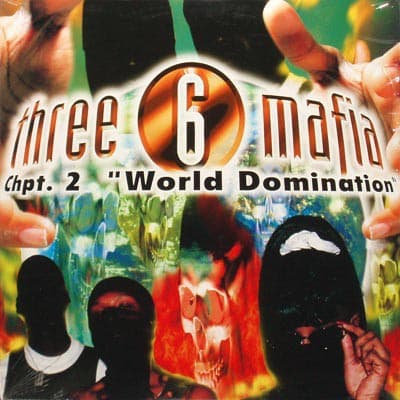
Three 6 Mafia Chapter 2: World Domination — The Last Dark Album Before the Daylight
Chapter 2: World Domination works best as a handoff record. It is the last Three 6 Mafia album built mostly on dark, dust-caked Memphis beats, and it is also the first one that a record store in any town could actually stock. That tension is the whole story of the album, and it makes the record more interesting than it is consistently good.
My argument is simple: the best songs here are the ones the group had already made. Four tracks are reworked versions of earlier favorites, and every one of them lands harder than the new material around it. Tear da Club Up ’97, Late Nite Tip, Bodyparts 2 and N 2 Deep arrive with their hooks already tested, and the group sharpens the drums and tightens the chants without sanding off the menace. The fresh songs are competent and often grimly entertaining, but too many of them run on one mood, one tempo and one idea of what a threat sounds like.
The stakes are a little larger than a normal catalog entry. This was a wider release for a crew that had spent years moving tapes through Memphis, and it went gold. You can hear the group deciding how much of the basement to carry into daylight. A few songs reach for a smoother, more radio-ready shape, a direction that would pay off fully on When the Smoke Clears: Sixty 6, Sixty 1. Here the compromise is still half-finished, which gives the record a loose, unsettled energy.
For anyone tracing how Three 6 Mafia turned a regional underground sound into a national one, this is the document of the pivot. For anyone who wants a tight, front-to-back Southern Hip-Hop album, it is a rougher sit, 22 tracks deep and padded by skits and repeats.
Boxy Drums, Triplet Chants and a One-Note Menace
The production credit goes to DJ Paul and Juicy J, with additional production from 2000 Watts Music, and the sound they build is more disciplined than the horror-movie reputation suggests. Drums are bare and boxy, with low kicks that feel pushed forward in the mix and hi-hats that skitter in triplet patterns. Over the top sit thin, eerie keyboard lines and sparse sampled stabs, leaving huge gaps of silence for the voices. It is cheap-sounding in the best possible way: the limits of the equipment become the aesthetic, and the beats feel like they were built to rattle a trunk rather than to impress a studio engineer.
The rapping is where the album gets its character. The crew trade bars in a rolling, triplet-heavy cadence, stacking short phrases that bounce off the kick drum, and the group vocals on the hooks turn every chorus into a chant. Nobody is trying for dense metaphor. The writing deals in threats, club-night bravado and street boasts, delivered with enough rhythmic swing that the repetition feels like a feature. The guest slots add useful texture, especially Project Pat, whose drawl sits in a different pocket from the group's rapid-fire attack, and The Dayton Family, who bring a hard, Midwestern bark to Are U Ready 4 Us.
This is also an album built for atmosphere over argument. The best verses are the ones with a clear picture, a single image delivered with conviction, and the group is at its most effective when it commits to a hook and lets the beat do the talking. The mix of fear and party energy is a real strength: the same drum pattern can make a threat feel playful or a celebration feel dangerous.
The weaknesses are just as audible. Lyrical subject matter narrows quickly, and by the middle of the album the same few ideas keep circling back with only small changes in phrasing. A handful of songs lean on shock value in place of writing, and a couple of the sketch-like cuts, such as Neighborhood Hoe, feel more like leftover ideas than finished songs. The sonic palette is also very uniform. Tempos cluster in one narrow band, the keyboard tones barely change, and the mixing gives every beat the same hollow glow, so tracks start to blur after a while.
There is also a gap between ambition and execution on the more polished songs. When the group tries to widen the sound, the results feel tentative, as if the beat were reaching for a bigger room but the writing stayed in the old one. That is not a failure so much as a snapshot of an act mid-transition, but it does mean the record never fully commits to either identity. What you get instead is a very good rough draft of a mainstream Three 6 Mafia, wrapped around a handful of forceful street records and a lot of competent filler.
Twenty-Two Tracks and a Reprise Block That Outshines the Rest
As a sequence, the album front-loads its atmosphere and then spends a long time keeping it. The opening stretch is built from short skit-like pieces and a one-and-a-half-minute blast of aggression, a smart way to set the mood, because it tells you immediately that this is going to be a dark, clipped, unpolished ride. The first real run of full songs keeps that tension intact, and the early middle of the record is where the pacing feels best: heavy tracks arrive in quick succession, hooks stay short, and the group never overstays a mood.
The sag begins somewhere after the midpoint, when the album shifts into its second half and the earlier hits start to reappear in new versions. That reprise block is the best stretch of the record on paper, but it also exposes the weakness of the sequencing. The older songs are so much sturdier than what surrounds them that the tracks between them sound like waiting rooms. A tighter selection, trimming several mid-album cuts and letting the reworked favorites sit closer together, would have made a leaner and more convincing album.
Length is the problem. Twenty-two tracks is far more music than the material justifies, and the closing run, which pads out with remix-style radio edits, feels like a catalog afterthought rather than a finale. The final stretch does include a few songs that deserve to be there, including a late weed anthem with a loose, hazy bounce, but they arrive after the energy has already flattened. The record does not end so much as it runs out of road.
Still, the best sequencing decision is the hard cut between menace and party. A threatening track will sit next to a club-ready one without any transition, and that abrupt switching is part of the group's charm. It keeps the listener off balance and reminds you that, in Memphis, those two moods were never really separate. If the album were thirty minutes shorter, the whole thing would feel more like a deliberate collage and less like a full-length haul.
A Gold Record Built on Its Own Rewrites
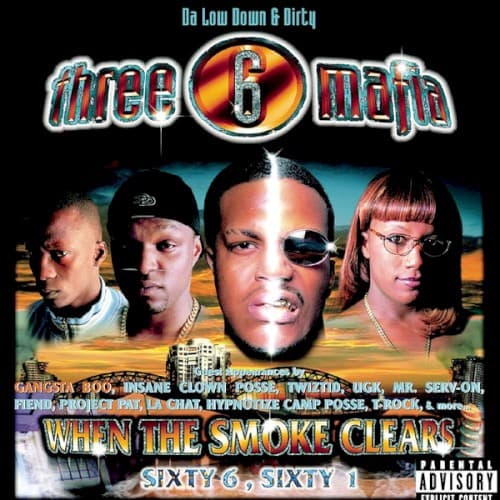
Within the catalog, Chapter 2: World Domination ranks below When the Smoke Clears: Sixty 6, Sixty 1, which sits at 7.1 on this site. The later record sharpens the same ideas into a stronger set of songs with a cleaner identity and better pacing. This earlier album has more raw character and some of the group's most durable chants, but it is padded, repetitive and unevenly written, so it lands in the good-but-flawed range rather than the essential one.
It is for listeners who care about the origins of Southern rap's darker strain: fans of lo-fi drum programming, chanted hooks and the particular menace of early Memphis production will find plenty to love. It is also useful for anyone who wants to hear how the group moved from tape-circuit cult heroes to a gold act. It is not the right entry point for someone who wants polished hooks and big guest-driven singles, and listeners who dislike shock-heavy subject matter will find large stretches of it hard going.
The album has aged unevenly. The beats still sound strange and fresh in their texture, and the group vocals remain easy to recognize, but the writing leans on repetition that has dated more than the production. The reprises are the strongest argument for the record, which is a mild irony: the best songs here are the ones that predate it.
Start with Tear da Club Up ’97, Late Nite Tip and N 2 Deep. Those three capture the group at its tightest, with huge hooks, bare drums and a clear sense of purpose. If you want to hear the sound evolve, move next to When the Smoke Clears: Sixty 6, Sixty 1, where the polish arrives without losing the bite. If the guest-heavy, hook-first direction appeals more, follow it through the broader Three 6 Mafia catalog and then back to the solo work from Project Pat, who is the album's most distinctive supporting voice.
The record's final lesson is practical: a trimmed twelve-song playlist built from its best cuts is a better album than the twenty-two-track original.
Track by track
Track Listing
We Are Waiting
SolidSkit-length opener at barely over a minute. It sets a mood and gets out of the way, which is the right call, though it carries no musical weight on its own.
Intro
SolidAnother very short setup piece. Pure atmosphere and filler; nothing here you will return to.
Will Blast
SolidA blink-and-it-is-over burst of aggression at one and a half minutes. The brevity is the point, and it works as a jolt before the longer songs begin, though it never develops into a full idea.
Hit a Muthafucka
SolidThe album's first full statement of purpose, and it hammers a single threatening idea over bare drums and a thin, creeping keyboard line. It is effective and blunt, with a hook built for chanting, but it also shows the record's habit of repeating one mood.
Are U Ready 4 Us
StandoutA long posse-style cut with The Dayton Family. The guests bring a different, harder bark that contrasts well with the Memphis triplet flow, and the stretched running time lets each voice settle in. One of the stronger new songs, even if it runs a little long.
Prophet Posse
SolidA crew cut featuring Prophet Posse, built on rotating verses and a steady, ominous groove. It captures the cypher energy of the camp, but individual verses blur together and none of them stands out.
Motivated
SolidA mid-tempo track with a more purposeful, driving feel. The beat is cleaner than much of the record, and the hook has enough lift to hint at the direction the group would take next, though the writing stays generic.
I Ain’t Cha Friend
WeakOne of the longest tracks, and the extra time works against it. The attitude is strong and the vocals are menacing, but the song circles the same idea for nearly five minutes and loses momentum in the second half.
Watcha Do
SolidA tighter, bouncier cut that benefits from its shorter running time. The groove is easy to lock into and the delivery is loose and confident. Solid, if not memorable.
Spill My Blood
SolidDark and heavy, with a slower pulse that gives the verses room to land. It is one of the more atmospheric new songs, but it leans on shock value more than on specific detail.
Who Got Dem 9’s
StandoutA feature spot for Project Pat, whose slow, slurred drawl contrasts nicely with the clipped beat. The hook is simple and sticky, the song is short enough to stay sharp, and it is one of the best new tracks on the album.
Gunclaps
StandoutPercussion-led and built around a punchy, rhythmic hook. It is a straightforward banger that does exactly what its title suggests, with little variation but a lot of drive.
3–6 in the Morning
StandoutA short, moody late-night piece with a bleary, stripped-down feel. It is brief and effective, and it gives the album a rare moment of atmosphere without bravado.
Tear da Club Up ’97
StandoutThe reworked club anthem and the album's centerpiece. The drums hit harder, the chant hook is bigger, and the whole thing moves with a ferocity the new songs rarely match. This is the sound the record is selling, executed at full strength: a stripped, menacing groove that turns the dance floor into a threat. It shows exactly why the reprises beat the newer material, and why the group was ready for a larger stage.
Late Nite Tip
StandoutA smoky, slow-rolling revisit that stretches out and takes its time. The beat has a hypnotic quality, with thin keys floating over deep drums, and the trade-off verses fit the lazy, after-hours mood. It is one of the best uses of the group's atmosphere on the album, and its length feels earned because the groove never stalls. A genuine highlight.
Bodyparts 2
StandoutA posse cut with Prophet Posse that builds on an earlier favorite. The macabre humor is the draw, and the verses pass the mic quickly enough to keep things lively. It is more of a spectacle than a story, but the energy is high and the chorus lands.
Flashes
SolidA tight, mid-tempo track that keeps the mood without adding much. The hook is decent and the beat is serviceable, but it is easily forgotten once the next song starts.
Neighborhood Hoe
WeakUnder two minutes and more of a sketch than a song. The idea is thin, the humor is crude rather than clever, and it reads as leftover material.
N 2 Deep
StandoutThe other major reprise and one of the album's best songs. The beat is sparse and rubbery, the hook sits perfectly in the pocket, and the verses slide through the rhythm with confident swing. It reaffirms the group's strongest quality: making very little sound enormous.
Anyone Out There
SolidA moodier cut with a more reflective tone and a slower pace. It gives the second half a welcome change of color, but the writing stays on the surface and the hook is forgettable.
Land of the Lost
StandoutA second Project Pat appearance, this time on a darker, slower beat. His voice carries the song, and the eerie keyboard line gives it a distinct identity. A strong late entry that deserved a better placement.
Weed Is Got Me High
SolidA hazy, laid-back closer in spirit if not in sequence. The groove is relaxed, the hook is easy, and the subject matter fits the loose, drifting beat. It is slight, but pleasant.
Tear da Club Up (DJ Herb’s Crunk & Tear It Up remix) (radio edit)
WeakA radio-edit remix of the earlier anthem. The remix keeps the chant but trades some of the original's grit for polish. It is useful as a curiosity, yet it adds nothing the album version does not already do better.
Late Night Tip (DJ Herb’s Ride Out Late Nite remix) (radio edit)
WeakAnother radio-edit remix, this time of the slow burner. The smoother treatment loses the hypnotic pull of the original, and as a closing track it feels like catalog padding rather than a finale.
Frequently Asked Questions
Is Chapter 2: World Domination worth listening to?
What are the best songs on Chapter 2: World Domination?
How does Chapter 2: World Domination compare to When the Smoke Clears?
Styles