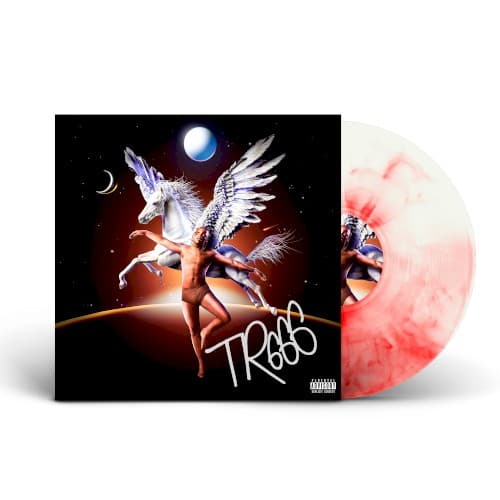
The scorecard
5.1/10 · Weak
- Writing25%
- 4.5
- Production25%
- 6.0
- Delivery15%
- 6.0
- Cohesion15%
- 3.5
- Originality10%
- 5.0
- Replay value10%
- 5.0
Hooks and melodies do the work while verses stay in generic territory, and the fairy-tale concept Redd described before release barely shows up in the actual words.
Hammad Beats and Oscar Zulu give the first stretch a glossy, floating sound, and tracks like Hell Rain and I Got You prove the budget was there, but too many beats sit in the same bright, mid-tempo lane.
Redd's sing-rap melodies are the strongest asset here, and his voice bends easily between love-song softness and hard-rap bite, even when the material underneath is thin.
Twenty-six tracks and a list of fifteen guests produce a playlist, with the promised love-to-deep-to-hard order only loosely audible.
It reaches for outer-space and fairy-tale ideas on paper and lands on the same melodic trap template that dominated streaming at the time.
A shuffle of six or eight songs holds up, but the full tracklist is easy to leave half-played, and a projection of its long-term staying power is cautious.
Trippie Redd Pegasus: A Great Singer Buried Under 26 Songs
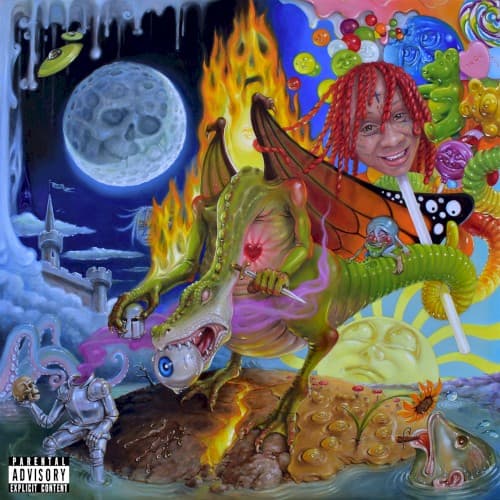
The most useful way to hear Pegasus is on shuffle, and that is both the best and worst thing that can be said about it. Trippie Redd built a twenty-six-track album with fifteen guests, a promised order that moves from love songs to something deeper to hard songs, and a pre-release pitch about a dreamy, nostalgic, outer-space fairy tale. What arrives is an album that sounds like many fine singles waiting for an editor, and whose strongest pieces are strong in spite of the sequence rather than because of it.
That is the thesis. Pegasus is a collection of good ideas and decent songs that the format of the streaming era rewards and the idea of an album punishes. The streaming-era defense is real: a long record with many guests gives the algorithm many entry points, and the album did exactly what that logic predicts, debuting at number two on the US Billboard 200 with 60,000 units, only a few thousand of them pure sales. But a chart position does not make a record cohere, and the cost of treating the album as a content bucket is audible by the second half.
Criticism of this kind of release is easy to overstate. Pitchfork called it a randomly generated playlist with little soul, and while that is harsh, the instinct behind it is fair. The better framing is that Redd is a gifted melodic rapper handed too much runway. His voice, which can sound fragile and aggressive in the same bar, is the one constant that makes the long tracklist worth sampling.
The context that matters is how the album was made. It leaked in full in August 2020 and sat on a shelf partly because the label doubted its commercial case, according to the fact sheet. Neither fact appears in the music, but both fit a record that feels more assembled than shaped. The result is a mixed album with a few real highlights and a lot of connective tissue.
Glossy Melodies, Generic Verses, and a Concept That Stayed in the Press Release
The first thing that stands out is the delivery. Redd is a melody-first rapper, and across the album he moves between sung hooks, clipped rap bars and half-spoken ad-libs without losing the thread. When a beat gives him room, as on the first run of songs produced by Hammad Beats and Oscar Zulu, his voice floats on top and the mood is close to the dreamy, space-adjacent feel he described before release. This is the part of the album that works as pitched.
Production is the second strength and also the source of the problem. The credits list dozens of names, often several per song, and the sound is consistently clean, bright and loud, which is the right palette for the genre in 2020 and does not give the album a particular identity. Individual tracks stand apart: Cardiak's beat on Hell Rain has weight that most of the record lacks, and Wheezy's work on I Got You pairs a recognizable interpolation with a big, simple groove. But the average track sits in a mid-tempo, melodic, slightly sad pocket, and after ten songs the textures blur. Producer credits are the one place the streaming-era format shows its seams: when many people work on a record, the record tends to sound like the genre rather than like an album.
Writing is the weak point. The concept Redd outlined, with fairy tales, outer space and a mystical atmosphere, barely appears in the verses. What replaces it is a familiar set of subjects: love, heartbreak, success, paranoia and defiance, delivered in lines that are serviceable and rarely specific. The words matter less here because the voice and the melody carry the emotional weight, and that is a legitimate way to make rap in this era. It is also why the album resists the kind of close listening that would make it feel like more than a playlist.
The guest list deserves a note. Fifteen features is a lot, and the quality varies. Some, like Future and Lil Wayne, bring an energy that matches the track around them. Others fill space without adding a distinct voice. The album would hold up better with a third fewer guests and a third fewer tracks.
There is also a question of ambition. Redd said the album would take the listener from place to place as far as genre goes, and the record does include pop-leaning, hard-rap and melodic stretches. But the genre changes happen mostly through the beat and the guest, not through Redd's own approach, so the movement feels like a playlist crossing styles rather than an artist moving through them. That is a sound choice for the streaming era. It is a shaky foundation for an album that wants to be judged as a unit.
Twenty-Six Tracks Later: A Sequence That Promises an Arc and Delivers a Shuffle
Redd said the order would run from love songs to deeper material to hard songs, and the first third of the album honors that in broad strokes. The opening run is soft, melodic and mid-tempo, with short tracks that keep the pace brisk. It is the most coherent stretch, and it makes the strongest case that the album had a shape before it had a feature list.
The middle is where the sequence loses its grip. Guests arrive in quick succession, the tempo varies without a clear logic, and a few tracks run close to two minutes without enough of a hook to justify their place. The album is padded with songs that would work as bonus cuts, and the effect is that the listener drifts. The promised depth is hard to locate, because the tone barely changes from song to song. Moving through the middle of the record feels less like a descent into something deeper and more like scrolling through a playlist.
The final stretch tries to flip the mood toward harder material, and some of it works. The change in energy is real, the beats get heavier and the features switch to more aggressive voices. But at that point the length has already taken its toll, and the harder songs feel like a second album attached to the first. This is the central sequencing problem: the idea of a three-part arc is sound, and twenty-six tracks is too many to make it land.
There is a case that the length is a feature, not a bug. Streaming rewards volume, and a long album with plenty of entry points gives different listeners different favorites. That is true, and it explains the numbers. It does not change the experience of playing the record front to back, where the pace flattens and the peaks are hard to locate. A trimmed version of this album, perhaps fourteen or fifteen songs, would be a better record, and the material for it is already here.
A Playlist With a Few Real Songs, and a Reason to Trim
Pegasus is a mixed album, and the catalog context here does not yet list another Trippie Redd project, so its ranking comes from the album alone. The strengths are real: a distinctive melodic voice, a few well-built tracks and a glossy sound that fits the moment. The weaknesses are just as real: generic writing, too many guests, too many tracks and a concept that never makes it into the music. The scores reflect that balance, with delivery the high point and cohesion the low one.
Who is it for? Anyone who likes melodic, emotional trap and wants a broad sample of what Redd can do in one place. Fans of the guests will find several moments worth saving to a playlist. Listeners who want a unified album experience, with ideas that develop across a sequence, should skip the full record and take the best tracks instead. The right way to use Pegasus is to pull ten songs and ignore the rest.
How will it age? The streaming-era logic that produced the album is the same logic that will make it hard to remember as a unit. Individual songs may last, particularly the ones with strong hooks, but the album as an object is built to be unbundled. That is a projection, not a certainty, and the voice at its center is strong enough that a few tracks will probably survive.
Start with I Got You, Hell Rain and Excitement. The first has the most direct hook and a clear interpolation, the second has the heaviest beat and a Lil Wayne feature that fits, and the third is the lead single, with a smooth PartyNextDoor collaboration that captures the album's melodic side at its most polished.
For what to hear next, A Love Letter to You 4 is the project Redd himself named as the comparison point, so it is the natural place to test whether the shorter, more focused format suits him better. The last word on Pegasus is that it is a collection of promising songs that would sound better if someone had cut the tracklist in half.
Track by track
Track Listing
Let It Out
SolidA soft, melodic opener with Myiah Lynnae that sets the album's dreamy tone. It is brief and pleasant, and it works as an introduction without making a strong claim.
Moonlight
StandoutShort and floating, with the glossy production that defines the early run. The hook is easy to like, and the song fits the spacey brief better than most of what follows. It is slight, but it does its job.
Love Scars 4
StandoutA continuation of a series Redd has carried across projects, kept short and lean. The melody is the draw, and it plays as a reminder of the voice that made the earlier entries land. Solid and brief.
The Nether
SolidA short, moody cut that adds texture but not much substance. It reads as a bridge rather than a destination.
So Stressed
SolidYung LB joins on a track that stretches a little longer than its neighbors. The emotional tone is clear, but the writing stays at the level of mood rather than detail, and the guest does not add much contrast.
Excitement
StandoutThe lead single, with PartyNextDoor, and the longest track in the early stretch. The pairing makes sense: both are melodic singers who can float over a smooth beat, and the track gives the album its most polished love-song moment. The hook is easy, the arrangement has room, and the length is earned. It is one of the better entry points to the record, though it does not reinvent the sound.
Mood
SolidChris Brown adds a smooth vocal to a short, melodic track. The collaboration is natural and the song moves quickly, but the result sounds like a pleasant interlude more than a highlight.
Pegasus
SolidThe title track is brief and does little to explain the title. It carries the airy production style, and the hook is serviceable, but it does not deliver the mythical atmosphere the name promises.
Weeeeee
SolidA playful, energetic cut that breaks up the mellow run. It is short and a little slight, but the change of pace helps the sequence.
Personal Favorite
SolidA Rich the Kid feature on a short, bouncy track. The guest brings a different cadence, but the song blends into the surrounding material.
V‐12
SolidThe shortest of the early tracks, with a hard edge that hints at the album's later shift. It is a sketch more than a song.
Spaceships
StandoutYoung Thug appears on a track that takes the outer-space idea more literally than most. The beat has some float and the guest adds a distinctive voice, so it is a fair match for the album's pitch. Not a standout, but it fits the concept better than most of the surrounding material.
Never Change
StandoutFuture arrives on a track with a long list of producer credits and a clear, melodic pull. The guest fits the mood, and the hook is simple enough to stick. A solid mid-album moment.
Good Morning
SolidA longer, more relaxed cut that gives the middle of the album a breather. The tone is warm and the delivery is easy, but the track does not build to anything.
No Honorable Mention
SolidWith Lil Mosey and Quavo, this is one of the album's longer tracks and one of its more crowded. The three voices trade places without a clear shape, and the song runs longer than its material warrants. A good example of the album's guest-heavy approach, where the names are bigger than the idea.
I Got You
StandoutBusta Rhymes joins on a track that interpolates an earlier Busta Rhymes song and uses a big, simple groove from a production team that includes Wheezy. It was a single, and the choice makes sense: the hook is direct, the beat has weight, and the guest brings real energy. This is one of the clearest peaks on the album, and an example of what the record sounds like when the ingredients are focused. The song is also short enough that it never overstays.
Too Fly
SolidA confident, mid-tempo track that sounds like many others on the record. It is fine and forgettable.
Red Beam
SolidSean Kingston adds a sing-song hook to a short track. The pairing is unexpected and adds some color, though the song is brief and light.
Oomps Revenge, Pt. 2
SolidA short cut in the album's harder run. It is a sketch with energy, and it sets up the shift toward heavier material.
Take One
StandoutBrief and tightly built, with an immediate hook. A small highlight in the second half.
Sleepy Hollow
StandoutThe third single, and the shortest track in this stretch. It is catchy and compact, and its brevity is part of the appeal. It plays well as a single and fits the streaming-era model, though it is slight as a piece of an album.
Kid That Didd
SolidFuture and Doe Boy join a track that moves toward harder territory. The beat is heavy and the verses are aggressive, and the guest verses match the mood. Solid, if interchangeable with other hard tracks on the record.
Don
SolidA short, aggressive track that continues the hard run. It has energy but little shape, and it blends into the songs around it.
Hell Rain
StandoutLil Wayne and HoodyBaby join on a Cardiak-produced track with more weight than most of the album. The beat is the draw: it is heavier and more spacious than the surrounding material, and the guests respond with matching intensity. This is the clearest moment where the late, hard-song section of the album delivers on its promise, and it is one of the strongest tracks on the record.
TR666
StandoutAn older song, first released in 2017, with a Swae Lee feature and a sample of Lonnie Liston Smith. The sample gives it a different texture from the rest of the album, and the hook is among the more memorable. It sounds like a proven track dropped into a new sequence, and it works as one.
Sun God
SolidThe closer returns to Myiah Lynnae and the softer sound of the opening, bringing the album full circle. It is a gentle landing after the harder run, though the track is more of a coda than a resolution.
Frequently Asked Questions
Is Trippie Redd's Pegasus good?
What are the best songs on Pegasus?
How many songs are on Pegasus?
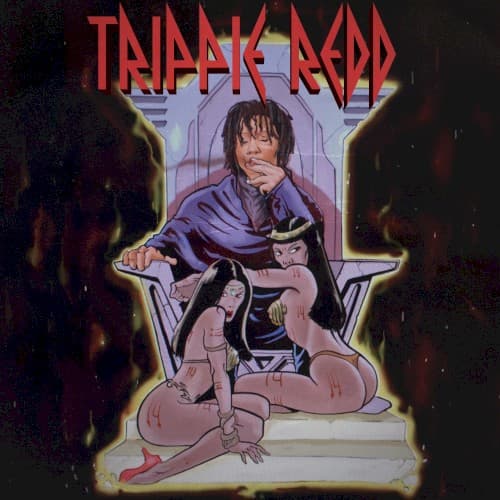
How does Pegasus compare with A Love Letter to You 4?
Styles