The scorecard
5.8/10 · Mixed
- Writing25%
- 5.0
- Production25%
- 6.5
- Delivery15%
- 6.5
- Cohesion15%
- 5.5
- Originality10%
- 5.5
- Replay value10%
- 5.5
Pop-culture name-dropping on Super Cell and Baki stands in for specificity, and the wealth boasts on Vibes and New Money repeat each other, so the lyrics are rarely a reason to return.
Loesoe, Star Boy, Nadddot and tnfdemon deliver bright, glitching rage beats that sound consistent and expensive from Molly Hearts to Captain Crunch, though the narrow palette leaves little room for variety.
The vocals alternate between melody, shouting and rapping with more rhythmic discipline than on earlier projects, and the trade-offs on Matt Hardy 999 have real chemistry, though the long guest list sometimes leaves the host a supporting player.
The middle stretch blurs and a long run of guests turns the host into a supporting player, even though the sound never wavers and the short songs keep the record from dragging.
The full commitment to rage and hyperpop textures is a clear pivot for the artist, but the sound was already established by peers, so it reads as commitment more than invention.
The best songs are immediate and fun, but the album was built to deliver everything on first listen and offers little new on repeat, which is a projection for a recent release.
Trippie Redd Trip at Knight: A Great Playlist Wearing an Album's Clothes
Trip at Knight is the sound of Trippie Redd deciding that focus means picking one lane and flooring it. The lane is rage: bright, glitching synths, hard 808s, and a vocal that treats a hook as a dare. Where Life's a Trip, the album this one spins off from, tried to be a rock record, an R&B record and a rap record at once, this one commits to speed and sheen. Seventeen songs, most of them under three minutes, arrive with almost no downtime, and the instinct behind that is exactly right for how people listen now.
The thesis of this review is that Trip at Knight is the tightest Trippie Redd project in years and also one of the most disposable. Both statements are true. It is tight because the sound never wavers and the best songs hit within seconds of starting. It is disposable because the quality of those songs drops fast once the opening run is over, and because a large share of its identity belongs to guests rather than to the host. The record is a very good playlist with a shaky album built around it.
That is a streaming-era trade, and it is made knowingly. Short songs, quick hooks and a steady stream of recognizable names are an effective way to win a first listen, and the album debuted at number two on the Billboard 200. Its lead single, Miss the Rage, became his highest-charting song on the Hot 100 at number 11. The format works, but it also means the record has to keep reintroducing itself, and by the back half the introductions start to repeat.
I do not think this is a weaker project than its reputation suggests, or a stronger one. Critics who called it a return to form are right about the focus, and critics who said it does not reward repeat listens are right about the depth. The useful question is what you want from a Trippie Redd record. If it is a charged half hour of rage-pop with a few genuinely strong guest spots, this delivers. If it is the emotional specificity of the earlier work, you will find it in only a few places.
Shiny Rage Beats, a Sprinting Voice, and Name-Dropping in Place of Detail
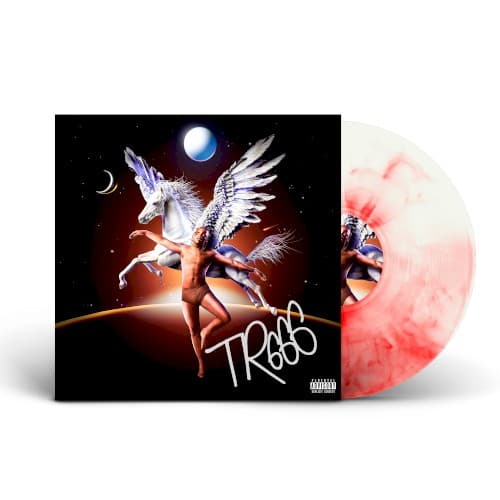
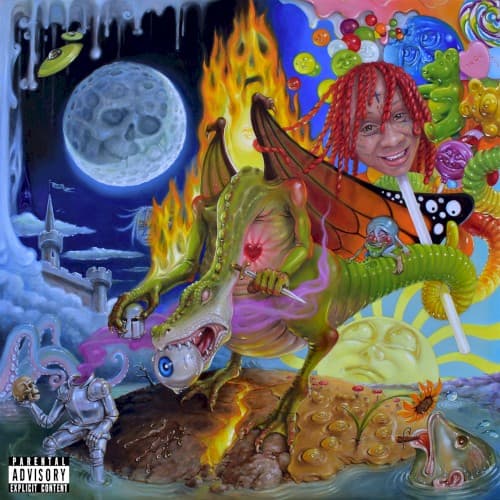
The sound is built on a narrow palette and executed with real polish. Producers including Star Boy, Nadddot, tnfdemon, Loesoe and Cashmere Cat, among others, work in the same register: sharp, shiny synth leads, rolling 808s, and drums that snap in a way that feels designed for headphones and festival speakers alike. The result is a record that sounds expensive and consistent. There is a game-soundtrack flavor to some of the keyboard sounds, and a hyperpop sparkle on the edges, and together they give the album a distinct look that matches the cartoon-and-anime imagery of the lyrics.
Trippie Redd's voice is the thing that makes the formula work. He sings, shouts and raps in rapid alternation, and the vocal production leaves his raw edges intact, so a hook can sound melodic and unhinged at the same time. On the best songs he rides the beat with a playful, almost sprinting energy, and the cadence does the persuading rather than the words. The delivery is more disciplined than on earlier projects: fewer strained notes, more rhythmic control, and a clear sense of where each line should land.
The writing is the album's limitation. Verses lean heavily on pop-culture references, from wrestlers and anime characters to video games, and on the standard vocabulary of wealth, women and invincibility. The references are cheerful and sometimes funny, but they function as a substitute for specificity: a line about a cartoon character does not tell the listener anything about the narrator. Some songs are little more than a string of boasts delivered over a very good beat, and the lyrics are rarely the reason to return.
Guests are the other major factor, and they are a mixed blessing. SoFaygo, Lil Uzi Vert, Playboi Carti, Ski Mask the Slump God, Juice Wrld, XXXTentacion, Polo G, Lil Durk, Sada Baby, Icewear Vezzo, Babyface Ray form a long list, and the best of them change the shape of the song. The Juice Wrld feature, built around two voices trading ridiculous lines, is the most successful. The posthumous verses are used with more care than is usual, and critics noted that they sound like they were written for these songs rather than pulled from a vault. Still, the sheer number of names means the host is sometimes a supporting player on his own album, and a few features add little beyond a familiar sound.
The central weakness, then, is depth. The tracks are short and bright and mostly shallow, and the repeat-listening value depends on how much you enjoy the sound itself. A reviewer at one outlet argued that the album does not reward repeat listens in the way Life's a Trip does, and the claim holds up: the songs do not reveal new details after the first few passes, because they were built to deliver everything at once. That is a valid design choice, but it limits the ceiling. The best moments are immediate and exciting. The rest sits at a competent, pleasant level that rarely rises above background energy.
A Fast Start, a Blurry Middle, and a Guest-Heavy Finish
The opening is the most efficient in Trippie Redd's catalog. The first song sets out the sound, a glittering, glitchy rage beat with a pop hook, and the second adds a guest that sharpens the energy. By the time the record reaches its fourth and fifth songs, the album has established its tempo, its mood and its tolerance for excess, and the run is as strong a start as anything released in the rage genre that year.
The middle holds its pace but loses its edge. A run of songs about money, drugs and confidence arrives at similar tempos, with similar production, and the names change more than the ideas do. This is the stretch where the album plays most like a playlist, and individual tracks become hard to distinguish without checking the title. The short running times protect it from becoming tedious, but they also prevent any song from building the kind of momentum that would make it memorable.
A recovery arrives in the late stretch, thanks to a pair of songs that bring the record's emotional register back into view. A posthumous collaboration near the end reintroduces the personal side of the host's writing, and a longer, darker posse cut closes the record with a change of pace. These songs give the sequence a sense of shape that the middle lacks.
Is the length earned? Seventeen songs in about three-quarters of an hour is efficient, and the record never drags. But an efficient album is not necessarily a strong one: the weakest third of the tracklist could be removed without affecting the experience, and the project would be better for it. A shorter version, perhaps twelve songs, would have the focus its reputation suggests. As released, it is a good album with a lot of passable songs surrounding the strong ones, and the pacing makes it easy to listen through without noticing which is which. In the streaming era that may be the point, but it does not make for an album with a distinct arc.
Perfect First Listen, Limited Second
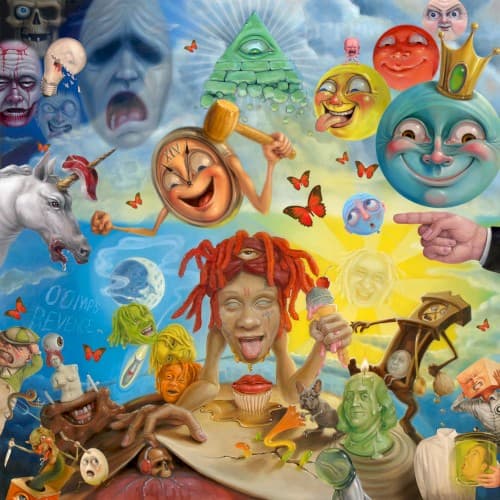
This site has no other Trippie Redd albums rated yet, so the placement is provisional. Trip at Knight is the commercial high point of the artist's rage-era pivot, a spin-off of his debut that trades emotional range for speed and sheen. Next to the debut, which it explicitly references, this is the more focused record and the less affecting one. The scores make that trade explicit: strong marks for production and delivery, solid marks for originality, and lower marks for writing, cohesion and replay.
Who is it for? Fans of rage and hyperpop-leaning rap, listeners who like short, high-energy songs with famous guests, and anyone who wants a playlist rather than an album. It is also a good entry point for newcomers who find the earlier emo-leaning material too slow. Who should skip it? Anyone who wants the confessional writing of the earlier mixtapes, or a project with a clear arc, will find little to hold onto. Listeners who dislike heavy Auto-Tune, glitching synths or name-heavy tracklists will find most of the record grating.
How has it aged? Reasonably well for the sound, less well for the writing. The production still sounds current, and the best songs retain their punch, but the pop-culture references and wealth boasts do not accumulate into anything, and the record has less to say now than it did on release. The record was certified gold in 2022, which suggests the hits have found their audience.
To start, play Miss the Rage, Matt Hardy 999 and Supernatural. The first is the lead single and the album's biggest song, the second is the best guest collaboration, and the third shows the beat-switch energy that makes the project work. For further listening, go back to Life's a Trip, which is the parent album and has more emotional range, and A Love Letter to You, which is rawer and more melodic.
The strongest argument for this album is also its limit: it is a perfectly designed first listen that rarely offers a second.
Track by track
Track Listing
Molly Hearts
StandoutA glittering, glitchy opener from Loesoe that lays out the album's palette in under three minutes: digital sparkle, heavy bass and a hook built for speed. The lyrics lean on game and film references and a drug-themed hook, but the energy is the point. A strong start and a good model of what the record is trying to do.
MP5
StandoutSoFaygo joins Trippie Redd on a synth-heavy rage beat from Star Boy, and the track is named after a weapon from a video game series. The energy is high and the beat is relentless, and the collaboration is a good fit. Critics singled it out as a standout, and the short length keeps it sharp. A solid high point.
Finish Line
SolidA sexual boast over a clean, hard beat from Hammad Beats and RAFMADE. It is an early high for some critics, but the writing is routine and the song fades from memory quickly. Competent, forgettable filler.
Holy Smokes
StandoutLil Uzi Vert joins on a song produced by tnfdemon and sserotonin, the album's second single. The two voices play well together on the hook, and the lyric about wealth failing to buy love gives it a little more weight than most of the record. A strong single and one of the better duets on the tracklist.
Super Cell
SolidA short song built almost entirely on Dragon Ball Z references, with a bouncing beat from WNDWS and Nadddot. It is funny and energetic, but the lyrics are a gag stretched across the length of the track. Fun in small doses and an easy skip once the joke lands.
Miss the Rage
StandoutThe lead single with Playboi Carti, produced by Loesoe, and the biggest song on the record. It reached number 11 on the Billboard Hot 100, and its title became a motto after the pandemic lockdowns. The beat is bright and bouncy, Carti's presence adds a different color, and the hook is built for repetition. It is the clearest argument for the album's formula and the best entry point. A key track.
Supernatural
StandoutA song in two halves: a glitchy, upbeat opening followed by a sudden switch to a darker, lower beat where the delivery turns aggressive. The beat switch is the highlight, and it gives the track a shape that most of the album lacks. Critics named it a standout, and it deserves the praise. A key track and the best demonstration of the host's range on this project.
Demon Time
SolidSki Mask the Slump God joins, over a Nadddot beat that reworks a fan-made Playboi Carti track. The two trade fast, playful verses and the energy is high, though the song is slighter than its billing suggests. A solid collaboration without a lasting hook.
Matt Hardy 999
StandoutThe Juice Wrld collaboration, a reworked version of a leaked song with a new rage instrumental. The two rappers trade ridiculous lines at speed, and the chemistry is the album's best. Critics often called it the best track on the record. The production, with Cashmere Cat and Star Boy among the credits, gives the song real momentum. A key track and the clearest case for the guest-heavy approach.
Vibes
SolidA brief boast about money and enjoyment, with a retro video-game feel in the production. The beat is fun and the song is gone in two minutes, but the writing is thin and it does little the album had not already done. Filler.
New Money
SolidA cloudier, slower take on the same wealth themes as the song before it. The production is pleasant but unremarkable, and the song does not build. Another competent track that blends into the middle of the album.
Danny Phantom
StandoutA reworked version of an earlier song with XXXTentacion, now with a rage instrumental, and the posthumous verse carries over from the original song. The song ends with a pained cry, and for once the host's emotion feels audible. Listeners will weigh the feature differently depending on how they view its subject, but as a piece of music it is one of the album's more affecting moments. A solid late highlight.
Space Time
WeakA short boast about being a top-five rapper, running under two minutes. The beat is clean and the energy is fine, but it is the kind of song that exists to fill the tracklist. Filler.
Baki
SolidNamed for an anime, this is a boast about wealth and drugs with references scattered through. The beat from Nadddot and sean baby is catchy, but the writing is the usual mix of names and money. Pleasant and disposable.
iPhone
StandoutA softer, melodic song about calling a lover, produced by Young Cutta and Curtains. It gives the record a break from the aggression and shows a more tender side of the voice. Critics named it a standout, and the change of pace is welcome. Solid and a little understated.
Rich MF
StandoutPolo G and Lil Durk join on a moody, aggressive beat built by five producers, with a Chicago flavor. The guests are strong and the song has more weight than the middle of the album. At just over four minutes it is long for this record, but it earns the space. A good posse-style cut and a standout for several outlets.
Captain Crunch
SolidA Detroit-flavored closer with Sada Baby, Icewear Vezzo and Babyface Ray. At just over four minutes it is the longest cut on the record, and the guest voices give the ending a different texture. The energy is high, but the song feels more like a showcase for the guests than a conclusion. Fine, and a little diffuse.
Frequently Asked Questions
Is Trippie Redd Trip at Knight good?
What are the best songs on Trip at Knight?
How did Trip at Knight perform commercially?
Styles