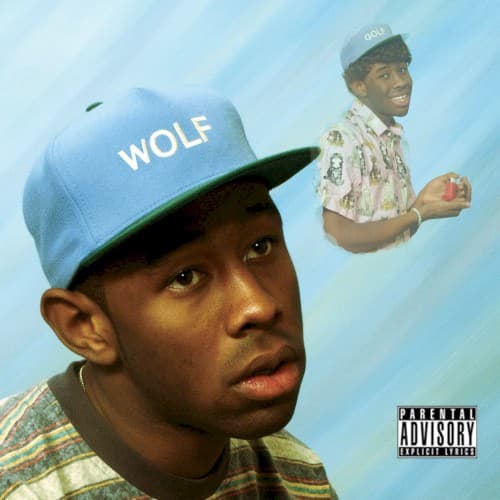
The scorecard
6.8/10 · Good
- Writing25%
- 6.5
- Production25%
- 8.5
- Delivery15%
- 6.0
- Cohesion15%
- 5.5
- Originality10%
- 7.0
- Replay value10%
- 6.0
The concept album storytelling shows ambition but the lyrics still lean on shock value over substance, though tracks like Answer and Colossus suggest real growth.
Tyler's beat craft takes a major leap forward with jazzy arrangements on Treehome95, Neptunes-inspired synths on IFHY, and lush boom-bap on Rusty showing genuine compositional range.
His rapping remains stiff and monotonous across most tracks, though guests like Earl Sweatshirt on Rusty and Pharrell's sung outro on IFHY elevate their moments considerably.
The 18-track, 71-minute runtime sags badly in the middle with Trashwang and several concept pieces that add length without purpose, though the opening and closing hold together.
The production borrows heavily from Neptunes and RZA but applies those templates to Tyler's odd sensibility in ways his previous albums didn't attempt, even if the shock-rap persona feels stale.
The best production moments warrant returns but the bloat, the provocations that land flat, and Tyler's limited vocal presence make full playthroughs a chore.
Tyler, The Creator Wolf — The One Where He Learned to Build Beats But Forgot to Edit
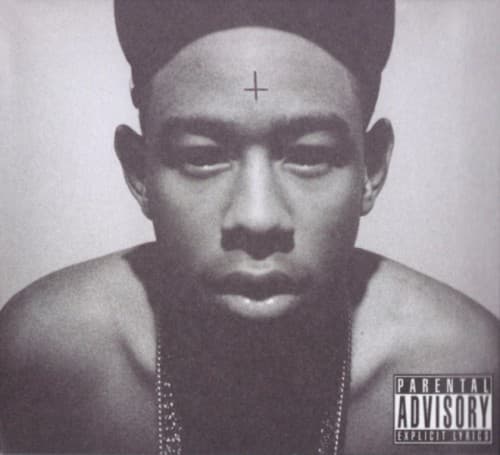
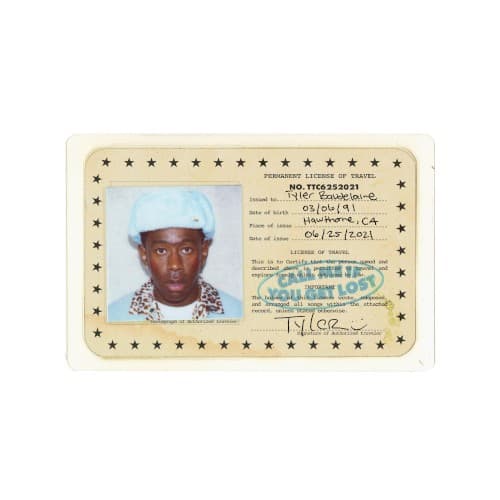
Wolf is the album where Tyler, The Creator figured out how to produce like the people he worshipped and forgot that an hour-plus runtime requires an hour-plus of ideas worth hearing. The craft improvement is real: the jazz chords on Treehome95, the plinking Neptunes homage on IFHY, the boom-bap reimagining on Rusty all prove he absorbed a decade of Pharrell, RZA and Madlib and can now build something beyond the murky horrorcore of his first two projects. But Tyler in 2013 is still Tyler at his most self-indulgent, piling on 18 tracks and dragging several past five minutes when the rapping and the concept cannot support the length. The result ranks in the middle of his catalog: better than the one-note Goblin, miles behind the focused Flower Boy and CALL ME IF YOU GET LOST, essential only for the production reveal it became and the handful of tracks where the writing catches up.
The shift away from Goblin's darkness was deliberate. Tyler told Spin in 2011 that rapping about rape and violence no longer interested him, that Wolf would brag about money and feature weird hippie music for getting high. He delivered on the production promise but not the writing one. The album still leans on gay slurs and shock lines that feel exhausted even by 2013 standards, and the concept album structure about characters Wolf, Sam and Salem connects loosely at best. What holds it together is the sound: Tyler maturing as an arranger while his persona stayed stuck at 18. The question Wolf asks is whether great beats can carry weak rapping for 71 minutes, and the answer is no, but the beats are good enough that stretches of this album still work a decade later.
When the Student Becomes the Apprentice
Tyler produced every song on Wolf himself, and the album plays like a semester abroad in the studios he studied from a distance on Goblin. The Neptunes influence dominates: IFHY is so faithful to Pharrell's plinking synth style that Pharrell shows up to sing the outro, a co-sign that feels earned. The breathy piano chords on the title track, the jazzy progressions on Treehome95 with Erykah Badu, the seven-minute PartyIsntOver suite that shifts from downtempo to campfire acoustic to Frank Ocean crooning over synth pads, all of it shows Tyler learning to arrange beyond the one-dimensional grit of his earlier work. Rusty borrows the lush soul loops and compressed drums of 1990s RZA production, and while the execution is not quite there, the fact that he tried it and mostly pulled it off matters. The production on Wolf is frequently stronger than anything on the album requires, which is both the achievement and the problem.
The writing did not make the same leap. Tyler raps in the same stiff, nasal monotone that worked on Bastard when the content was raw and fails here when the content is half-baked provocation. His flows are basic and his wordplay is sparse.
The storytelling ambition is real: Answer addresses his estranged father over simple guitar and heavy drums, Colossus switches perspectives between Tyler and an obsessive fan in a structure Pitchfork compared to Stan, and the therapist character Dr. TC returns on the closing track Lone to frame the album as the final session. But the execution rarely matches the concept. Tyler's verse on Colossus about a fan turning predatory has none of the specificity or escalation that made Stan work. Answer names his father issues plainly but never digs past the surface complaint. The album is littered with gay slurs that he still defends as meaningless, which by 2013 mostly signal that he has no sharper tool in the box.
The guest verses are a mixed rescue. Earl Sweatshirt on Rusty is the album's best rapping by a wide margin, dense and internal and doing more with 16 bars than Tyler does with 18 tracks. Frank Ocean's sung parts on Slater and the Bimmer section of the PartyIsntOver suite add melody and texture that Tyler cannot provide himself. Pharrell's falsetto outro on IFHY justifies the whole Neptunes worship that precedes it. But the posse cut Trashwang, a trap-influenced mess with seven Odd Future members, is the album's low point: poorly mixed, structureless, and a waste of four and a half minutes that feels like Tyler rubbing in that he can release anything. The production keeps Wolf above water but the rapping and the editing are what sink it to the middle of his discography.
Seventy-One Minutes is Not a Vibe, It's a Sentence
Wolf is too long by at least 15 minutes and the sequencing makes the bloat worse. The first third is the album's best stretch: the breathy title track leads into the collaboration with Hodgy Beats, then a run of sharp tracks that peaked at number two on the Bubbling Under chart and remains among Tyler's tightest work. That opening establishes momentum and variety. Then the middle sags under its own length.
The seven-minute suite has two minutes of good ideas stretched to seven. One track meanders for over four minutes without a hook or a point. The posse cut is an active disaster, sounding like no one in the room was sober enough to realize the beat was bad and the rapping worse.
The album recovers slightly at the end. The most overtly jazz-influenced track Tyler had made to that point lifts the energy, and a brief burst of aggression precedes the therapist session finale. But the highs do not justify the length. The concept album structure about Wolf and Sam and camp never coheres enough to make the runtime necessary, and several of the longer tracks could be halved without losing anything but dead air. Tyler in 2013 had the production chops to fill 71 minutes but not the editing instinct to know that he should not.
The One You Play for the Beats and Skip Through the Rest
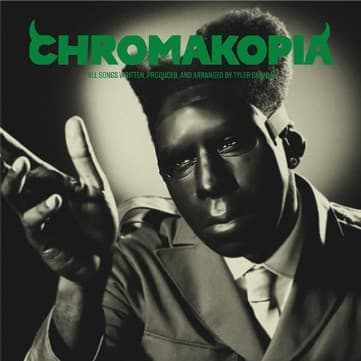
Wolf ranks fourth in Tyler's catalog, below Flower Boy, CALL ME IF YOU GET LOST and Chromakopia but above Goblin and Don't Tap the Glass. It is the album where his production caught up to his ambition and his writing stayed stuck in 2010. The craft leap is hard to argue with: the Neptunes worship on IFHY, the RZA homage on Rusty, the jazz flourishes on Treehome95 all prove Tyler could build beats at a level his previous work never approached. But the album is bloated, poorly sequenced, and weighed down by rapping that sounds bored with itself and provocations that feel tired. The 89,000 first-week sales and number three Billboard debut showed he had an audience. The fact that this is not the album fans return to a decade later shows he had not yet earned it.
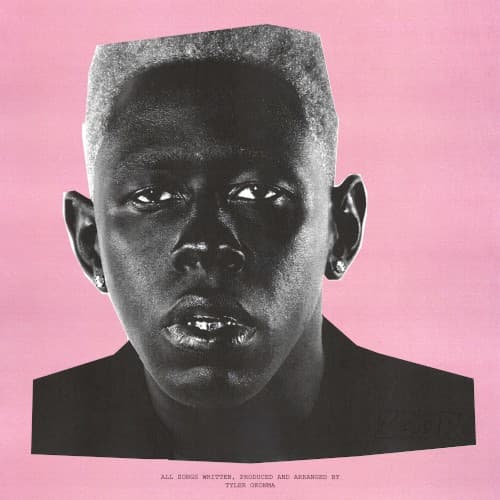
The album aged as a producer's display and a transitional work. It is the bridge between the horrorcore phase and the melodic, focused Tyler who made Flower Boy four years later. For fans who arrived with IGOR or Chromakopia, Wolf will sound like a rough draft: the ideas are there but the execution is not.
For Odd Future diehards it was the last album before the crew fully splintered and Tyler became a solo auteur. Start with Domo23, IFHY and Rusty to hear the production at its best, then jump to Answer and Treehome95 for the moments where the writing almost catches up. Skip Trashwang entirely and do not feel bad about skipping Pigs and Parking Lot. If you finish this and want more Tyler, go straight to Flower Boy to hear what happened when he finally learned to edit.
Track by track
Track Listing
Wolf
SolidBreathy piano chords and whispered vocals open the album with atmosphere Tyler rarely attempted before, though the 110-second runtime means it functions more as an intro than a full track. The character Wolf appears at the end to establish the concept album framing that the rest of the record will mostly ignore.
Jamba
SolidHodgy Beats contributes a solid verse over a mid-tempo beat with vocal samples and simple drums, but the track meanders without a strong hook or structure. It is a competent album cut that does not justify its three and a half minutes, the kind of song that would have been trimmed on a tighter project.
Cowboy
StandoutA short solo cut with a catchy vocal loop and Tyler rapping in his usual monotone about fame and critics. The production is clean and the pacing is tight, one of the few tracks on Wolf that knows when to end.
Awkward
SolidTyler raps about an obsessive crush over a jazzy beat with layered vocal samples and shifting drums. The writing is straightforward and the concept is thin, but the production keeps it interesting enough to justify the near four-minute runtime. It is solid filler that benefits from placement in the album's strong opening stretch.
Domo23
StandoutThe album's lead single and its tightest track, a two-and-a-half-minute burst with a minimal beat, a simple hook and Tyler rapping with more energy than he musters anywhere else on the album. The song peaked at number two on the Bubbling Under Hot 100 and remains one of his most replayable early cuts, proof that he could write a focused rap song when he tried. The production is sparse and punchy, the flow is direct, and the brevity is a feature. This is the template Wolf needed more of.
Answer
StandoutTyler addresses his estranged father over a simple guitar melody and heavy drums, one of the few tracks on Wolf where the writing matches the production ambition. The subject matter is personal and the execution is plainspoken without being maudlin, though the song stops short of real depth. It gestures at pain without fully exploring it, which is both more mature than Goblin and still not quite enough. Frank Ocean or Kendrick Lamar would have written a second and third verse that dug further. Tyler writes one good verse and repeats the idea.
Slater
WeakA song devoted to Tyler's bike that ends with Frank Ocean speaking the words "You're talking to a bike. Loser." The joke is funny once and the song is not funny enough or strange enough to justify three minutes and 53 seconds. The beat is decent, the rapping is average, and the punchline is obvious. Skip it.
48
WeakTyler raps over a minimal beat and includes portions of a Nas interview from XXL, but the track lacks the focus and structure to make the concept land. It is four minutes of Tyler talking about fame and critics without saying much, and the Nas sample feels like borrowed credibility rather than earned homage.
Colossus
SolidTyler's attempt at a Stan-style narrative about an obsessive fan who turns predatory, switching perspectives between himself and the stalker. The structure is there but the execution is not: the fan's verses lack the specificity and escalation that made Stan work, and Tyler's responses are too detached to build tension. The production is clean and the idea is solid, but the writing is not sharp enough to pull it off. It is an ambitious failure that shows Tyler reaching for something he cannot yet achieve.
PartyIsntOver/Campfire/Bimmer
SolidA seven-minute suite that shifts between three distinct sections: a downtempo opener with Lætitia Sadier, a campfire sing-along middle, and a Frank Ocean-sung finale over synth pads. The production is lush and the arrangement is ambitious, proof that Tyler was learning to build multi-part compositions beyond simple loops. But the suite does not cohere and the length is not earned. The Campfire section meanders with acoustic guitar and talk about s'mores that feels like improv left in by accident. The Bimmer section is the strongest part, Frank Ocean adding melody and texture that Tyler cannot provide himself, though even that runs a minute too long. The whole thing is two minutes of good ideas stretched to seven.
IFHY
StandoutThe album's most overt Neptunes homage, plinking synths and jazzy chord changes that sound lifted directly from a Pharrell production circa 2003. Tyler raps about a toxic relationship in his usual monotone, but the production is strong enough to carry the song and Pharrell himself shows up to sing a falsetto outro that justifies the entire track. This is Tyler at his best as a producer on Wolf: borrowing a template he loves and executing it well enough that the original architect co-signs it. The song peaked at number 24 on the Heatseekers chart and remains one of the album's most replayable cuts, though that has more to do with the beat and Pharrell's 30 seconds than Tyler's five minutes.
Pigs
WeakOver four minutes of Tyler rapping over a plodding beat with no hook, no structure and no point. The production is fine and the rapping is competent but the song goes nowhere and feels like it was included to pad the runtime. This is the kind of track that a tighter album would have cut entirely.
Parking Lot
SolidCasey Veggies and Mike G contribute guest verses over a mid-tempo beat with a simple vocal loop. All three rappers are competent and none of them say anything memorable. It is fine and forgettable, the definition of filler.
Rusty
StandoutThe album's best pure rap track, a lush reimagining of 1990s RZA production with soul loops and compressed drums that Pitchfork compared directly to Wu-Tang Clan. Tyler and Domo Genesis contribute solid verses but Earl Sweatshirt steals the song entirely, rapping circles around both of them with dense internal rhymes and a flow that makes Tyler's monotone sound even flatter by comparison. Earl's 16 bars are the best rapping on Wolf and it is not close. The production is rich and layered, proof that Tyler had studied his boom-bap homework, and the track succeeds despite Tyler's limitations because the guests and the beat do the heavy lifting. This is essential.
Trashwang
WeakA trap-influenced posse cut with seven Odd Future members that sounds like it was recorded in one take with no plan and no quality control. The beat is bad, the mixing is worse, and none of the seven rappers deliver a memorable verse. It is the album's clear low point, four and a half minutes that feel like Tyler rubbing in that he can release anything and his fans will defend it. Skip it entirely.
Treehome95
StandoutThe most overtly jazz-influenced track Tyler had made to that point, with Coco O and Erykah Badu singing over live instrumentation and chord progressions that sound like he had been listening to Robert Glasper. The production is lush and the arrangement is confident, proof that Tyler could build something outside the loop-based hip-hop that defined his earlier work. Badu's presence elevates the track considerably, her voice adding warmth and legitimacy that Tyler's rapping cannot provide. This is one of the album's clear highlights, a three-minute showcase of Tyler's growth as a composer even if his writing still lags behind his production.
Tamale
SolidA brief, aggressive cut with distorted bass and Tyler rapping with more energy than he musters on most of Wolf. At two minutes and 46 seconds it is one of the album's shortest tracks and benefits from the brevity, a palate cleanser before the closing therapy session.
Lone
SolidThe album's final track features Tyler's last therapy session with Dr. TC, the character who appeared on Bastard and Goblin. Tyler describes the events leading up to his grandmother's death over minimal production, closing the concept album framing that the middle of the record mostly abandoned. The writing is plainspoken and the subject matter is heavy, but the track feels more like an obligation to close the trilogy than a natural ending to Wolf. It is a somber, low-energy closer to a bloated album that needed a stronger finish.